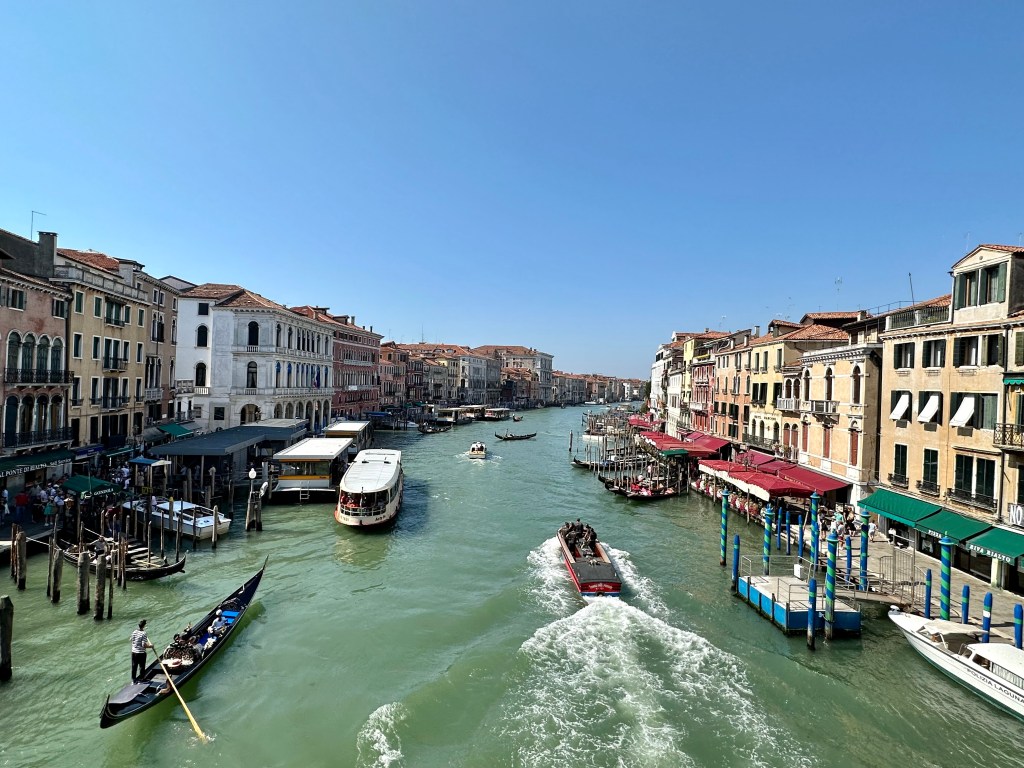
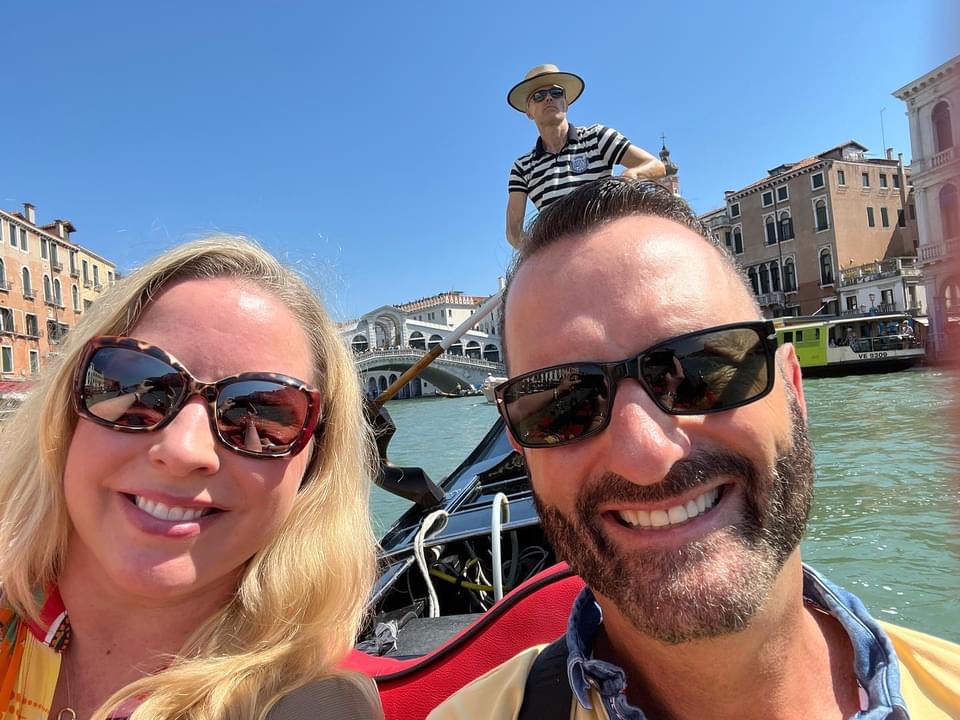
We took a leisurely gondolier ride under the hot Venetian sun, and were just chatting about this and that when Martine suggested I become a gondolier, write a book about my experience, and then sell the movie rights. I think that’s a grand idea! But…it takes two years to learn how to do it, and is generally handed down through families. Each gondolier owns their boat, most often bequeathed from dad, who got it from grandpa. You get the picture. Tough biz to break into. And in case you were wondering about the moms and daughters in all this, there are just three women gondoliers in all of Venice.
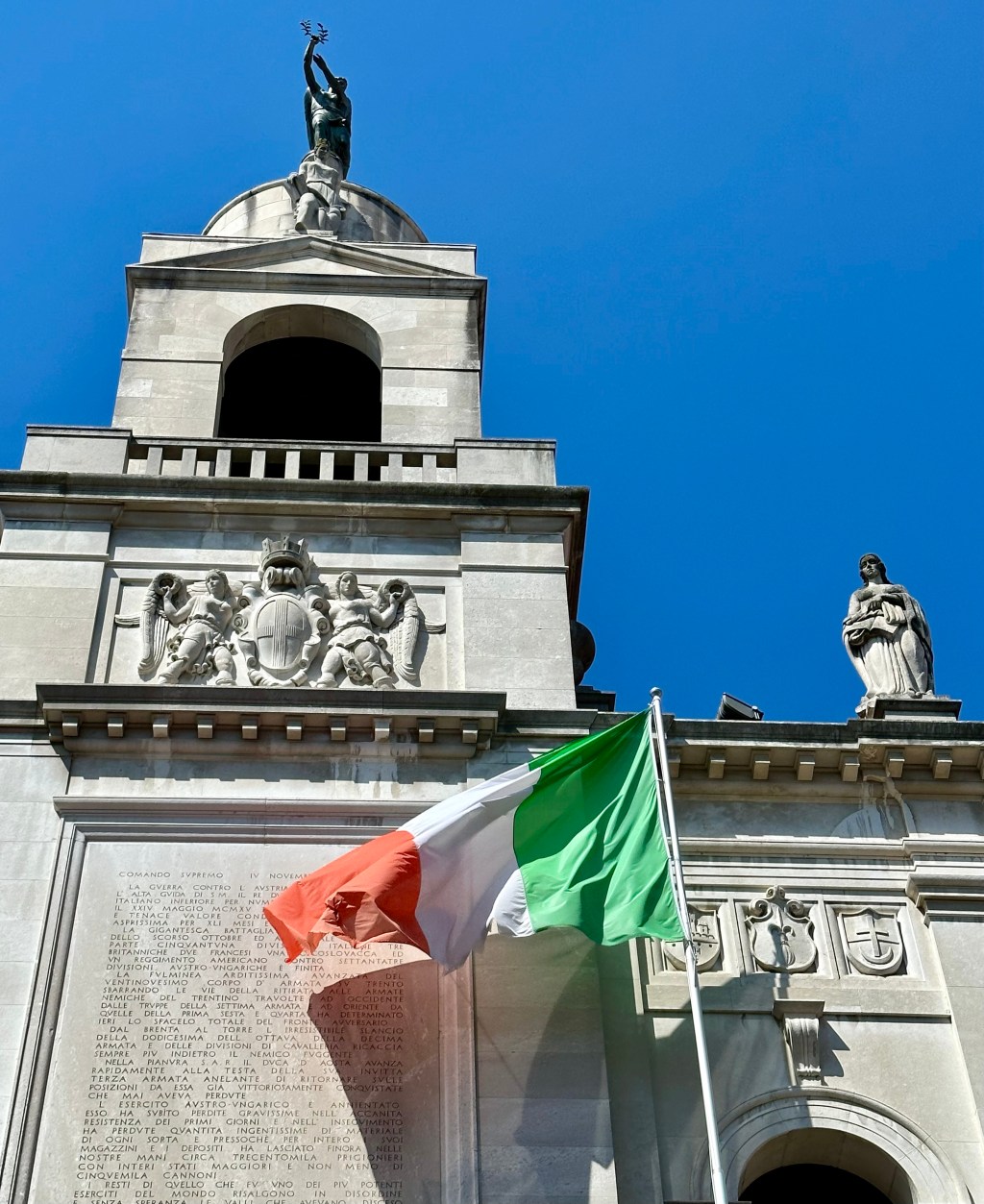
But I digress and jump over time – let me back up! Martine had arrived Venice while we were getting lost looking for dinner between our visits to the Doge’s Palace and St. Mark’s Basilica. We all met up the next morning, and while the plans for the day got quickly jumbled (that’s another story), we found ourselves atop the famous Rialto Bridge. It’s thrilling to be in such an iconic place…originally built in – gulp – 1173. Didn’t look then quite like it does today, of course, but suffice to say this has been a major crossing over the Grand Canal for nearly 900 years. The current bridge was constructed in 1591…impressively historic in its own right.


The day’s sun and heat was upon us, as was the need for a lunch plan, so we hopped a water taxi from the dock at Martine’s hotel headed for Locanda Cipriani. Recommended by two different friends it seemed like a good bet. A 45 minute, 160 euro water taxi ride across the Venetian Lagoon bounced us over the small white caps and wakes caused mostly by other taxis, fishermen, the water busses (“Vaporetto”), and larger commercial boats traversing the expansive waterway. The taxi boats, classic in their design – high gloss finish on the wood, passengers seated low inside, covered from the sun…an occasional splash and the wind on our faces, we are excited for this little adventure to another island.

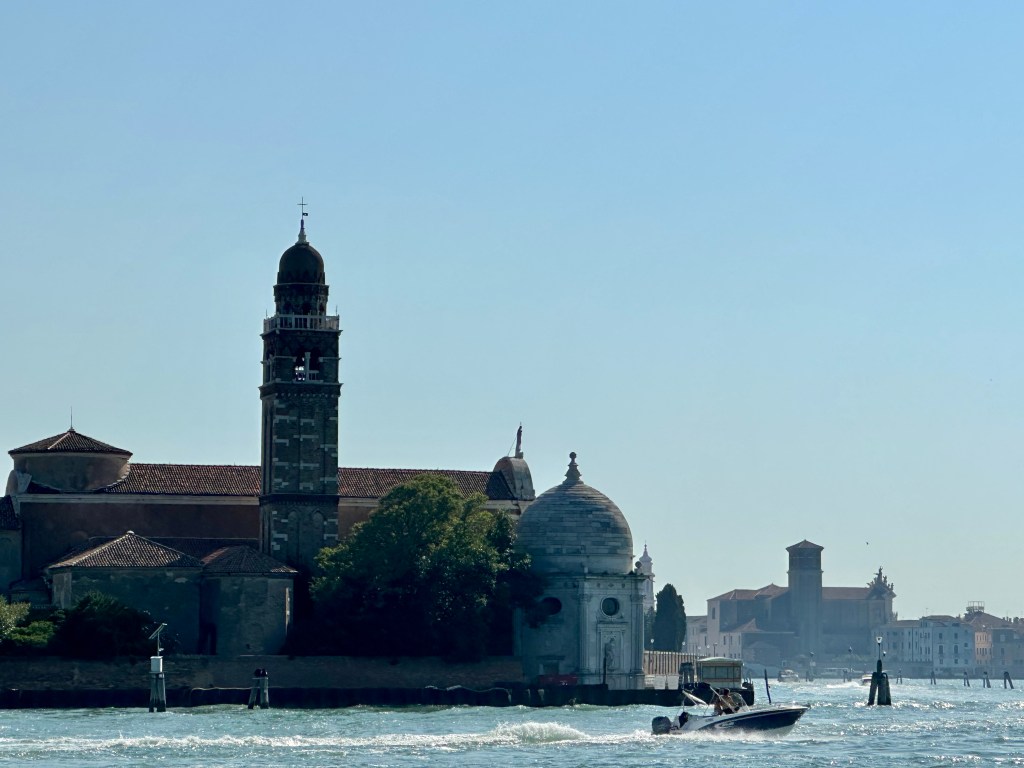

The lagoon fades behind us as we enter a small inlet, the boat slowing to a crawl. It’s quiet but for the crickets in the trees and brush that line the canal. Creeping along the calm water, a turn here, a turn there, and soon we are being dropped at the end of the canal, at Cipriani’s doorstep. A perfect risotto, a simple chicken salad, and an aperol spritz under the cooling, vined canopy of the pergola set an indescribable tone. We are in an Italian state of mind. This is the kind of thing that just has to make people live longer…stress fades away.


Our arrival made us experts (!) on taking the Vaporetto, so rather than get another taxi, we take it to Murano. It’s unbearably hot as we walk the canal from Cipriani to the Lagoon’s edge, and time it perfectly. The Vaporetto arrives, we figure out which stop to take it to, and wonder how to buy a ticket as there was no machine on the dock. We learn later this is a loosely enforced honor system; you’re just supposed to have a ticket. Not sure what happens if you get caught without one!


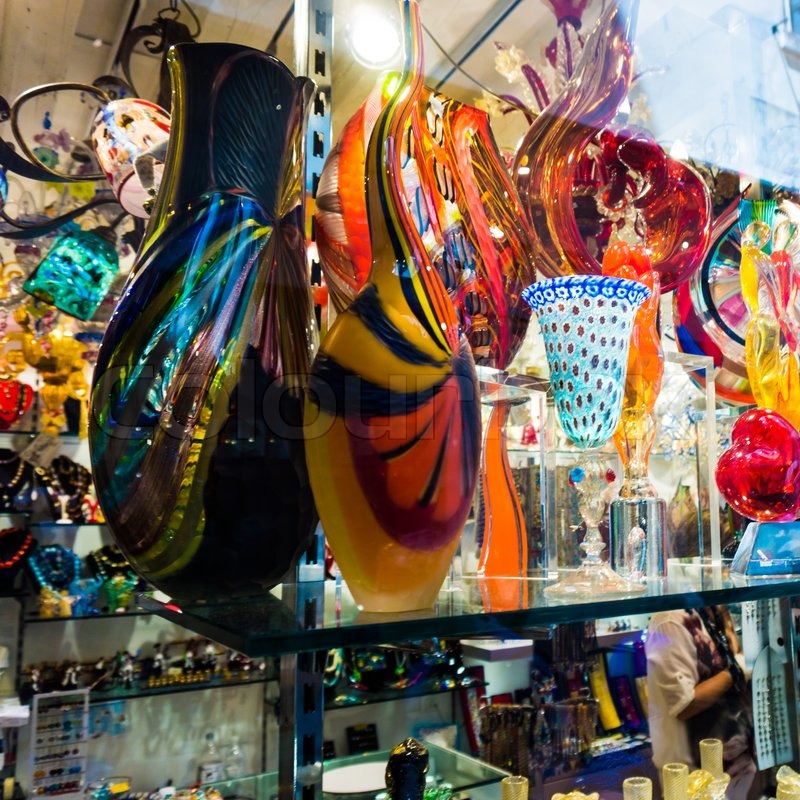
Murano is famous for its glass furnaces and the amazing glass artistry, from simple drinking glasses and small objet d’art to ornate, elaborate chandeliers. Glass has been made here since the 13th century, and it seems they can make anything from glass, as well as create any effect or color with different minerals added to the glass. Walking through the shops, we found ourselves with arms close to our sides for fear of breaking one of the hundreds of pieces that line the shop walls.
A walk through the village of Murano, the canal reflecting the buildings that line it, a lemon ice in hand…and we made our way to the Vaporetto stop (“do we take the #4 or the #7?”), Piazza San Marco is soon in our sights. Conversation at dinner that evening turned to boarding our ship tomorrow!
Another hot morning dawns, and we have some time before embarkation so Martine and I hire a gondolier, slowly exploring the nooks and crannies of Venice. Under bridges, around sharp corners, passing other gondolas, taxis, construction crews, and garbage collection (all of this happens on boats), our gondolier navigates with such precision it’s astonishing. He comes within an inch or two (seriously) but does not bump into anything…that’s when Martine suggests I become a gondolier. I think it will be better just to wear one as a hat…

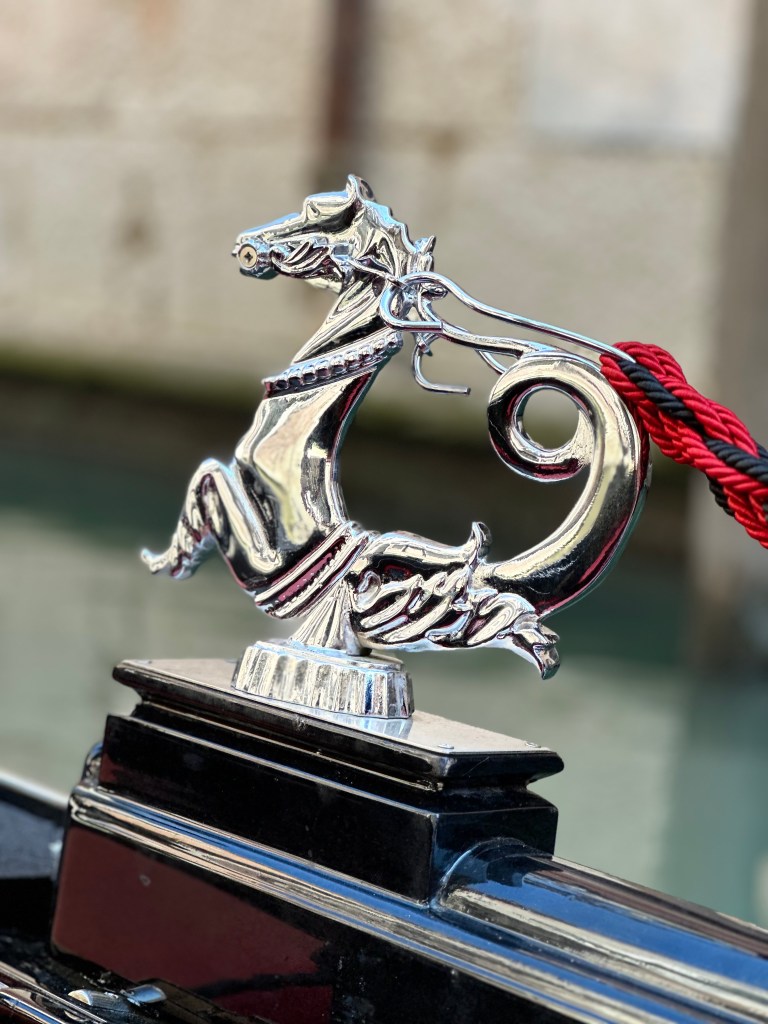
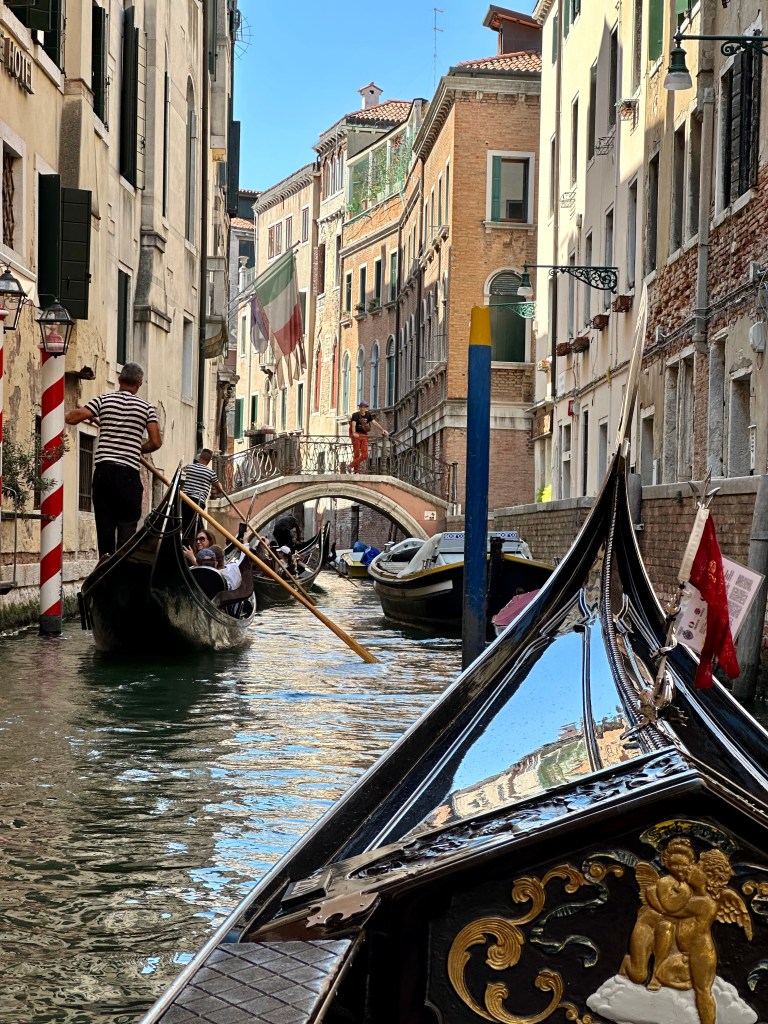
Early afternoon arrives quickly, and as we coordinate a taxi to the cruise terminal, we strike up a conversation with a waiting couple (Jimmy & Cindy from Chicago), who are going on the same cruise (Venice to Rome…have I mentioned that?). We share the taxi that is just big enough for five and luggage. Somehow it is the same driver that took us to Locanda Cipriani, a handsome Italian (is that redundant?) named Simone. The ride through the Grand Canal is of course practical, but also romantic and glamorous as we bounce across the water, the center of Venice fading behind us and a great adventure ahead.


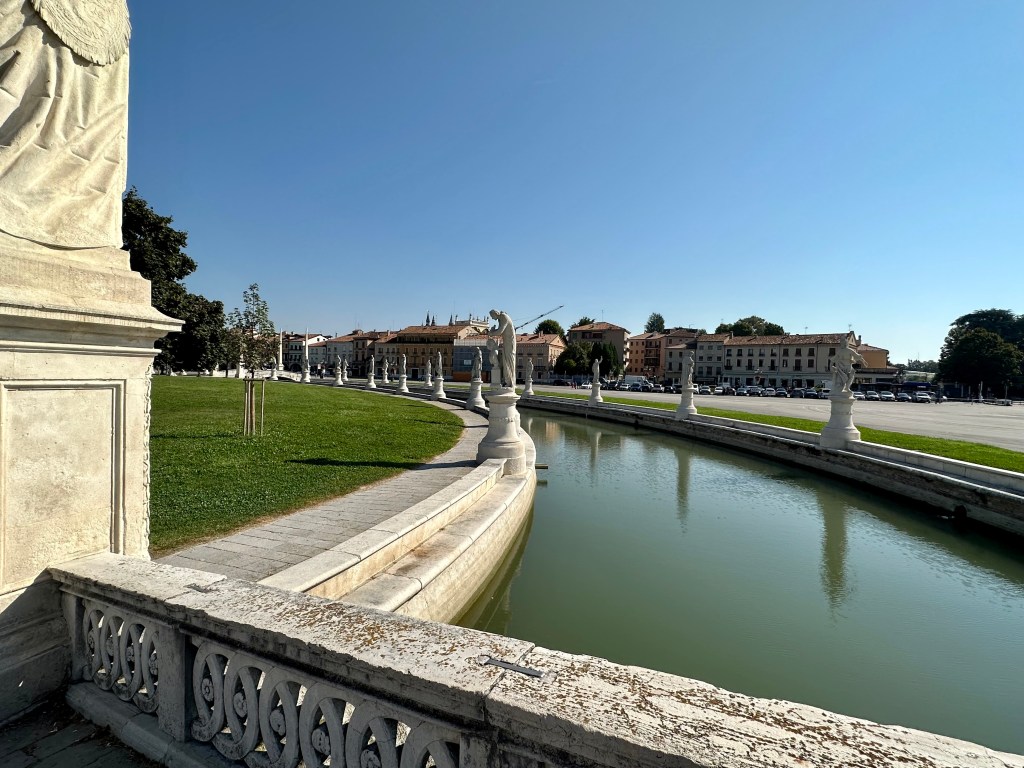
Docked for the night, we awaken the next morning on this beautiful new ship and pull ourselves together for an excursion to Padua. Sometimes included in greater Venice, it is just to the west, and a short bus ride drops us in the main park, the Prato della Valle.
Padua is primarily known as a city of learning – it has the one of the oldest universities in the world, the University of Padua, founded in 1222 (!!) where both Galileo and Copernicus studied and taught. It’s an incredible, modern step through the ages and the advancement of human knowledge.
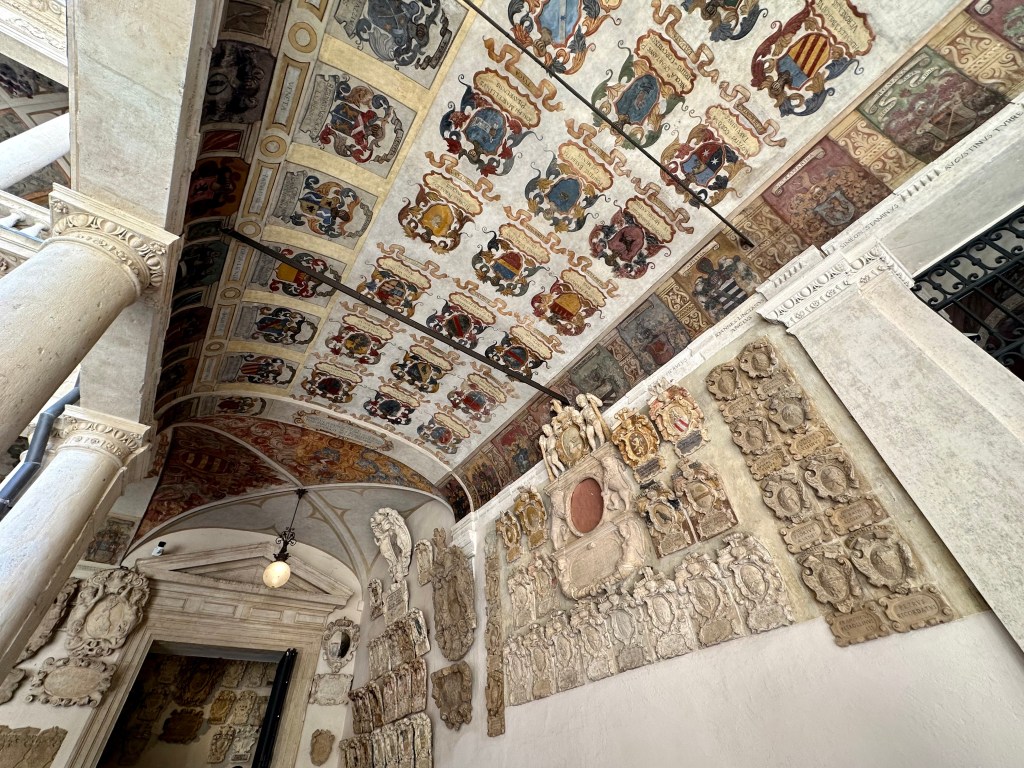

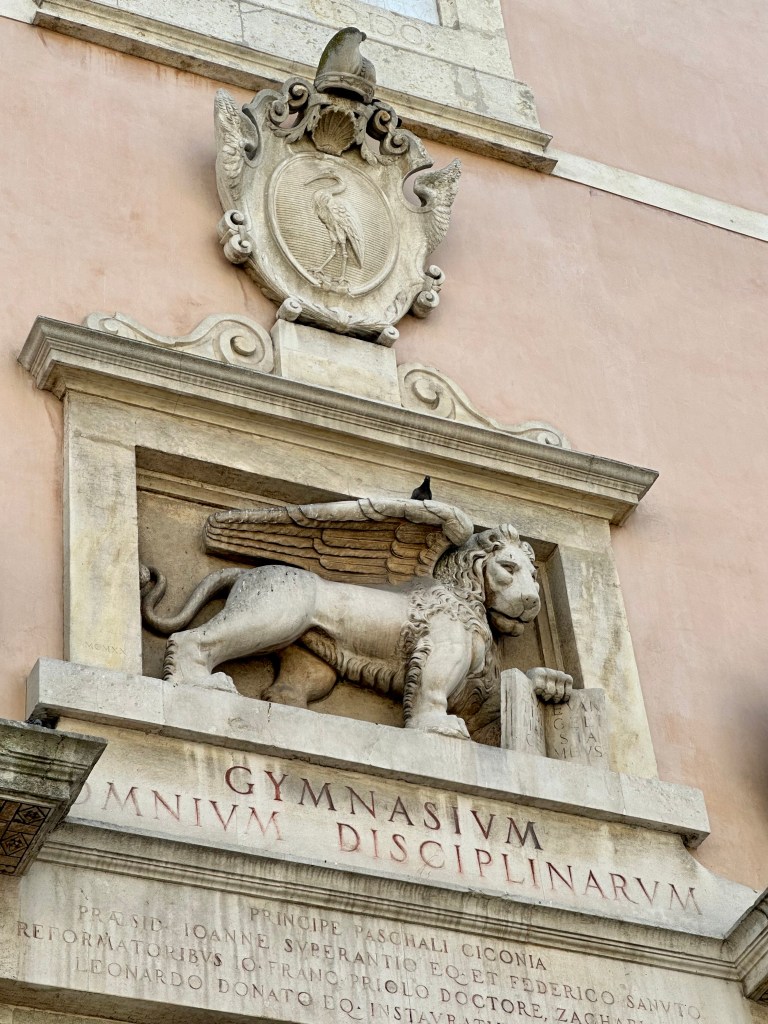


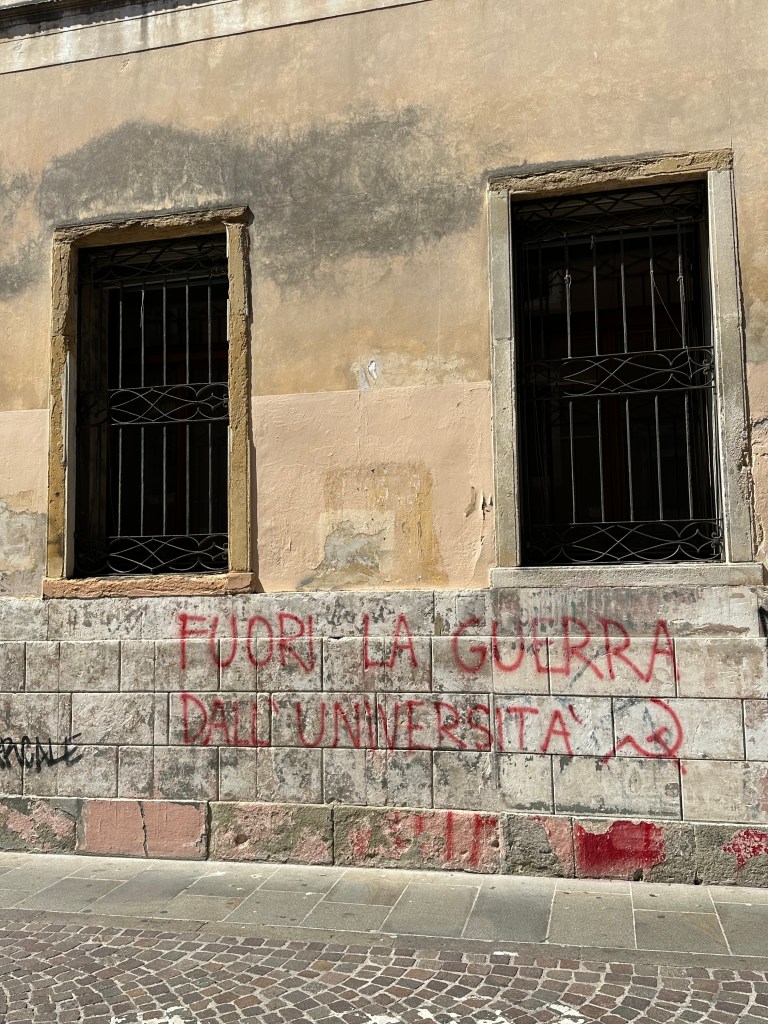
Our tour is a rather brief one, starting with a walk through the Prato, hardly anyone there save for a couple families strolling and a street vendor or two along the edges. It’s early in the day, but it’s already super hot, which keeps people indoors.

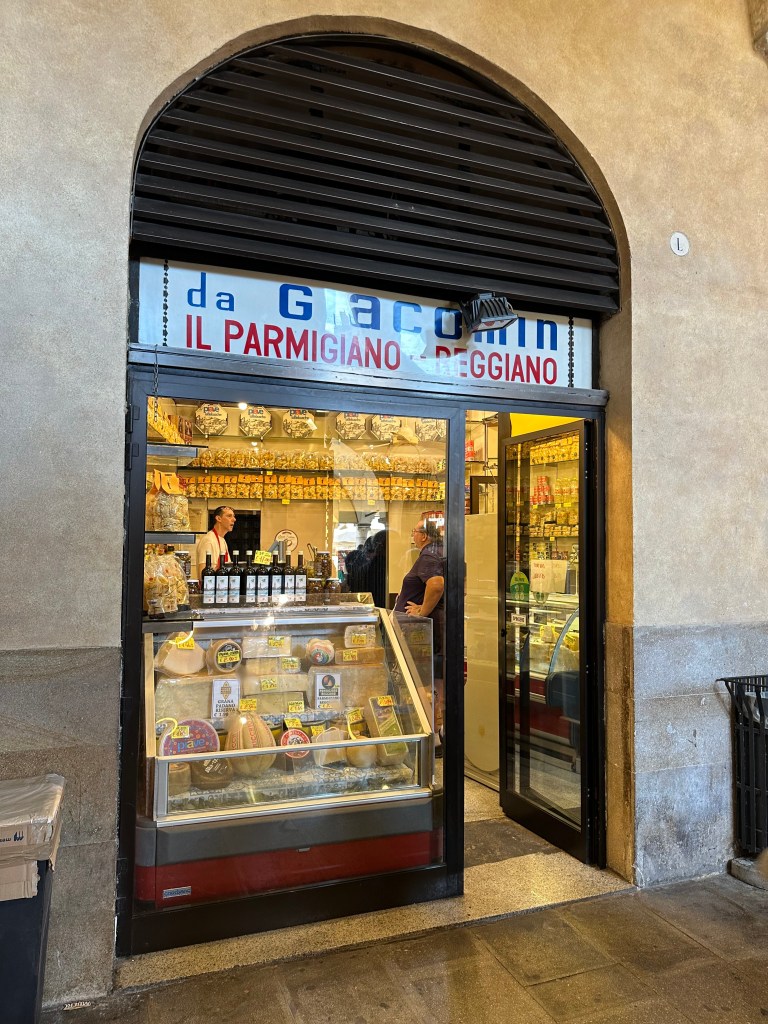
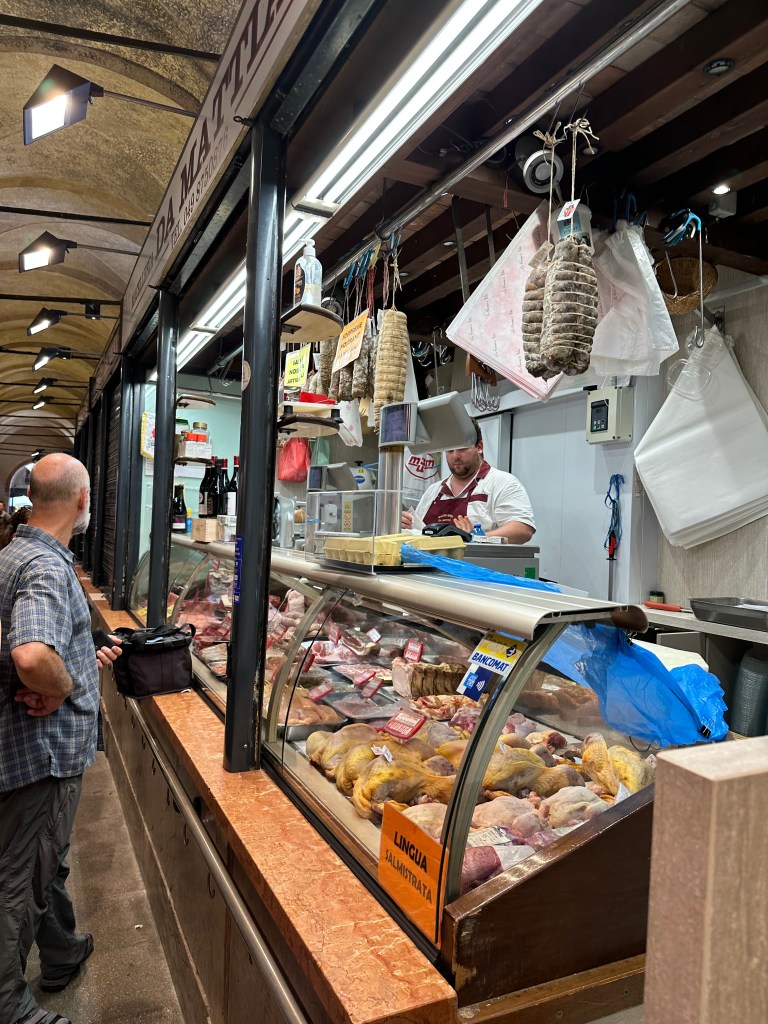
We walk through the the green market (fruit and veg) and have a coffee and snacks under umbrellas in the Piazza delle Fruta. The lively Italian chatter of locals surrounds us, their dogs focused intently on the pigeons (that universal standoff). From the green market, we go “indoors” to the fish, meat markets, and bakeries that are below the Palazzo della Regione, the hallways and columns originally just foundation for the massive building above.



It’s a charming city, typical for this area, with small shops lining narrow streets and apartments above. Our guide is leading us to the highlight of this visit, the Basilica of St Anthony of Padua, whose bones are in the reliquary here. Construction began in 1230 and continued for decades (makes me think of the Sagrada Familia in Barcelona, which began construction in 1882 and is still not finished)..

When the Basilica first comes into view, it’s impressive – multiple cupolas and the overall structure is huge, but somehow doesn’t overwhelm, perhaps because the exterior is rather plain. And then you enter…and it is just incredible inside. The St. Anthony Chapel looks like it should be its own church, pulsing with light that seems to come from nowhere and everywhere.

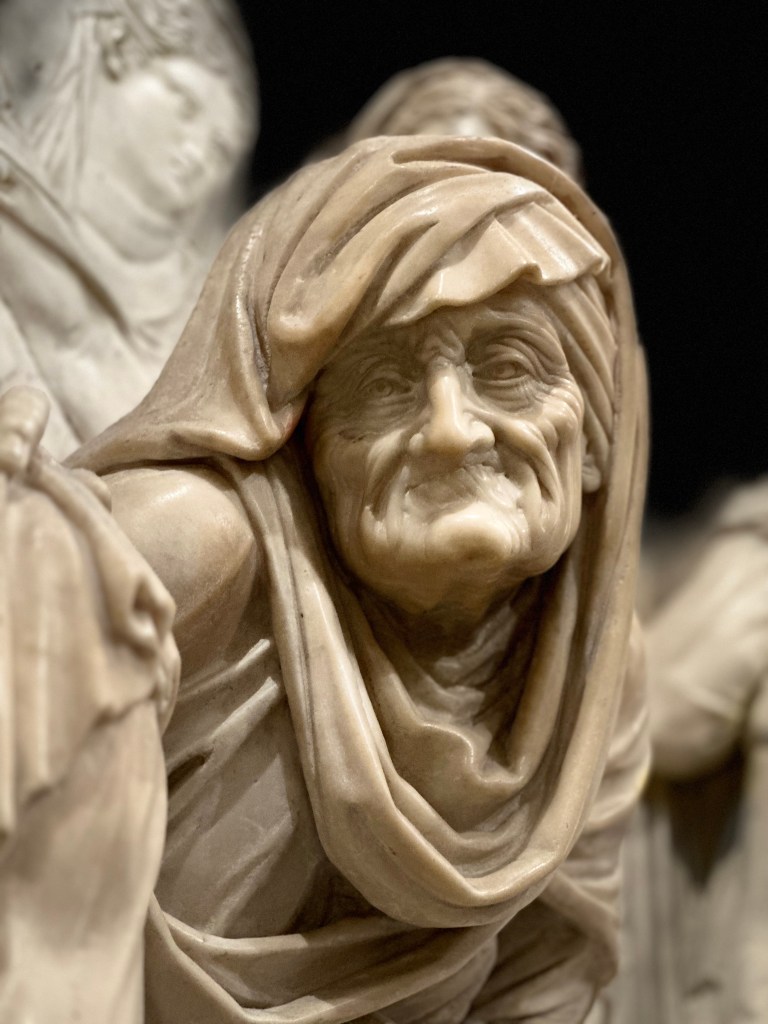
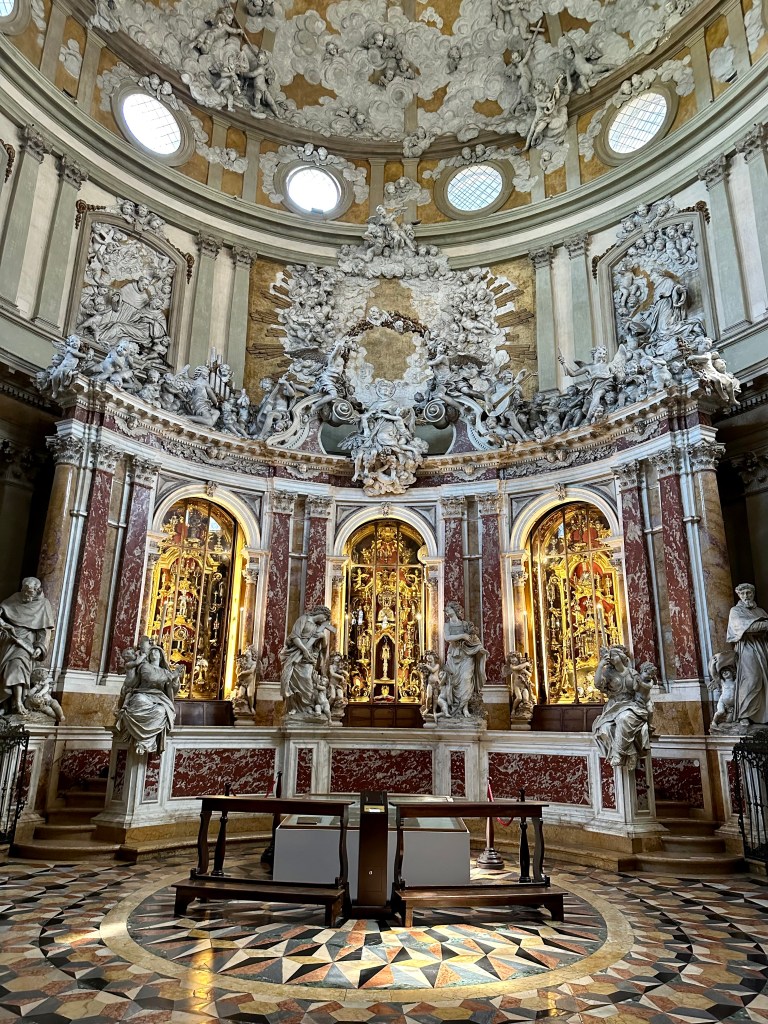

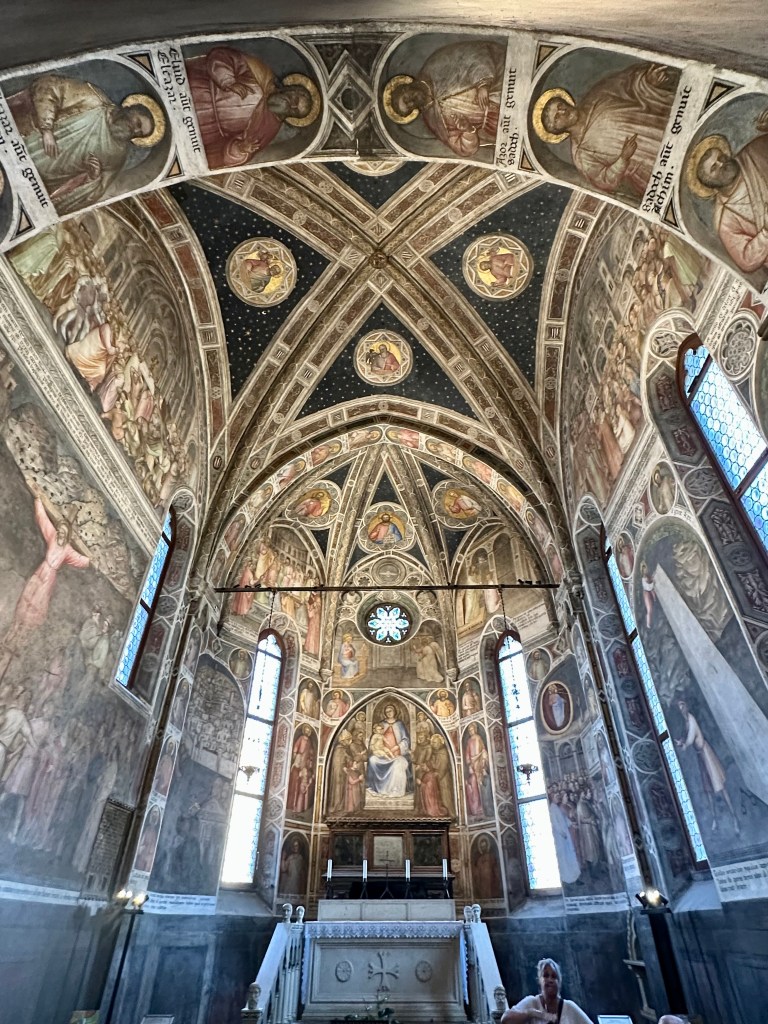
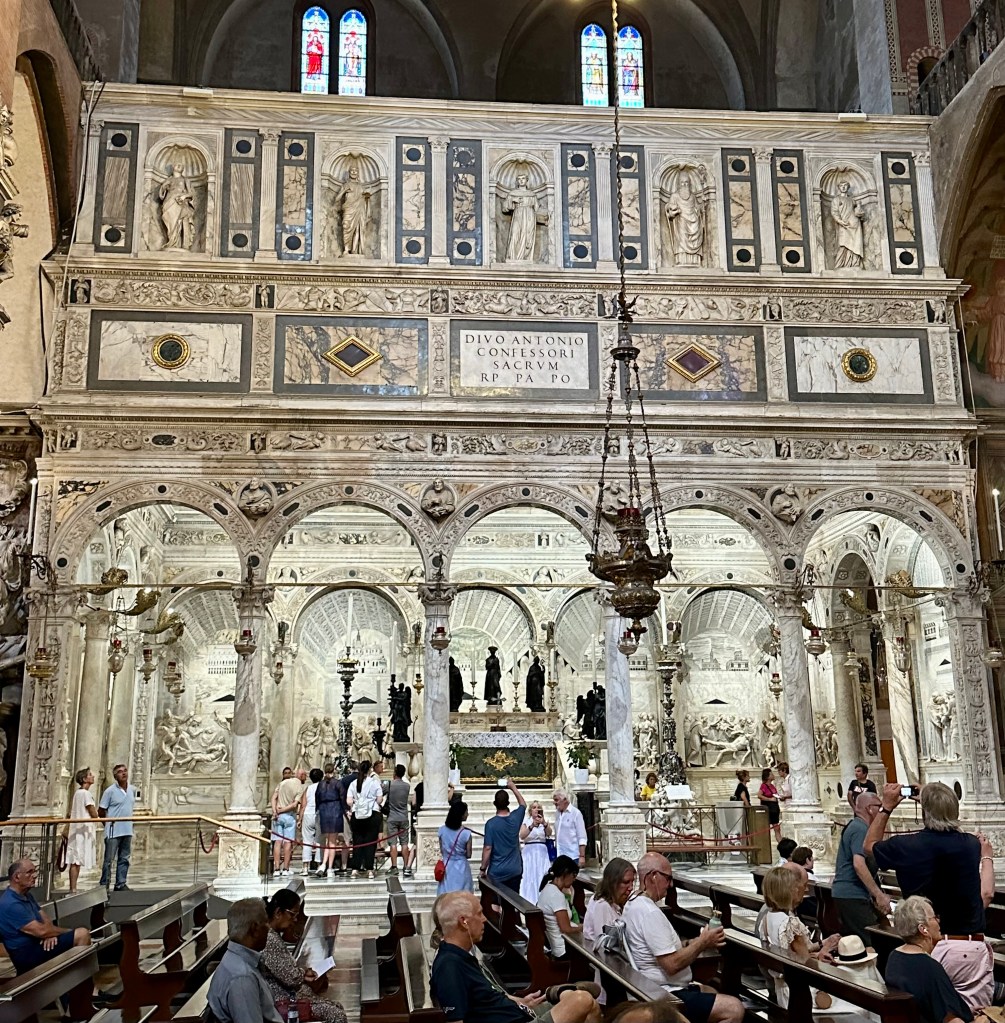
The intricately adorned columns throughout the basilica push the ceilings to the sky, so high above, every surface covered with fresco and marble, it’s almost frantic – chaotic – and somehow in harmony too. We linger and ponder the art and theology that surrounds us.
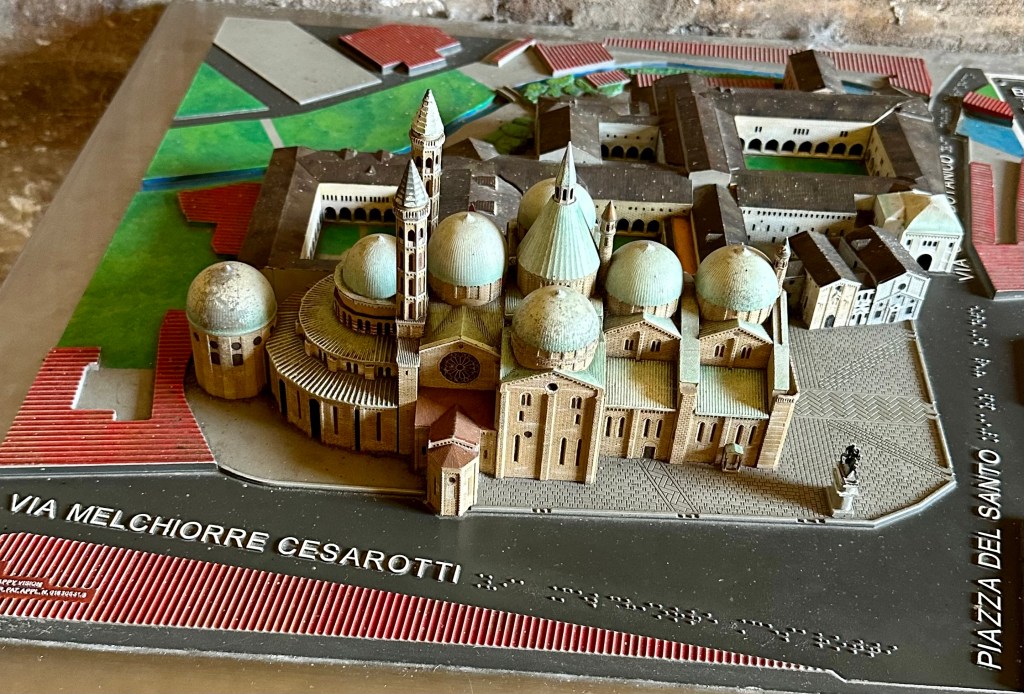
As we leave this incredible, ancient house of worship, a small model of the basilica sits on a table at the exit. It’s simple and humble, reminding us that even with all the grandeur inside, our humanity remains earthbound, nestled between two modern city streets…
 Dirt Roads and High Rises
2 responses to “An American Gondolier Goes to Padua”
Just fantastic!
LikeLike
It really was!
LikeLike