
Our first day in Marrakech was really like two as it started with the 5 am wake up call to go ballooning at sunrise. So amazing and so worth getting up in the dark! The balloon story is in a previous post, so check it out there if you missed it. With that beginning, the days in Marrakech blended together with all sorts of sights and sounds and adventures…and thus, so does this episode of DR&HR.
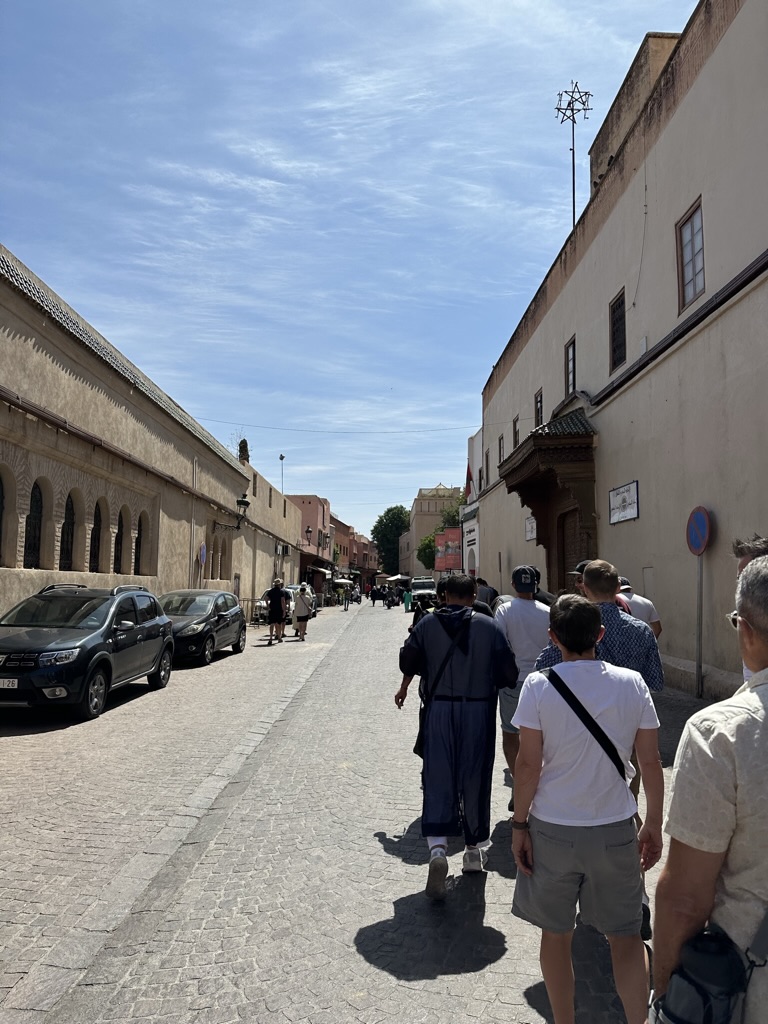
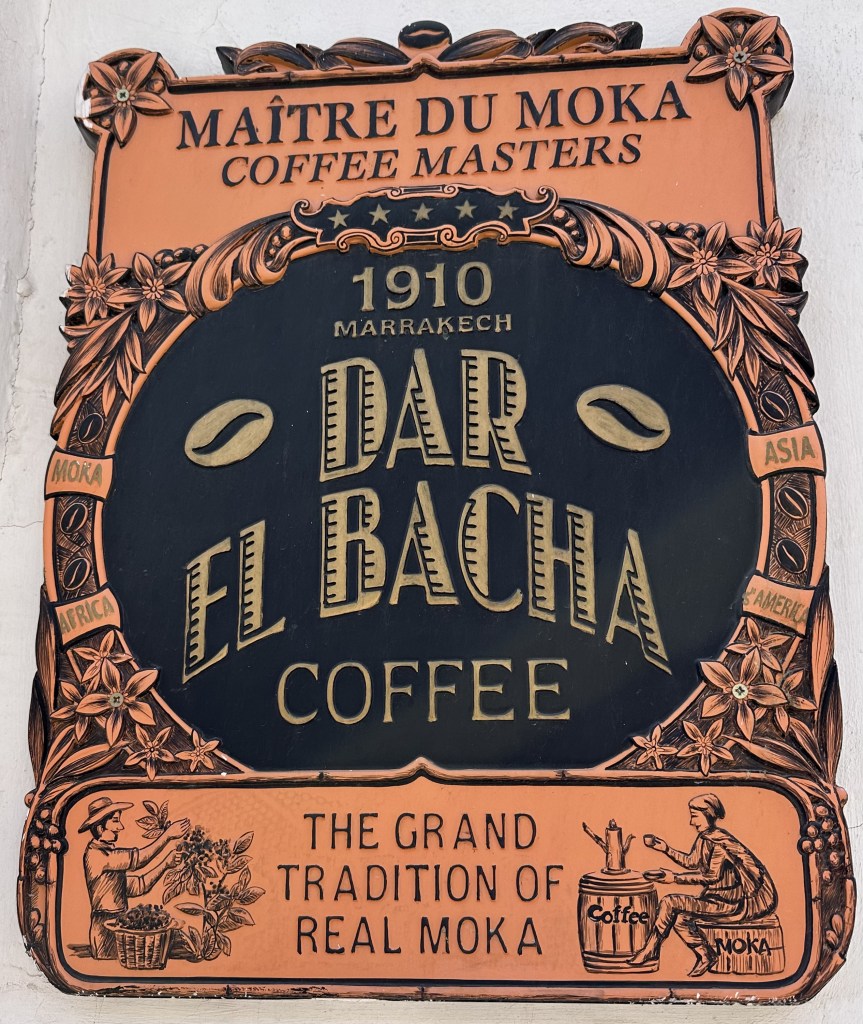
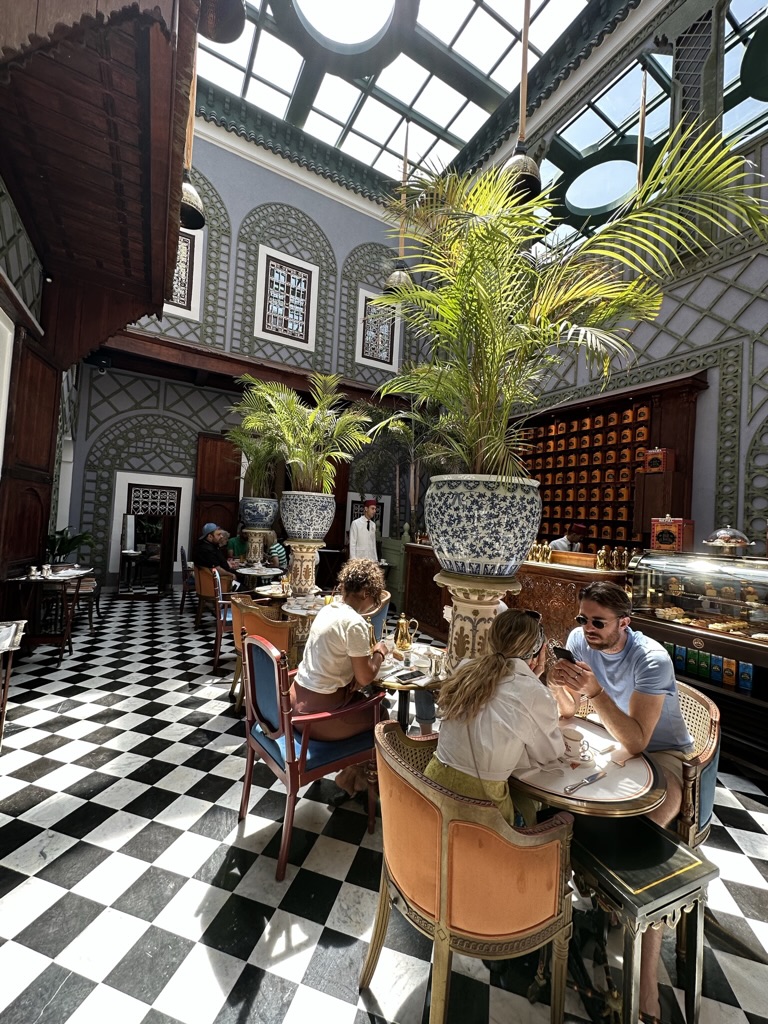
Like most places in Marrakech, Dar el Bacha is approached from a very nondescript exterior. All over this city, you just never know what grand discovery lies behind the high stucco walls or through a narrow doorway. This was once the governor’s palace and it is a sight to see, a truly spectacular example of Moroccan architecture and design.
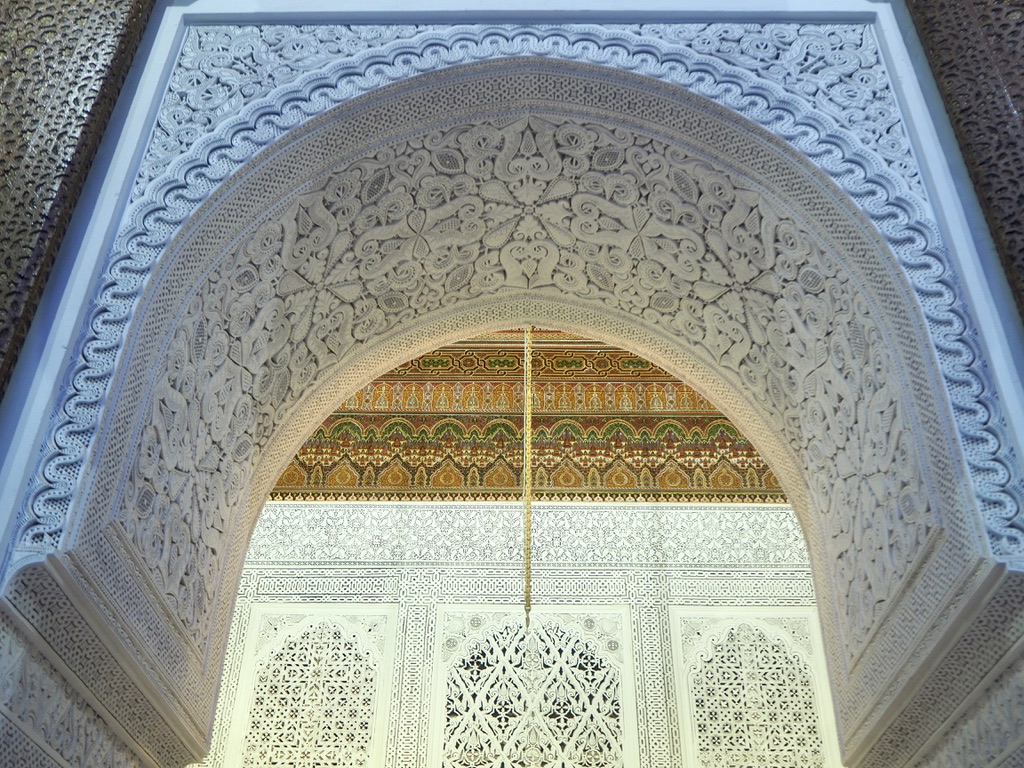
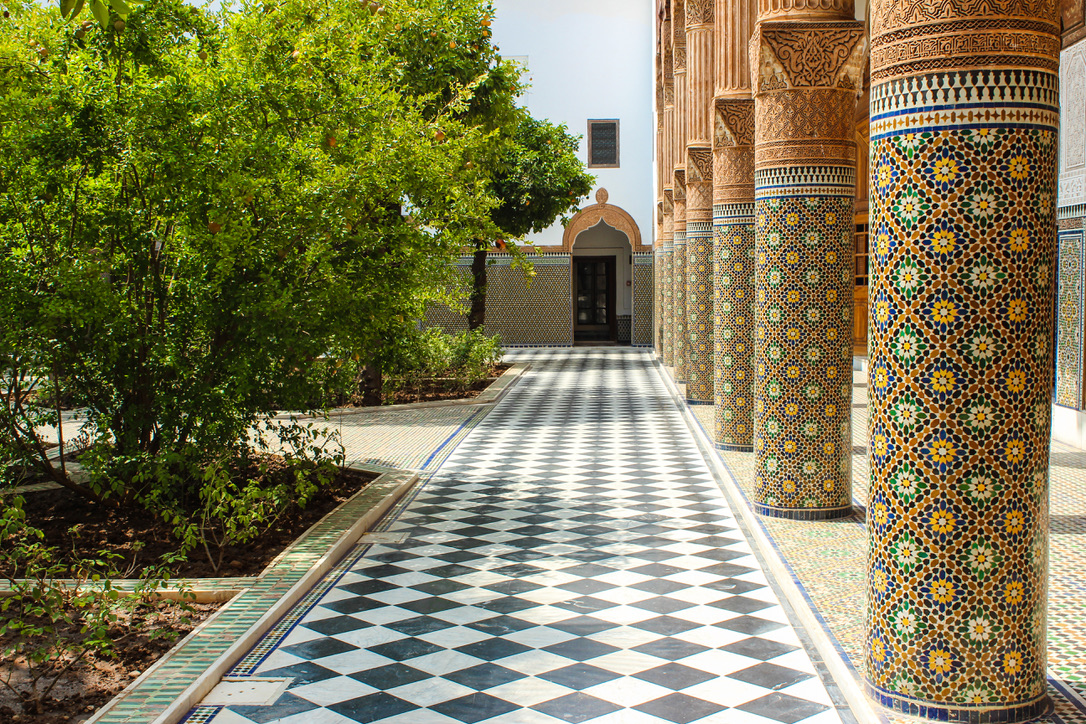
We enter with curiosity, Adil telling us about the “pasha’s” history, including the famous coffee shop inside here that people wait two hours for (really?). The sun is shining as we marvel at the courtyard’s garden and orange trees, and then are practically spinning as every nook and cranny is adorned beyond belief. Mosaics, carved stucco, and carved/painted wood cover every surface possible. It’s hard to imagine how much time – and craftsmanship – is on display here. It’s just unbelievable.
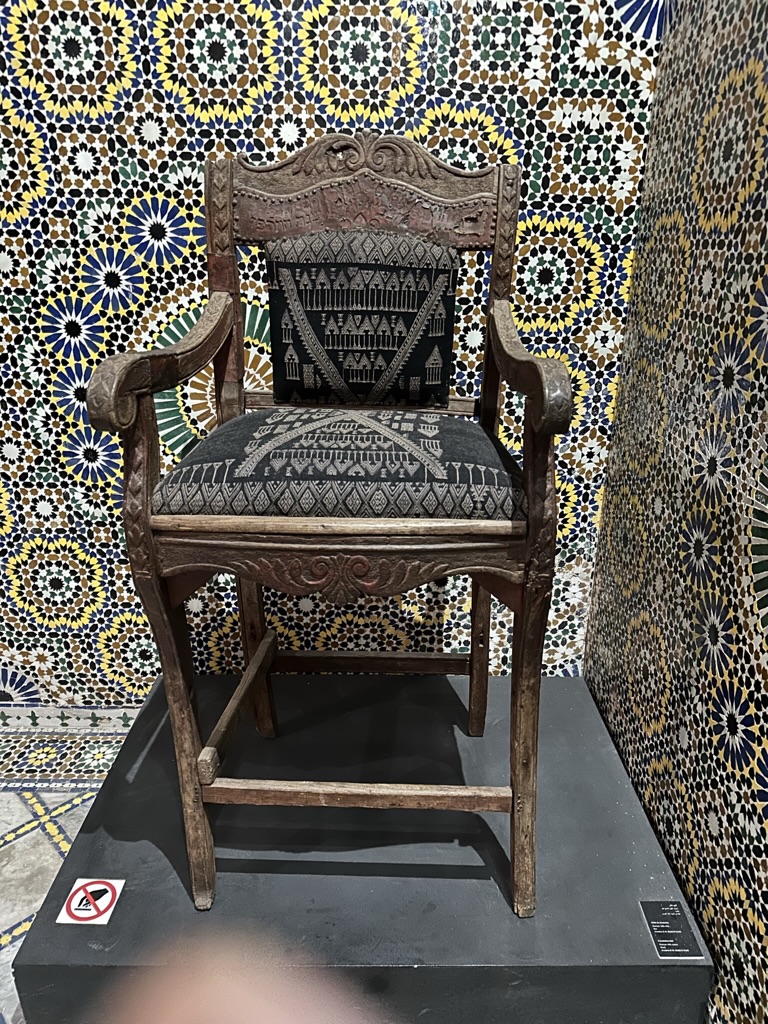
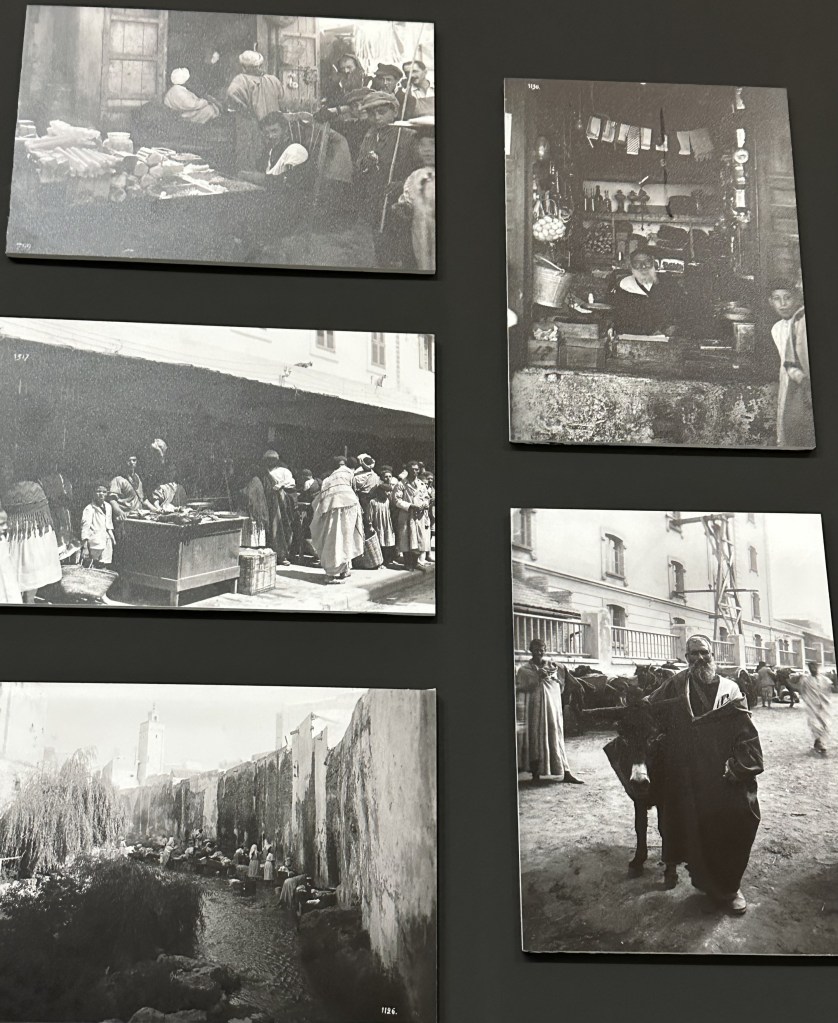
In a wing off the courtyard sits a small Jewish museum, and while the collection is limited to some menorahs and torah covers, some of the photographs are fascinating. And there’s a special item…a mohel’s chair. I’ve never known the mohel needed a throne, but there it is. [if you don’t know what a mohel is, well, Rabbi Google can help you out]
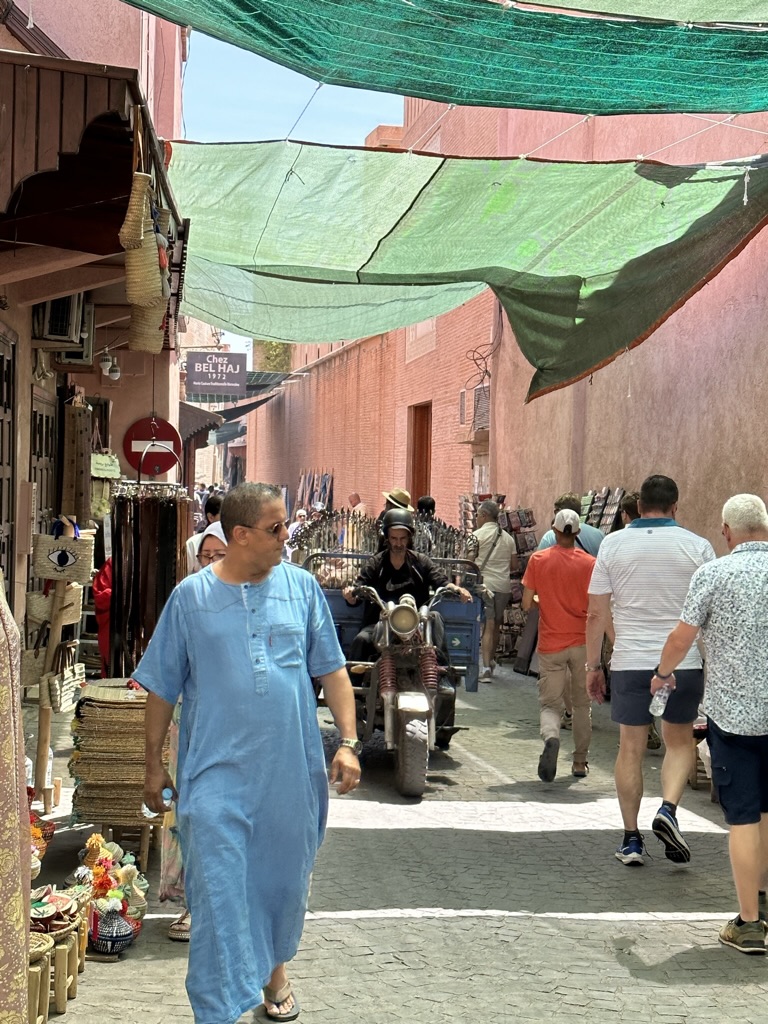
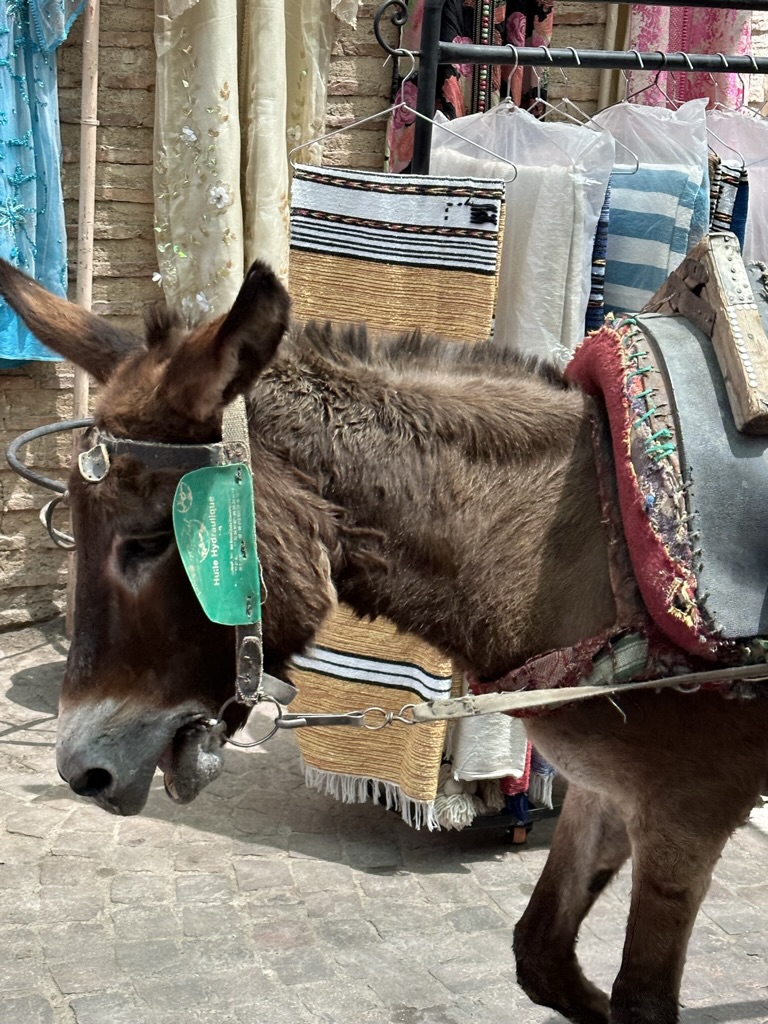
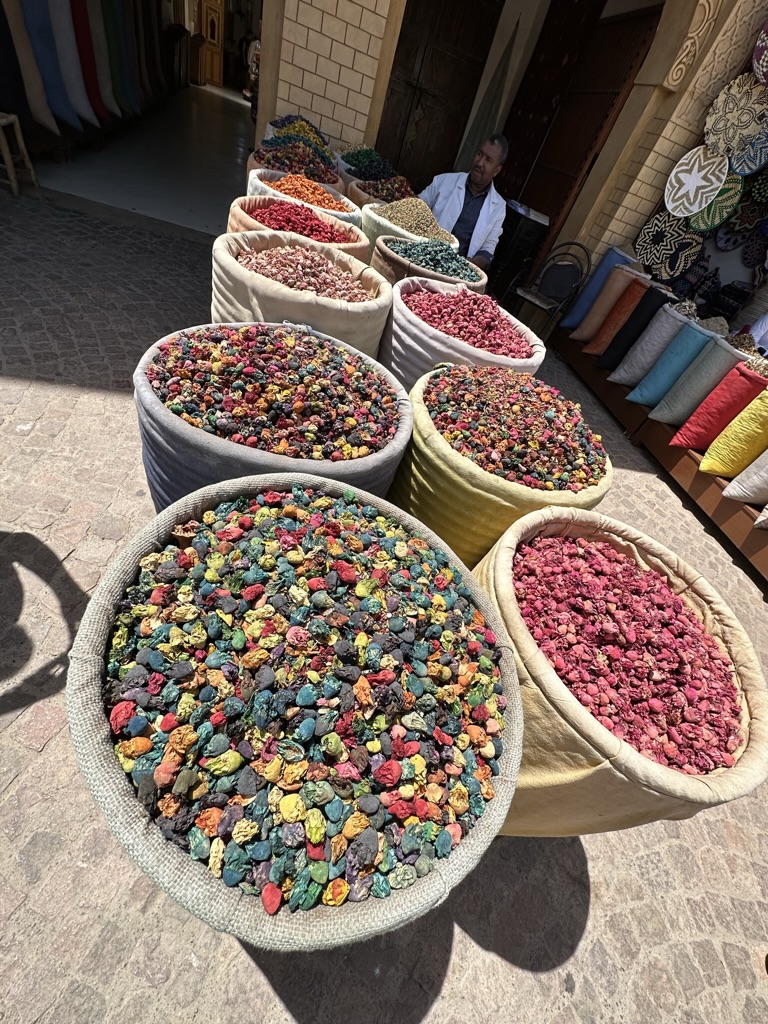
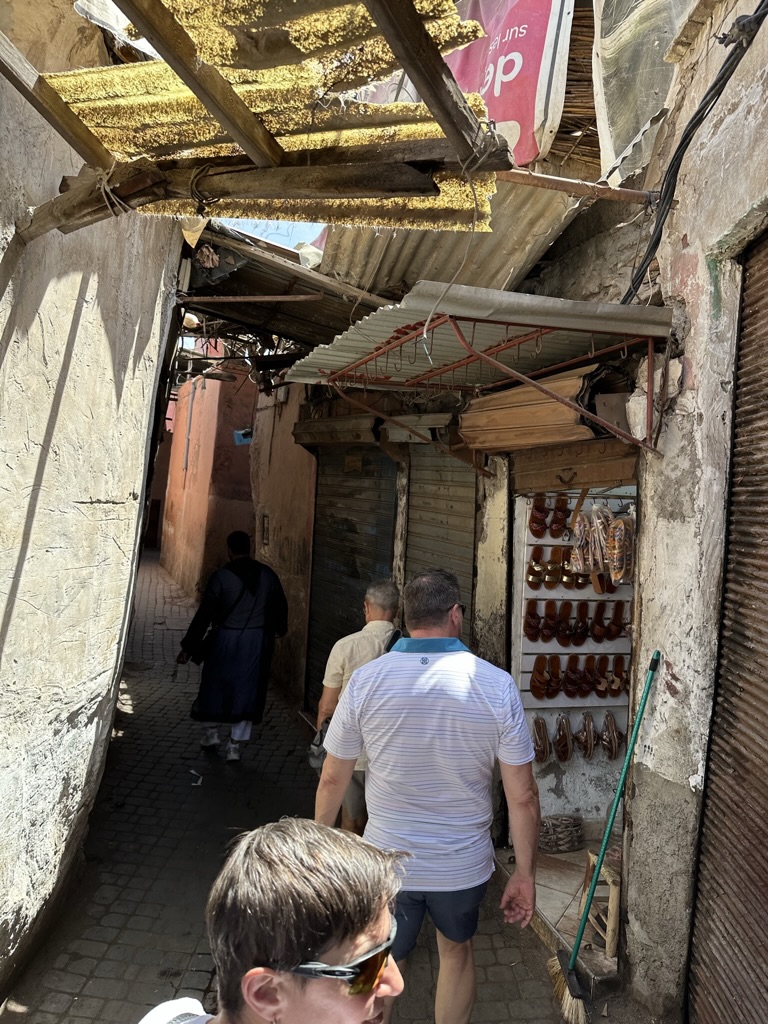
We wander the “streets” of Marrakech…not entirely sure if this is a medina or a souk or just an old part of town where people sell things out of tiny shops…and it doesn’t really matter…
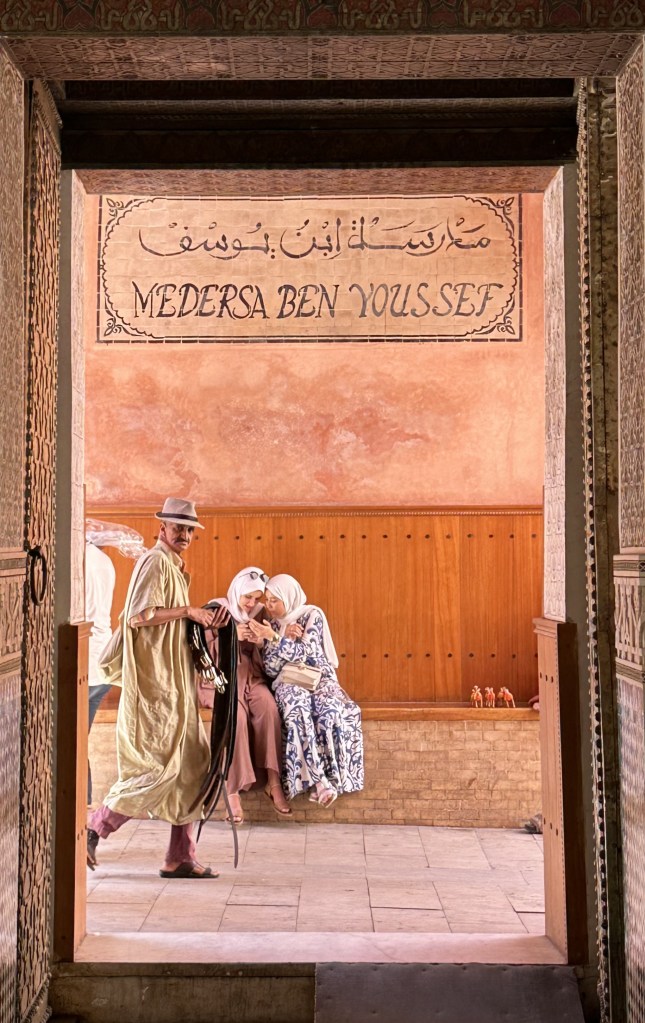
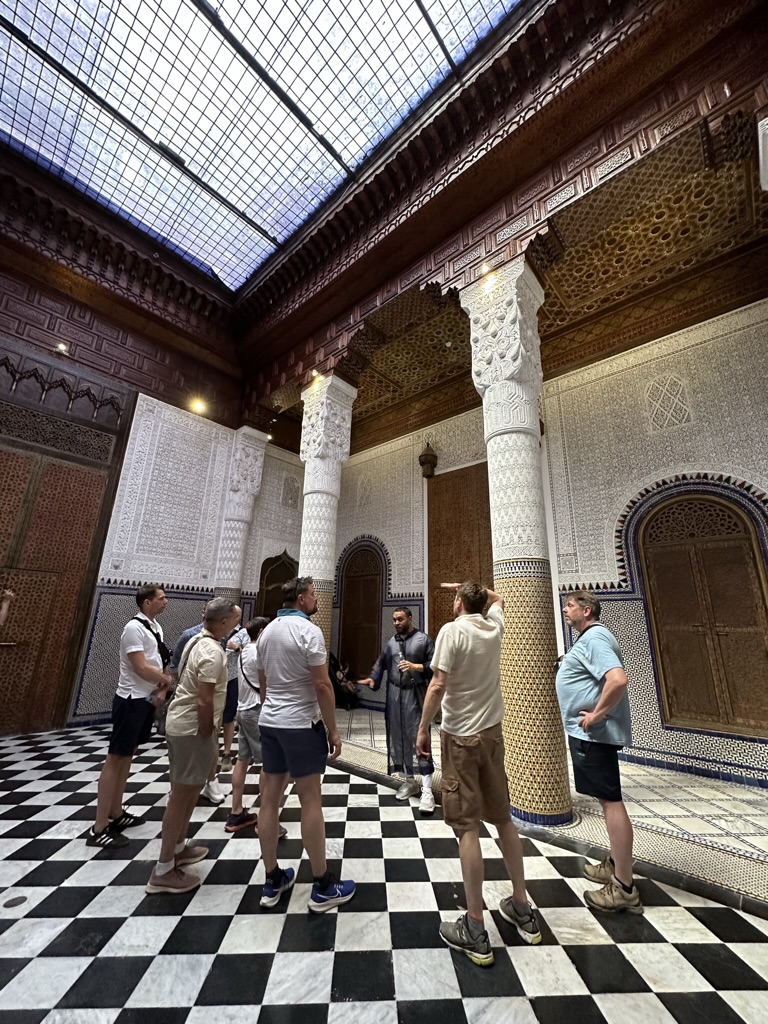
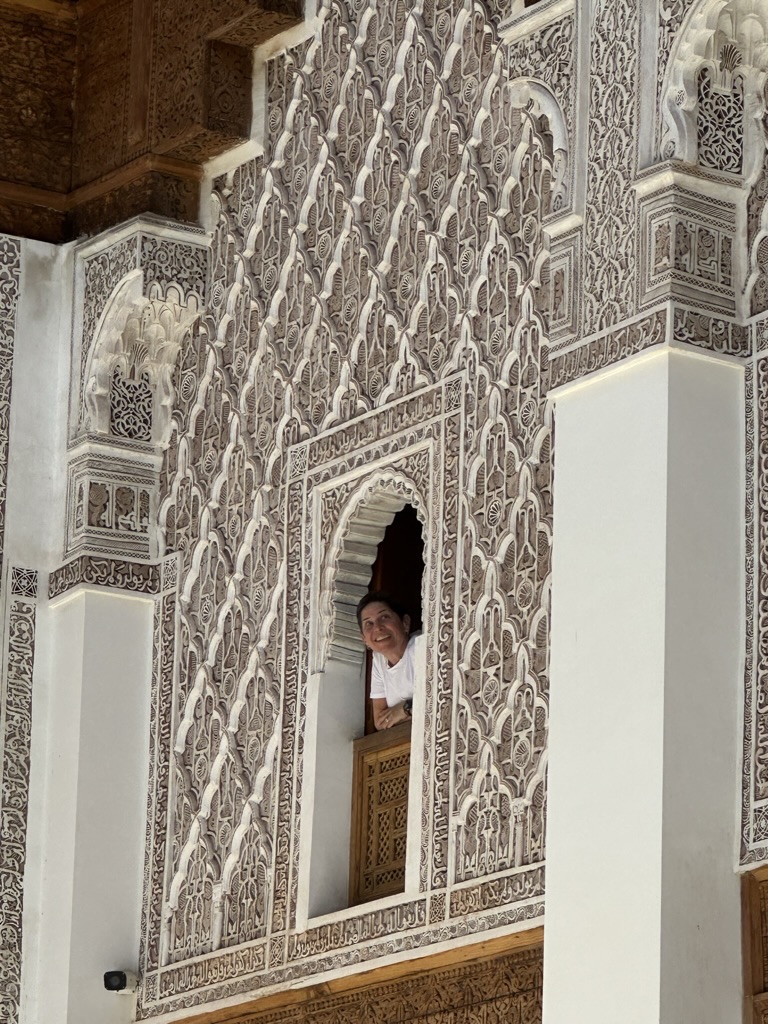
We stop into another palace (or maybe this one is just a riad?) that in some ways is even more spectacular than the Dar el Bacha. There is so much carved stucco, in such incredible detail, your eyes almost can’t make it out. The patience and skill to do that kind of work is mind-blowing. From the upper balcony, you look out at the courtyard, demonstrated so well by our very own Liz.
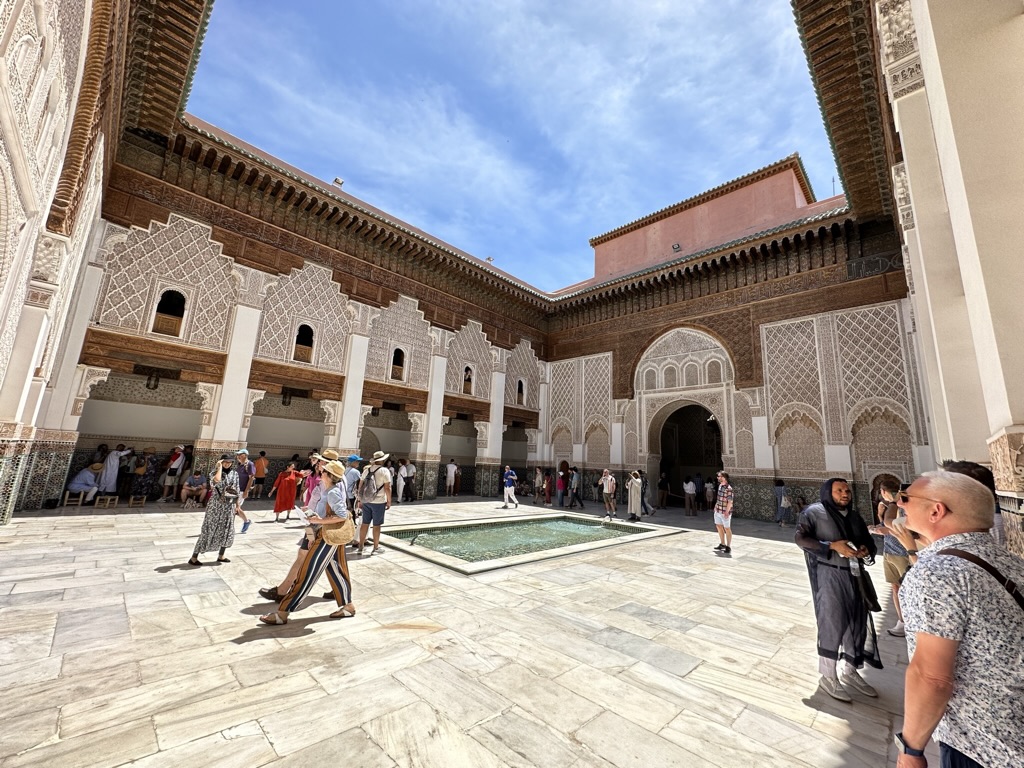
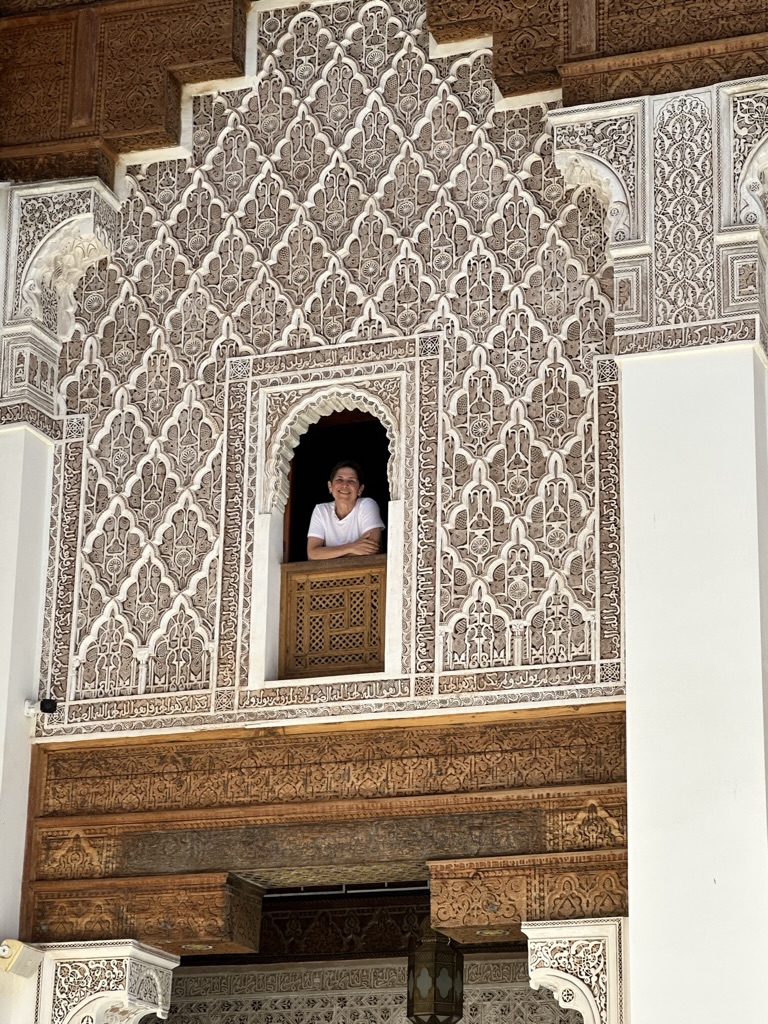
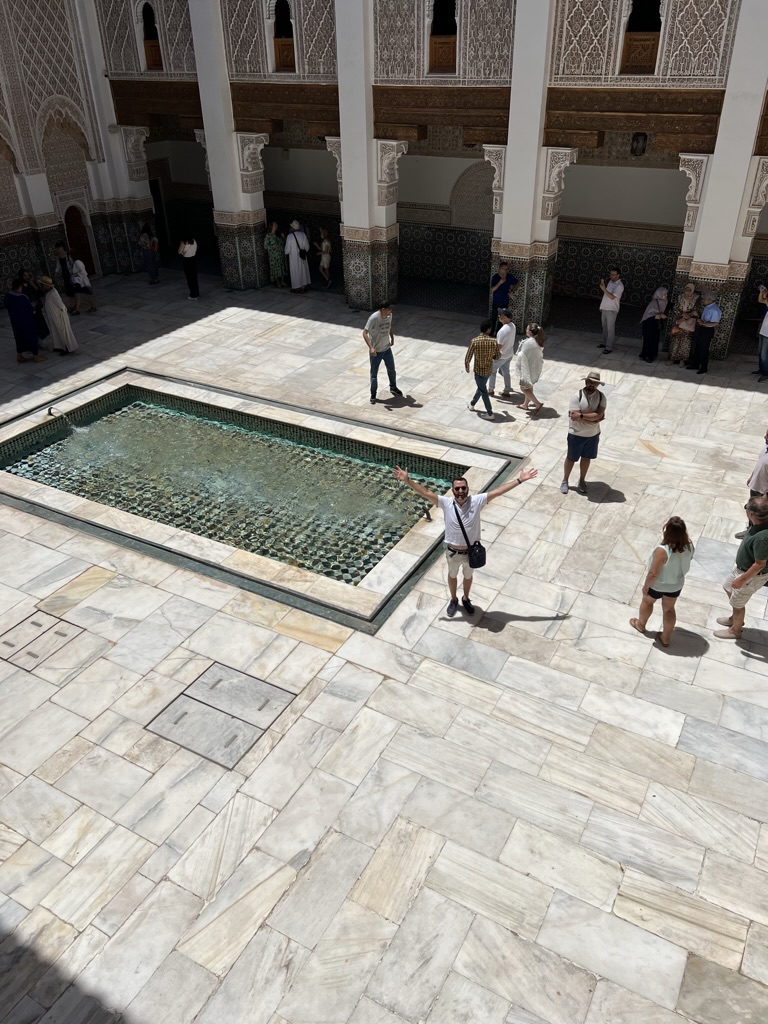
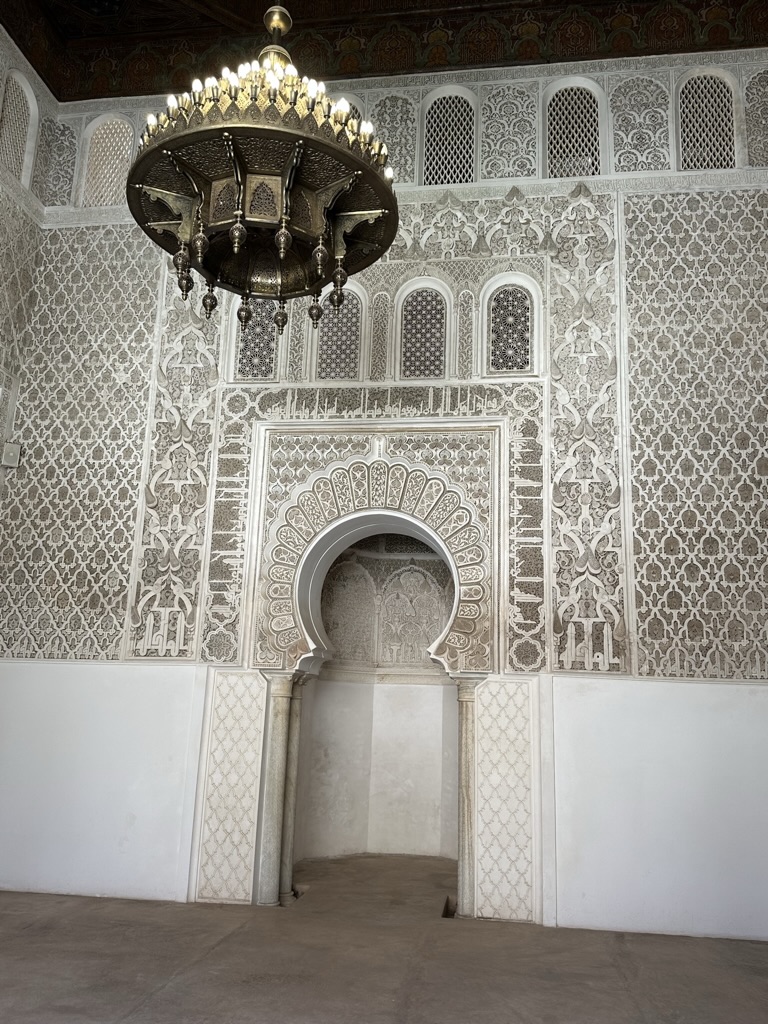
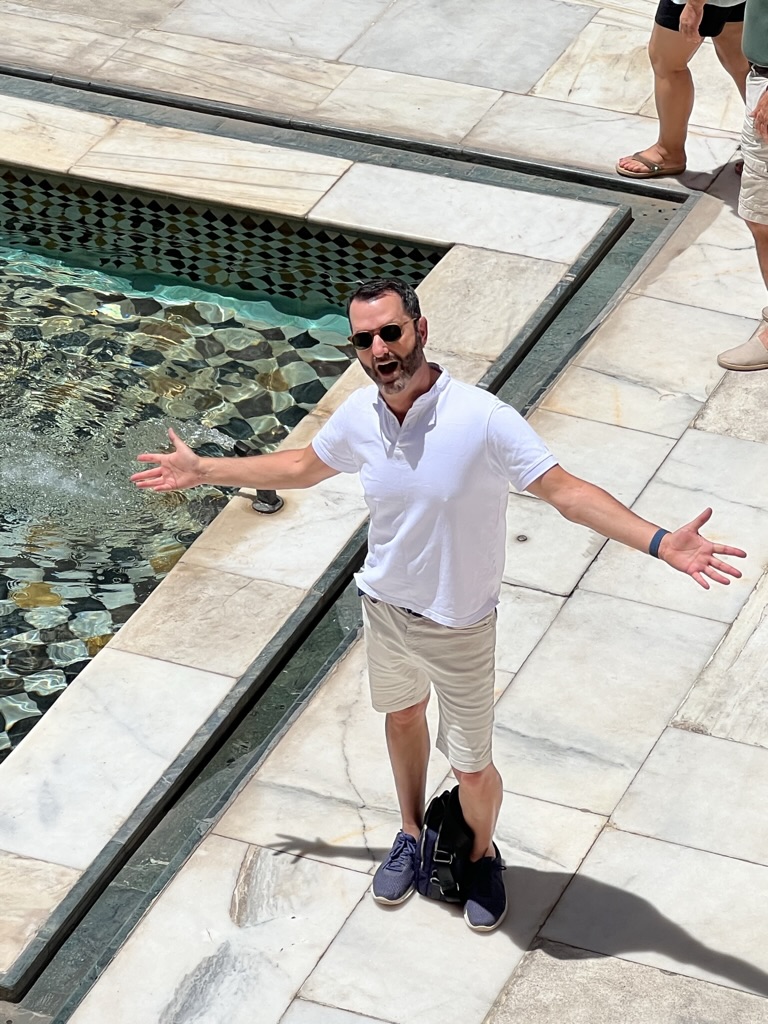
Story break for a collage of Moroccan mosaic tile designs…aren’t they all incredible?
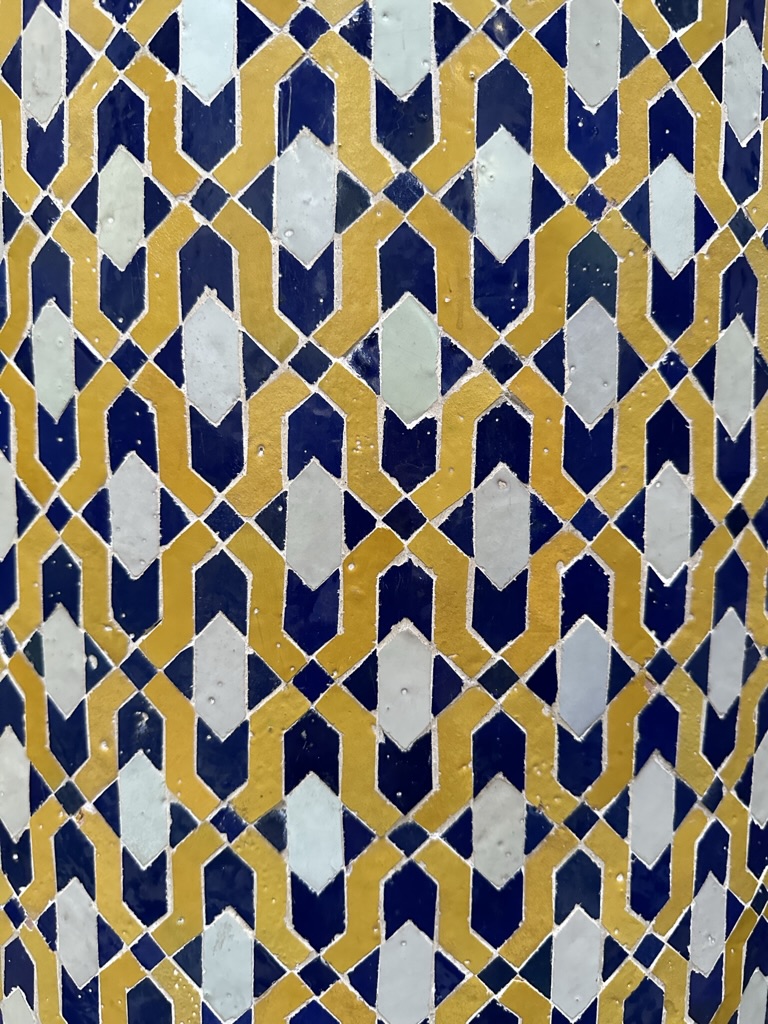
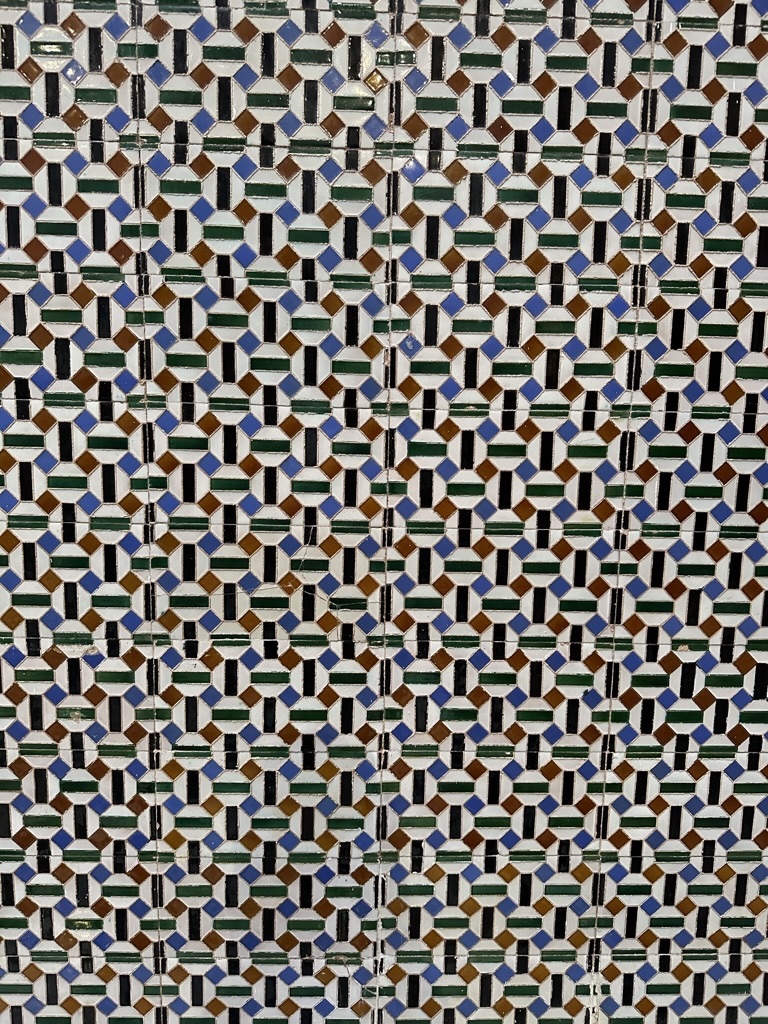
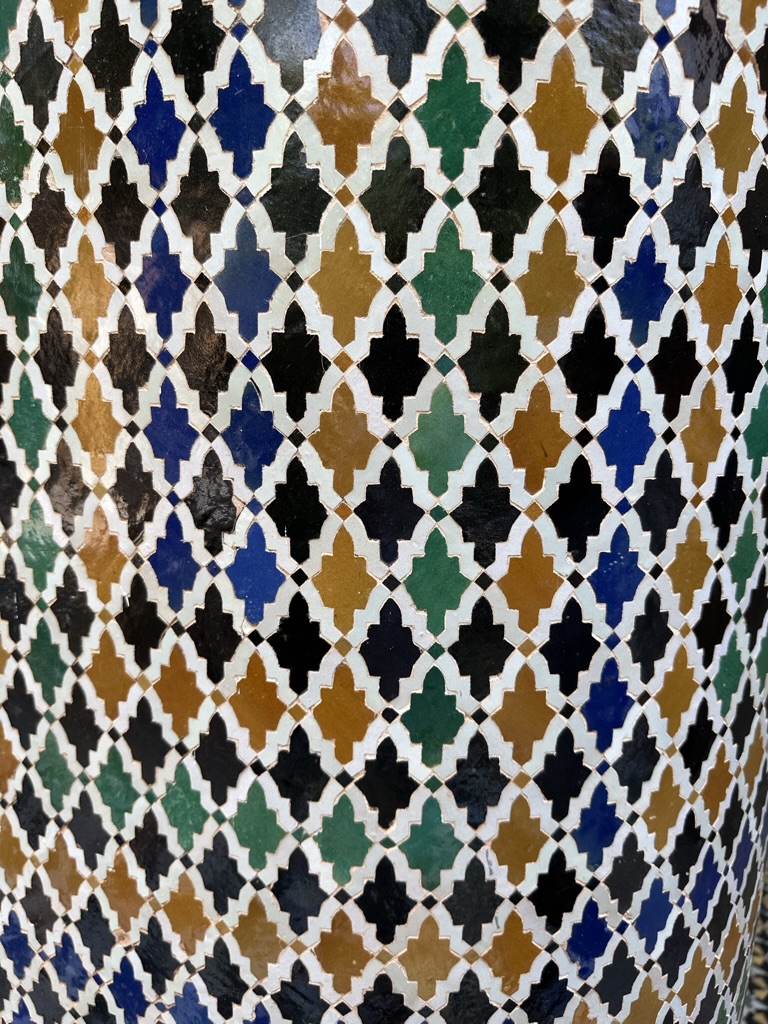
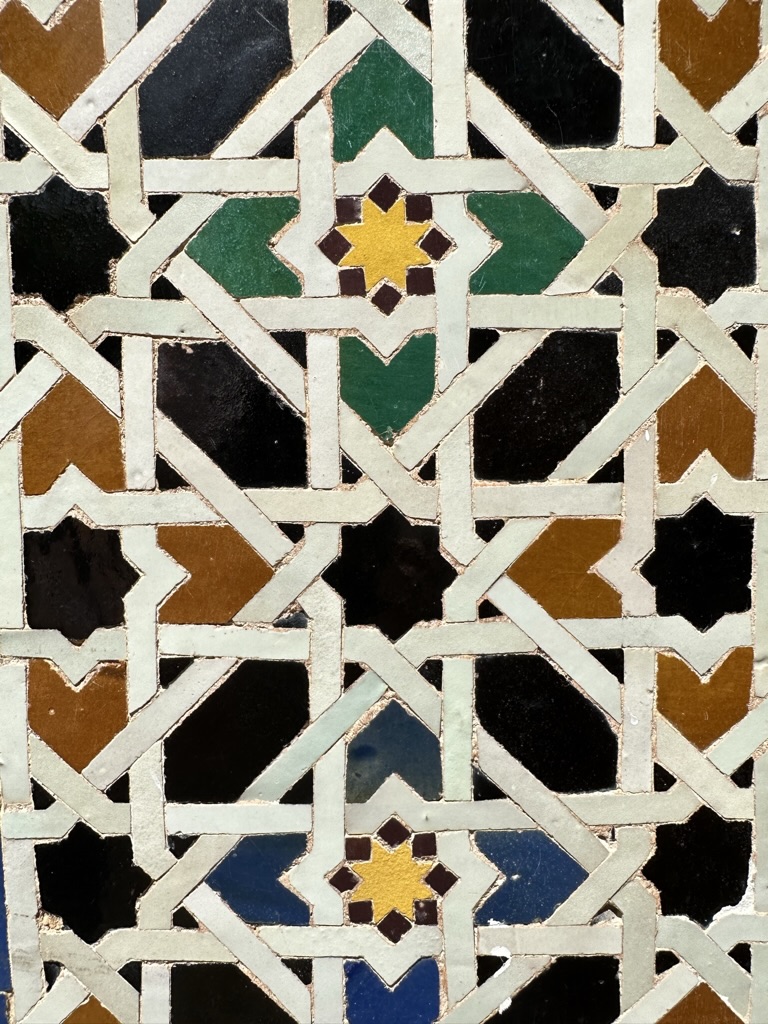
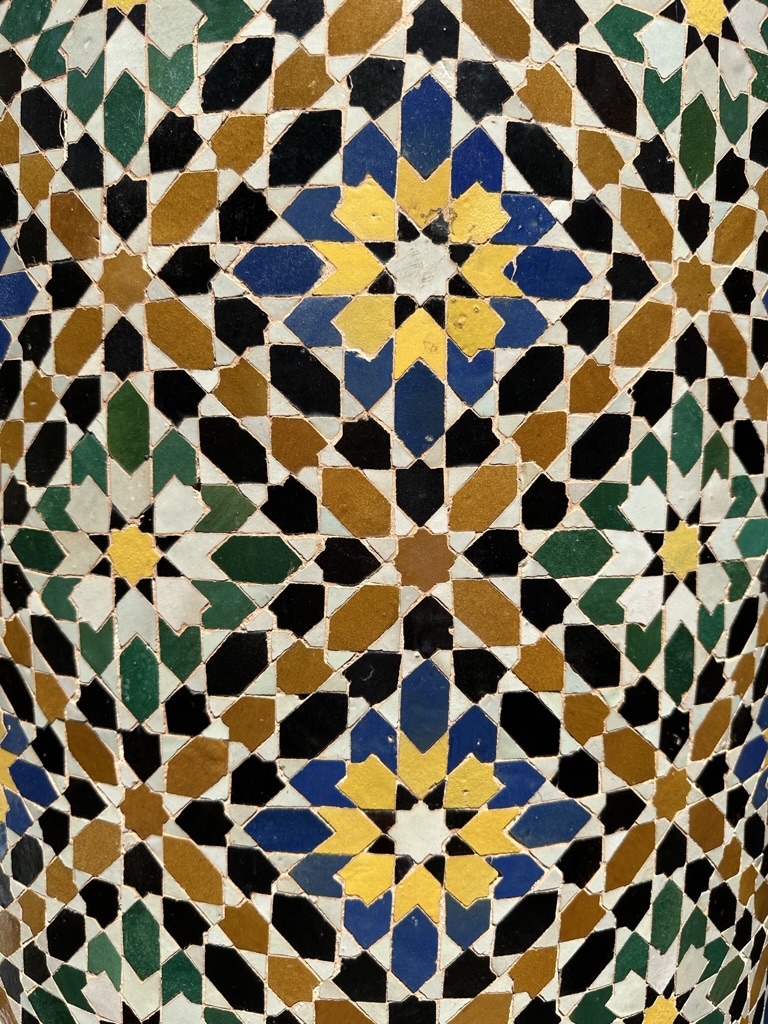
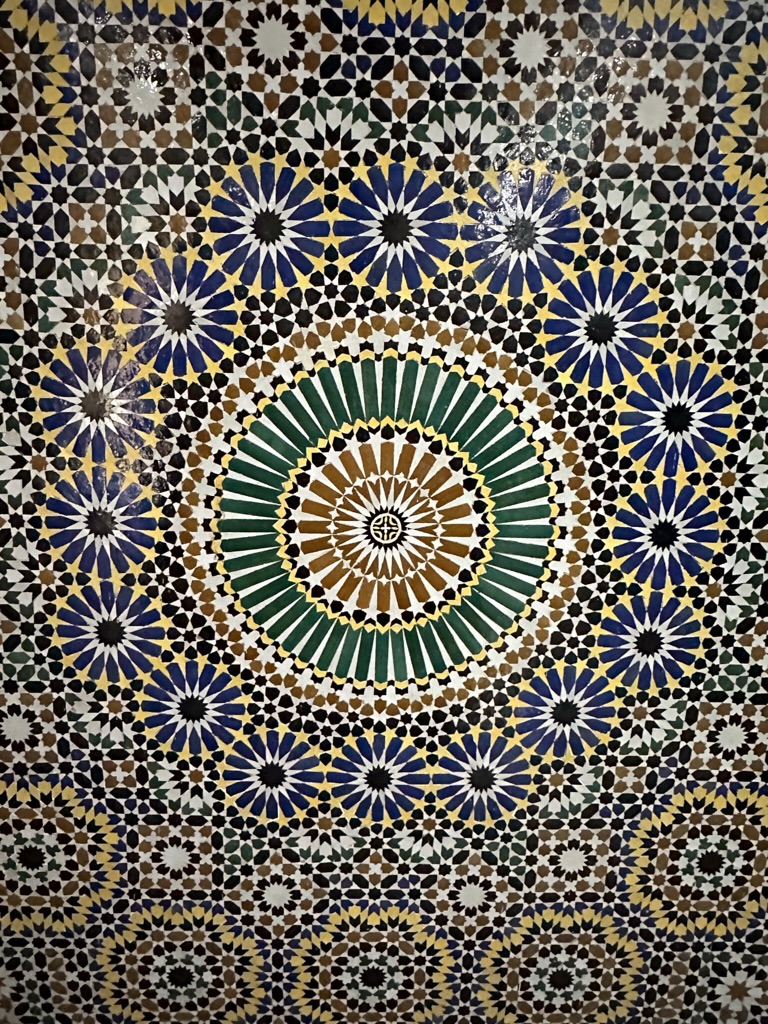
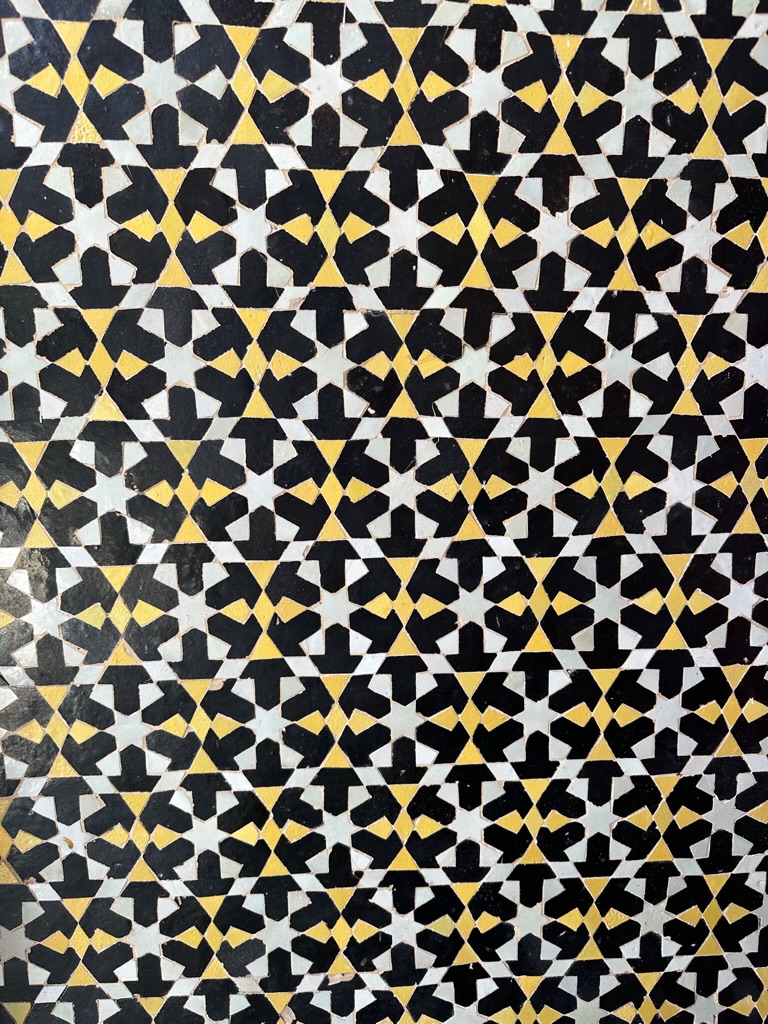
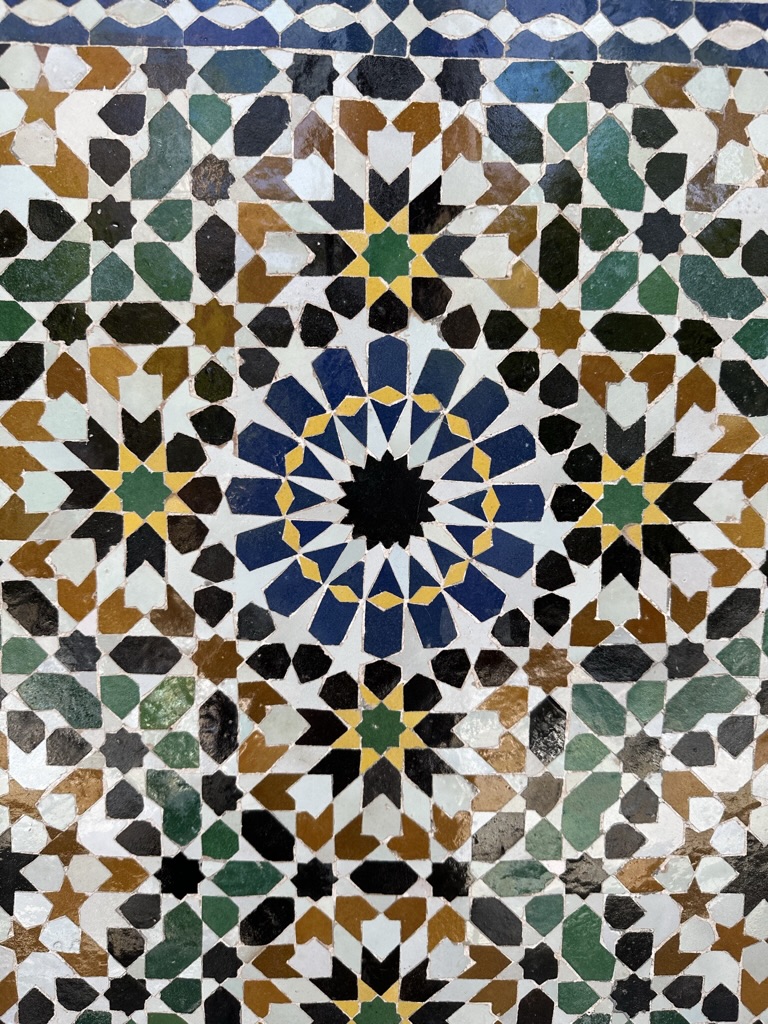
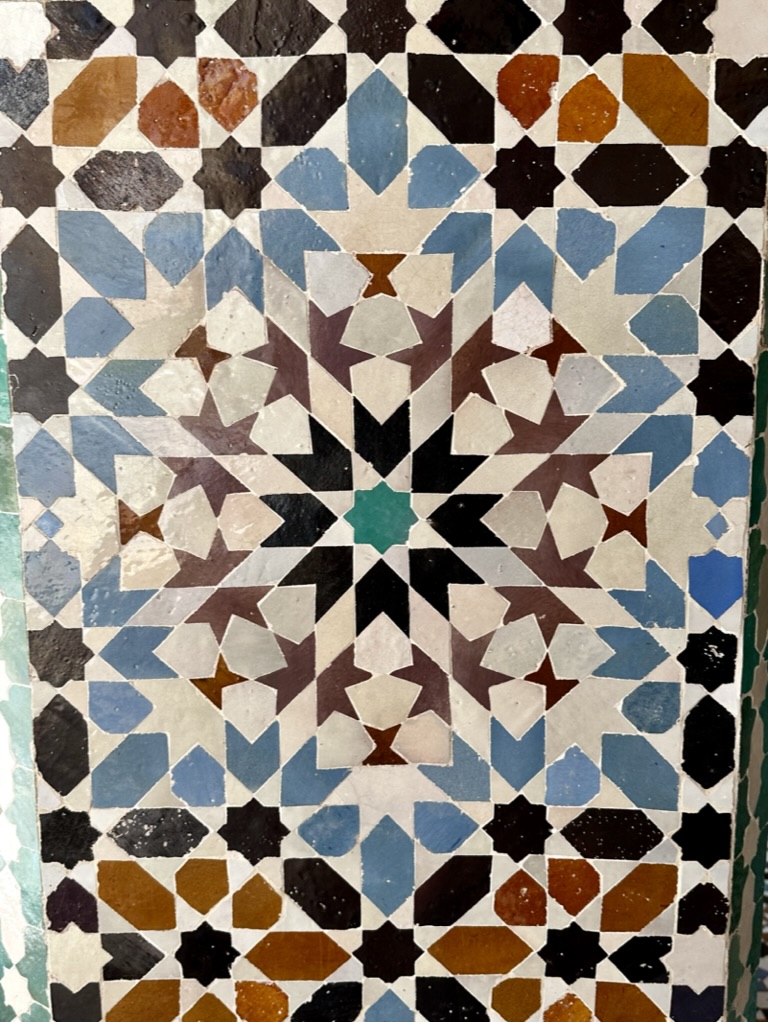
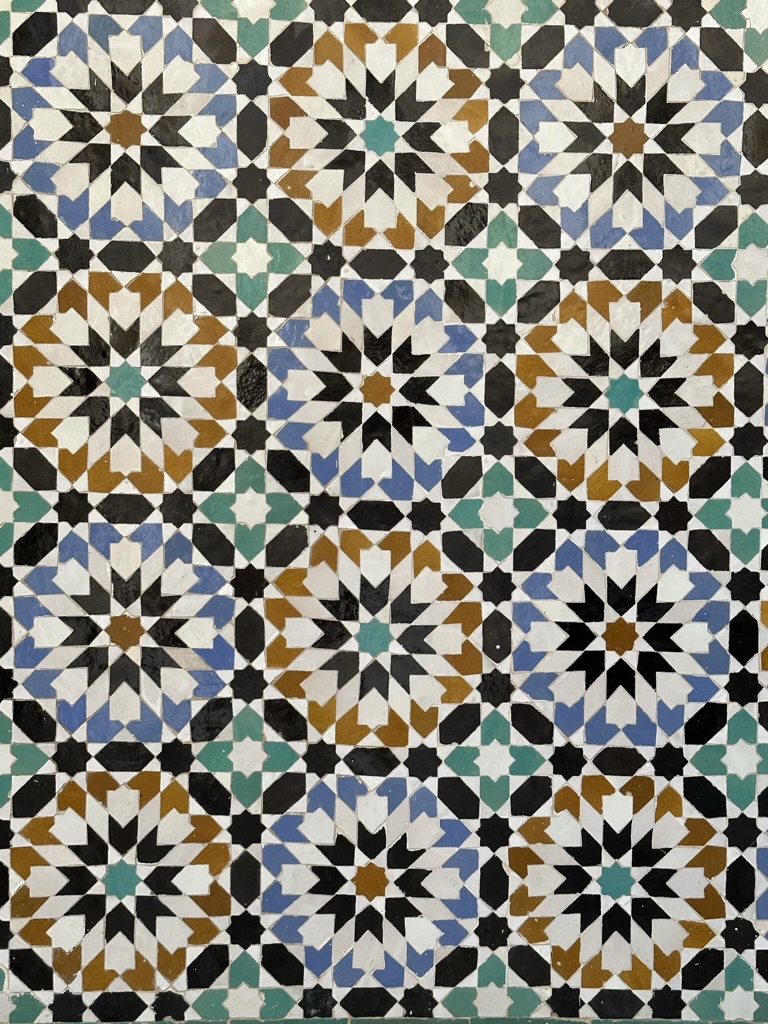
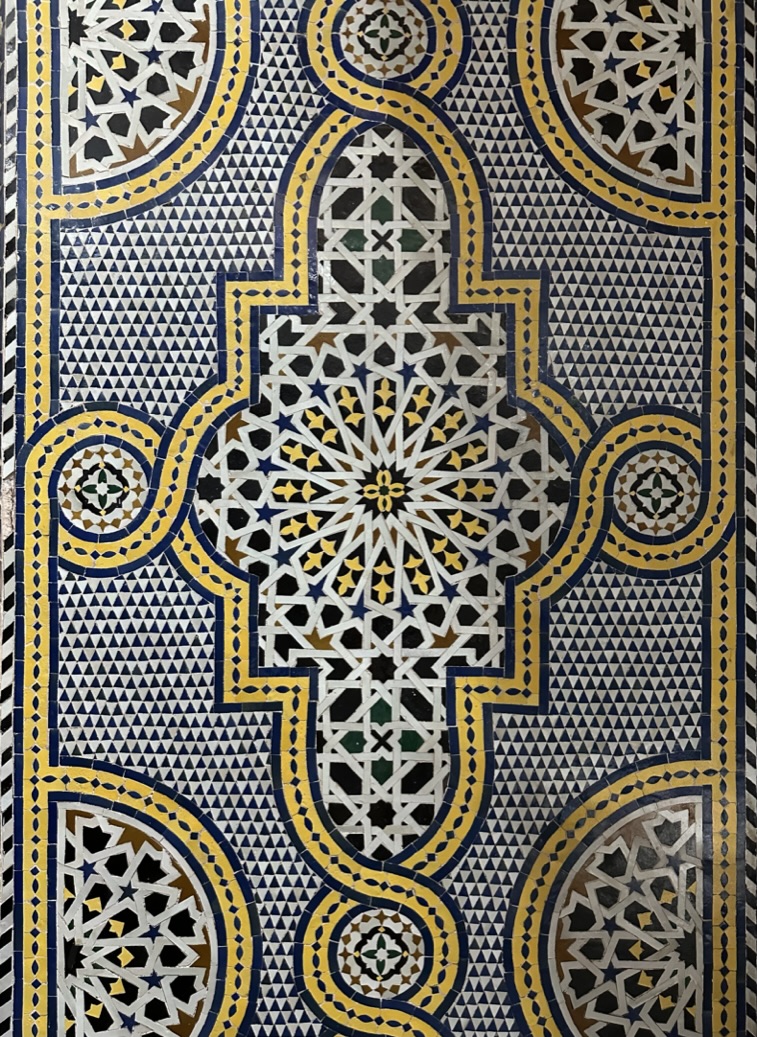
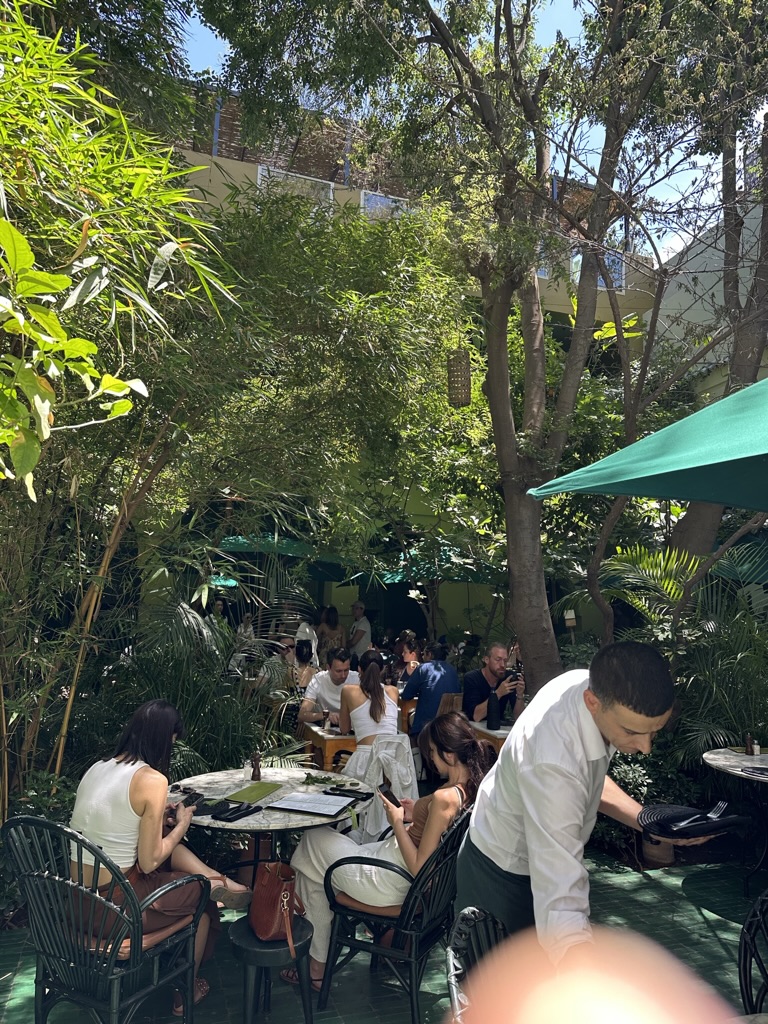
Time for lunch at an oasis inside a city, appropriately called Le Jardin. Once again, a place that looks like nothing from the street but inside it’s a haven of greenery. One of our better meals of the trip (including a decent cocktail!), and we continue our journey through the colorful and complicated Marrakech streets.
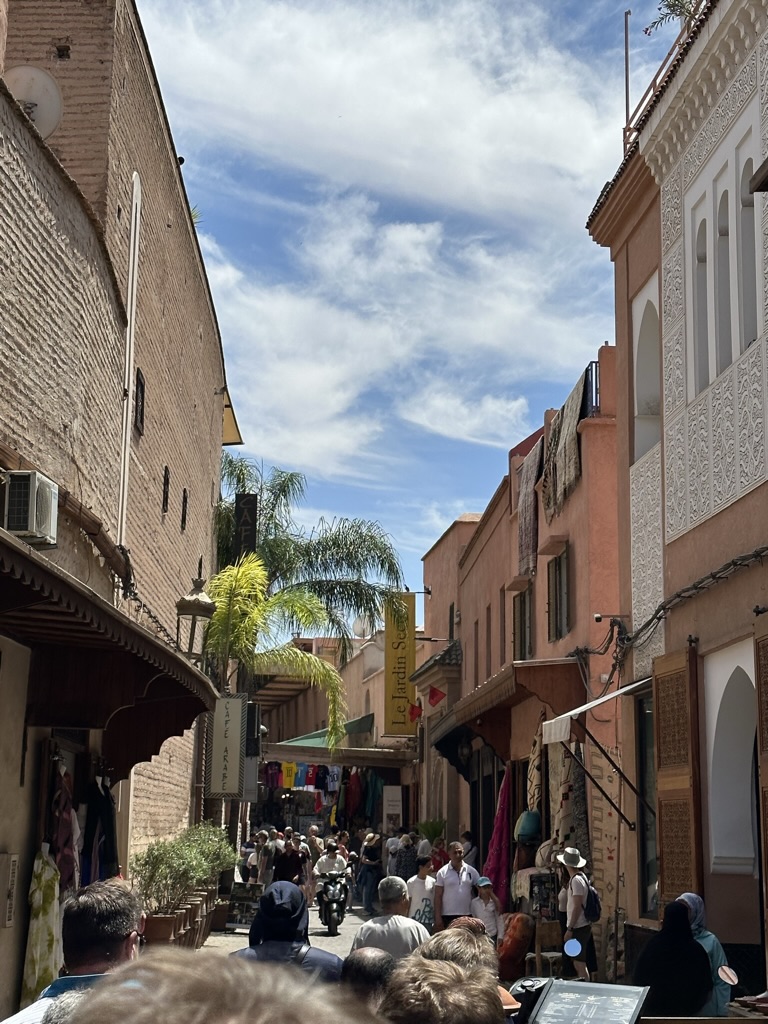
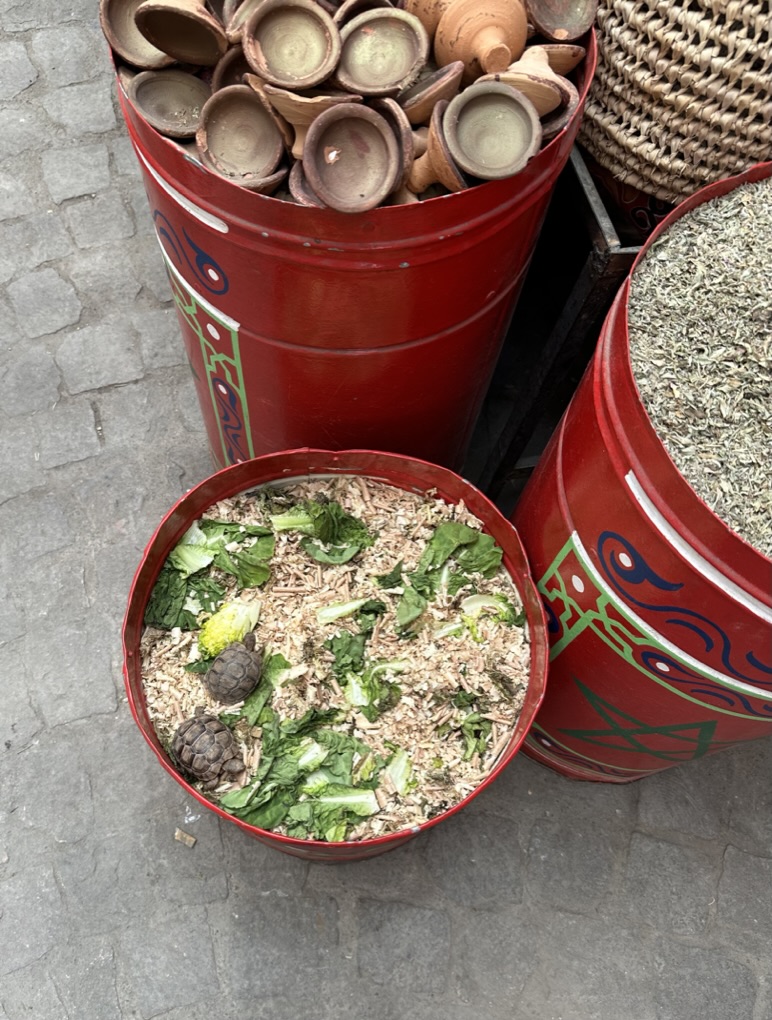
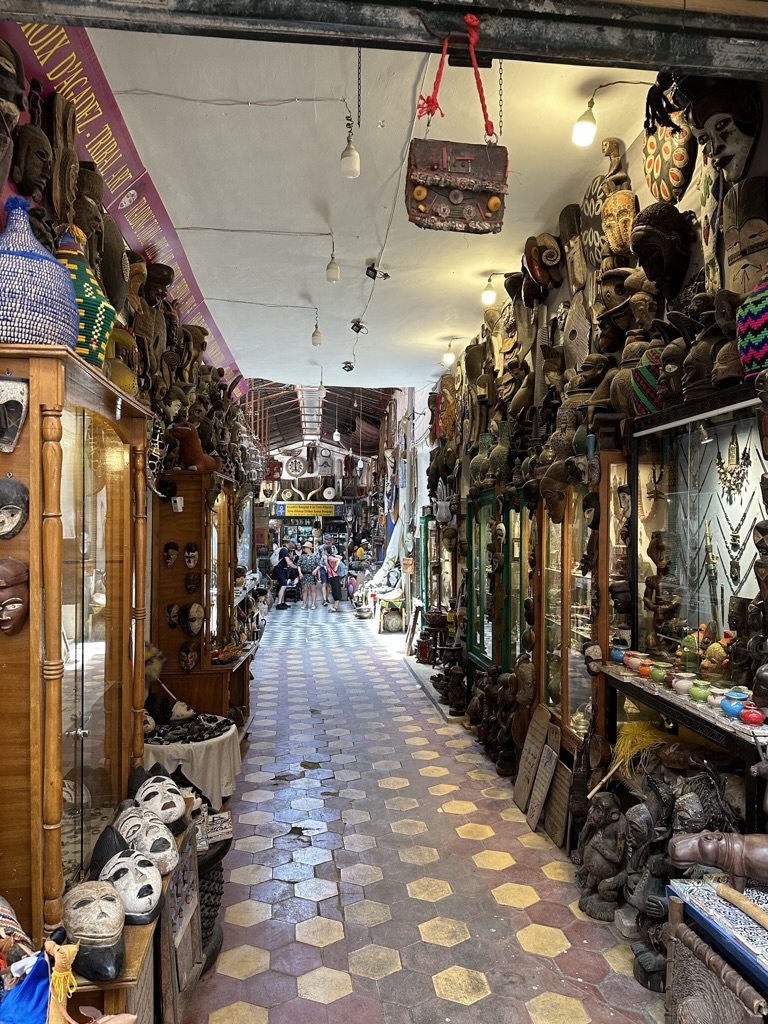
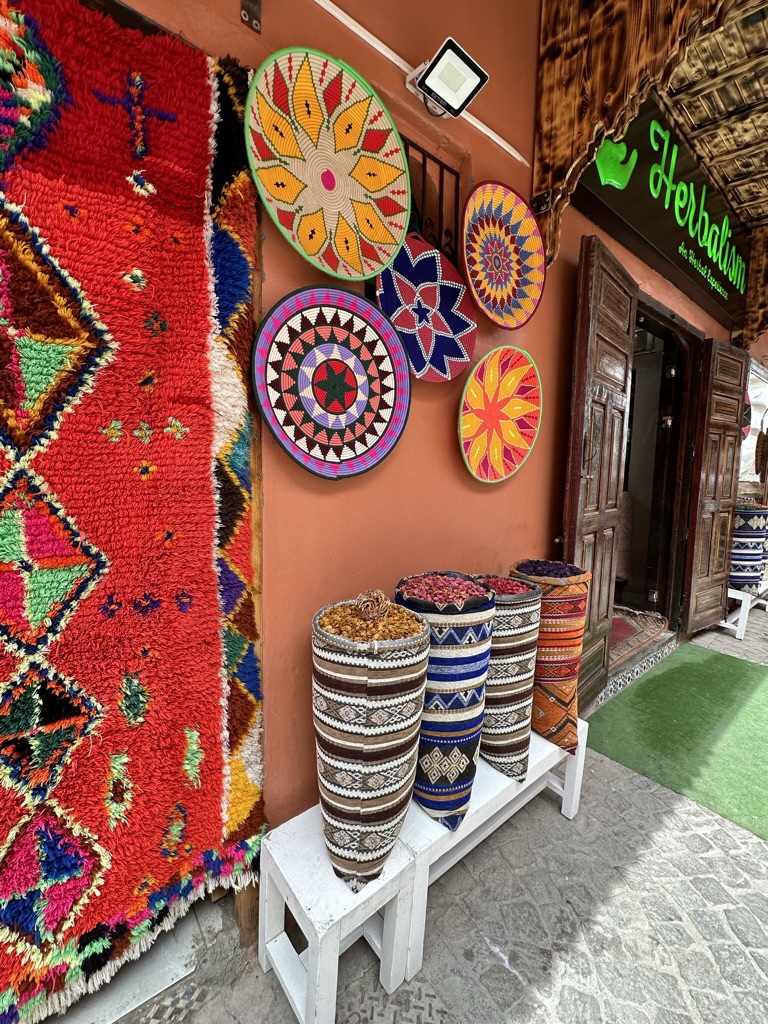
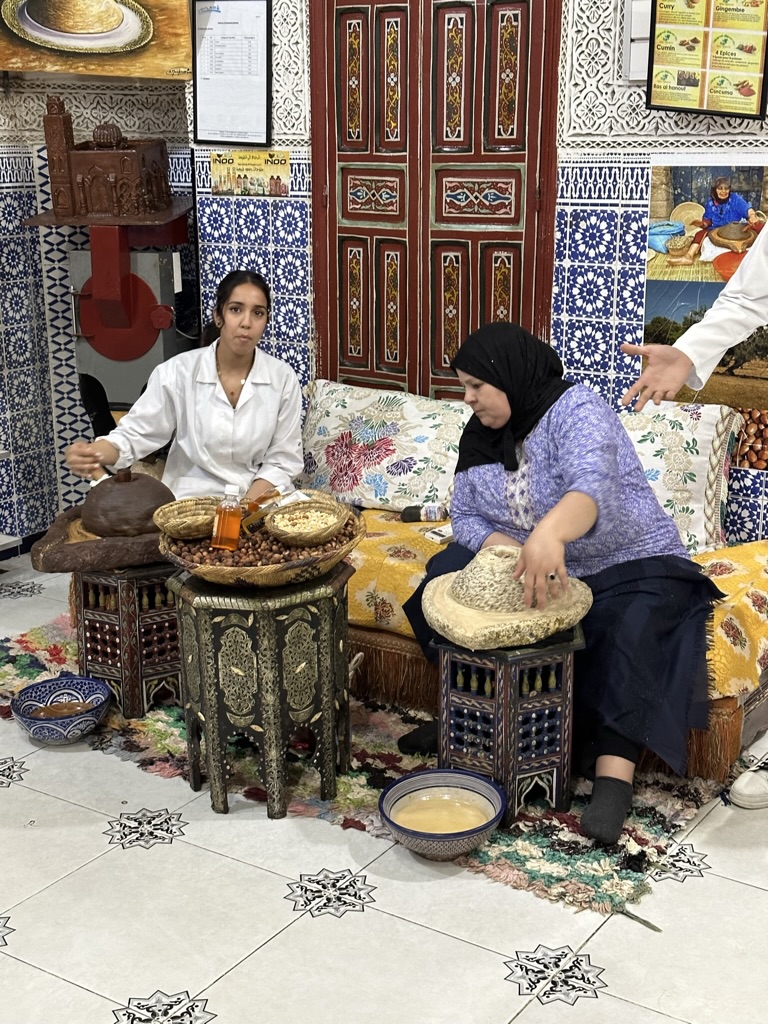
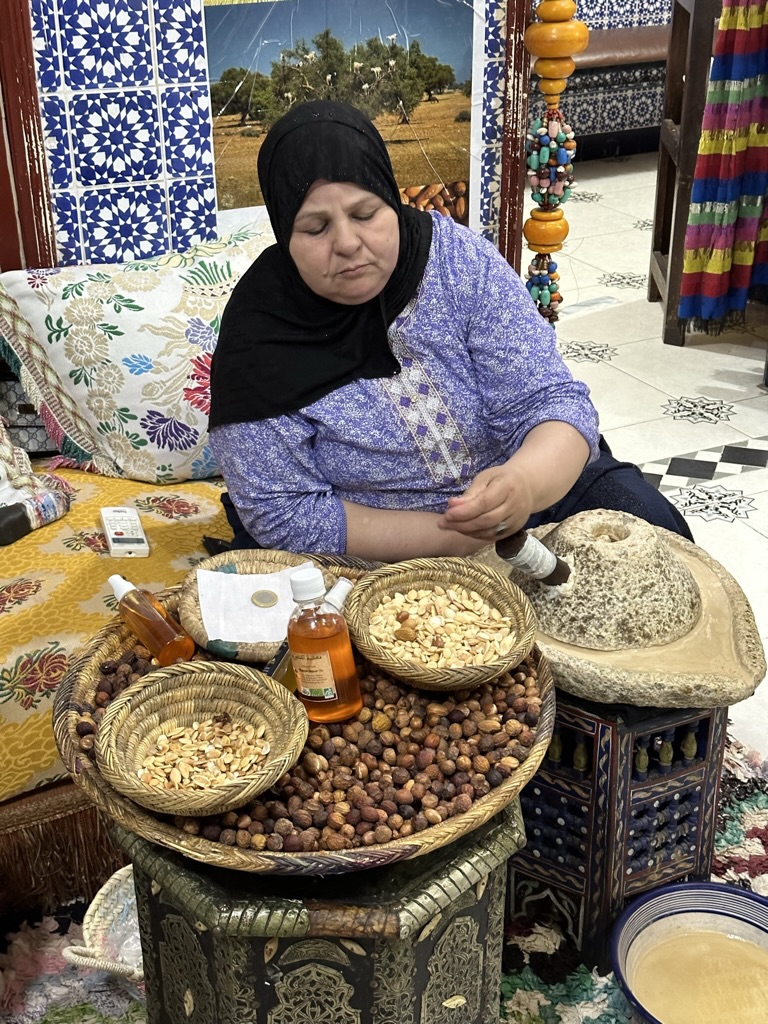
We are bound for the argan oil shop, and while most of us are only lukewarm on the idea, it turns out to be a really fun stop. When enthusiastically greeted by our host Efran, we are surrounded by shelves to the ceiling with every possible argan oil product you can imagine plus a multitude of other items (spices, teas, mysterious concoctions). And off to the side, on a low-slung sofa, two women demonstrate the age-old process of extracting the argan oil. The fruit’s flesh has to be removed and just the inside nut’s oil is extracted. One way to remove the flesh is to let goats climb the argan trees, eat the fruit, then from their poop the nuts are…harvested (?)…for processing into oil. There are, of course, more modern and commercial methods of removing the fruit’s flesh that don’t involve a goat ingesting it.
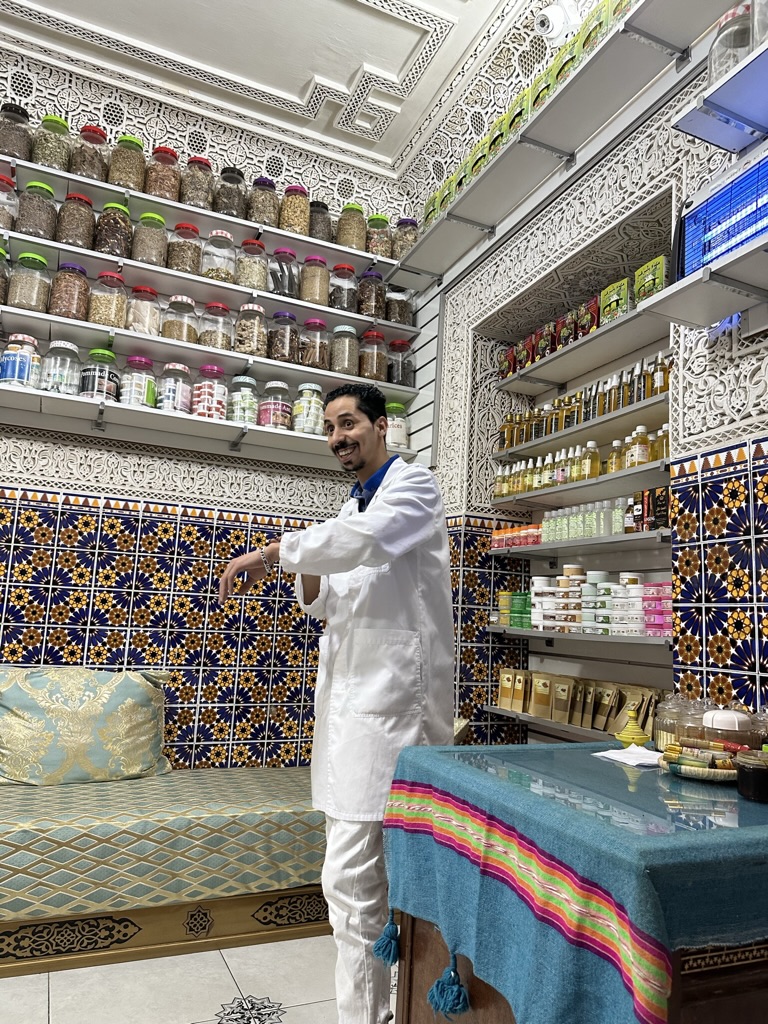
And then comes the demonstrations and samples! Efran’s smile and animation has no end as he talks about this creme and that – “it’s for your face! Try this! Oh, and this one is for your eyes. It’s a miracle – your wrinkles will all go away! Crepey skin? That one is perfect. This lotion is for your body – feel how dry it goes on! [it really did]. Here is shampoo that will make your hair shiny and silky smooth!”
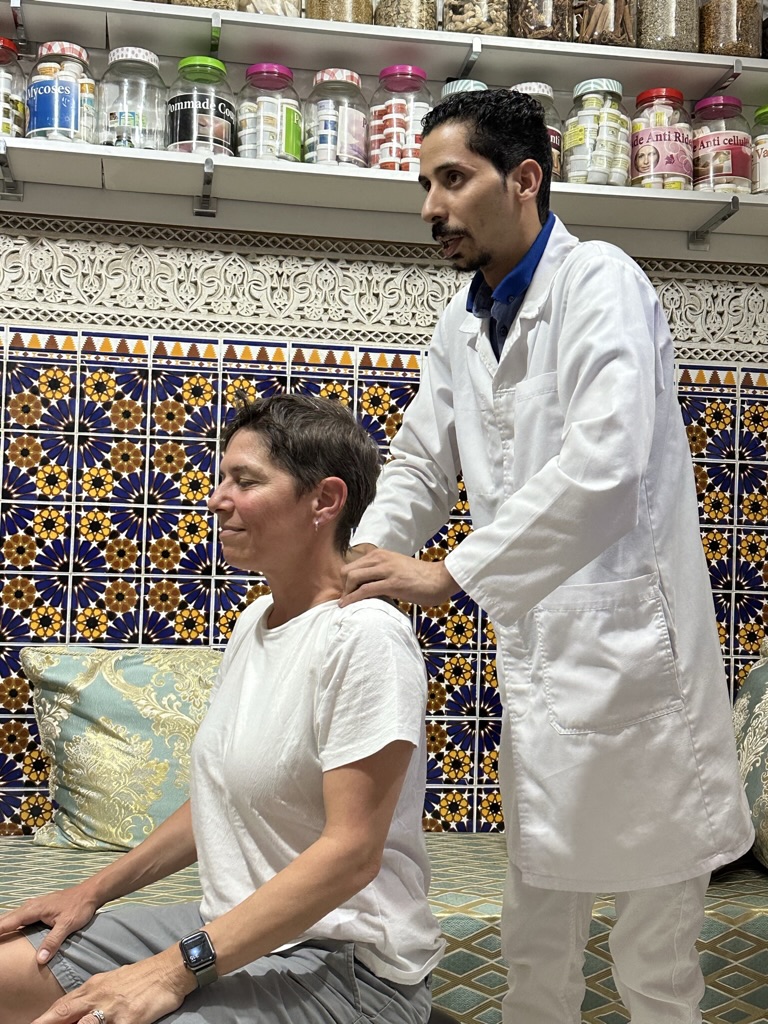
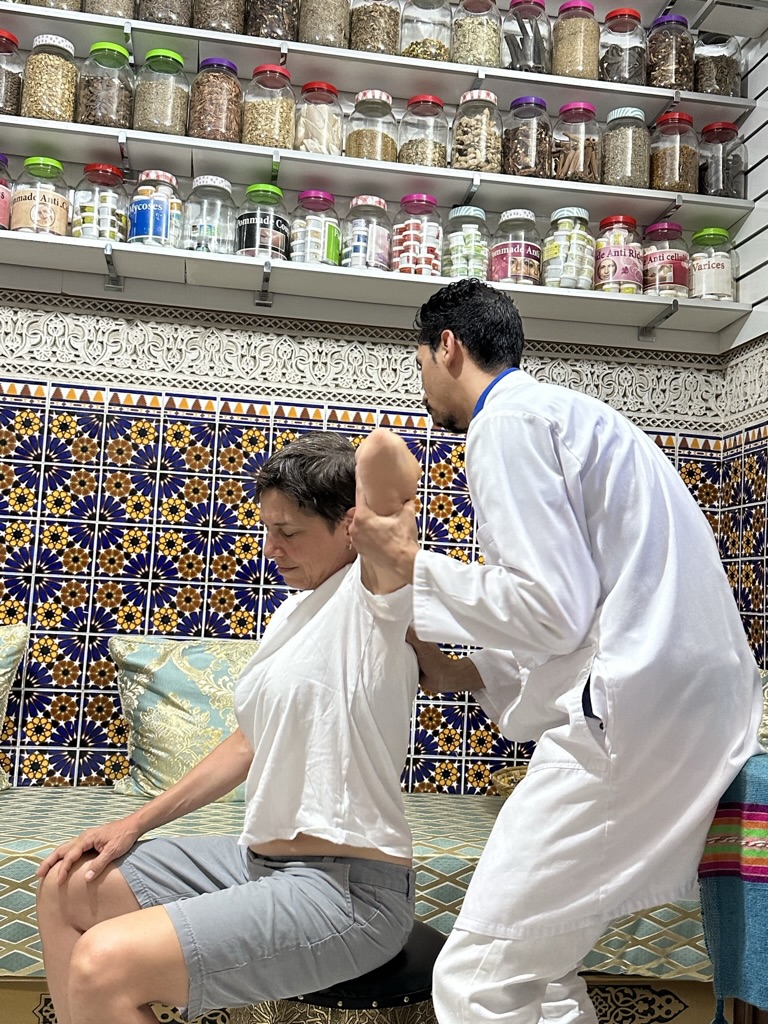
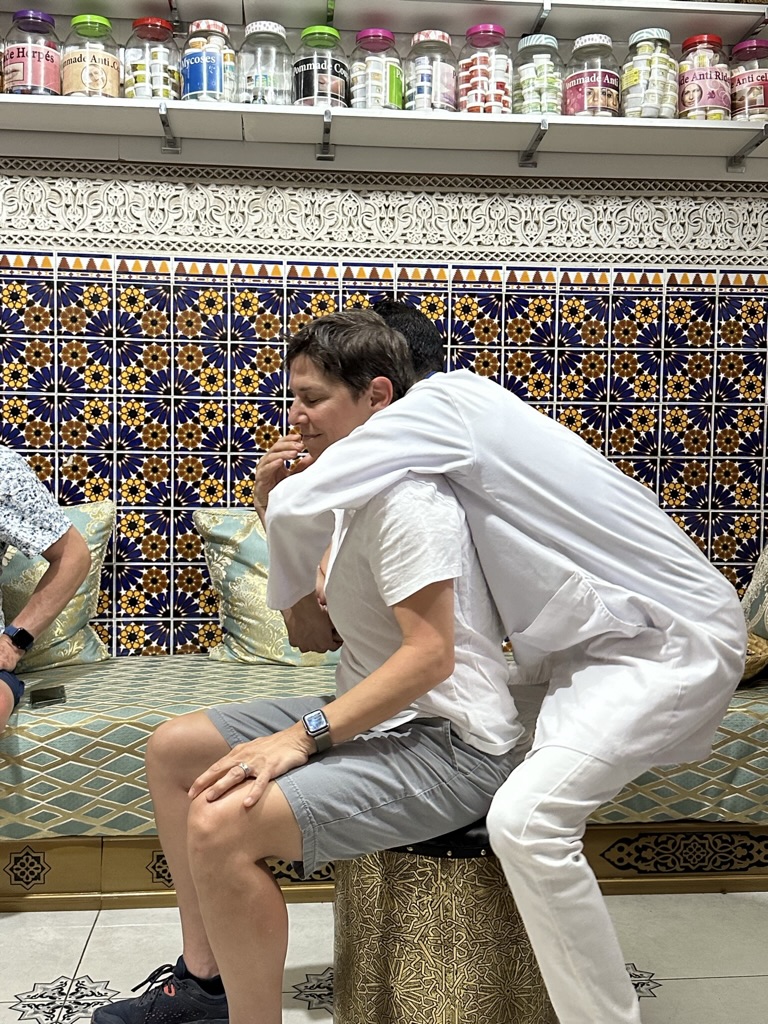
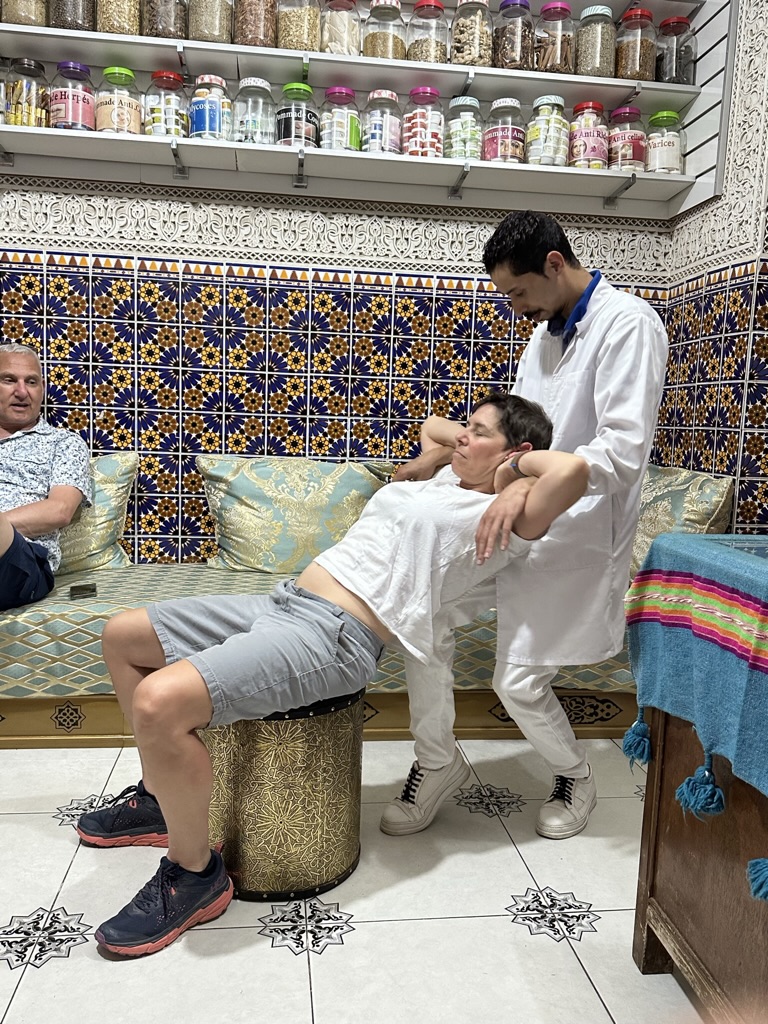
And then there was a similar presentation about the teas and tonics and such that they have. Efran, who claims to be a doctor, a chiropractor, and a physiotherapist, was so sincere and authentic, it was hard not to buy it all! We did walk out with quite a few things, after Liz got a full adjustment and chiropractic assessment…
No visit to Marrakech would be complete with paying homage to Yves Saint Laurent. He and his partner Peter Berge loved Morocco, and spent much of their time in Marrakech at their villa and gardens, now open to the public. It is beautiful and peaceful, impeccably maintained, and truly a place for creative contemplation and refuge, protected from the outside world.
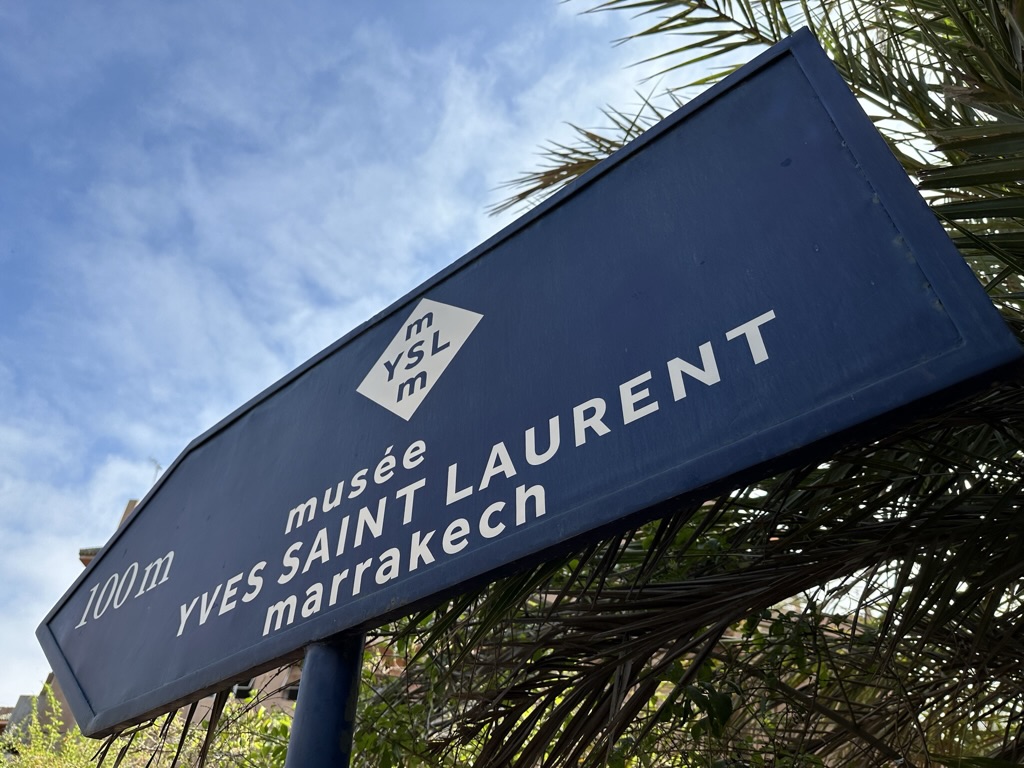
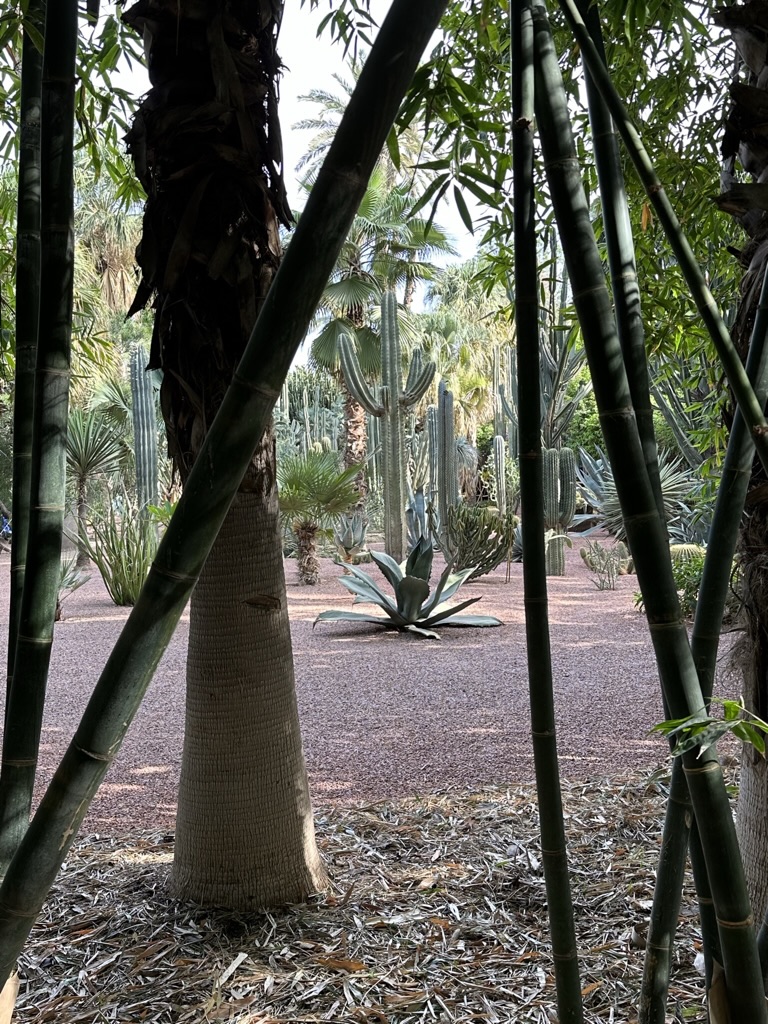
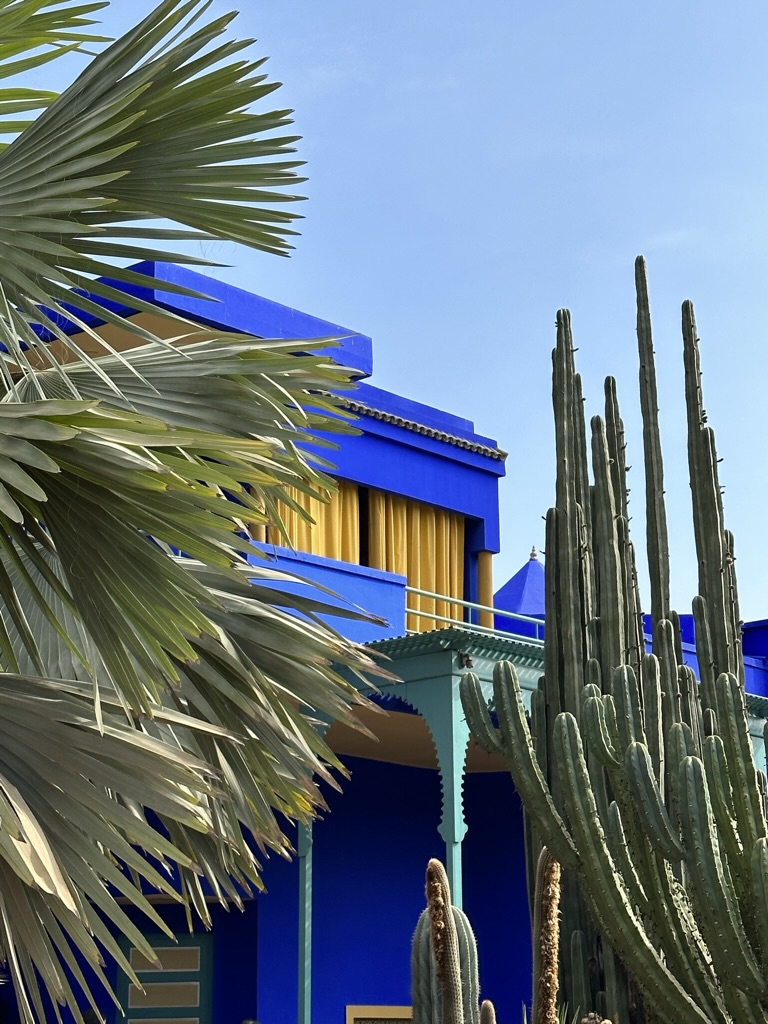
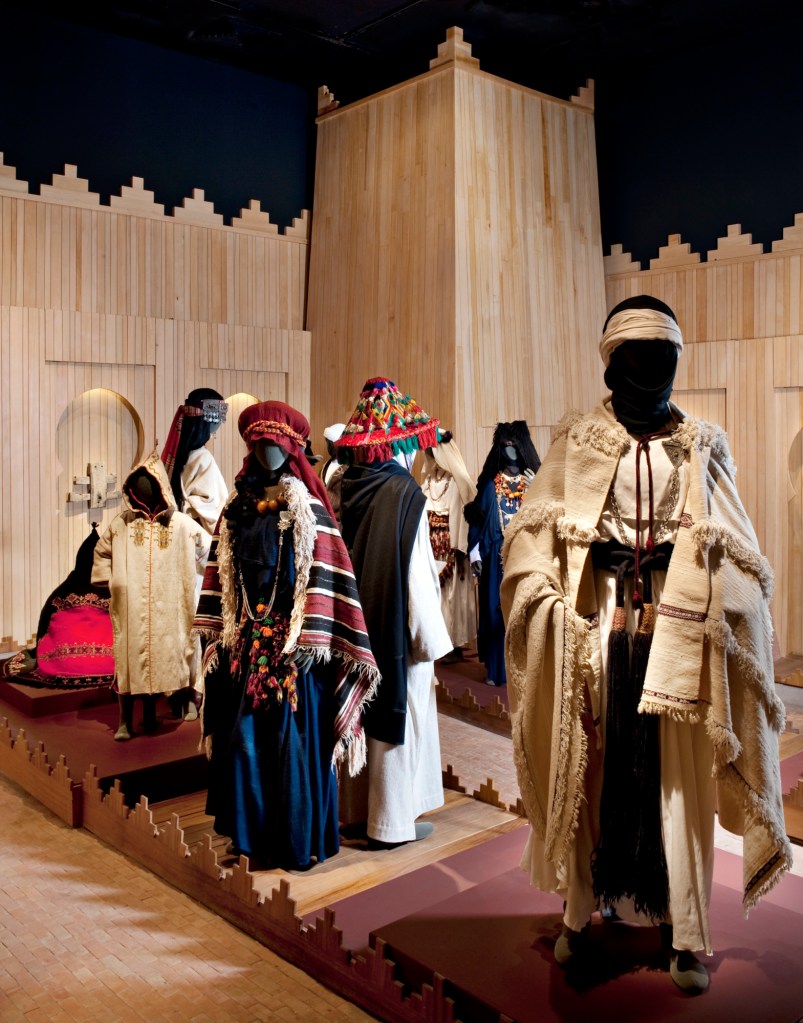
In the same complex, right next to the YSL museum, is a Berber museum, and while pictures are not allowed I managed to pirate a few….
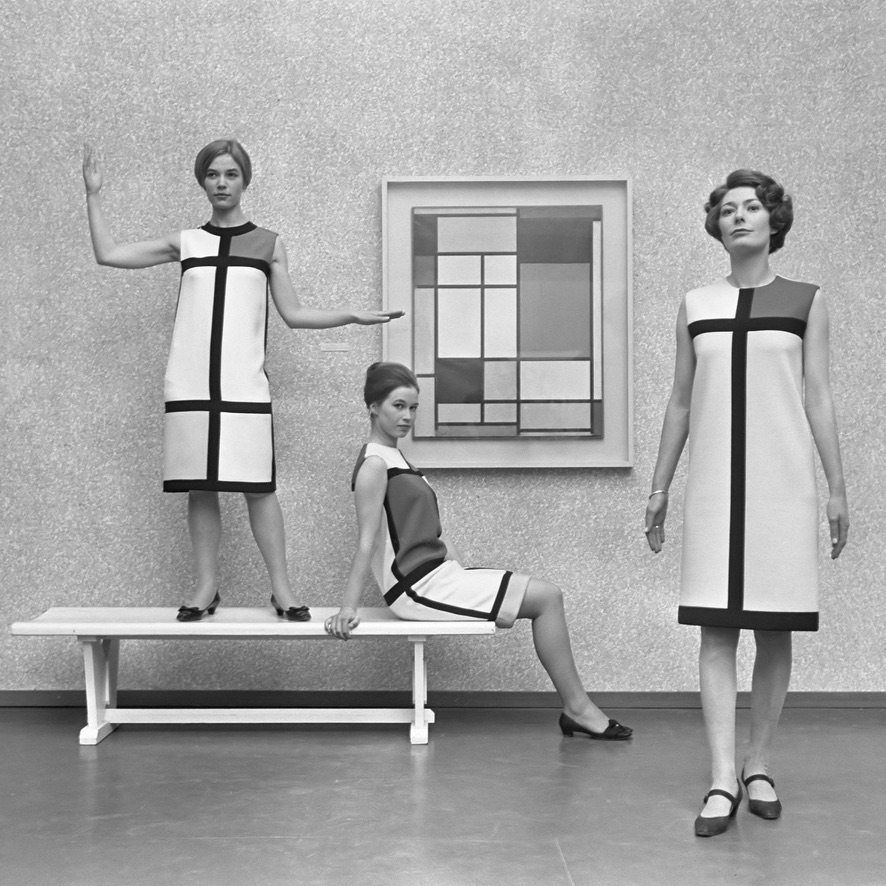
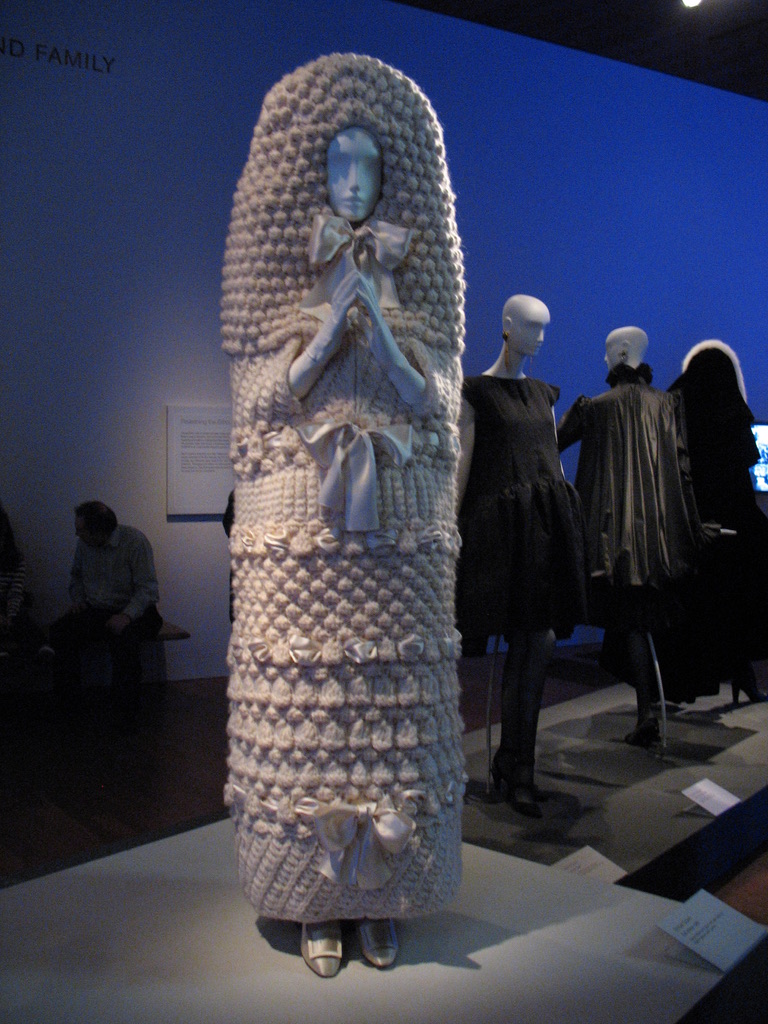
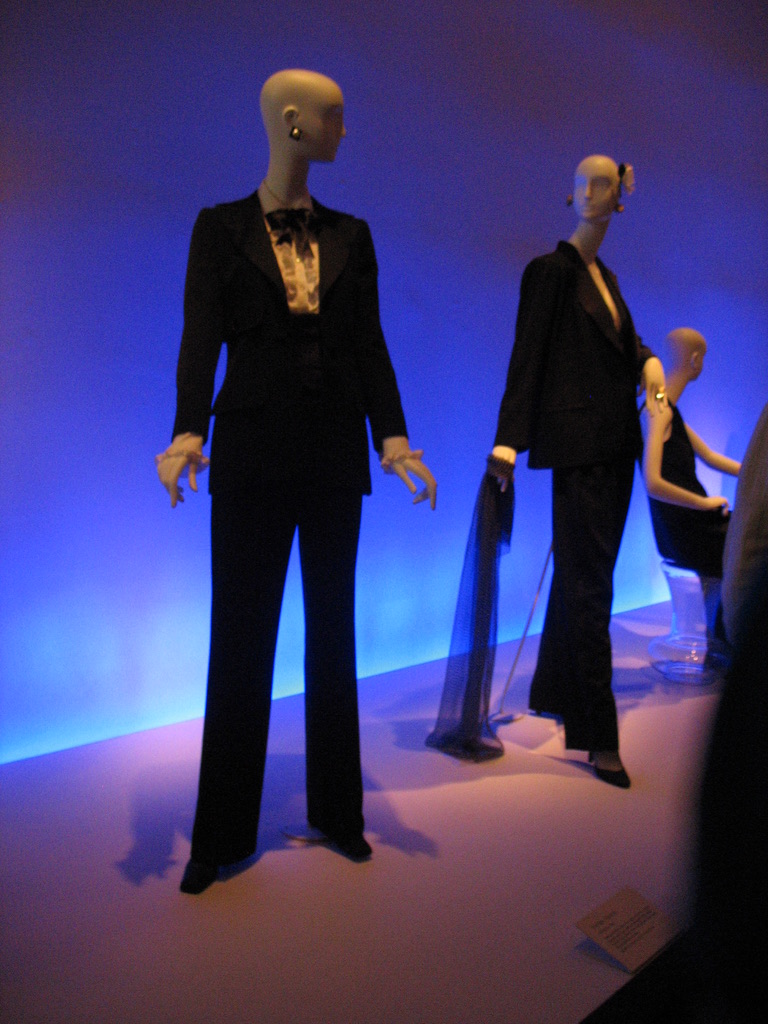
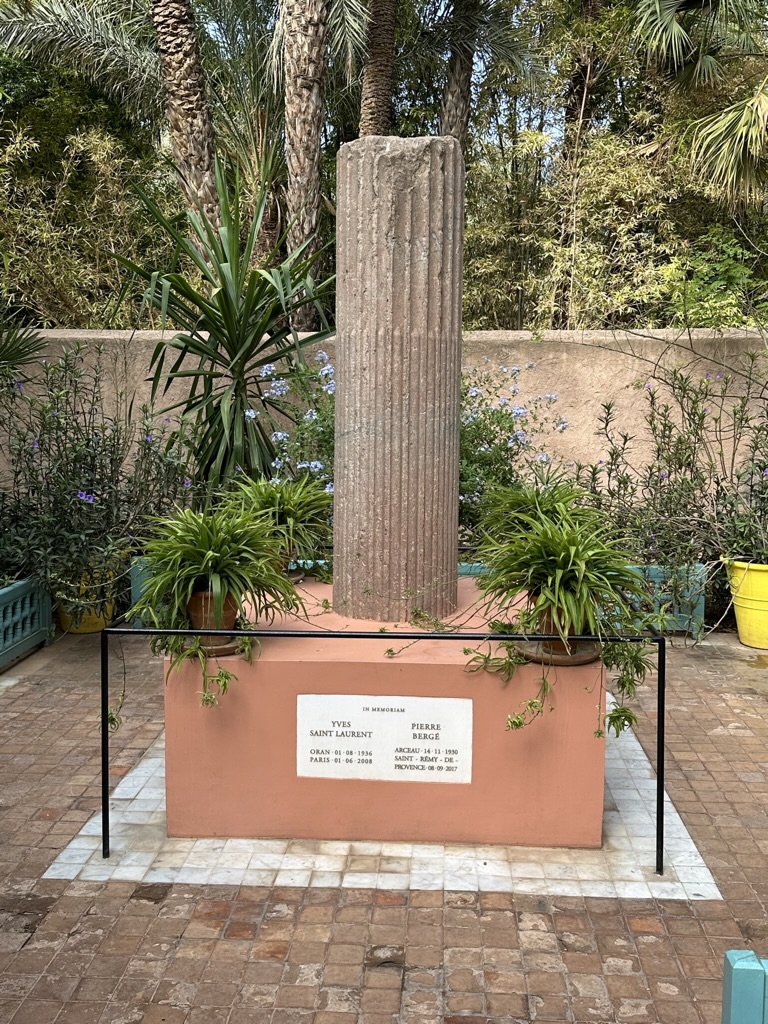
Yves Saint Laurent’s ashes were scattered here, a memorial marked by a simple gravestone for him and Peter, who said at Yves’ funeral service: “…I will never forget what I owe you and that one day I will join you under the Moroccan palms.” And he did.
Another story break…
The Berbers have been mentioned just a bit in these Moroccan meanderings, but did you know they have their own language? No, they don’t speak Arabic. Here’s what it looks like in written form:
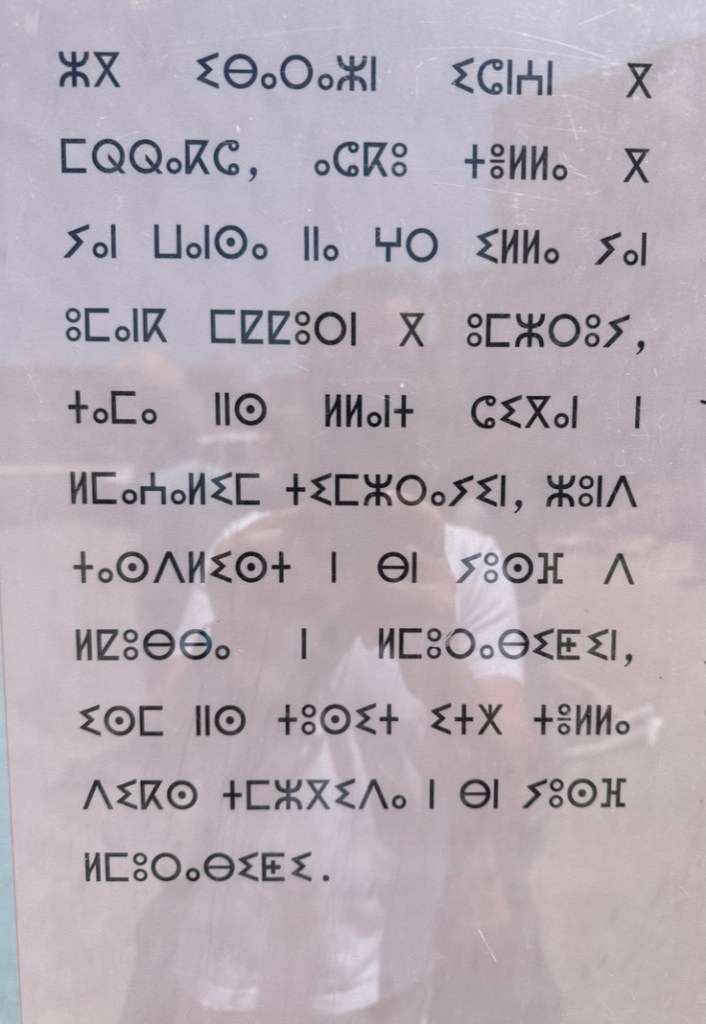
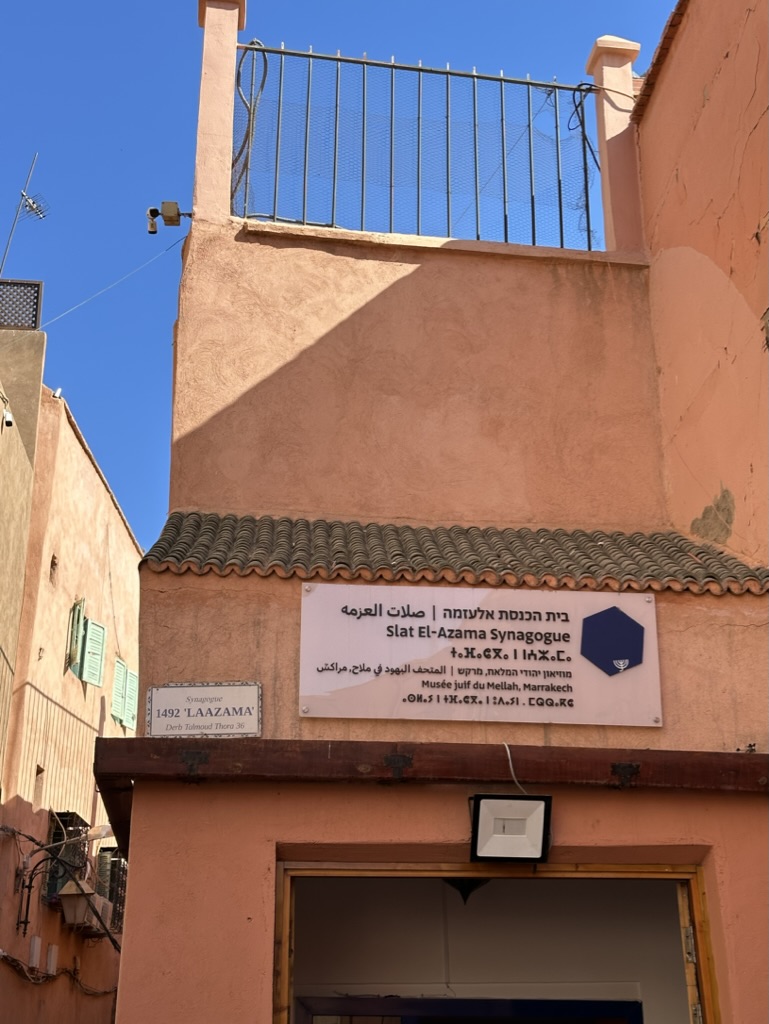
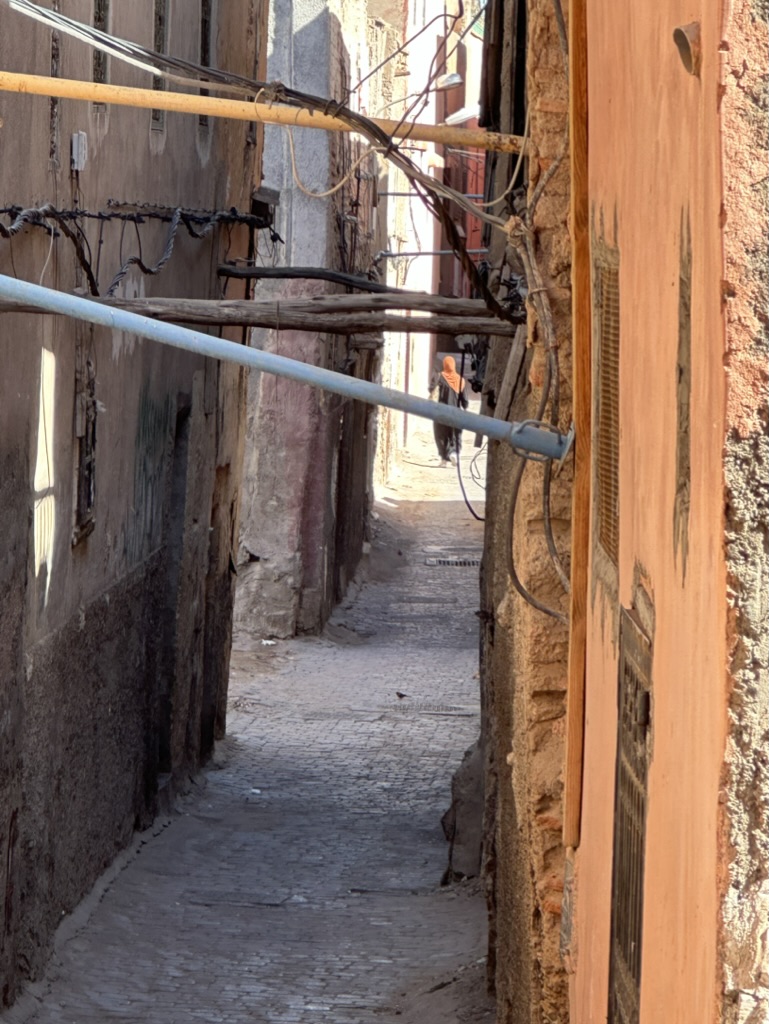
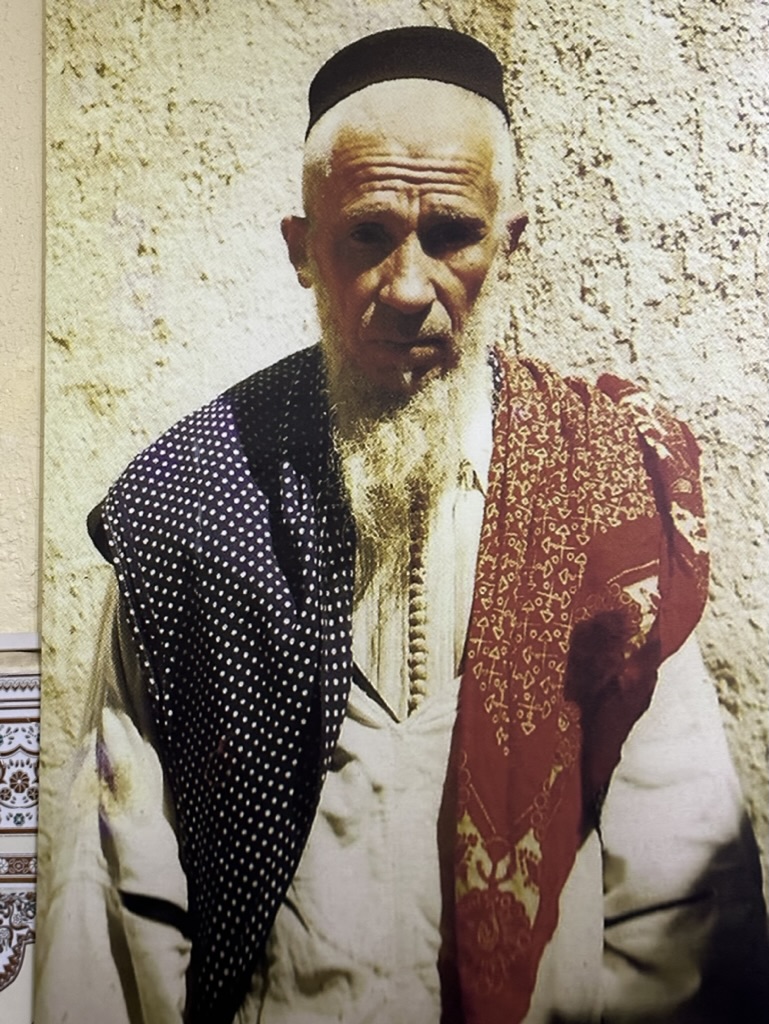
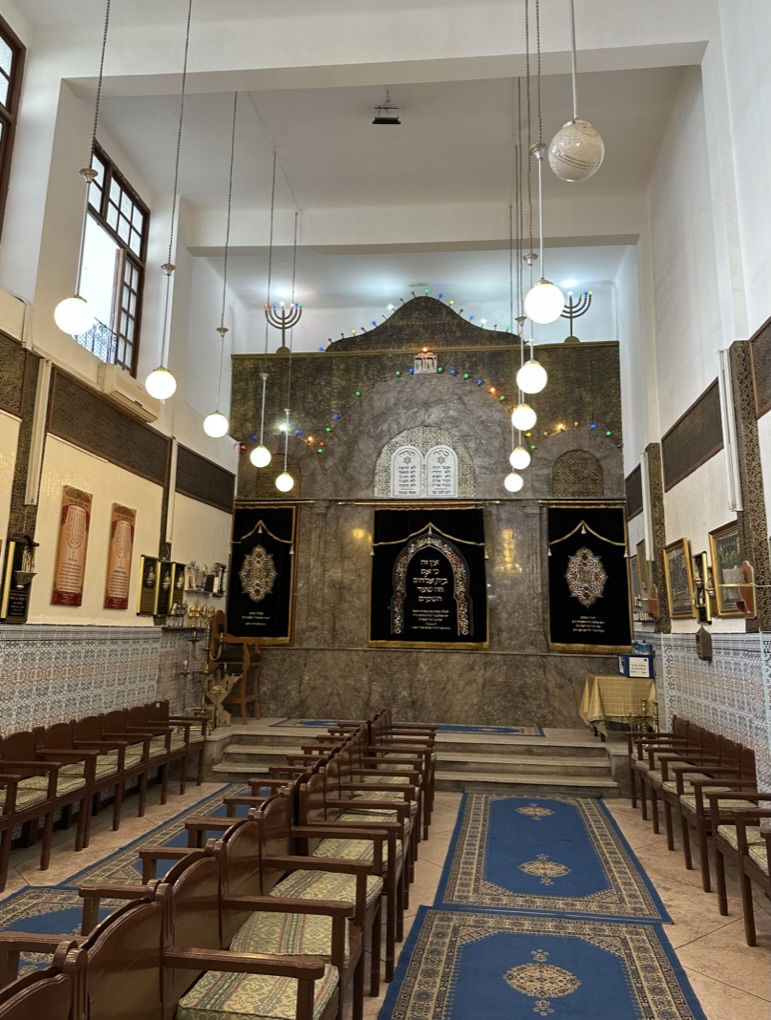
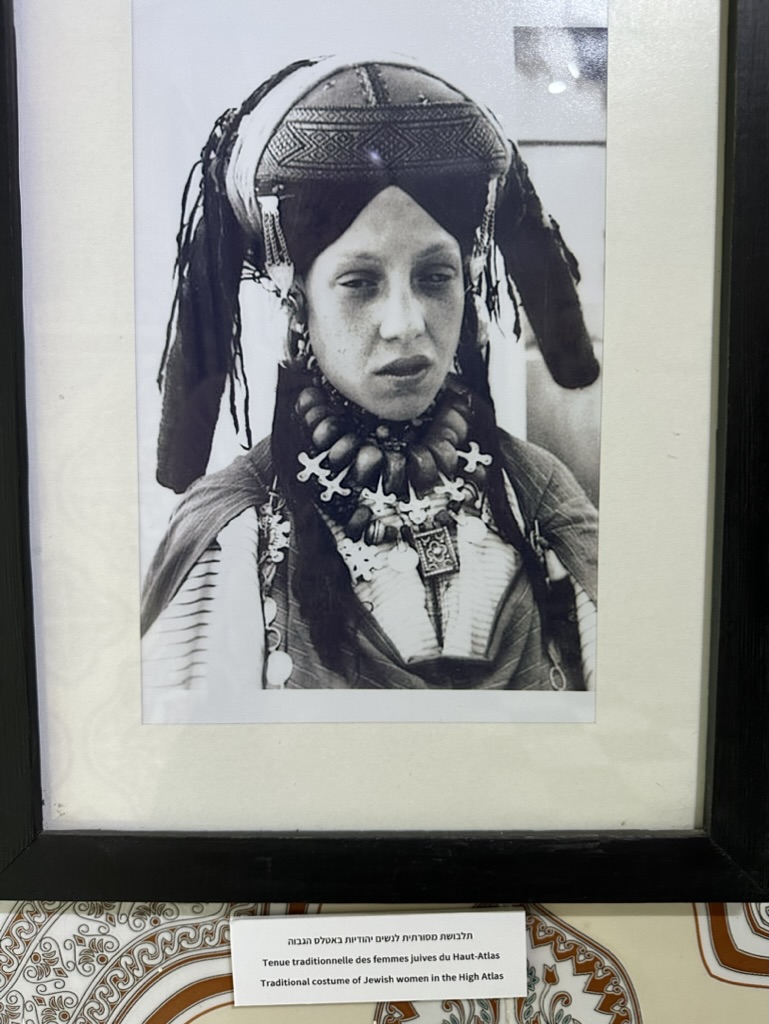
Interesting, huh?! Many of the Berbers were also Jewish, and when we visited the 15th century (!) synagogue, there was a small museum with some great photographs. I perhaps naively remarked how interesting it was to see Jews that look nothing like us, to which Liz replied “…you mean Jews of color?” Indeed.
Now back to our regularly scheduled programming – let’s cook!
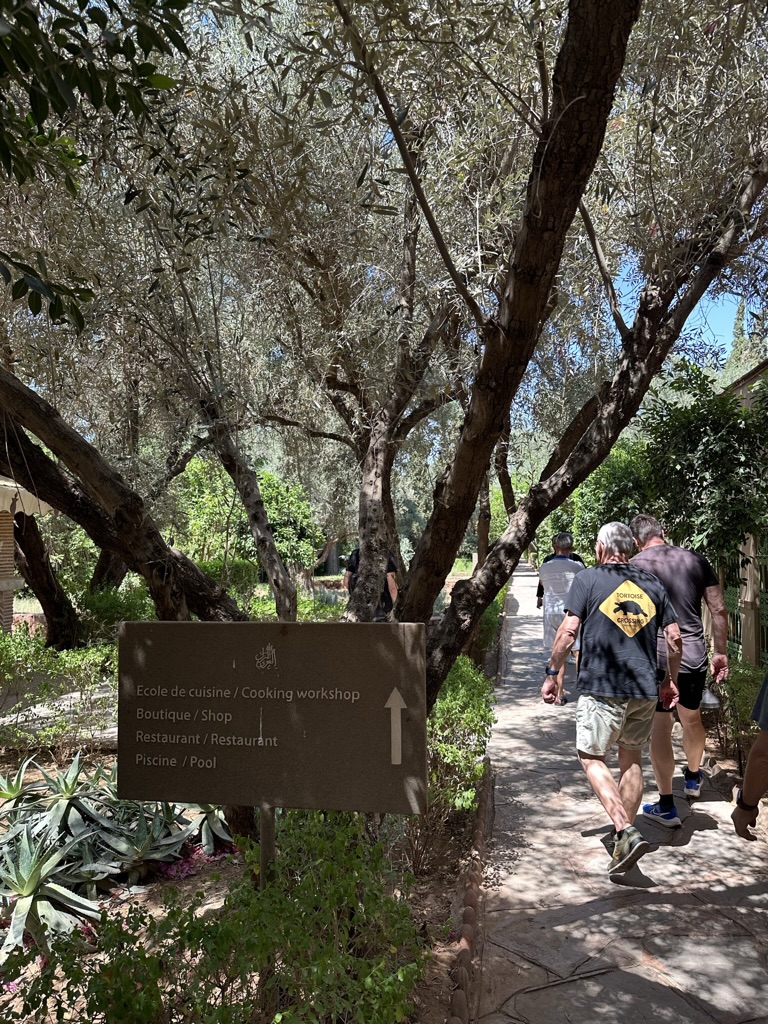
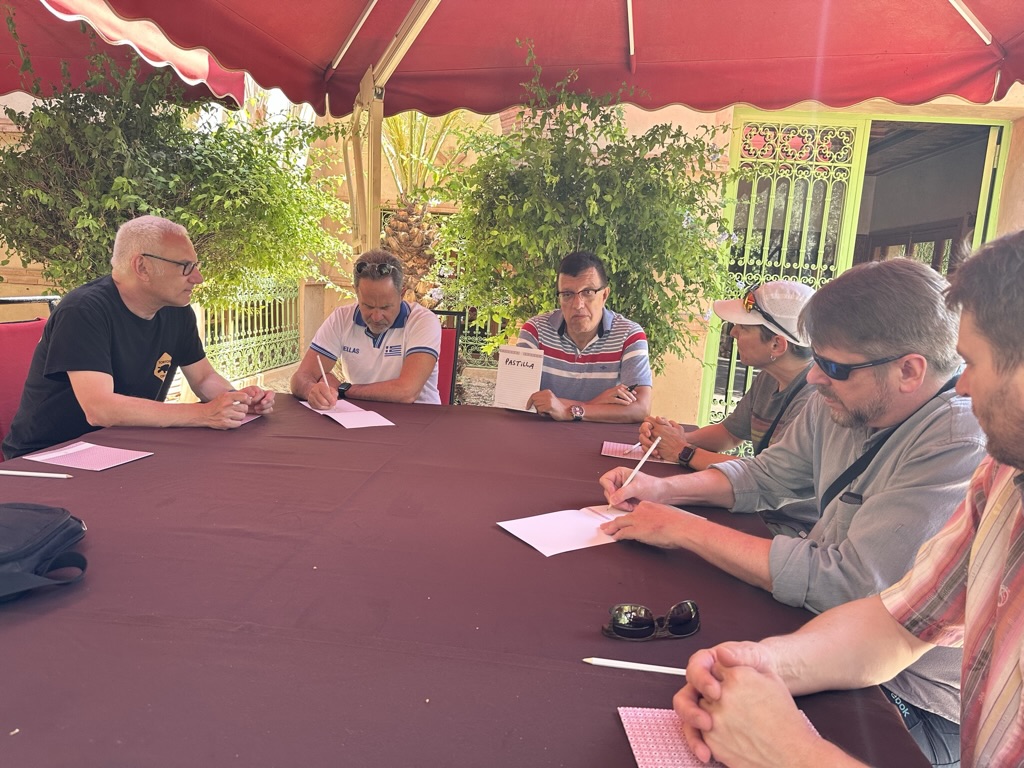
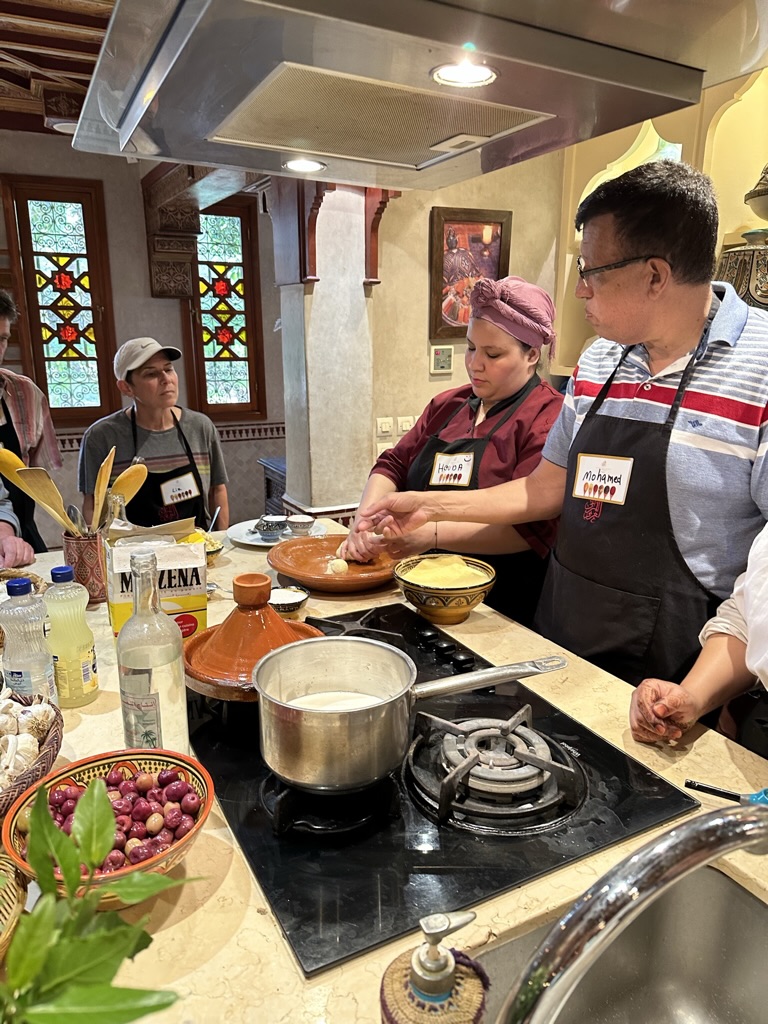
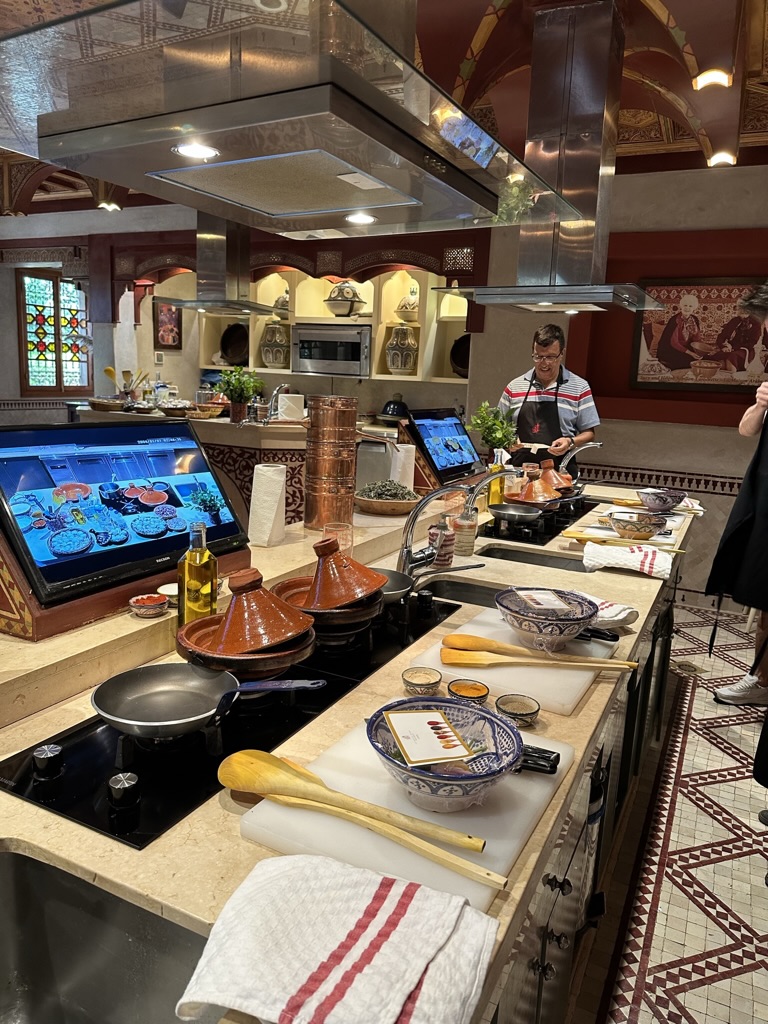
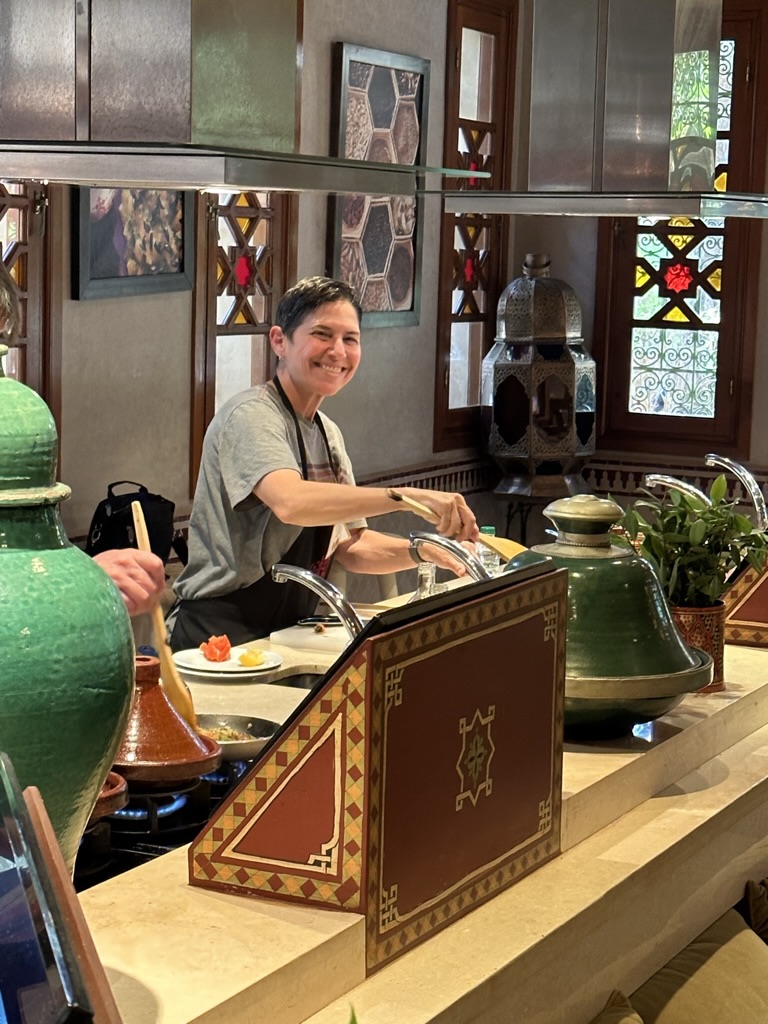
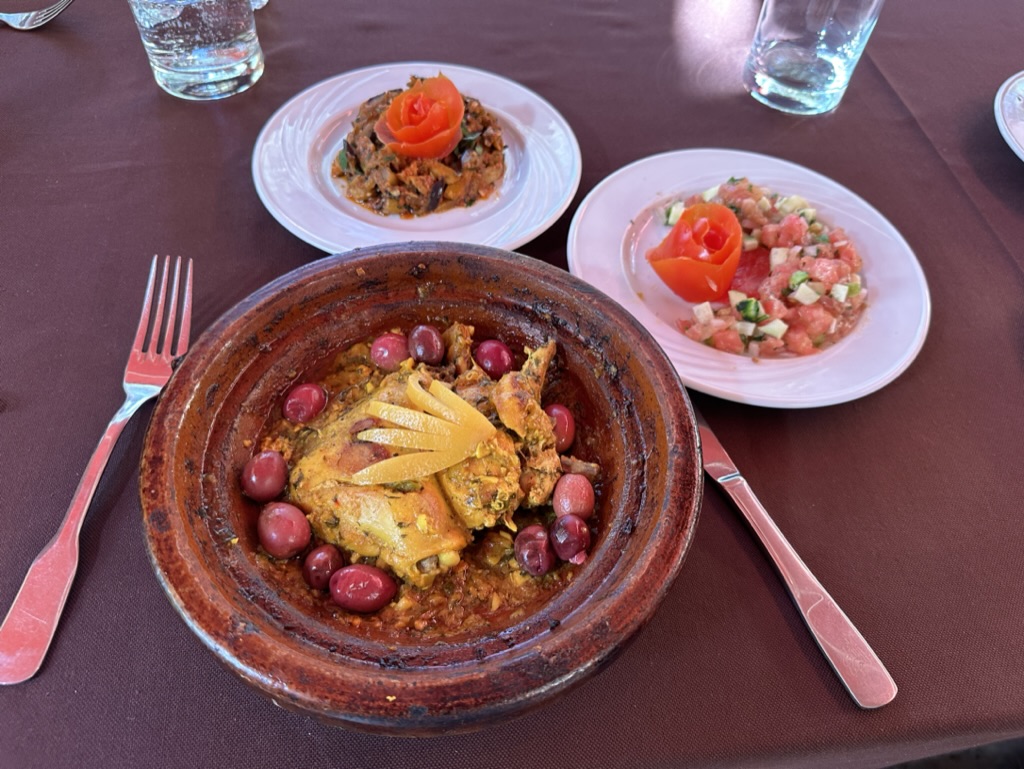
La Maison Arabe, a luxury riad-hotel with a cooking school, is in the heart of the city but you feel like you are a million miles away. Through a nondescript, untended gate we enter, taking a serene tree-shaded path to the ecole de cuisine. We are hosted by Mohamed and his team, our lessons beginning outside seated around a table, paper and pencil provided for taking notes. Mohamed teaches us the basic principles of Moroccan cooking (there are rather strict rules about which spices go with what), and talks about what we will be making today: chicken tagine, Moroccan salad (tomatoes, onions, cucumbers), and zaalook salad (eggplant and tomato, cooked).
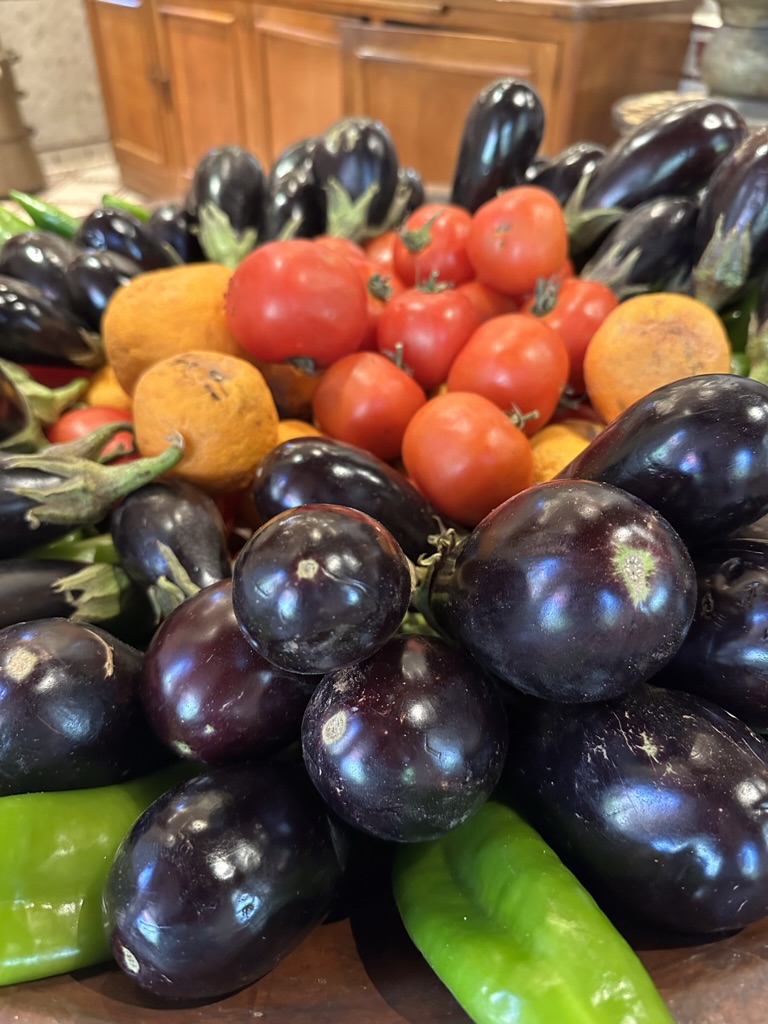
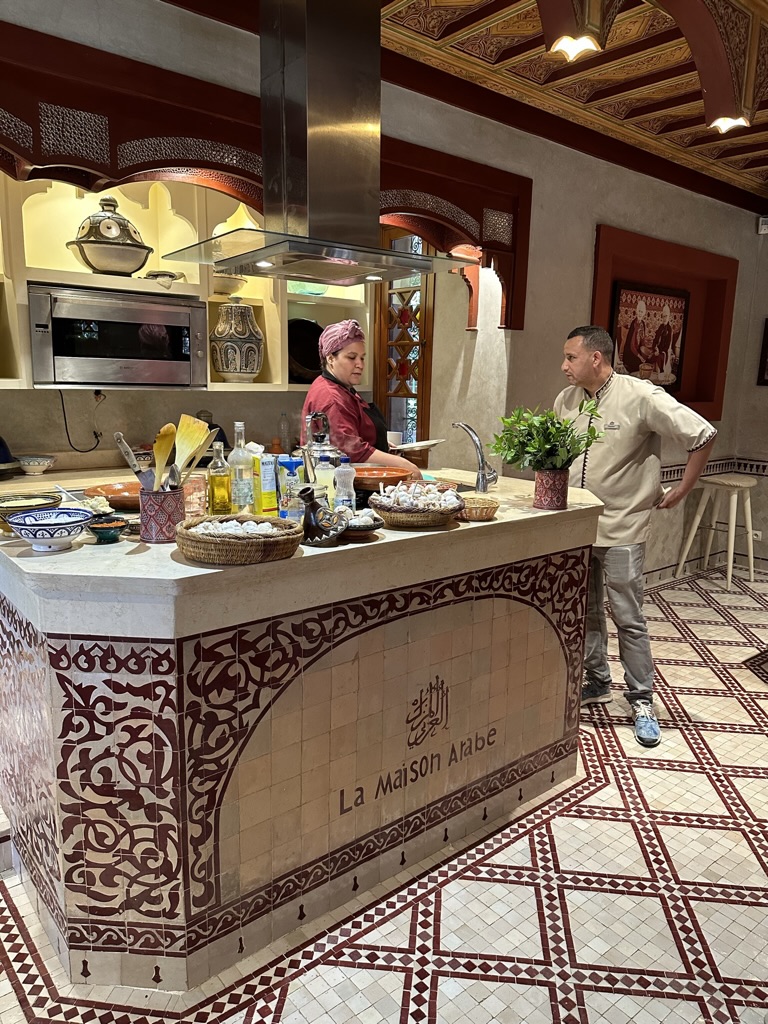
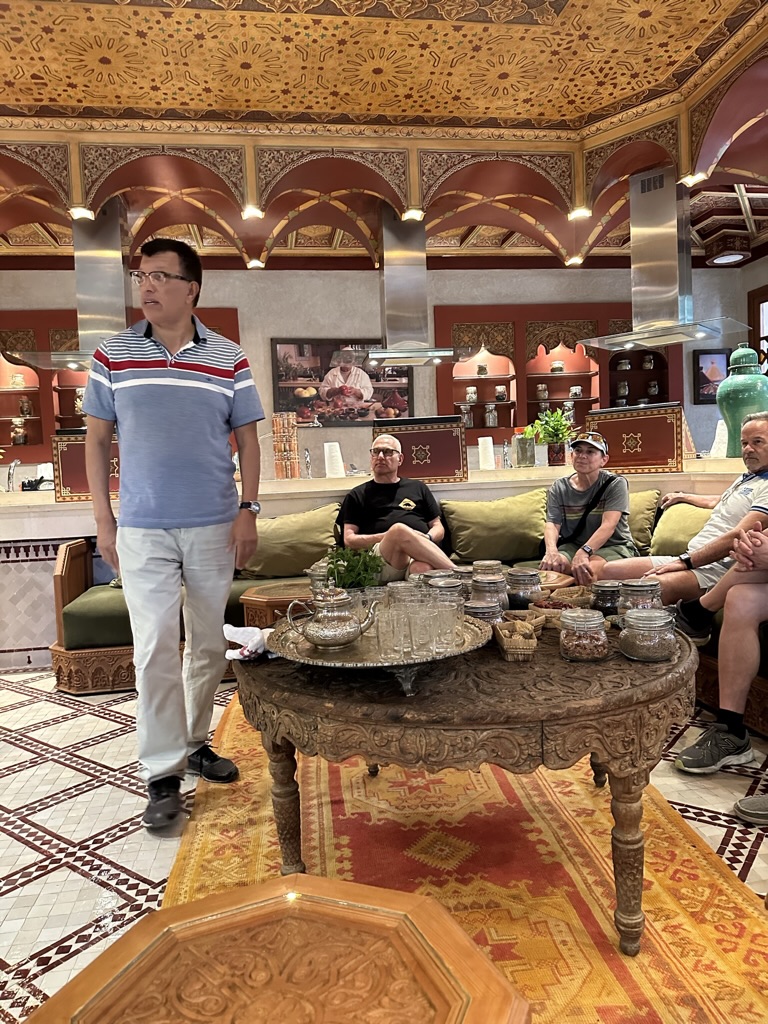
We start with a tea service, of course, and soon we are at the demo station where Houda shows us how to make the ubiquitous Moroccan bread (it’s everywhere – from fine restaurants to carts in the city streets and communal ovens), and she also makes Pastilla, a milk-pudding sort of dessert (that none of us really like much, it turns out).
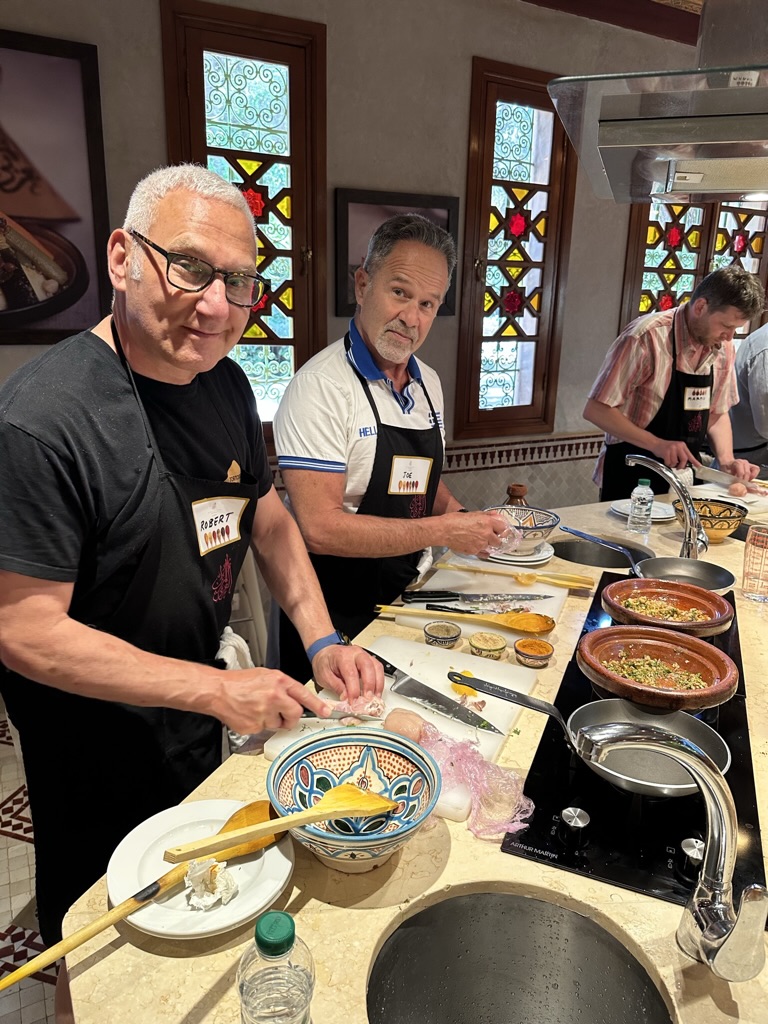
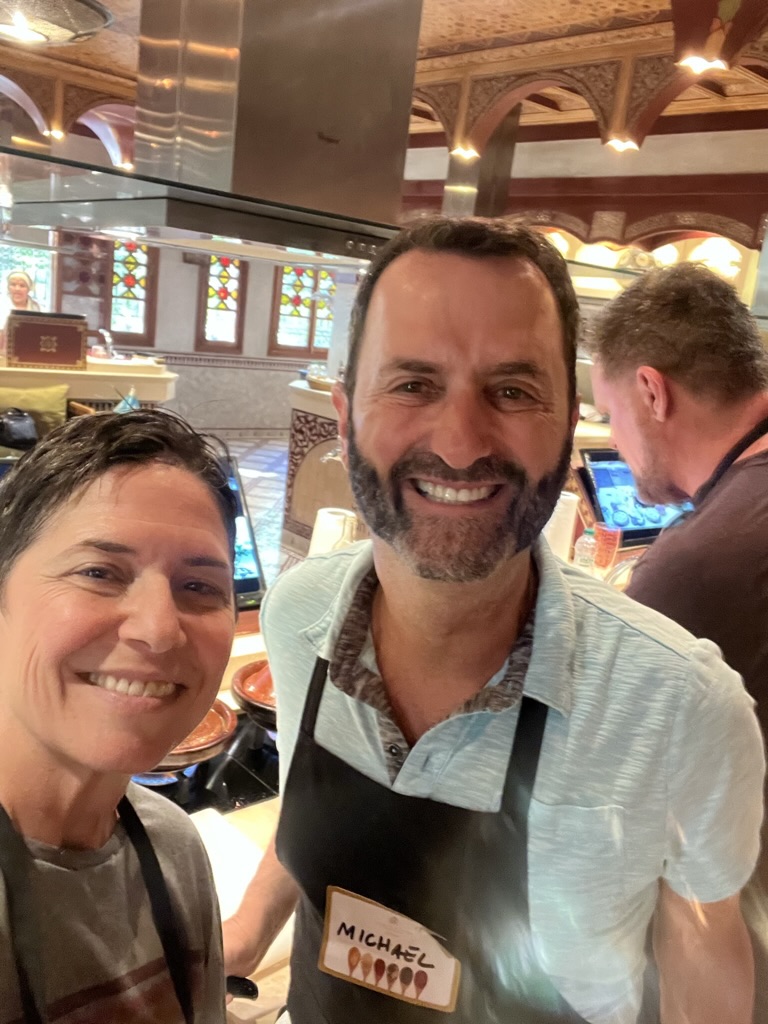
Each of us has our own cooking station, at which we chop, peel, sauté, braise, and ultimately present our creations! Mohamed and Houda coach as we go along – I get reprimanded for being creative in how I cut the eggplant! – and they help us make a tomato rose (harder than you think, especially with an overripe tomato).
Proud of our culinary accomplishments, we go back to the beautiful gardens and have an early dinner of our own making. And we all did a really great job – everyone’s dishes were spot-on and super tasty. I know we’ll all be giving these recipes a shot in our home kitchens.
Food is a central part of every culture, and Morocco is no exception. Combine that with a massive open air market, live music, crowds, parents and kids and the rest of the family, drummers, couples on dates, snake charmers, trained monkeys and horse-drawn carriages, story-tellers and palm readers, and you get one of the craziest places in Morocco: Jemaa el-Fnaa.
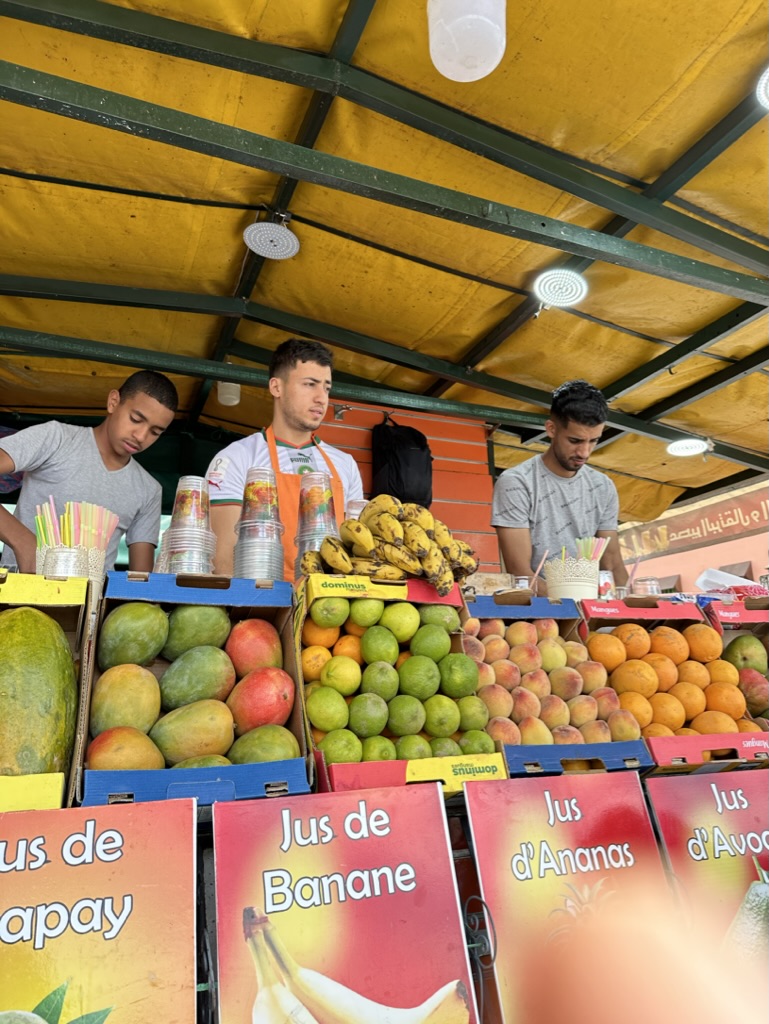
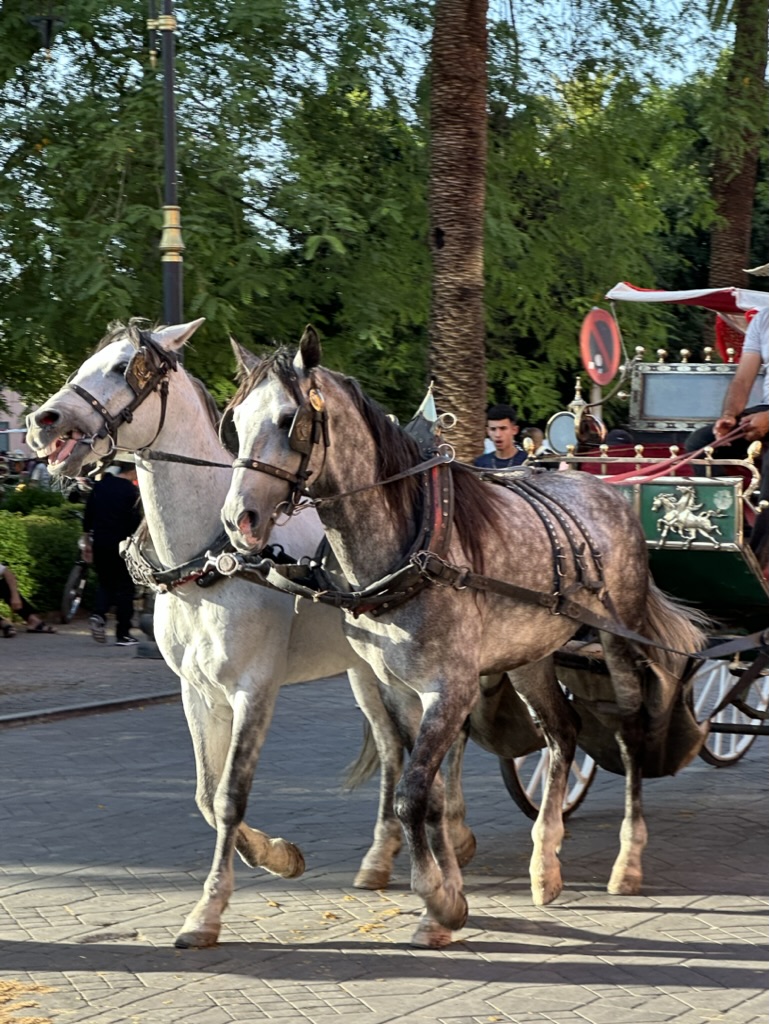
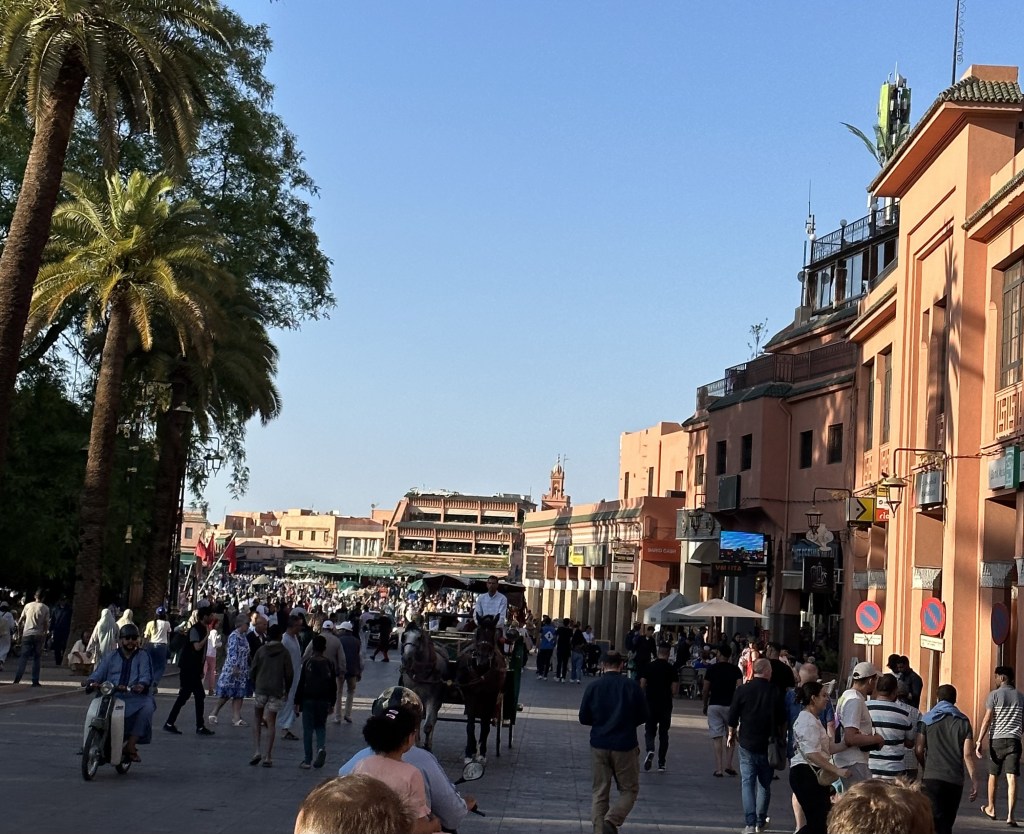
We start on the perimeter, as bordering the square is Marrakech’s largest souk [market] catering to both locals and tourists. We browse the usual leather and woven goods, but finally we see “Morocco” t-shirts! For some reason, t-shirts are not easily found in this country. It’s a mystery still unsolved. Adil bargains for us, we try things on, and when sizes are an issue, we are asked to come back in 10 minutes. We do, and our smiling salesman lives up to his promise, and with even more cool designs. He is happy to make some sales, and we are happy to take home memories.
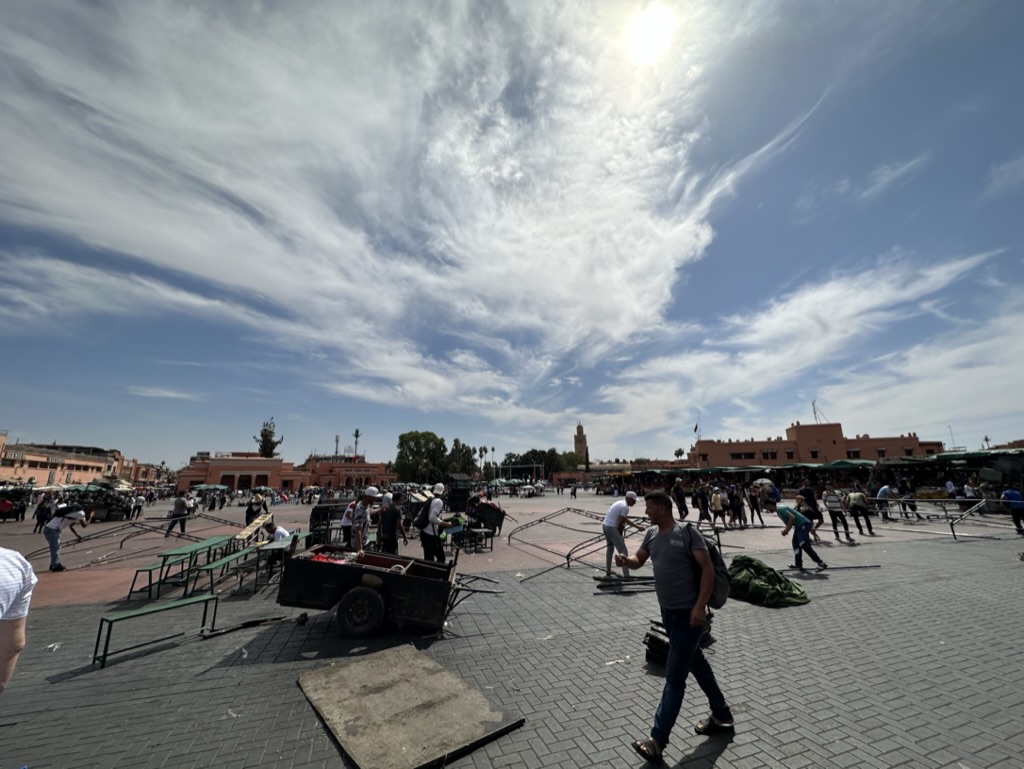
We’ve come in the late afternoon, as the sun is fading but still high, and the place is teeming with people at the stalls selling everything from kids clothes to olives, mint, and butchered meat. We stop by a place where a whole goat is cooked in an underground pit for a specialty dish that will be available later tonight.
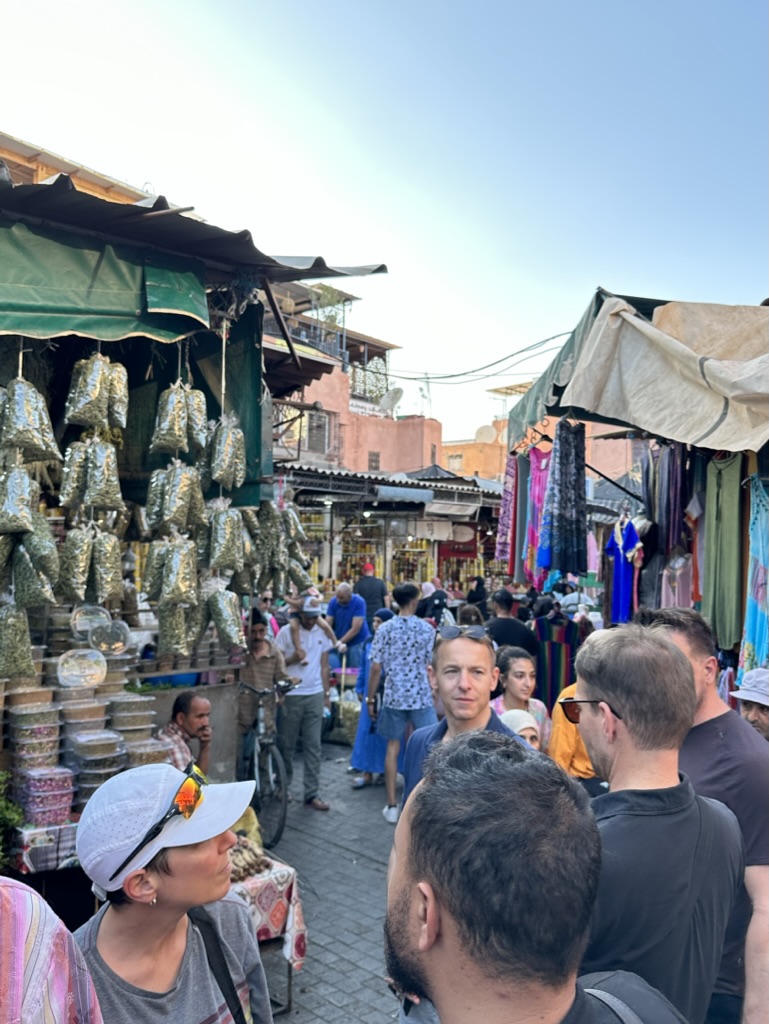
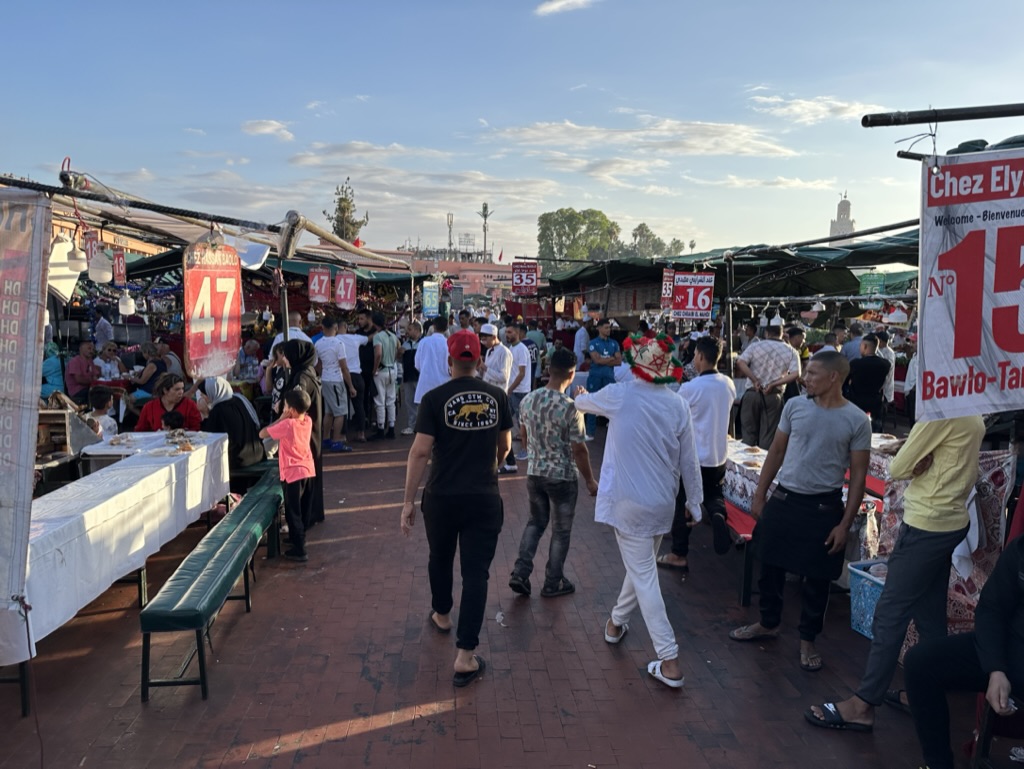
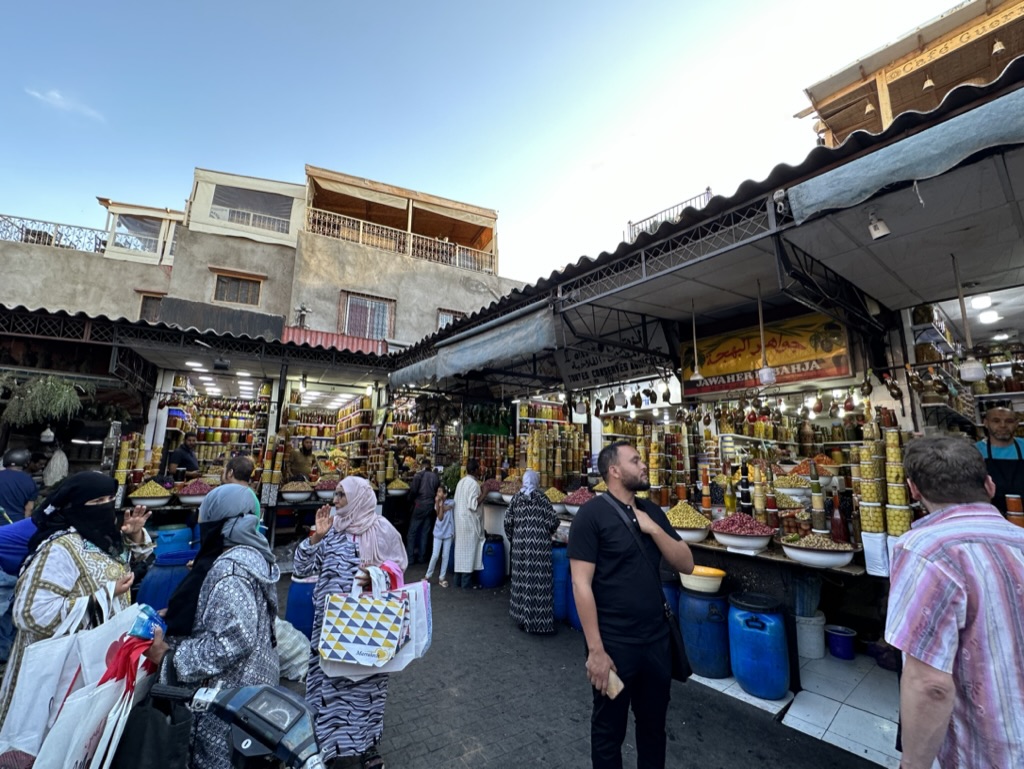
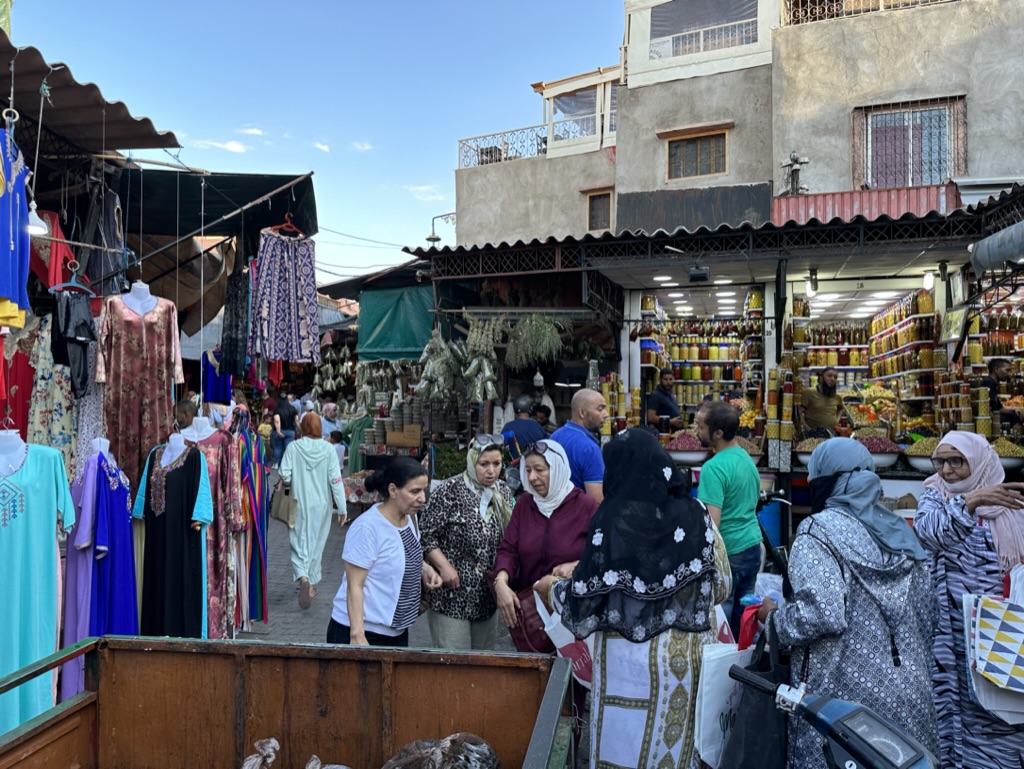
When we emerge from the souk into the square, it is already shifting to the evening activities. All these food stalls are set up and taken down daily; the daytime scene is very different than the night time scene, and we are here as the change-over takes place. It is amazing to see how quickly it turns into a crowded place to entertain, shop and eat, the smoke rising over the tents as the vendors yell at passersby to stop at their stand, “…the best you will find!” Roasted goat head, anyone?
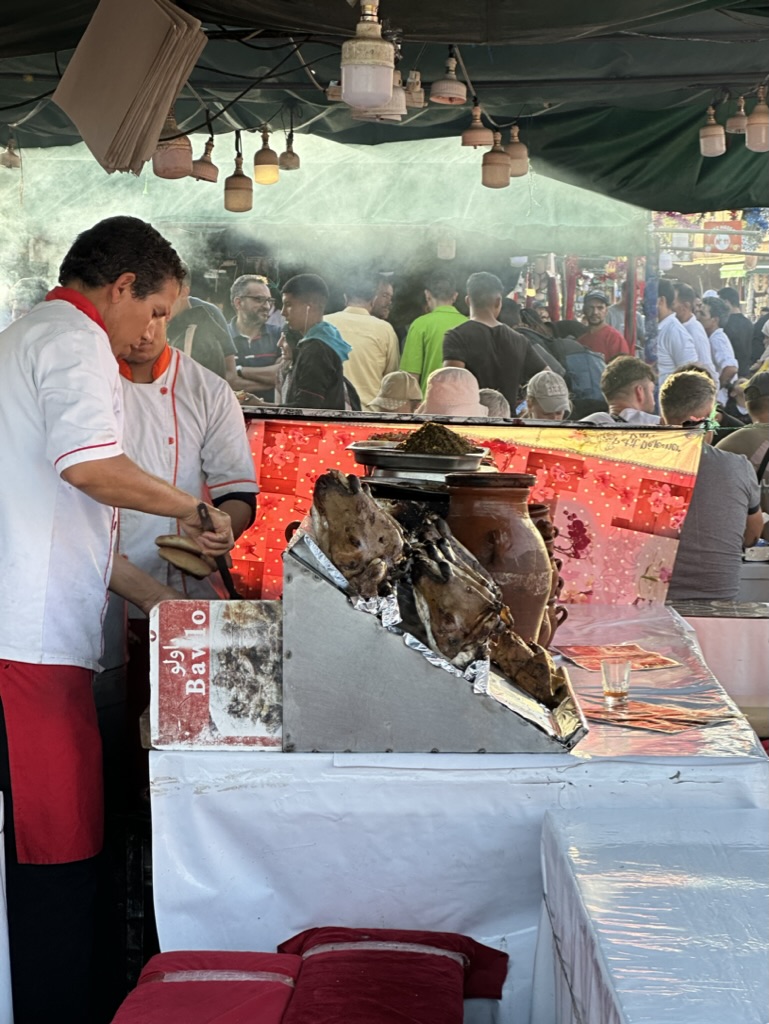
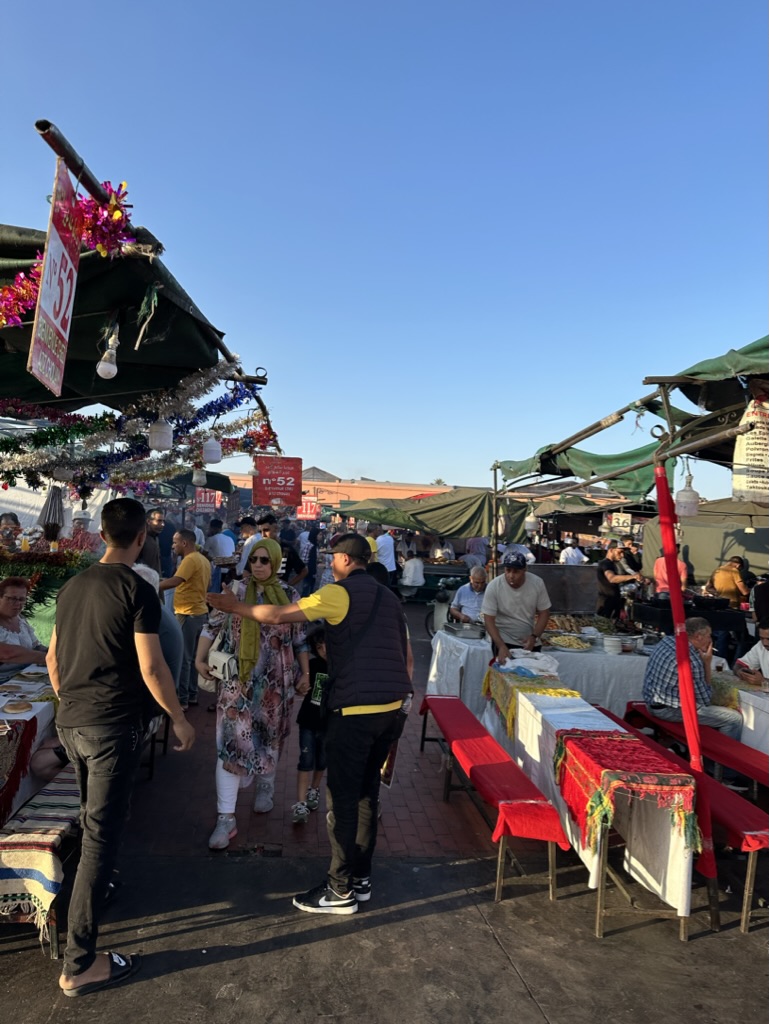
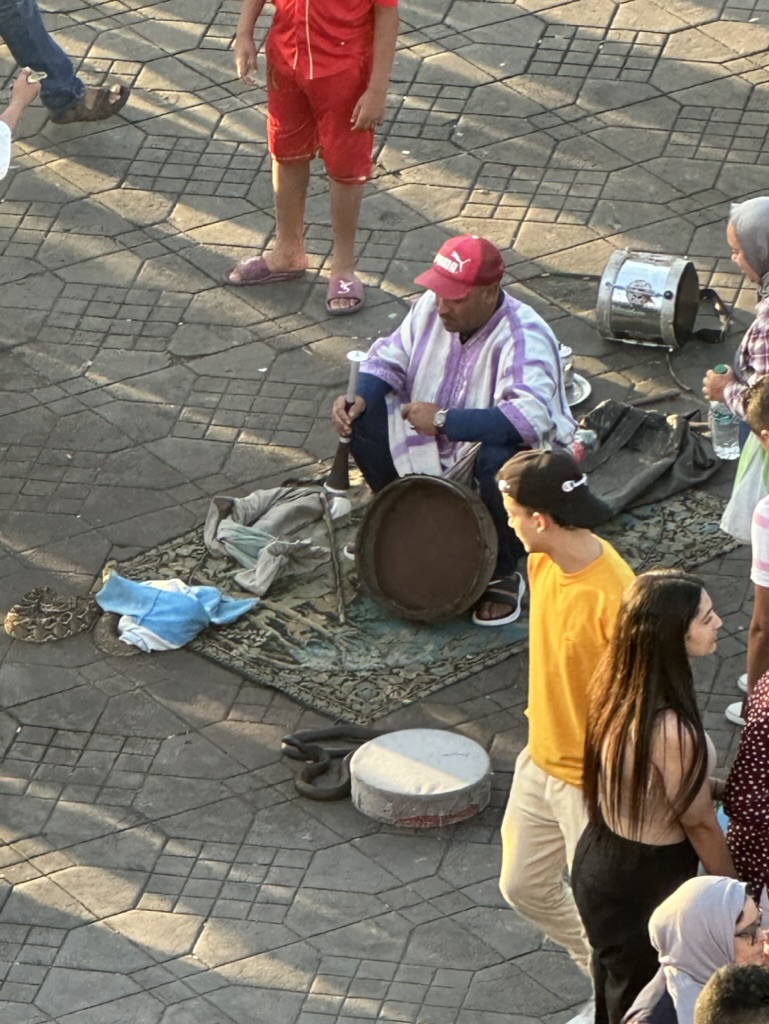
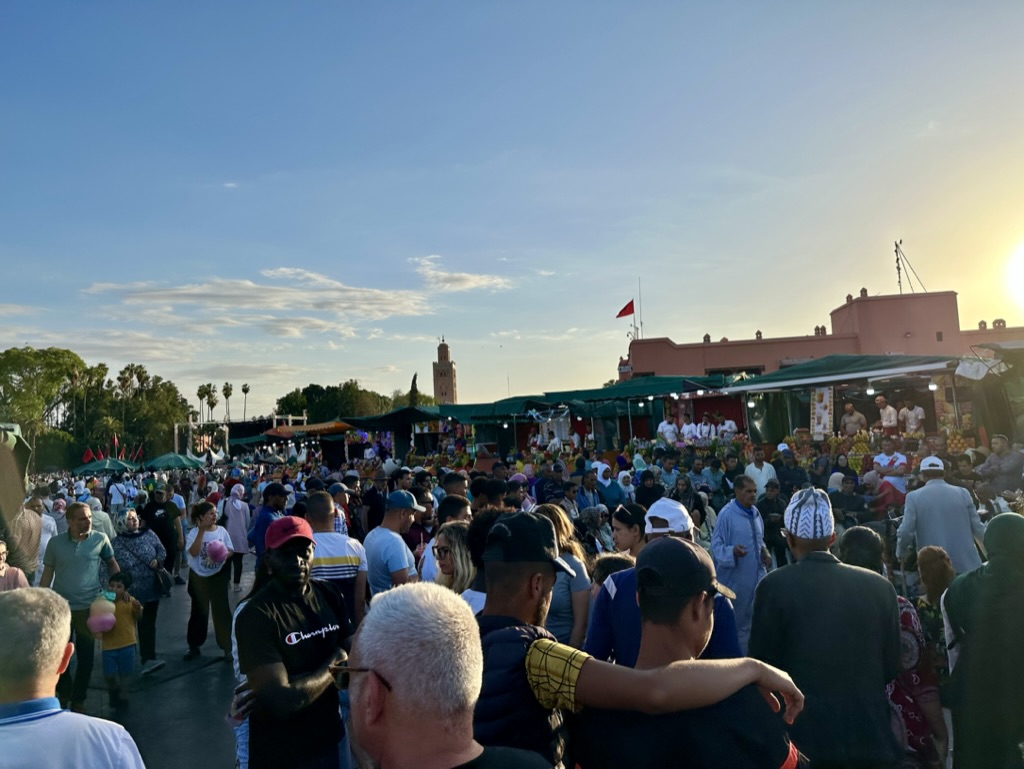
Here’s a short clip of what it sounds like, and this is before the crowds have gotten anywhere near capacity:
As the sun falls lower on the horizon and the people gather, the view from a rooftop bar/cafe beckons. Despite the crowds, we manage to get in and see this whole thing from above. The night scene is coming to life, getting busier by the minute. The cacophony rises as the band plays, the conversations bounce off the hard pavement, the snake charmers blow their pungi, the monkeys jump from shoulder to shoulder, the vendors hawk their wares, the smoky aromatic food stalls buzz with chatter, and the story tellers weave their fables.
Bobb remarks “Everyone should travel and see the world this way. This is LIFE.”
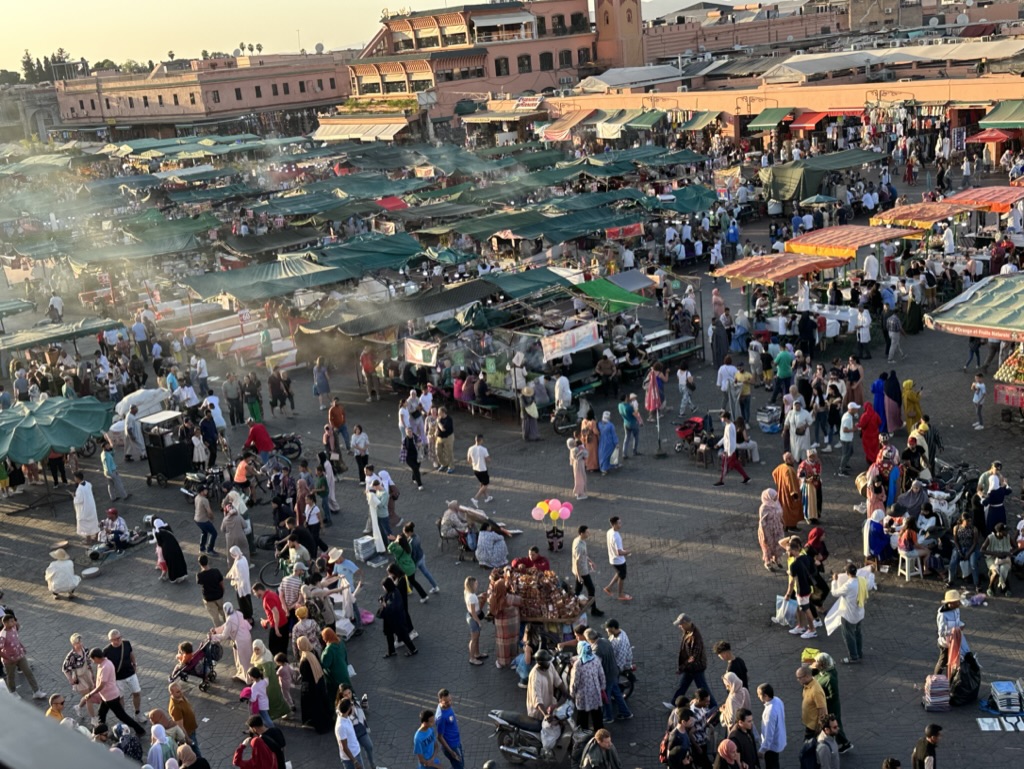
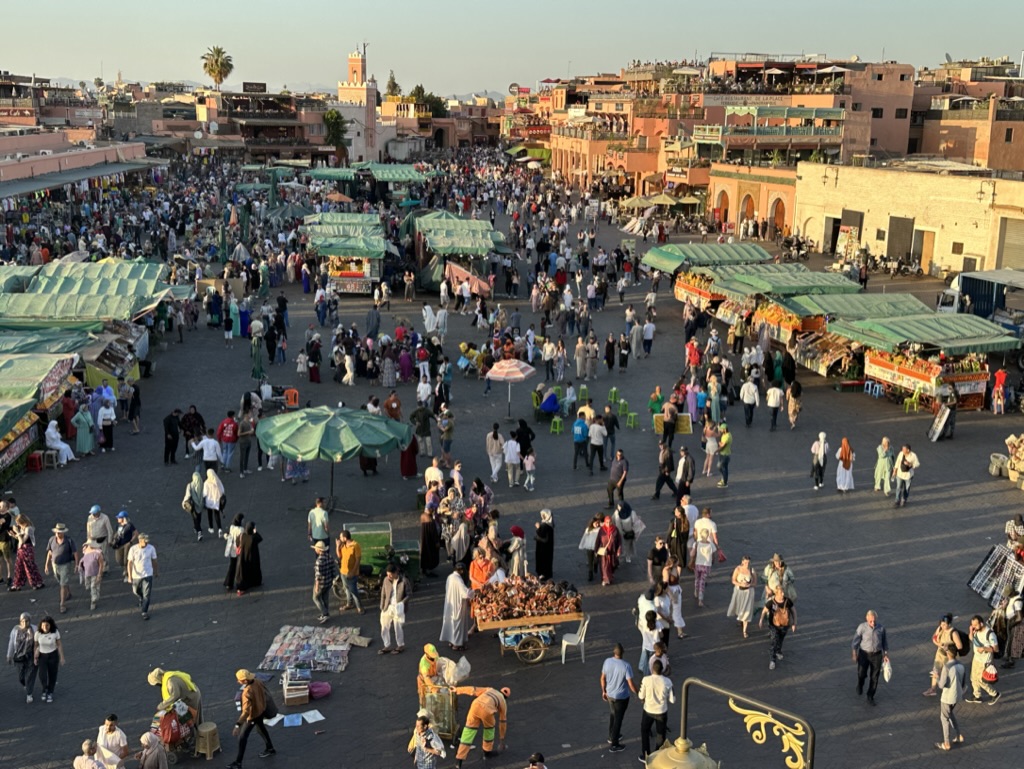
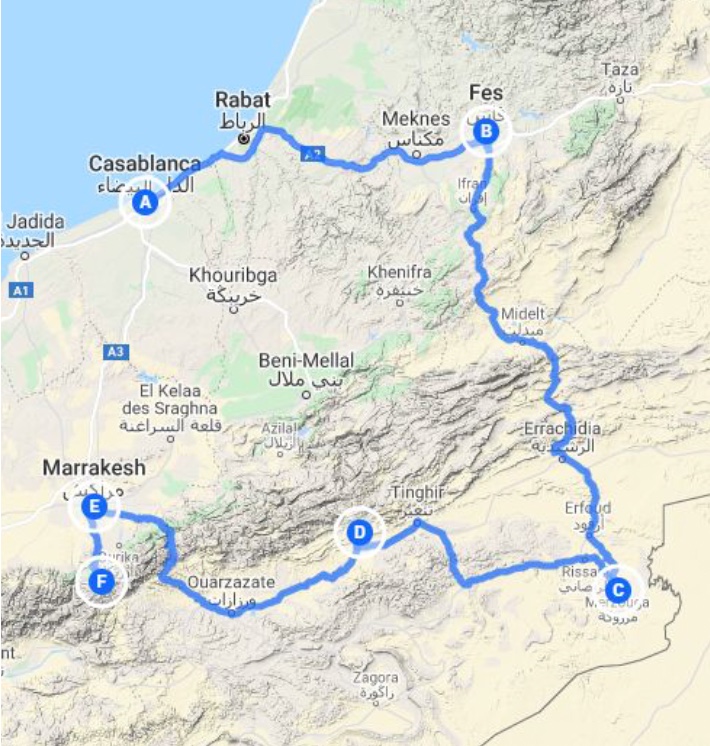
It’s come to our final evening, and over dinner we contemplate all we’ve seen and done as we explored this amazing country. From the seaside city of Casablanca to the ancient alleys of Fes, from the soft desert sands to the majestic Atlas Mountains, from the glamour of YSL to the sensory overload of Jemaa el-Fnaa, it has been our privilege to be a guest in this foreign land.
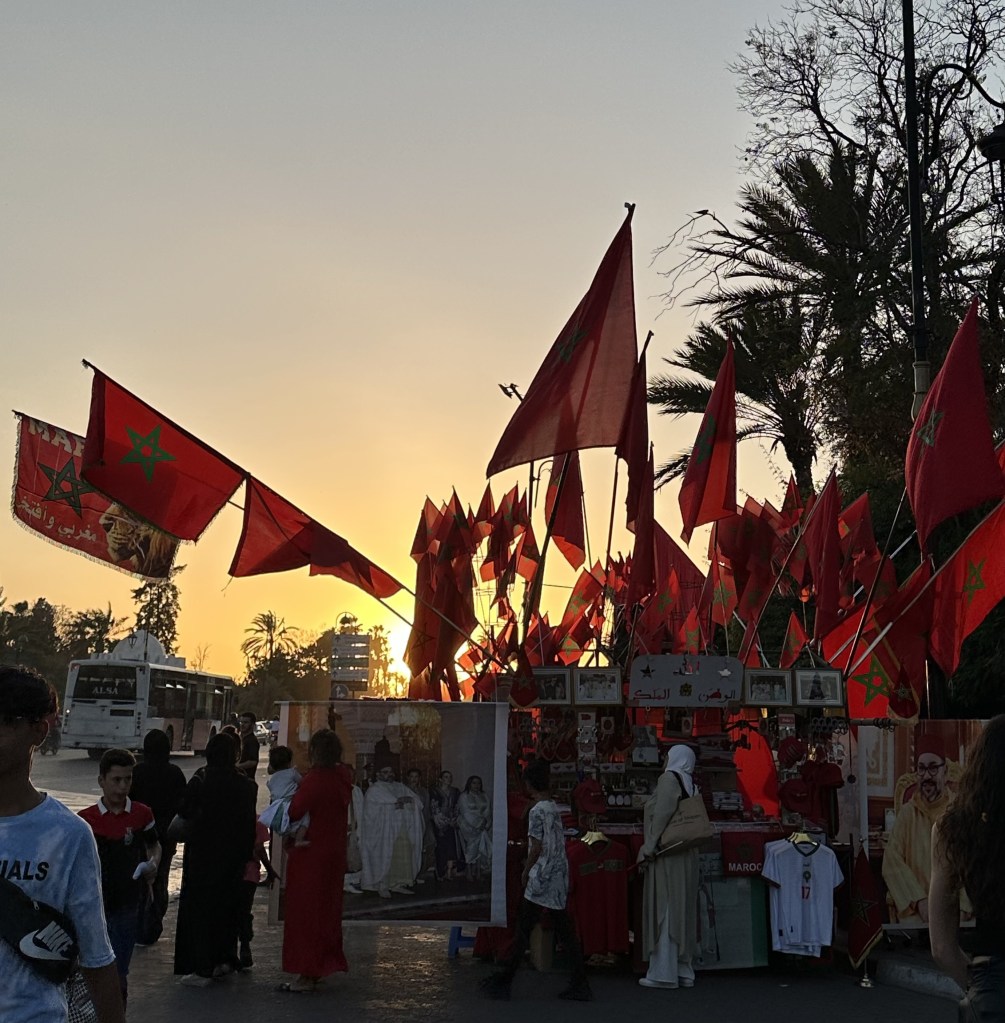
Au revoir, Maroc. Merci beaucoup pour une aventure incroyable…


One response to “Three Days in Marrakech”
Such gre
LikeLike