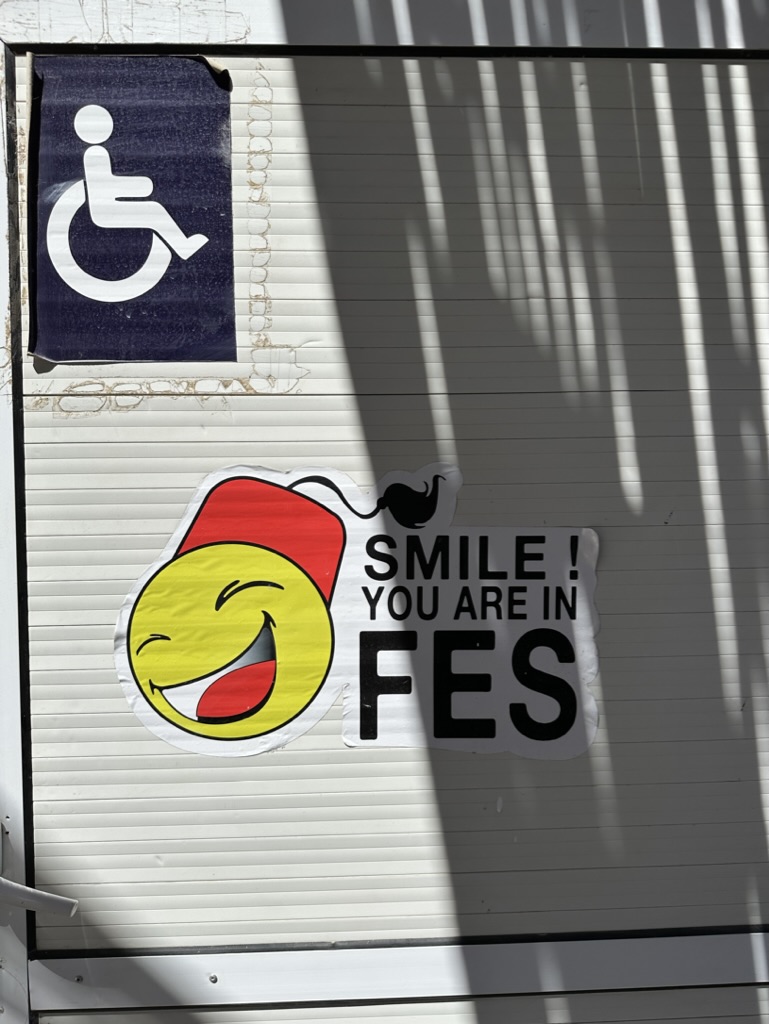
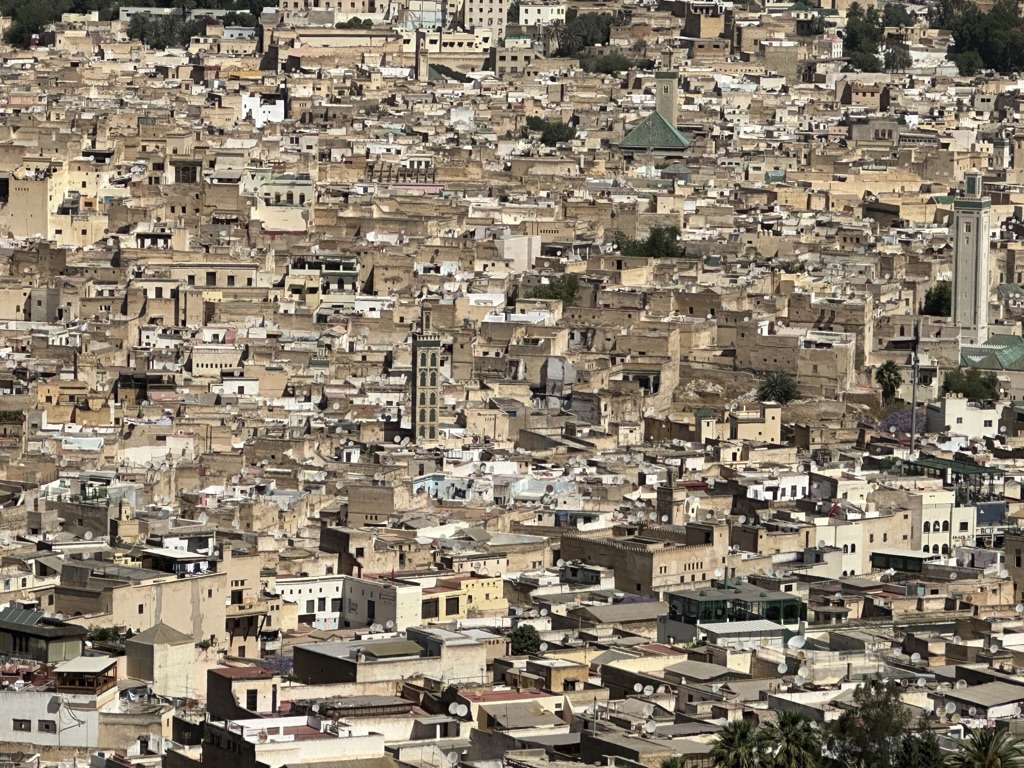
The Old City of Fez should come with a warning: you will get lost in here without a guide. It is a twisting labyrinth of indescribable complexity, dating back 1,200 hundred years. I ask Adil about this – what if we were here by ourselves? – and he assures me “you would find your way out. Eventually.”
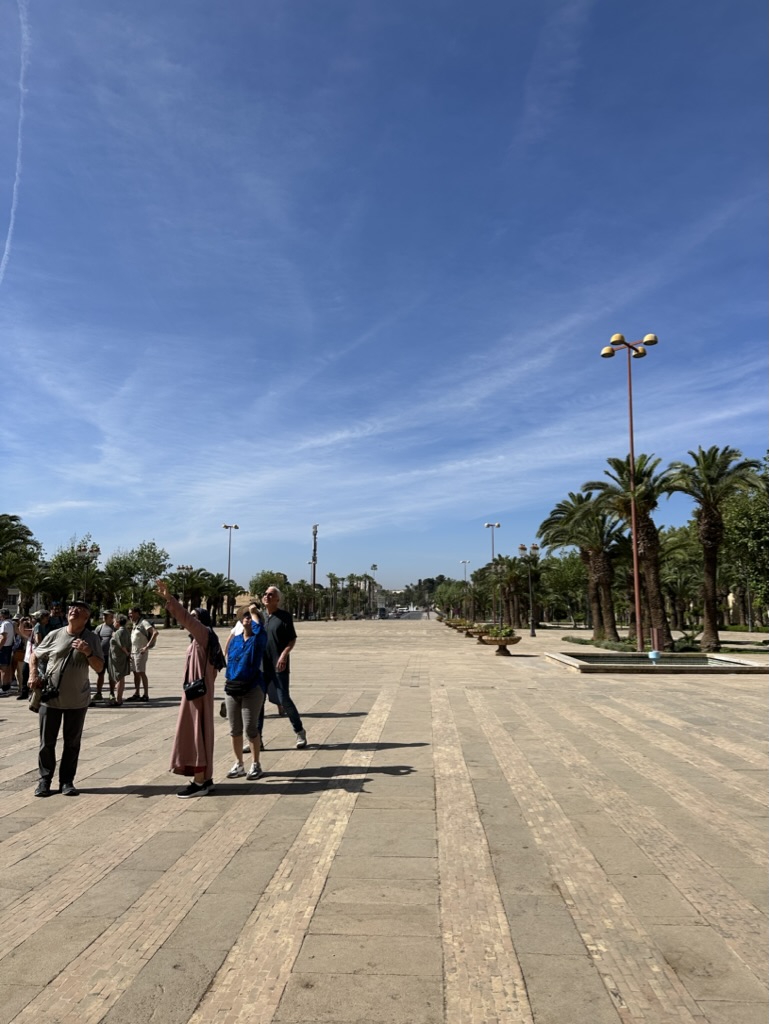
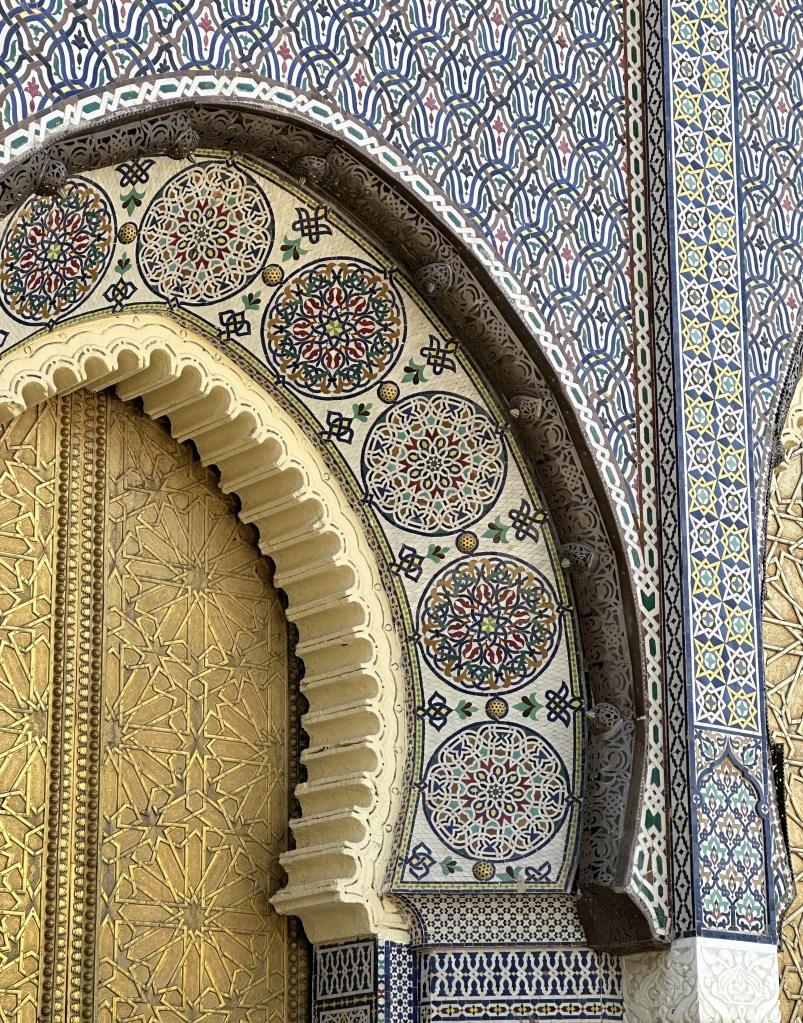
Our day doesn’t start in the Old City, but with a late morning visit to the Royal Palace. Rather, to the main gate and promenade outside, as no one is allowed in. This is true of all the royal palaces, which is understandably a point of contention for many Moroccans as they wonder what their tax dollars pay for. You can’t even see the structures behind the high walls. Hundreds of people are employed at each palace – there are four – and no one seems to know much about these elaborate residences…and the workers are sworn to secrecy.
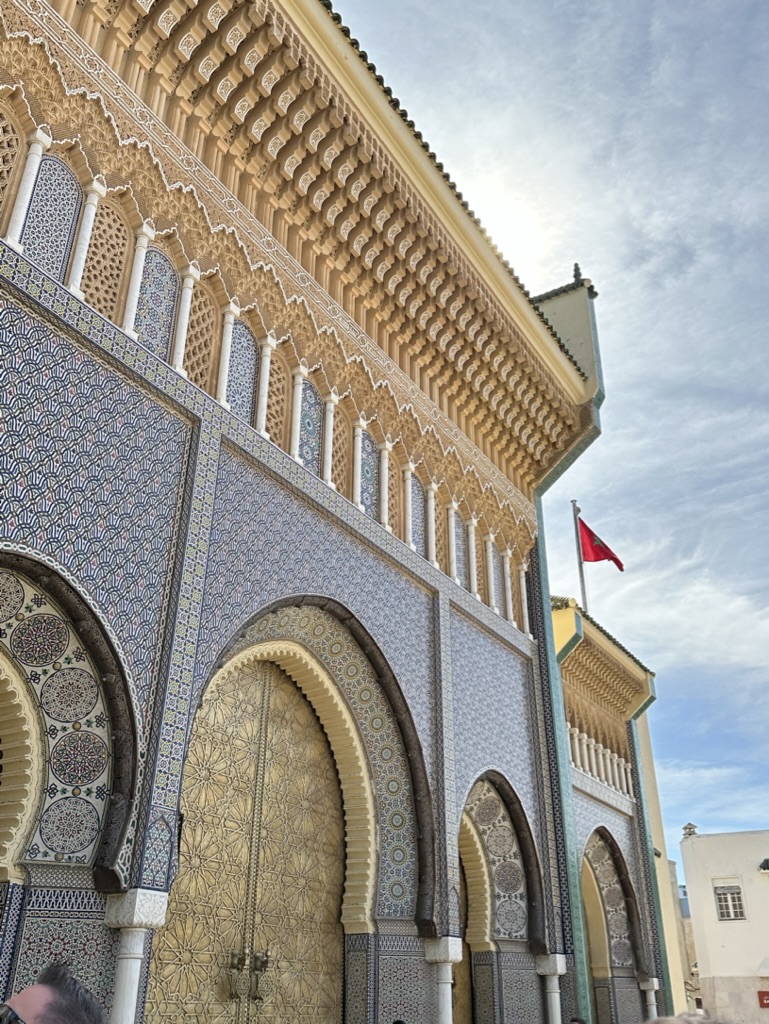

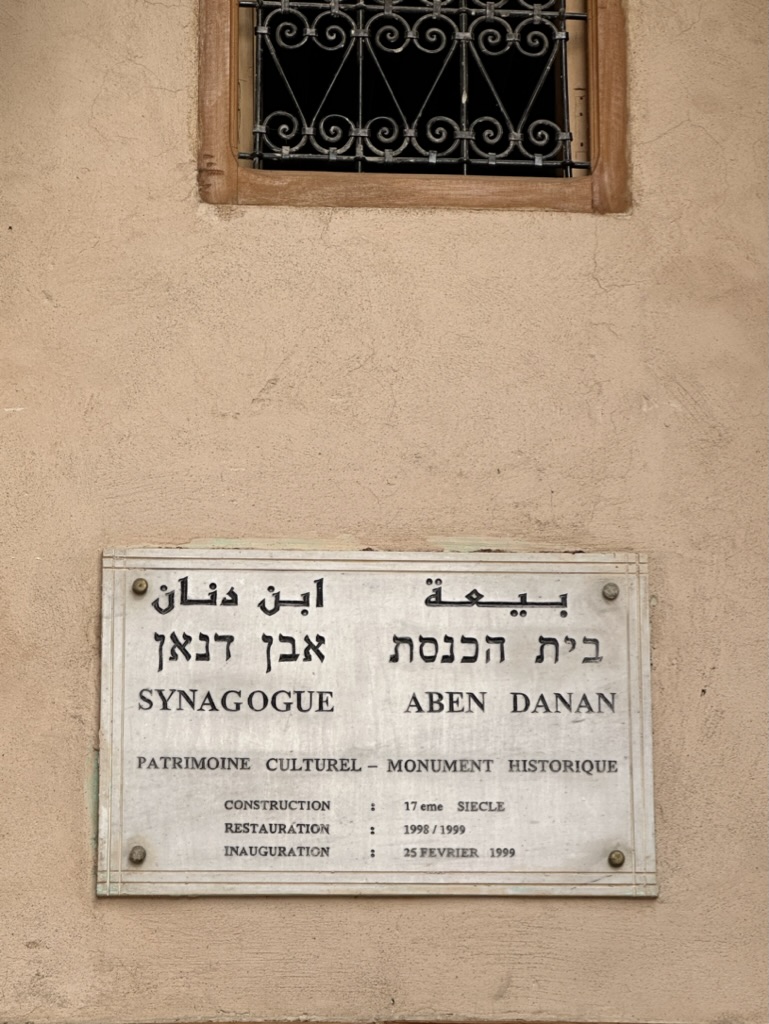
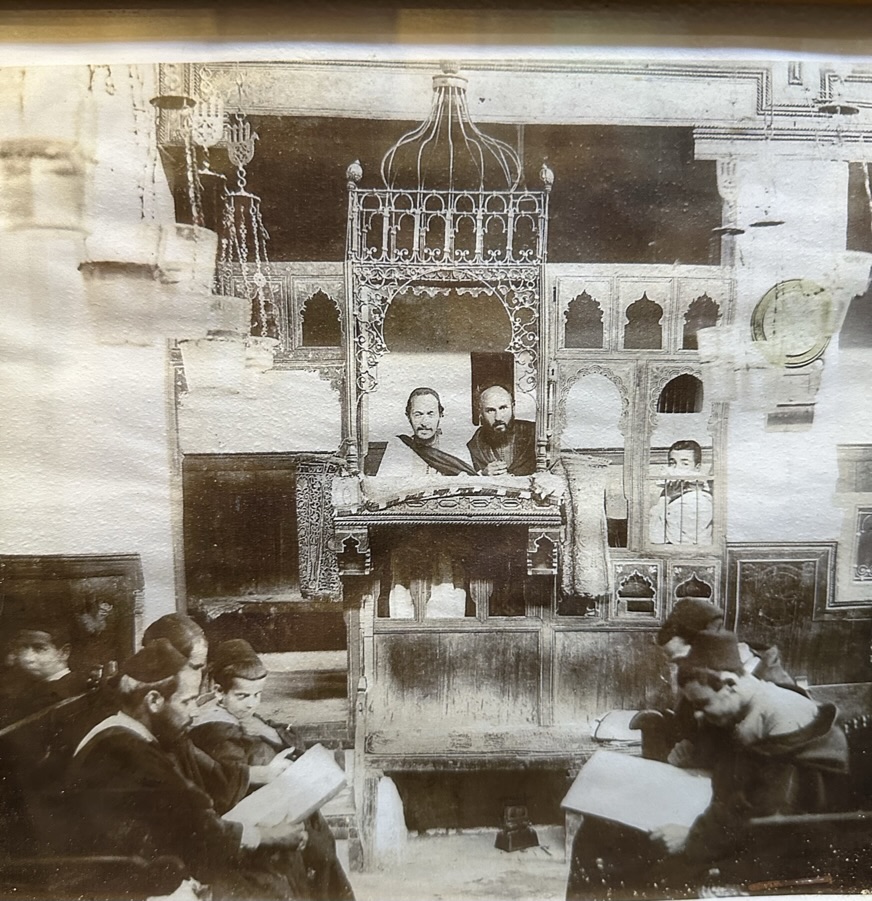
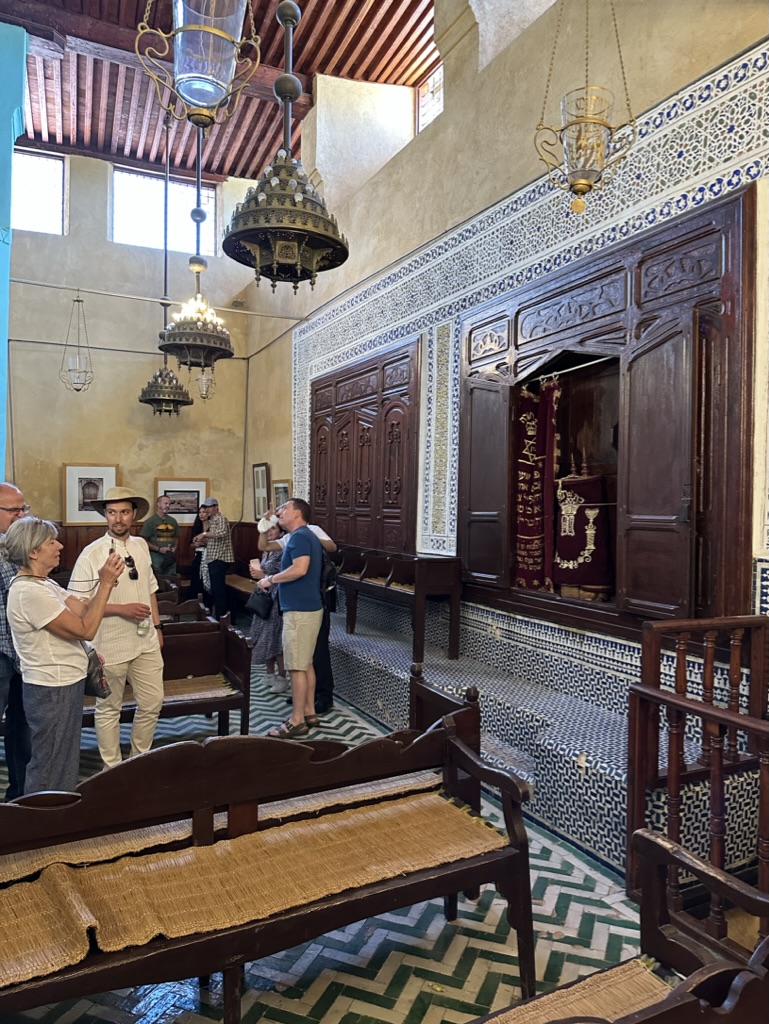
It’s a quick stop, after which we get a first taste of the old city, its narrow streets delivering us to oldest synagogue in Fes. Adil says it is still used for worship, but the ark is open and I see no eternal flame burning, so wonder about that. There was once a large Jewish population in Morocco, but it has dwindled to about 2,000 even as the government works to maintain Jewish heritage as part of Moroccan culture.
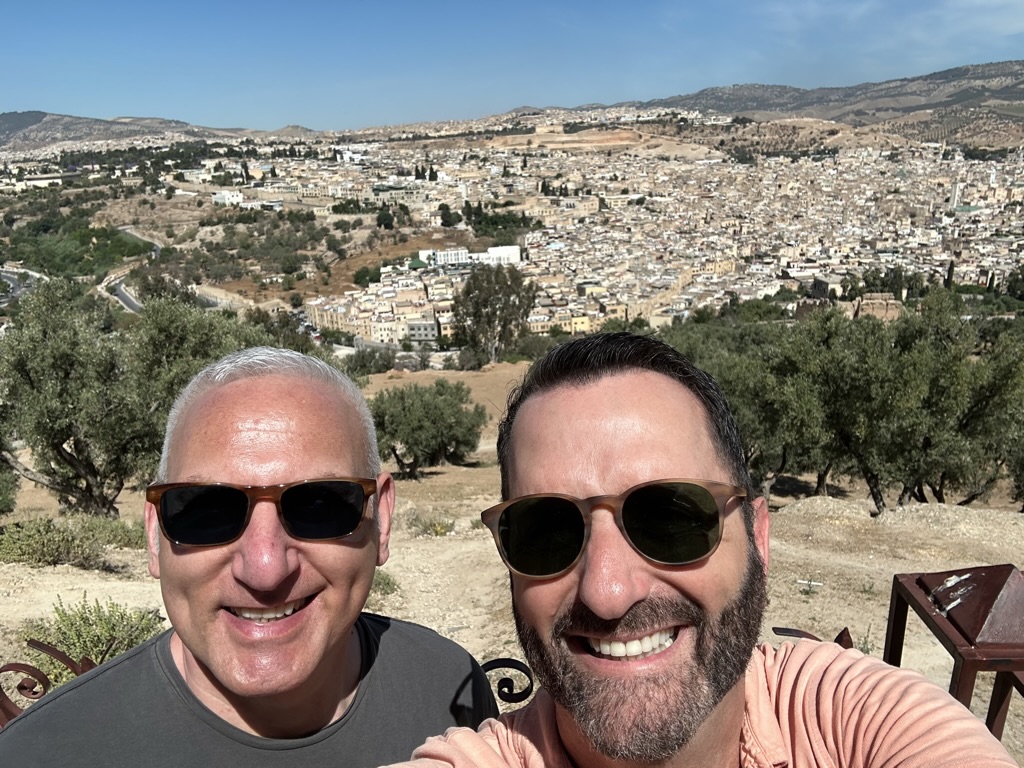
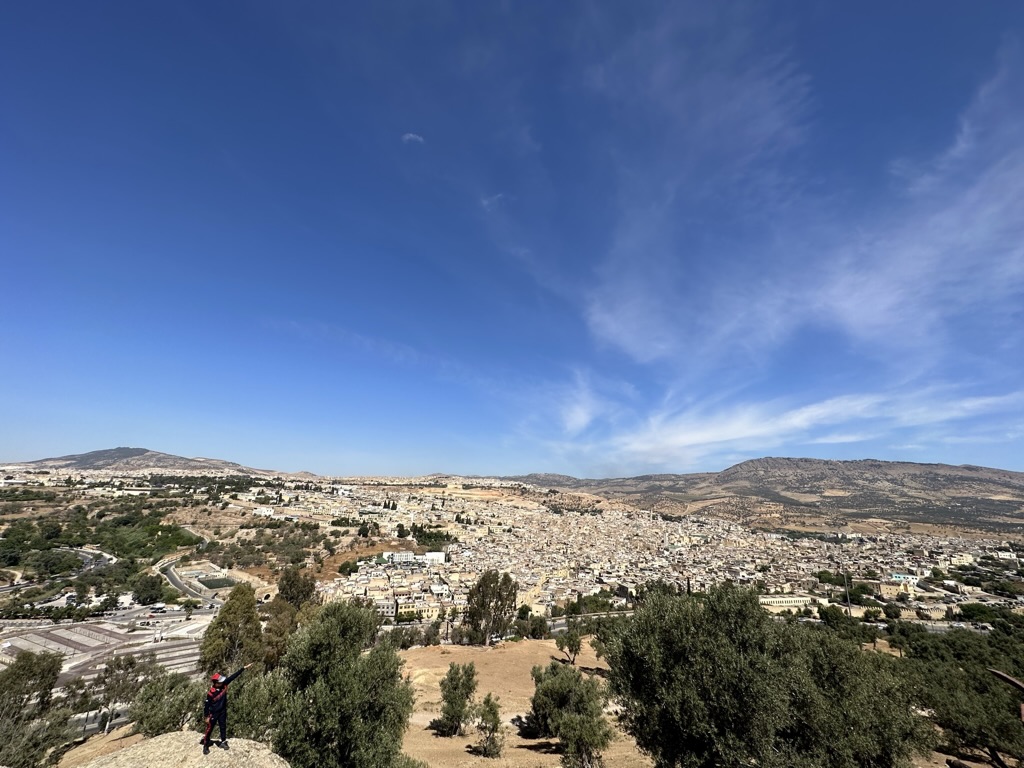
We are soon headed for a vista looking out over the whole city of Fes. It is strangely reminiscent of viewing Jerusalem from the Haas Promenade (there’s a post on that here), even including a cemetery to the right on a hillside. Ancient communities were often sited based on similar principles – water, defense, trade – so perhaps that is why. It’s a spectacular view, and we get a good sense of the region’s geography…a macro view of the hustle and bustle lurking below, surrounded by sloping hills. There are some other tourists doing exactly what we are, and a few vendors capitalizing on the opportunity, their wares laid out on blankets and rugs along the concrete walls. We get our first opportunity buy a fez! Red or maroon…hmmmm….Adil tells us to wait until we are at the silk weaver.
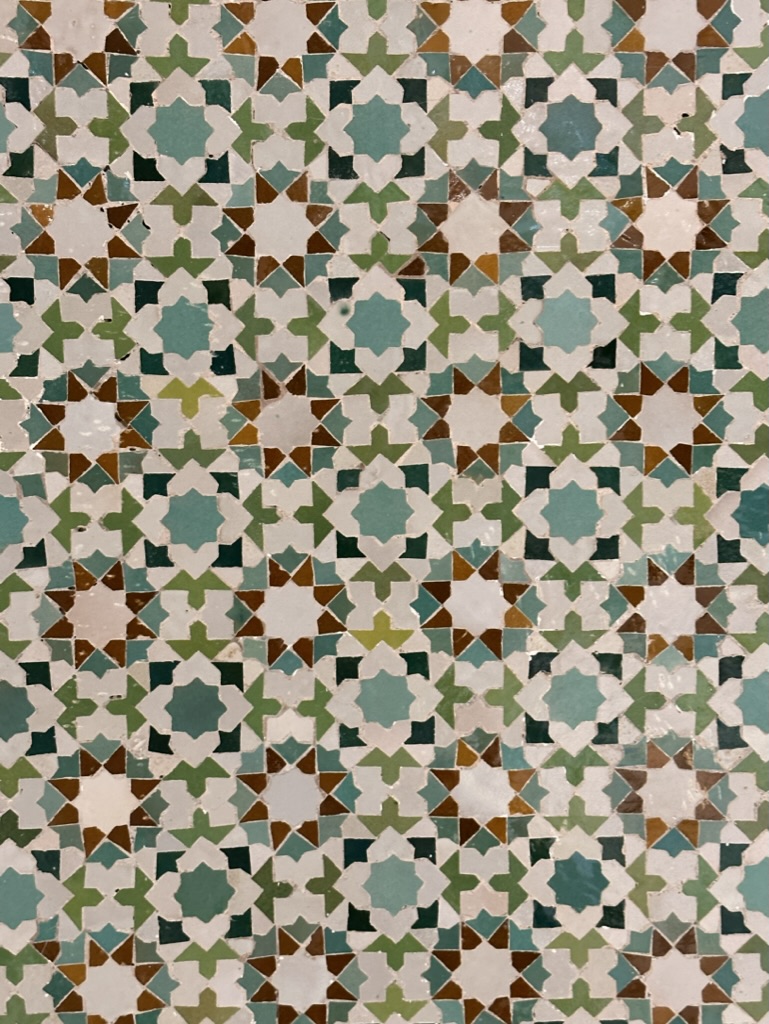
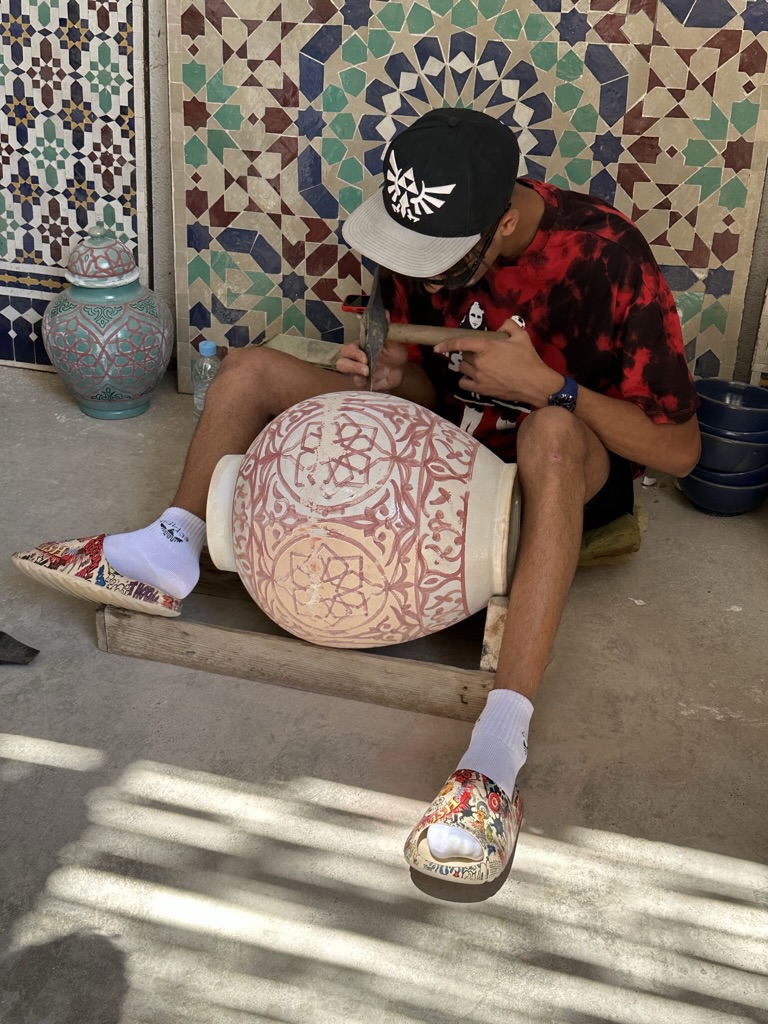
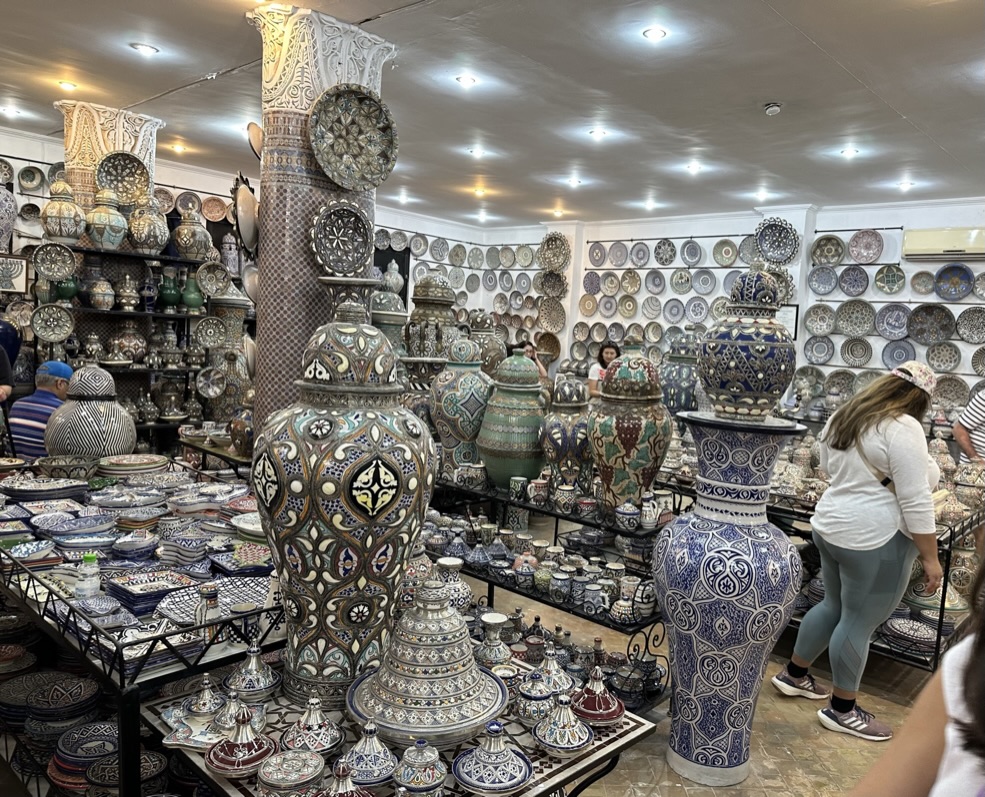
Next on our busy agenda comes the ceramic and mosaics “factory.” That’s the wrong word, though – it’s not really a factory as most of us think about that – it’s more a collective of highly skilled craftsmen with a common goal: absolutely stunning mosaic tables and fountains. The tiny mosaic tiles are made individually – scored, cut, and chipped away at by hand to get the perfect shape…one by one.
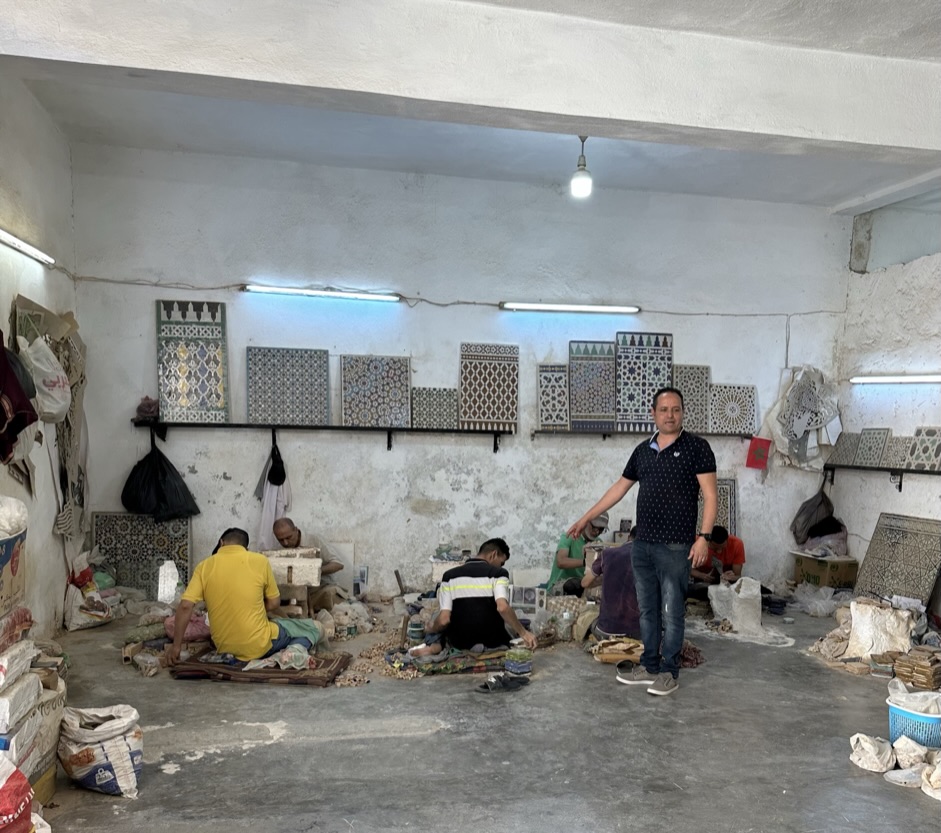
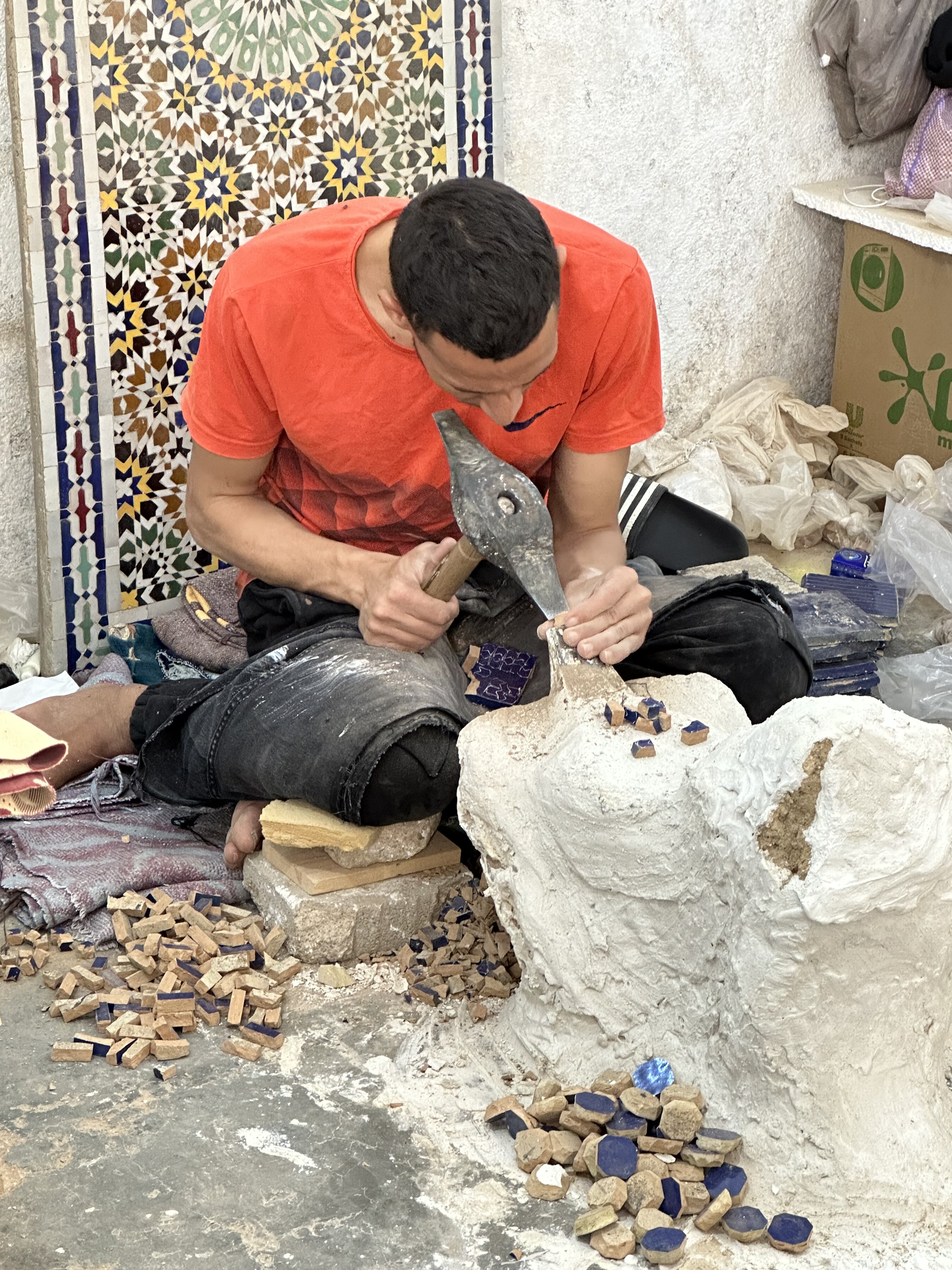
With a mosaic pattern designed, it is laid out upside down with just the right amount of space between each tile (no plastic spacers here!). It is then filled with a polymer (much lighter than plaster), turned over to reveal the colorful pattern, and grouted. We are fascinated watching this process, and wonder how often a green tile ends up where a red one should be – and then realize that each shape is a unique color, so as long as the shapes fit, the colors are right.
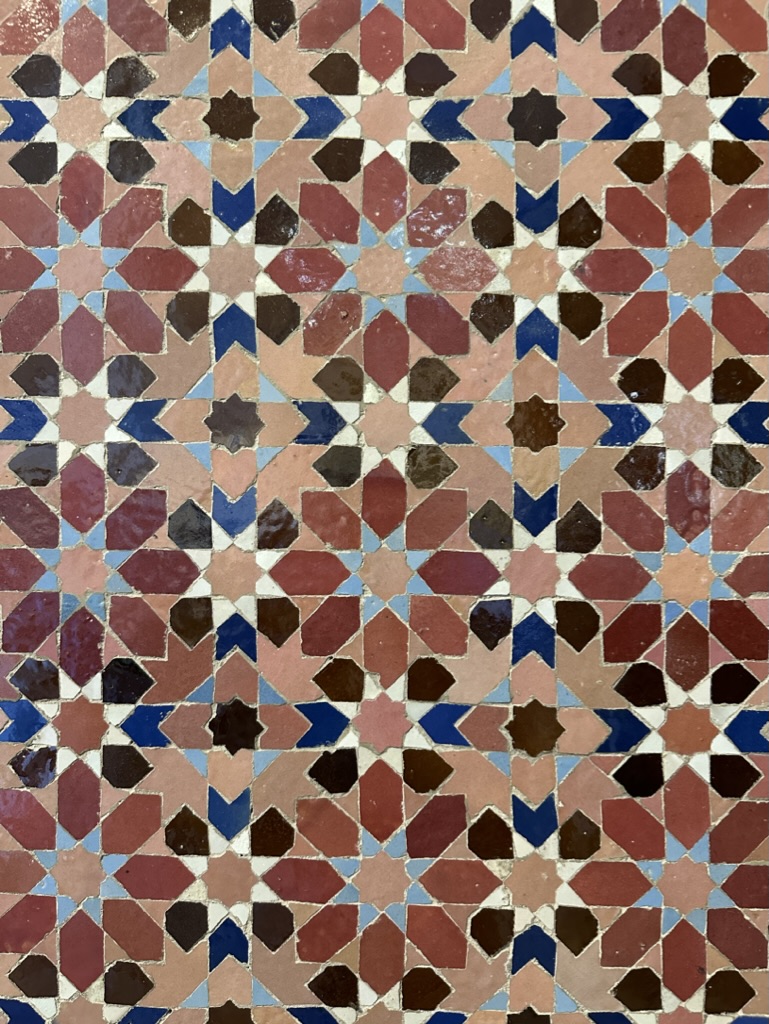
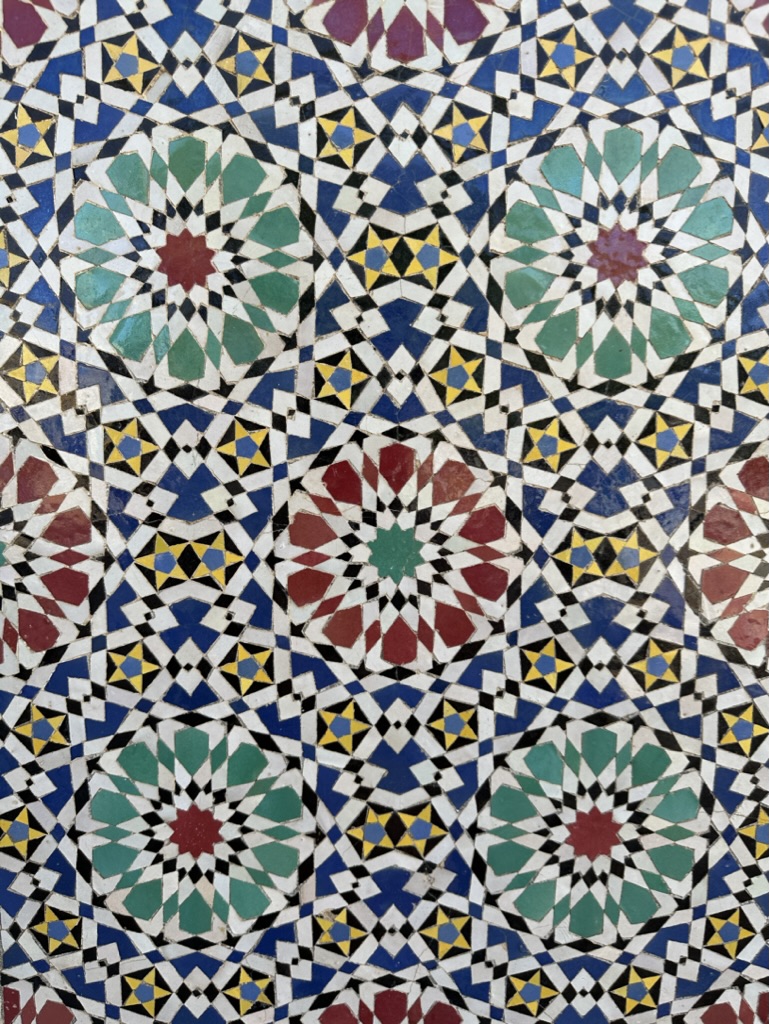
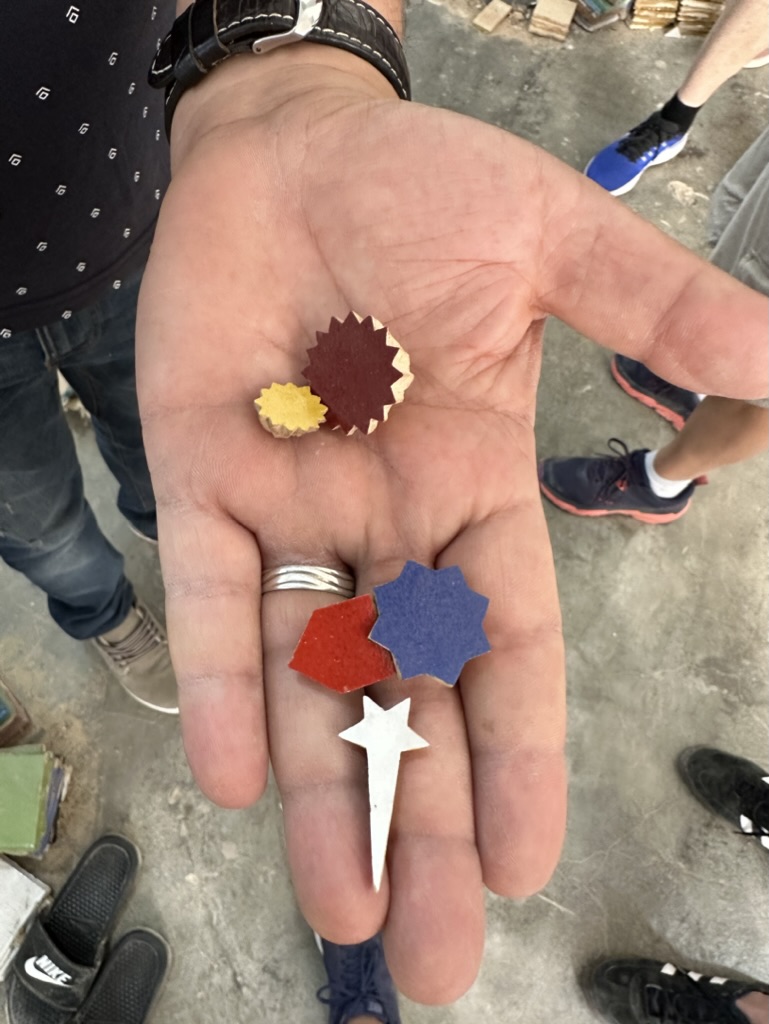
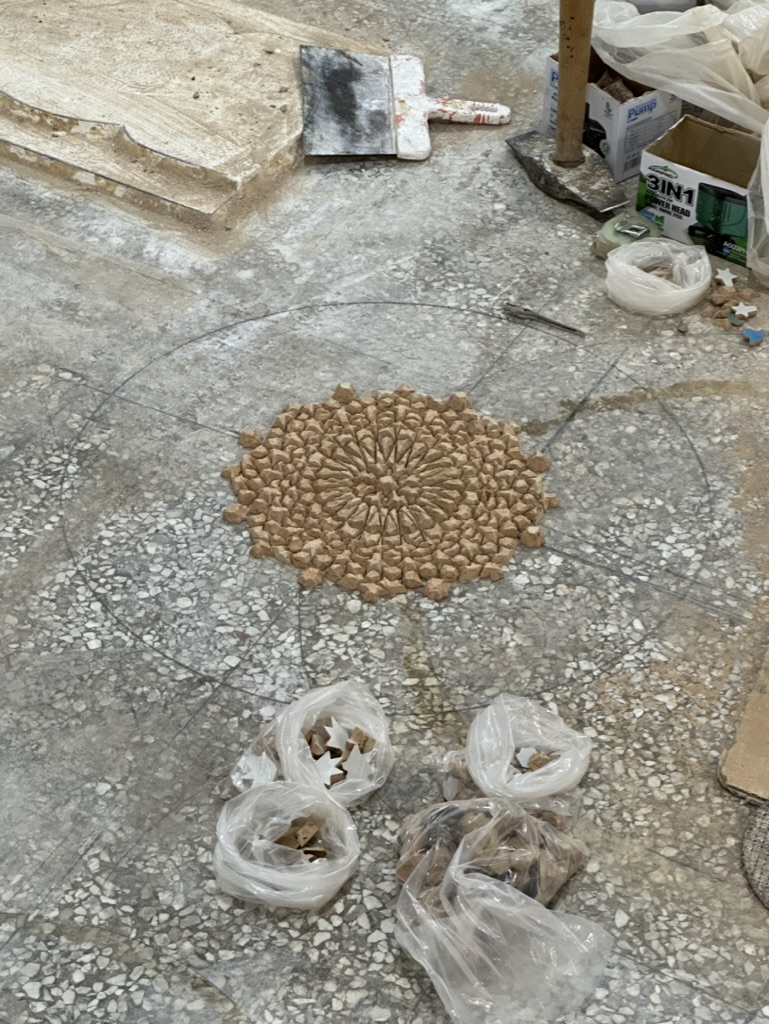
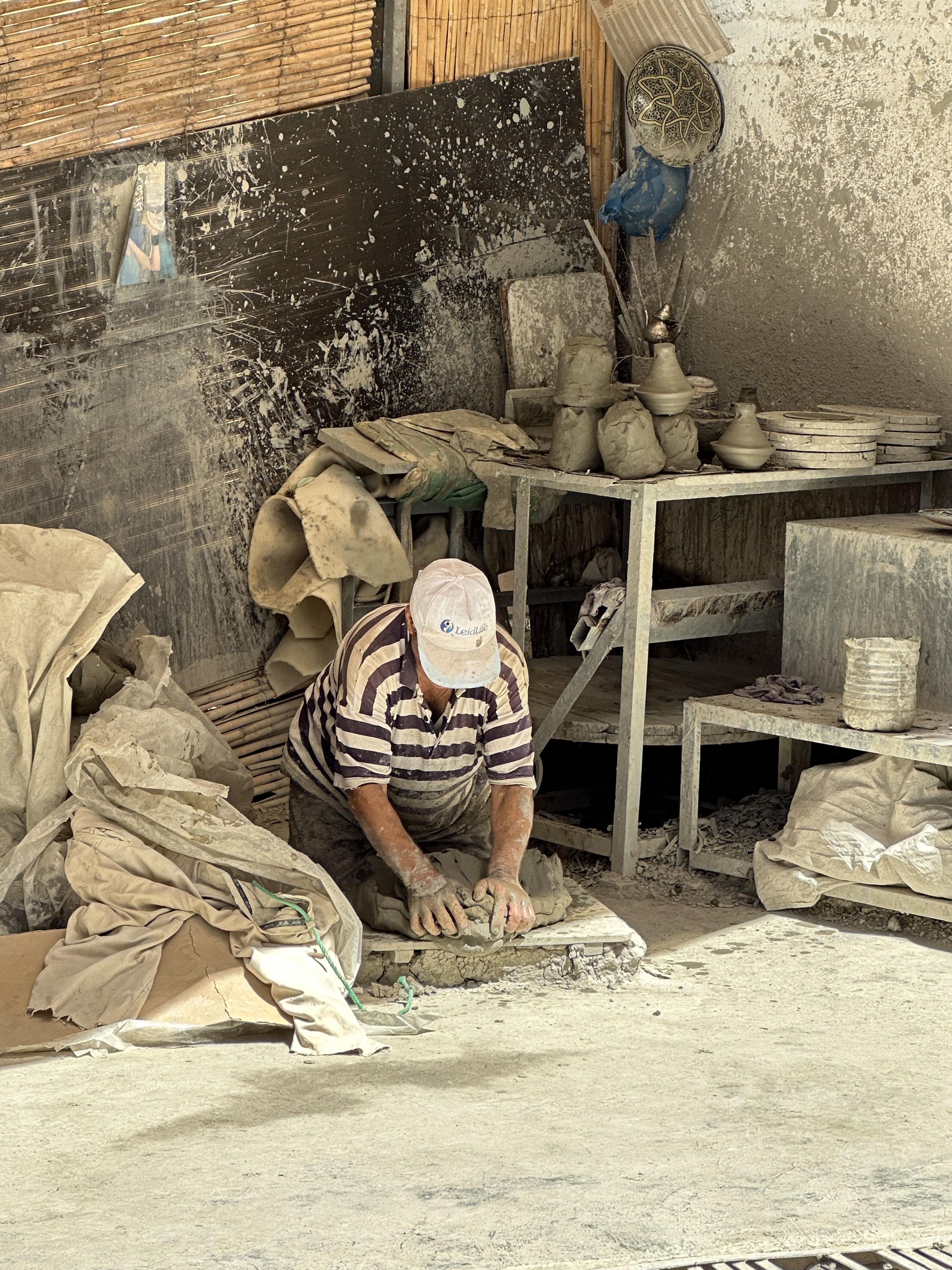
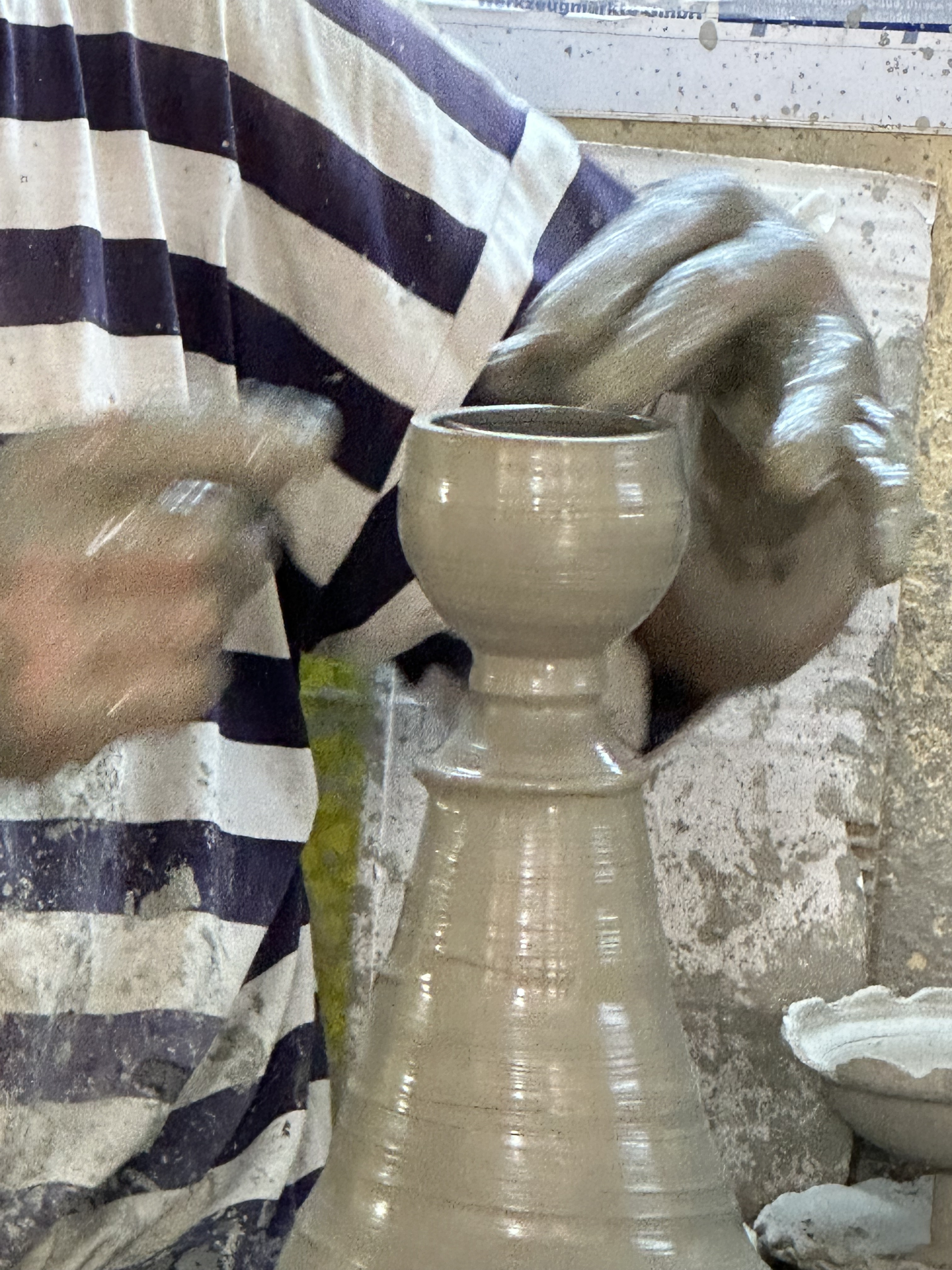
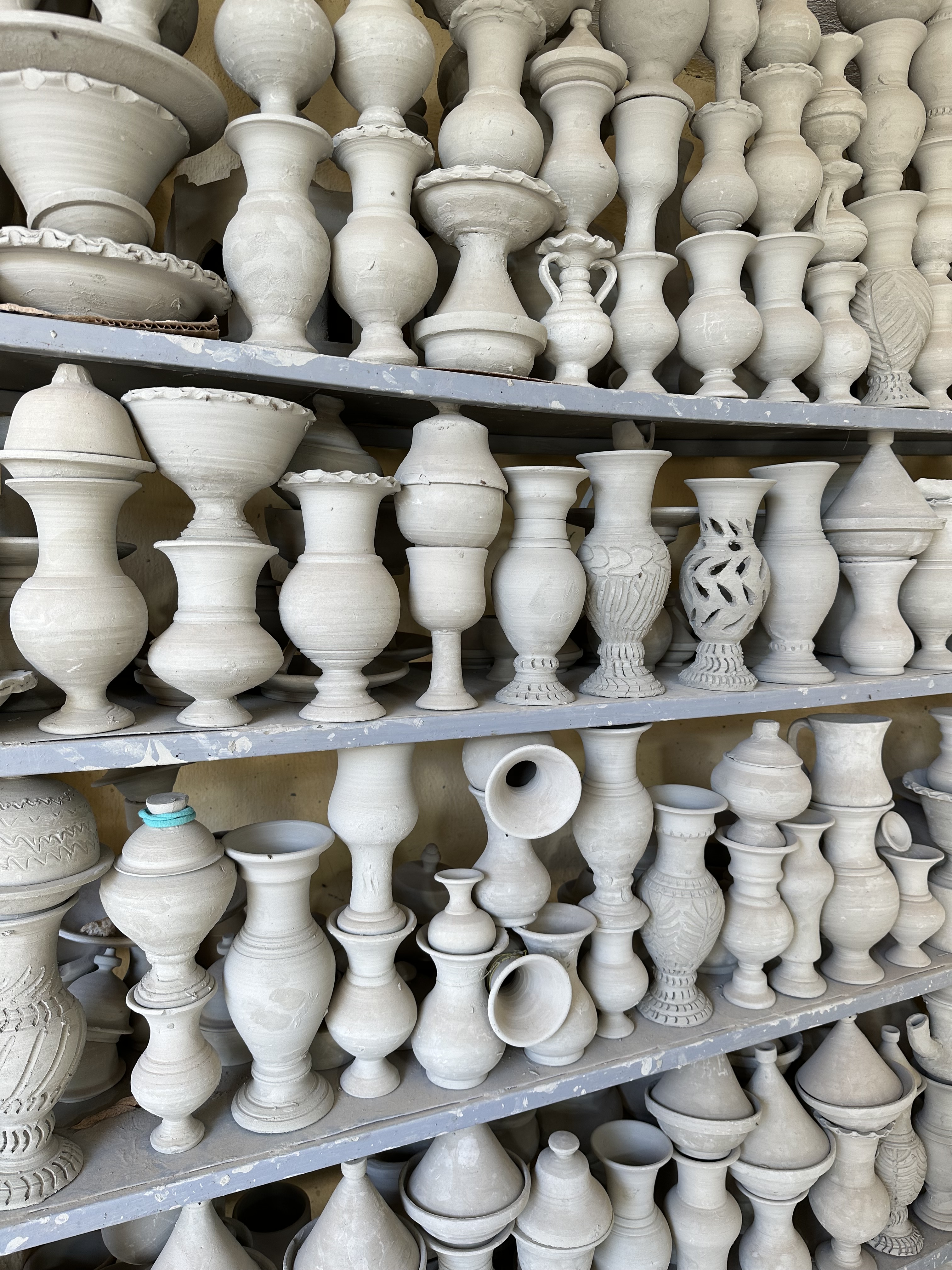
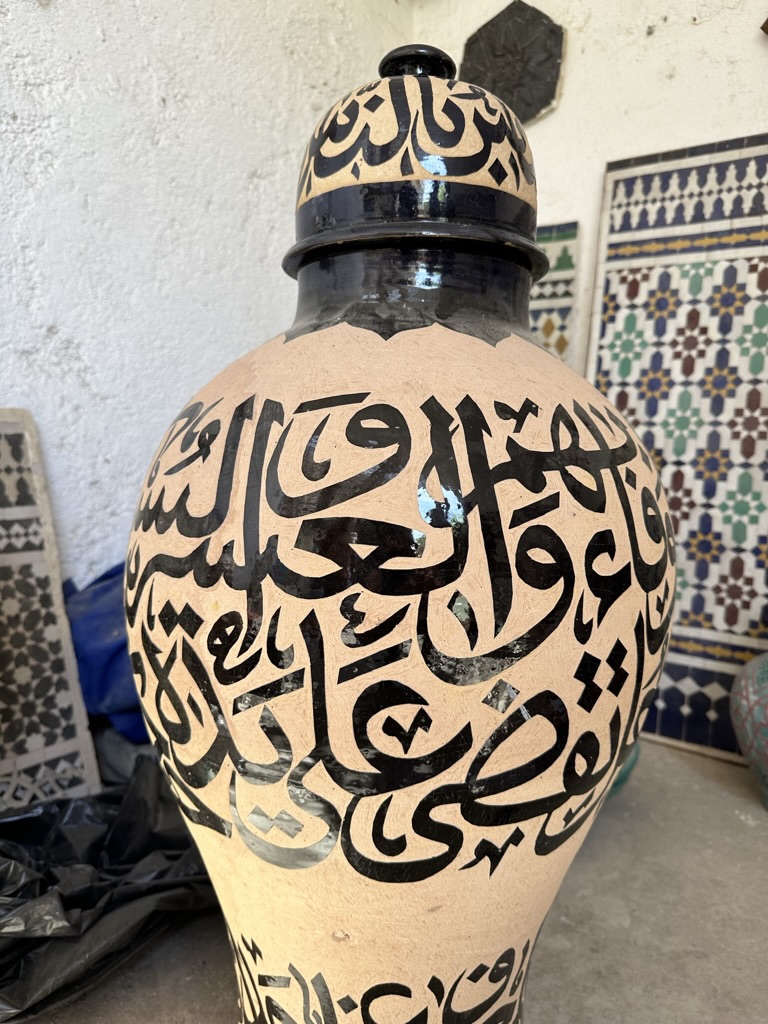
They also do stunning glazed ceramics with uniquely Moroccan designs. One style involves chiseling away glaze to create a relief sort of design. The artisans (all men) work quietly against the sound of hammers chipping and pottery wheels turning (by foot, not electric). We could watch them score and cut and chip and chisel for hours – it’s just so incredible to see. The purchase of a table almost happens…
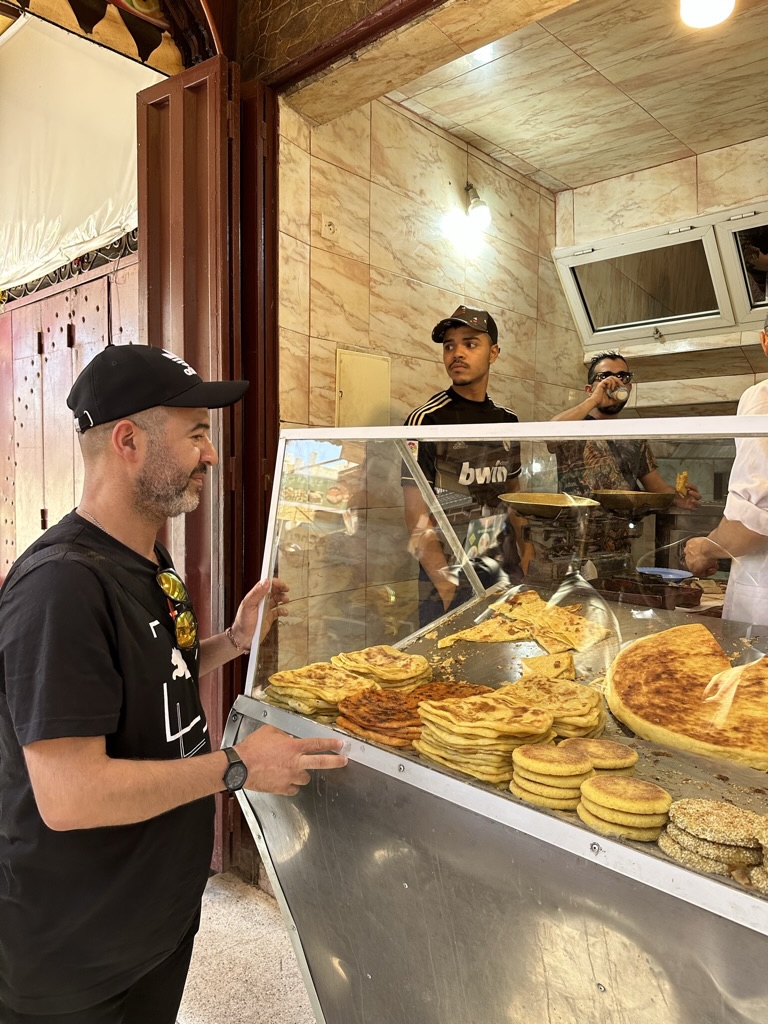
All of this morning activity has worked up an appetite, so the timing of our “culinary tour” is perfect. We meet up with another guide, Hasan, who will take us on an Old Fes tasting adventure – awesome! We start with breads…squeeze into a tiny “restaurant” for skewers (chicken or beef) that are eaten with bread dipped into a thin tomato sauce…there’s a walnut-stuffed date along the way…some baklava…and yes, we try camel – which was quite tasty if not a bit chewy – a well-spiced little burger in a Moroccan pita. A classic white bean soup came next, and lastly, honey of many varieties.
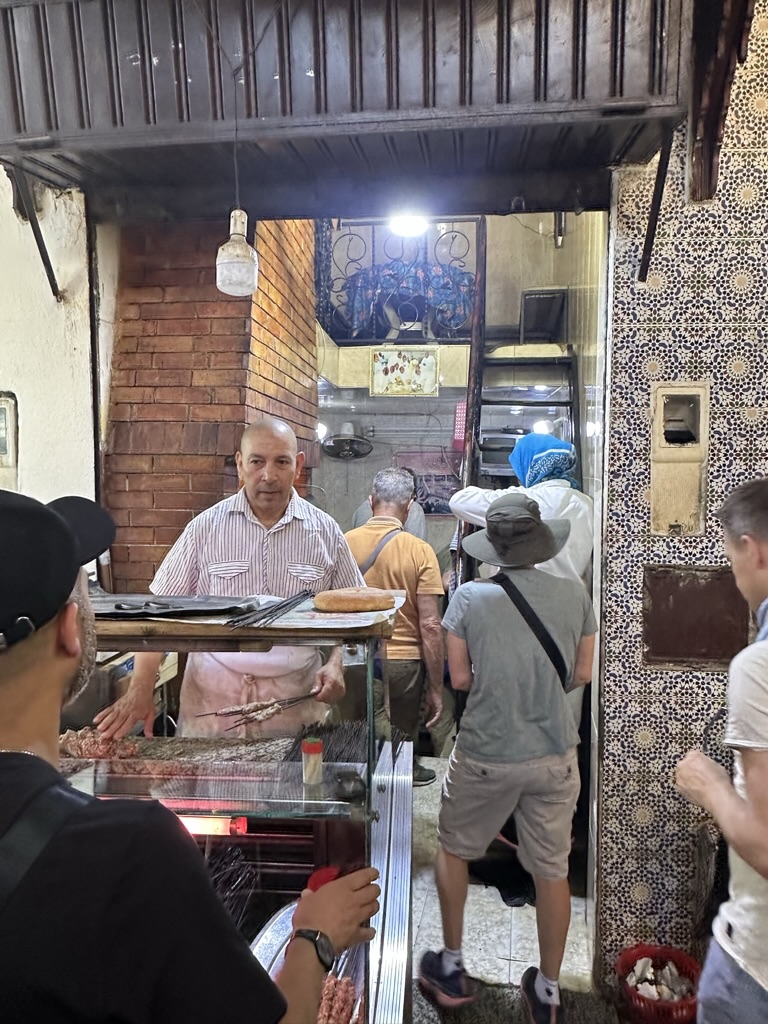
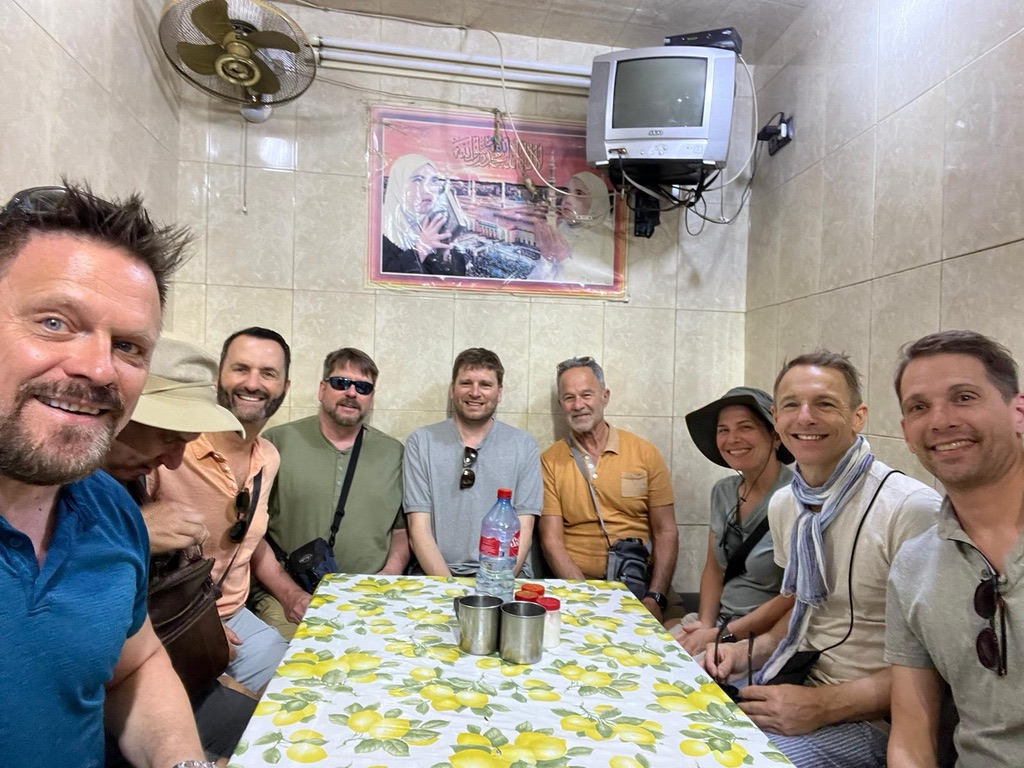
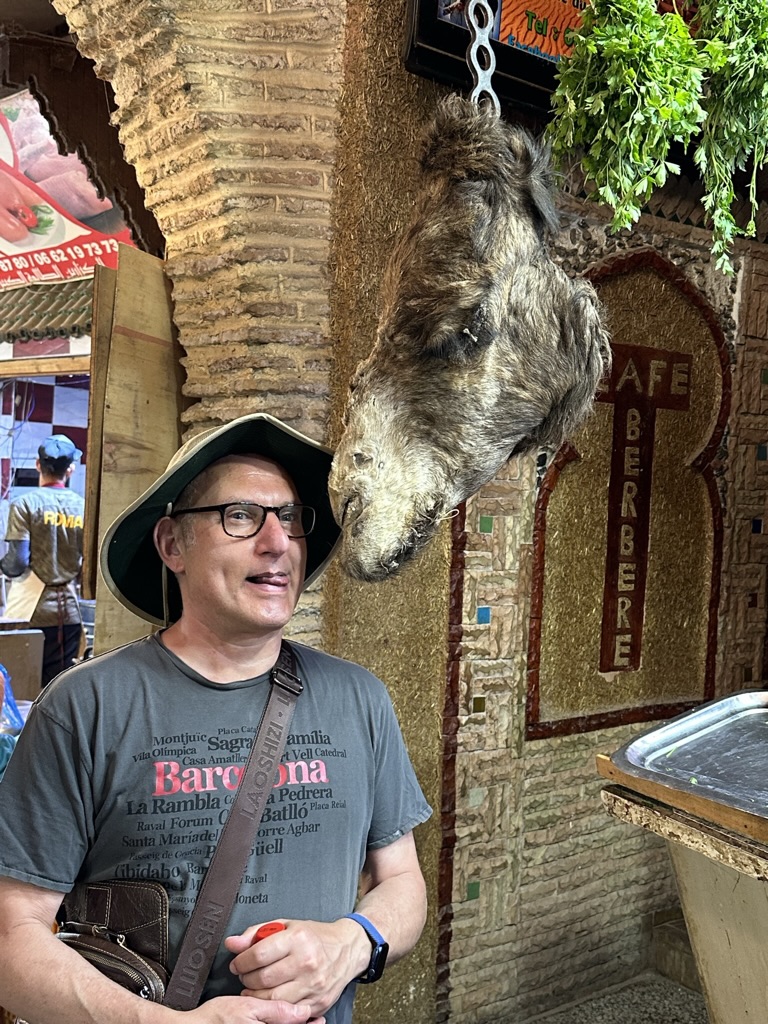
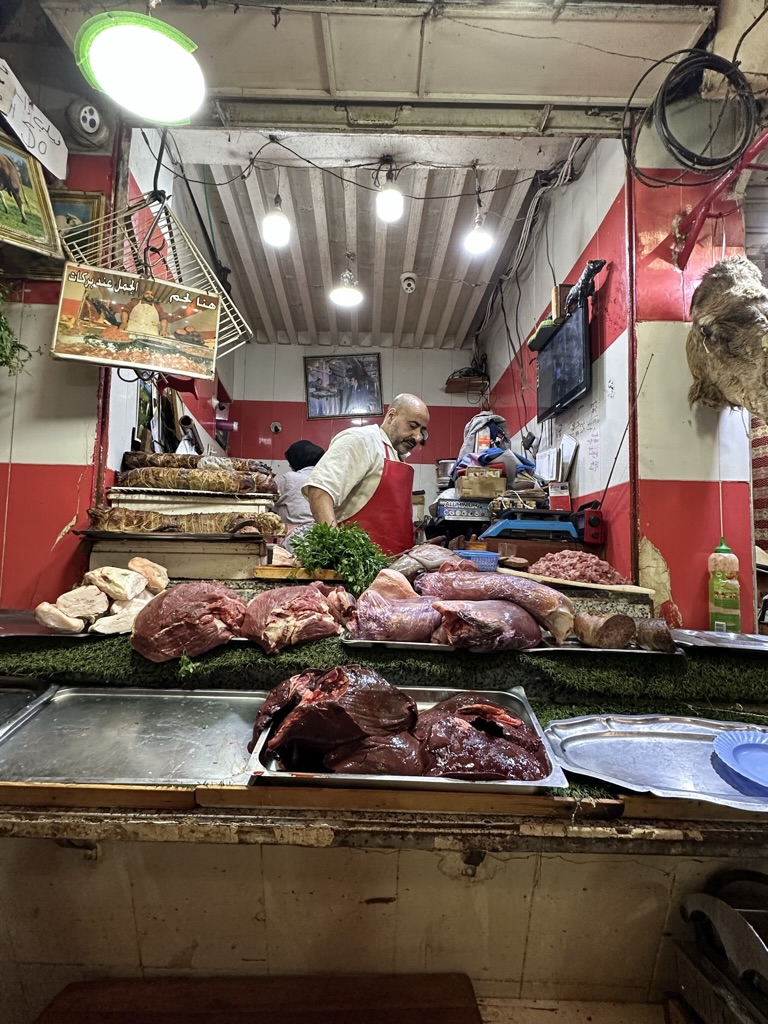
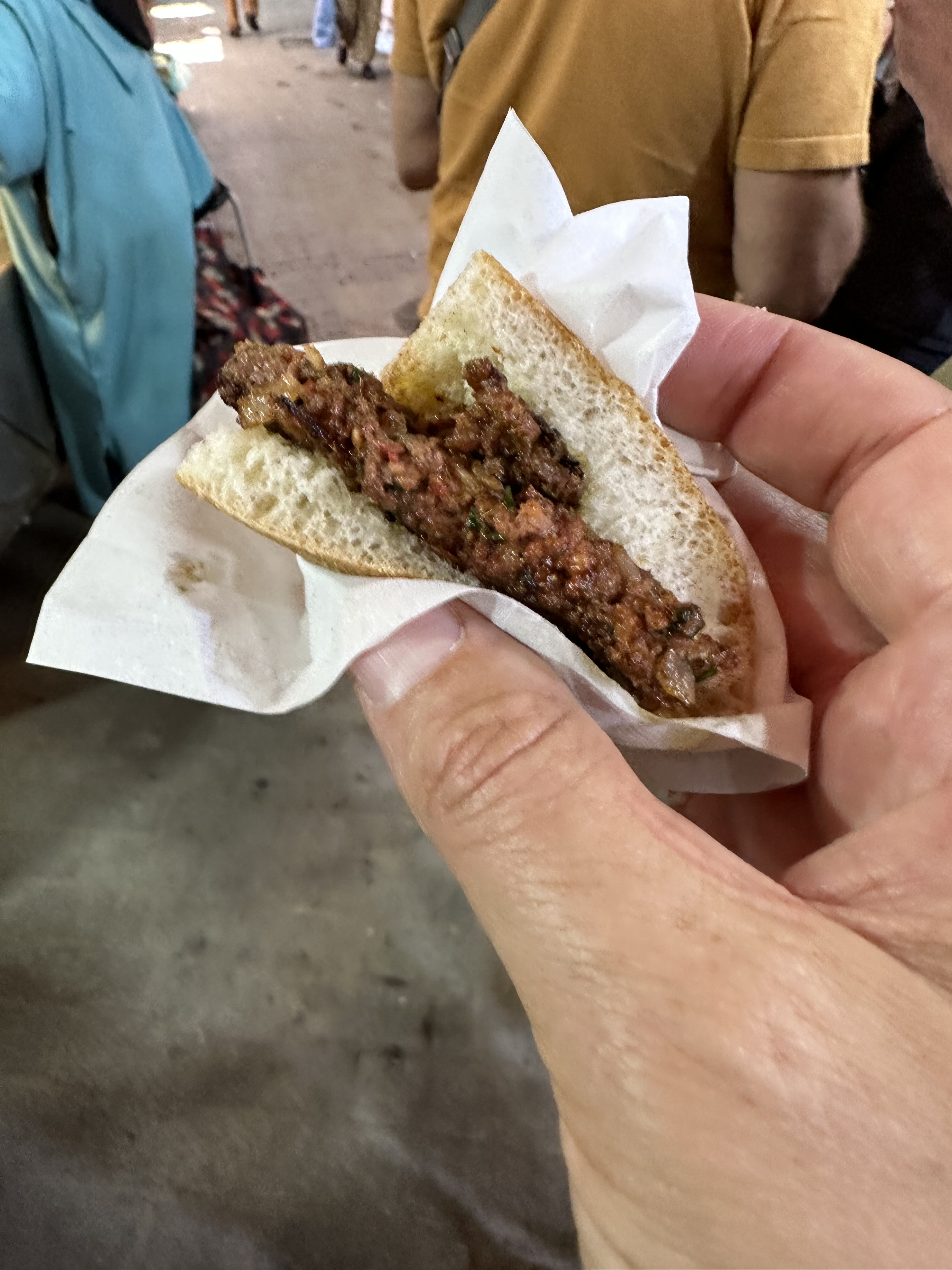
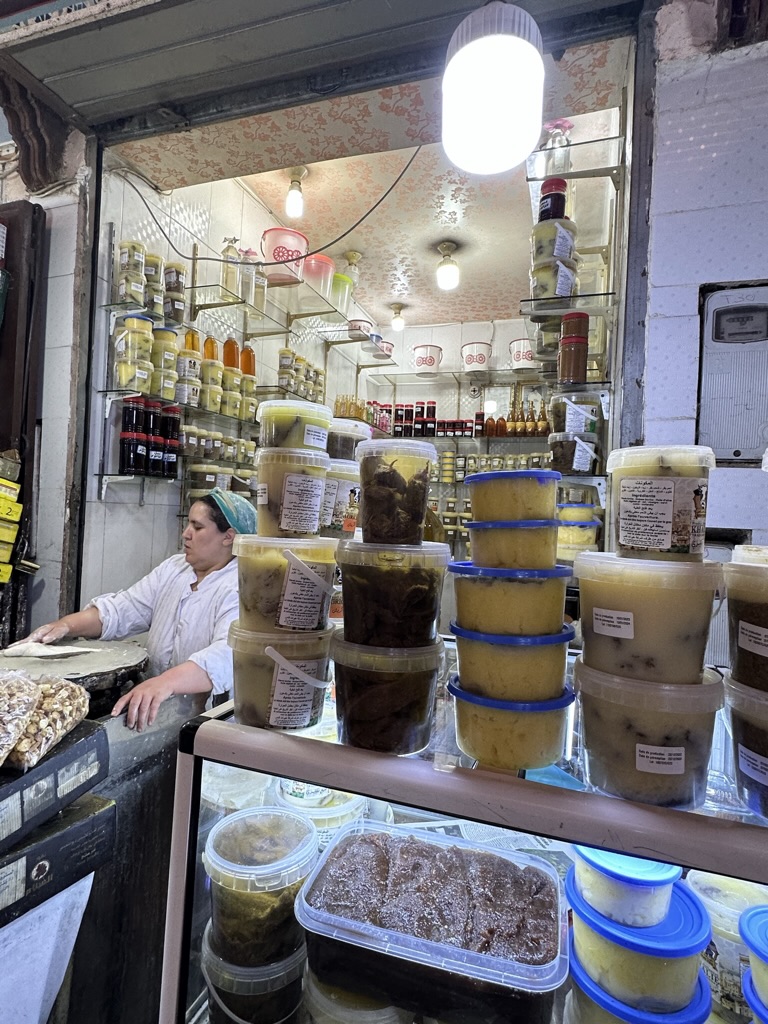
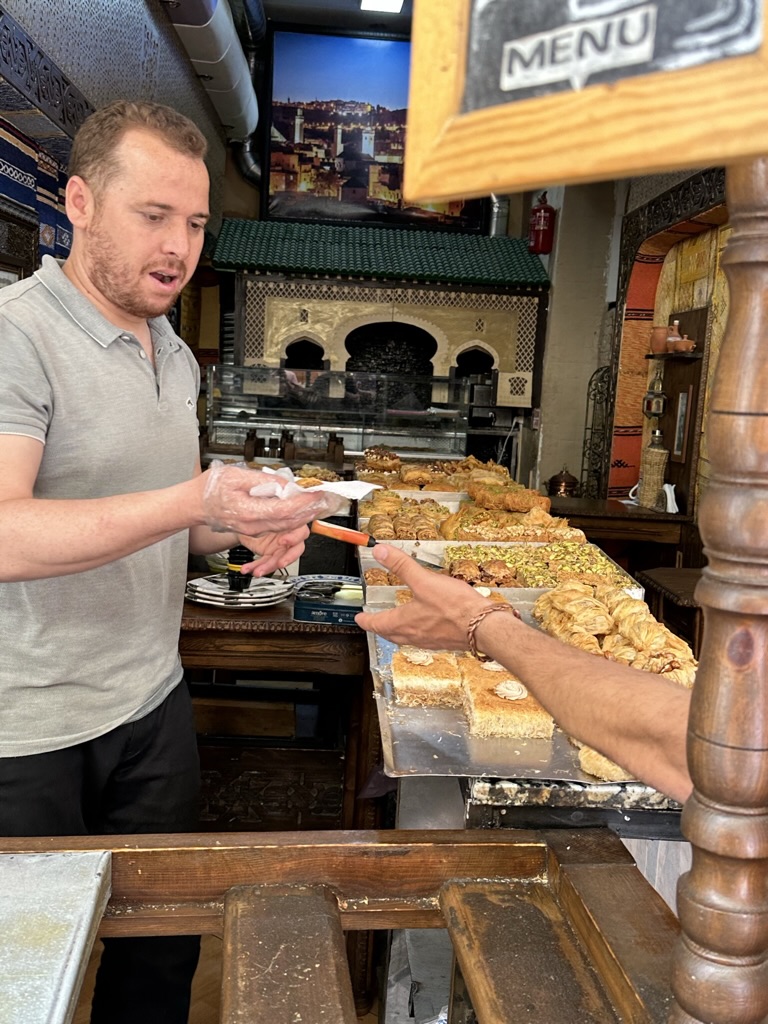
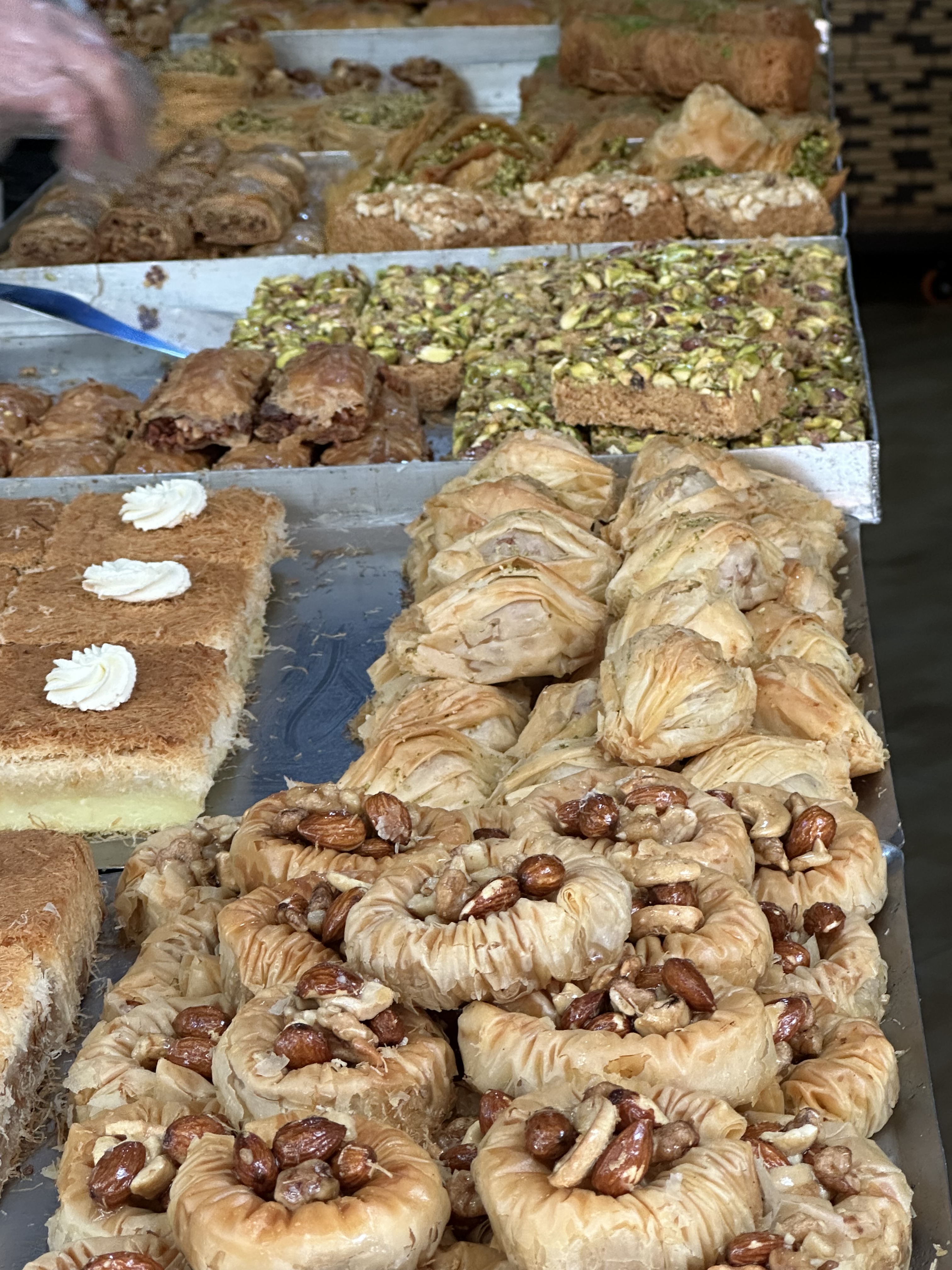
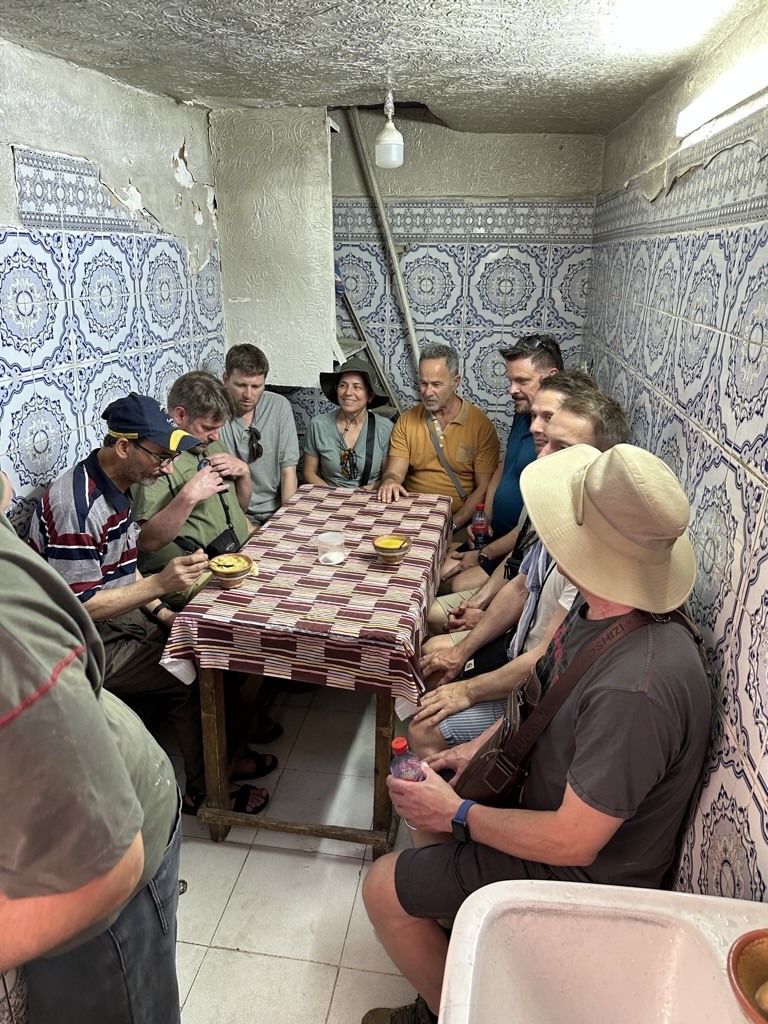
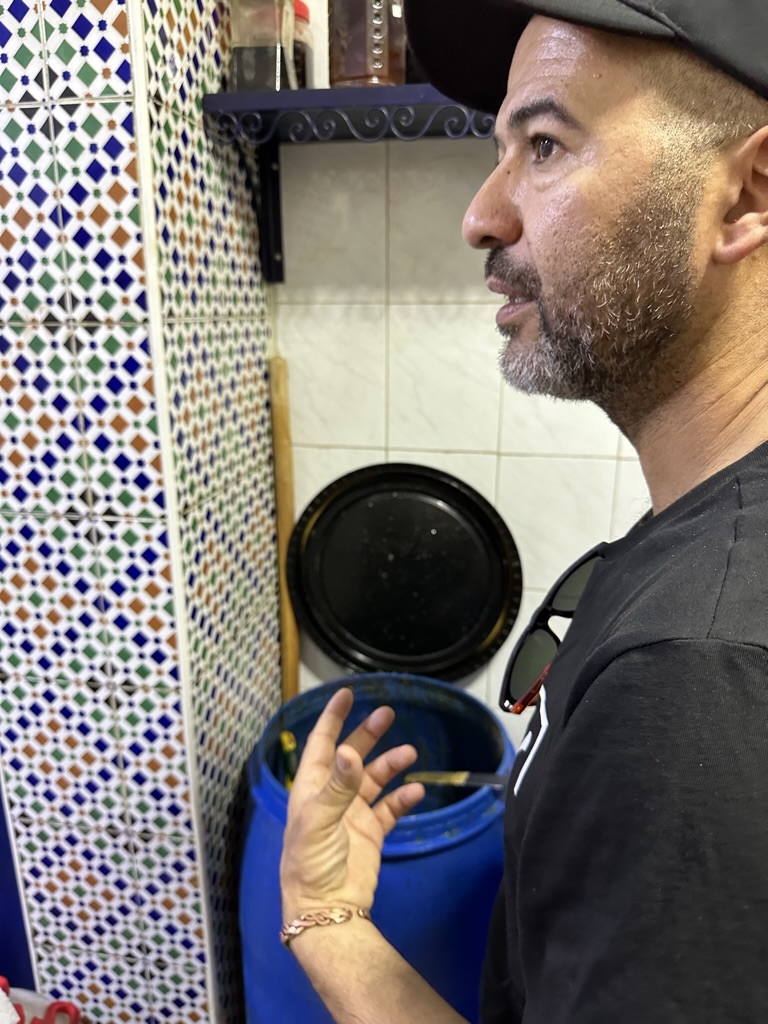
That blue barrel is filled with honey (one of many we tasted), and the random guy sitting at the soup table with us just happened to be there. Join the locals!
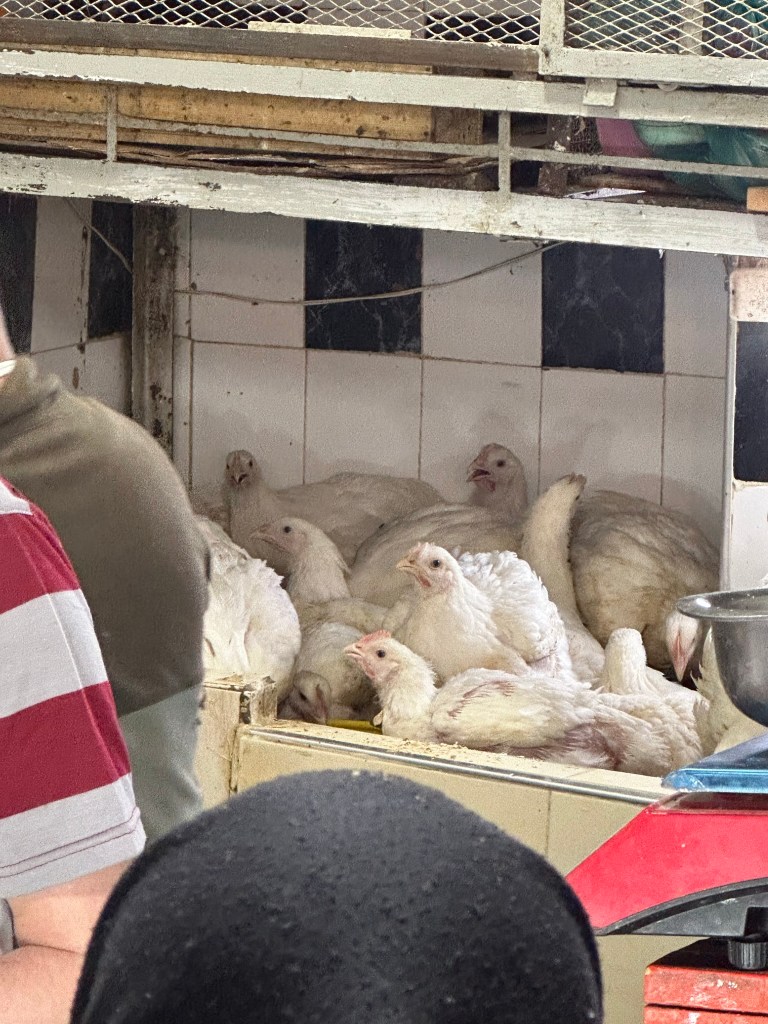
This journey took us through the “streets” of old Fes…down narrow paths lined with small shops, turning a corner here, a corner there, down a slope, turn left here, then right…the facades changing, the buildings sort of falling over, held up with boards between them, and then very-well kept. The shopkeepers range from energetic to bored repetition of their work (like making layers of phyllo). The sounds and smells fill the air – people yelling, chatting, buying, eating, smoke from grills, live chickens clucking. Yes, you buy a live chicken from the butcher, who kills, guts, plucks, and breaks it down in about 3 minutes.
Alley after alley, street after street, open skies, narrow and “wide”…and we would definitely have been lost were it not for our guides…
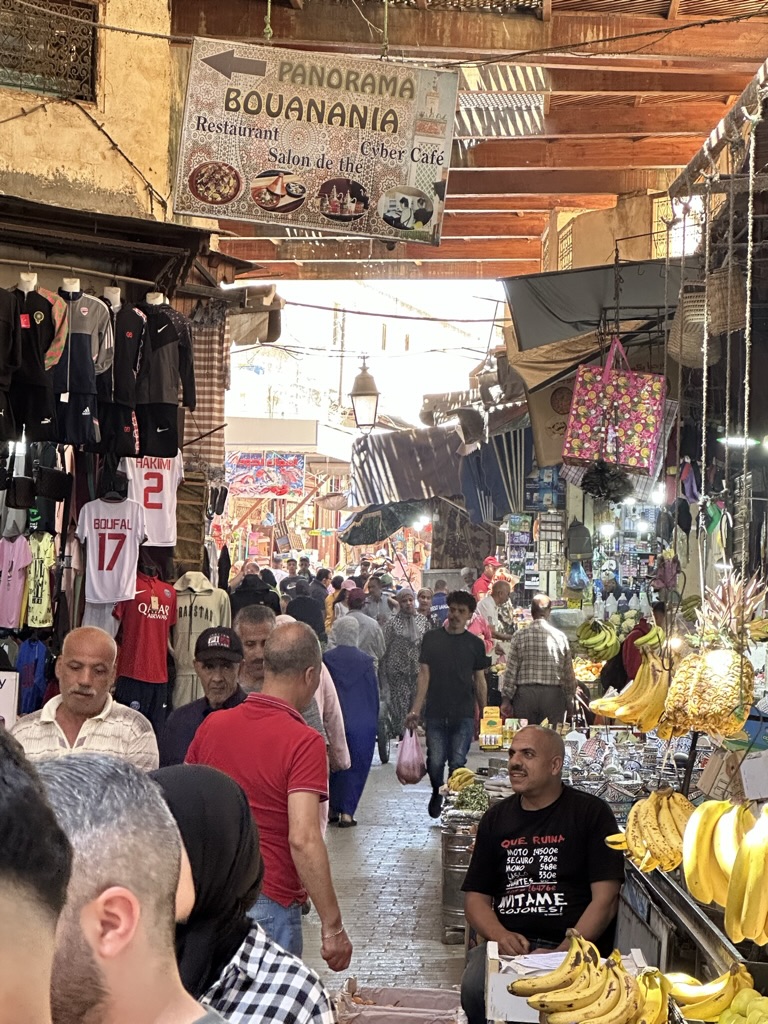
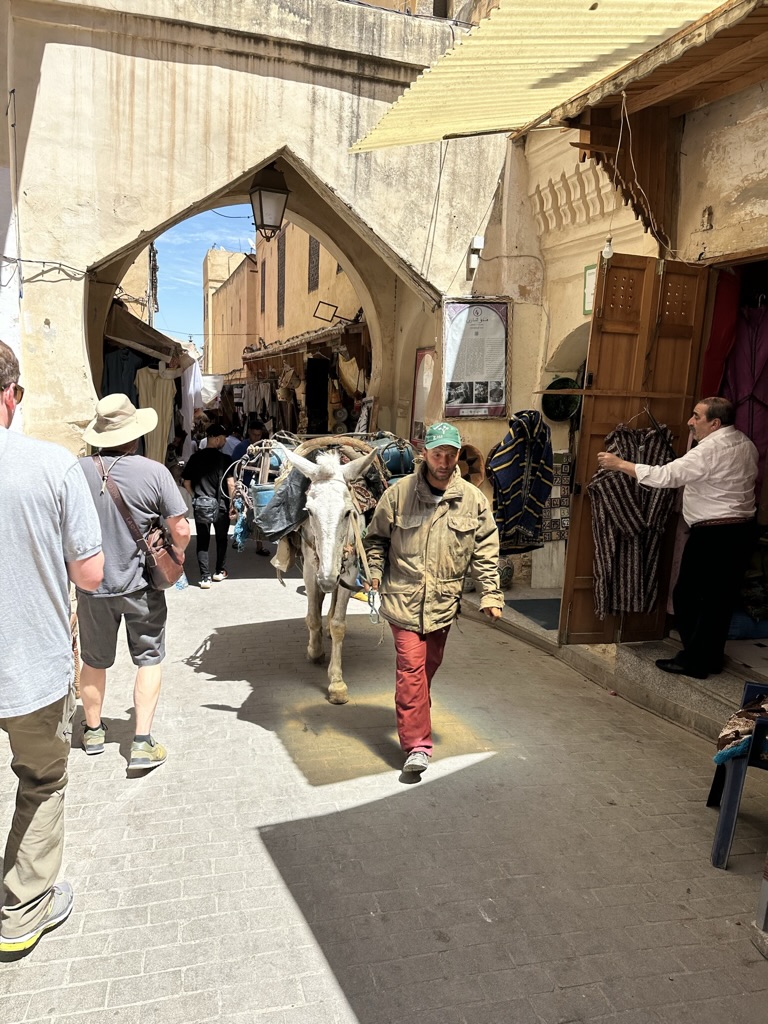
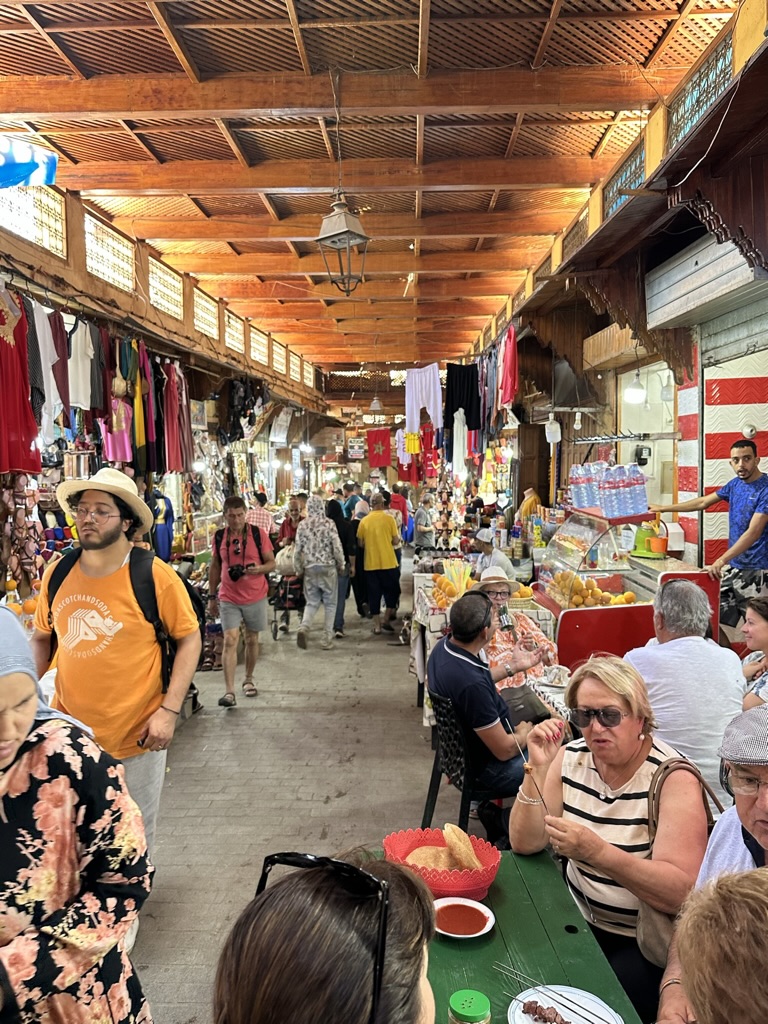
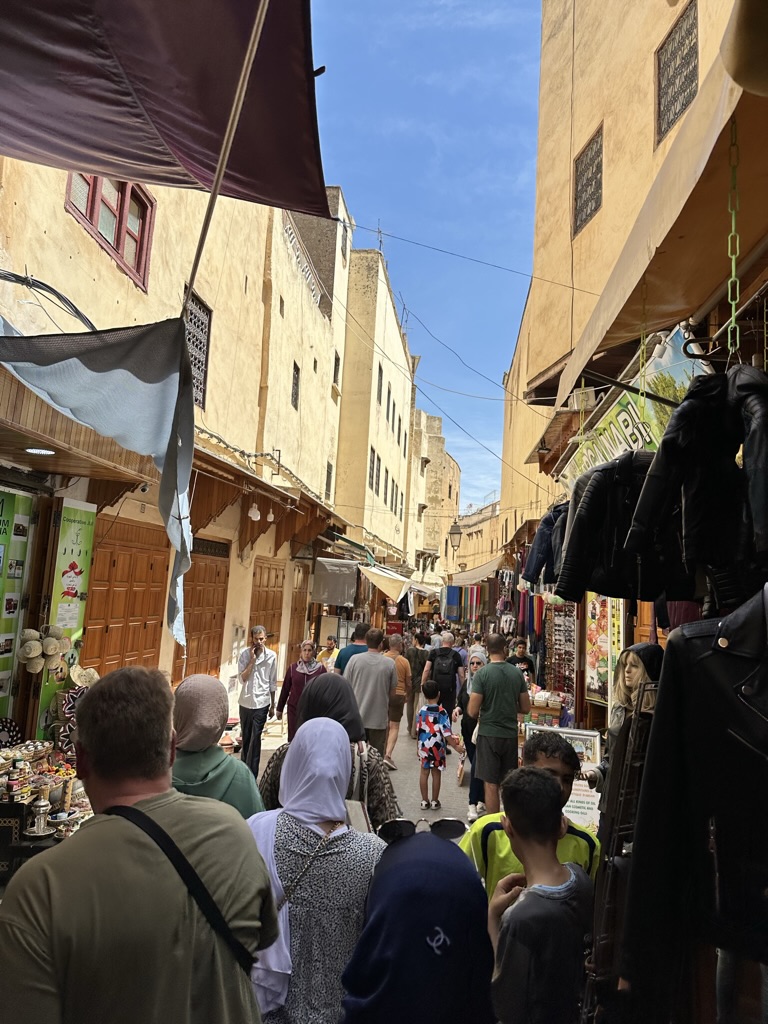
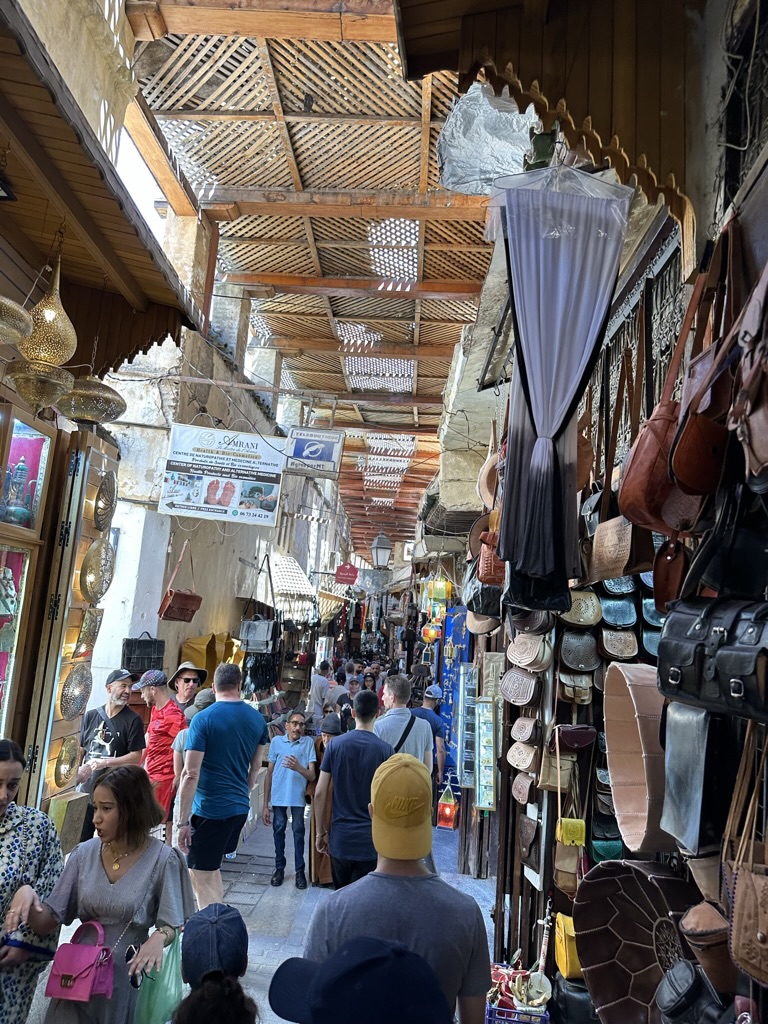
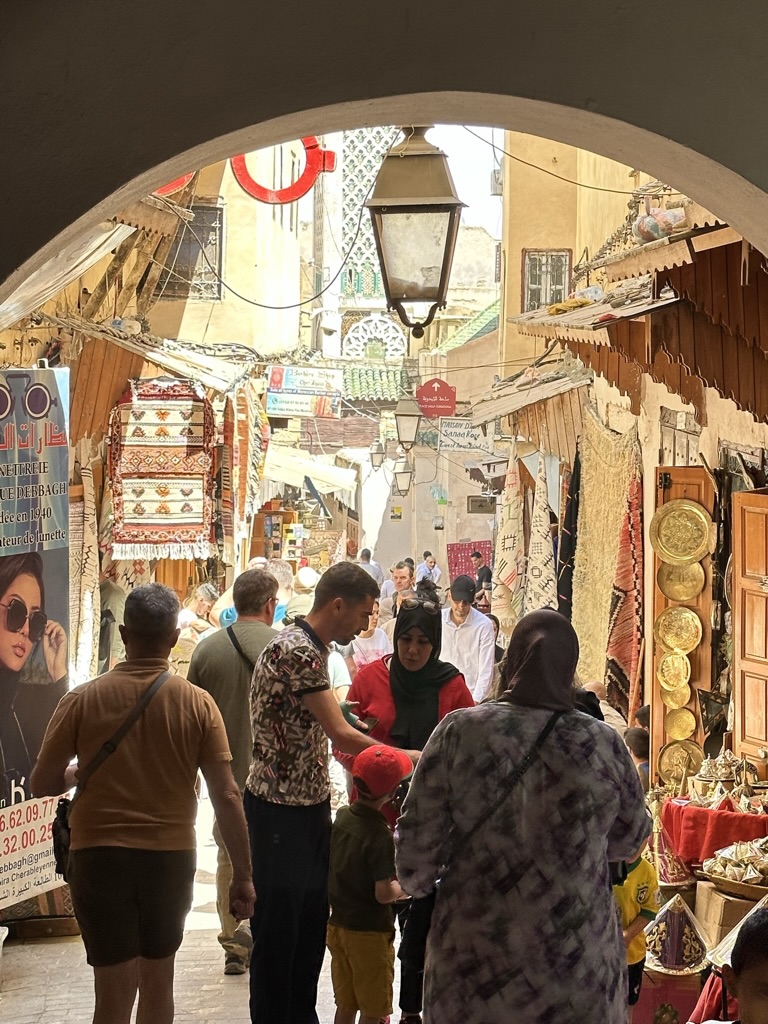
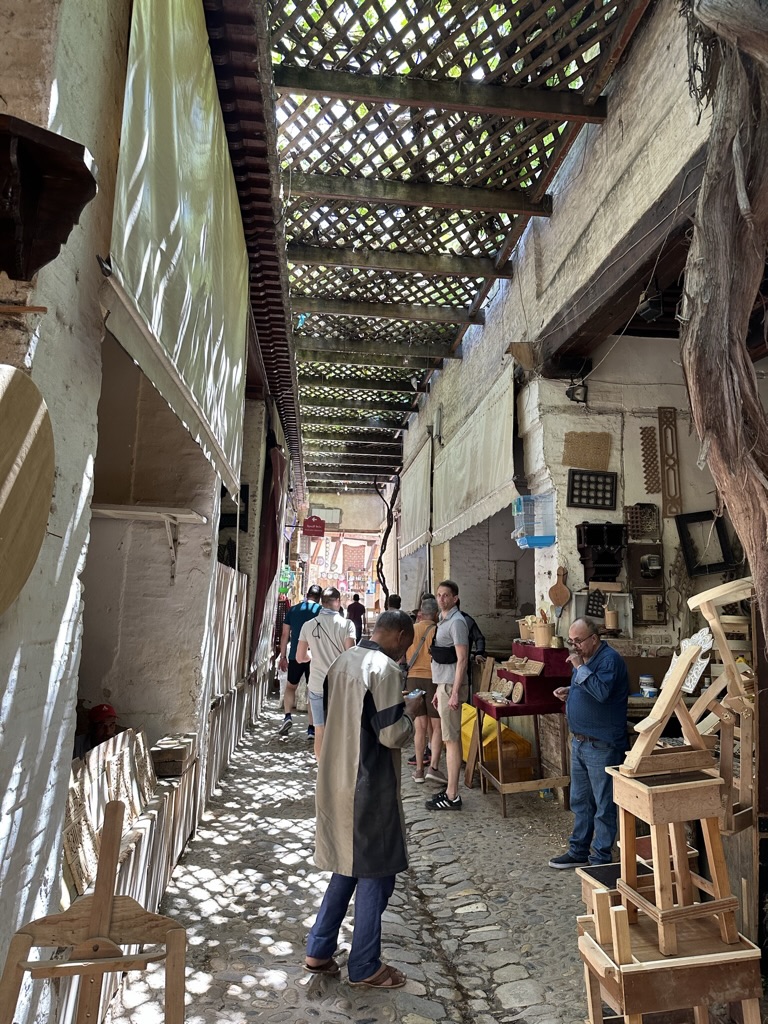
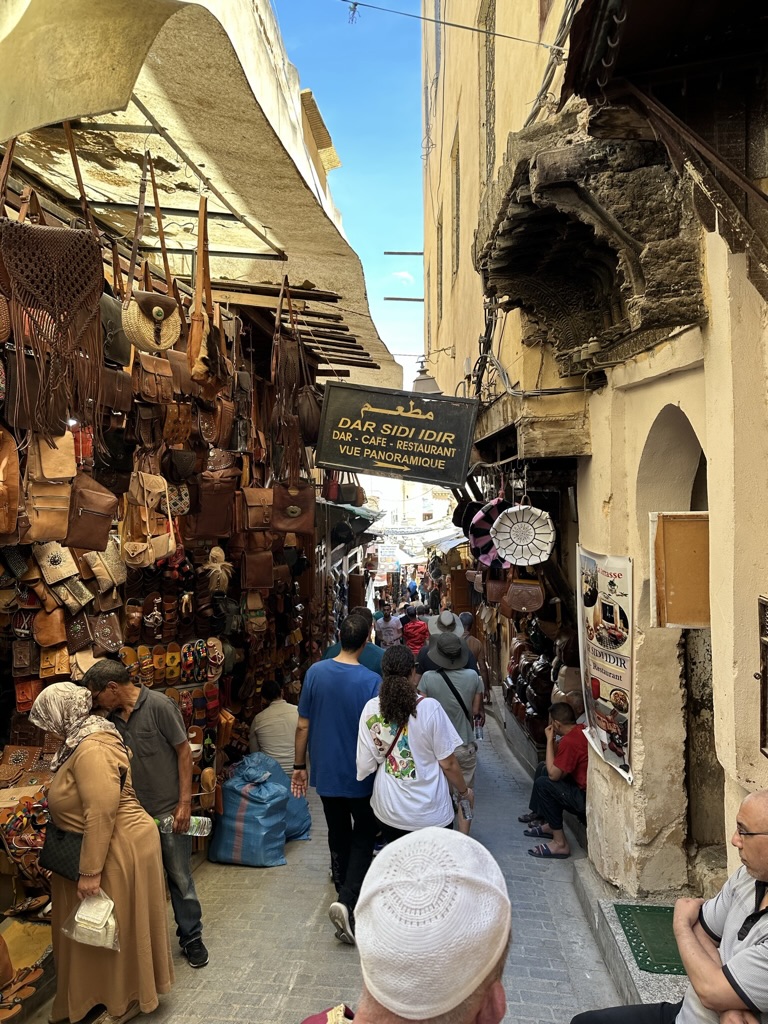

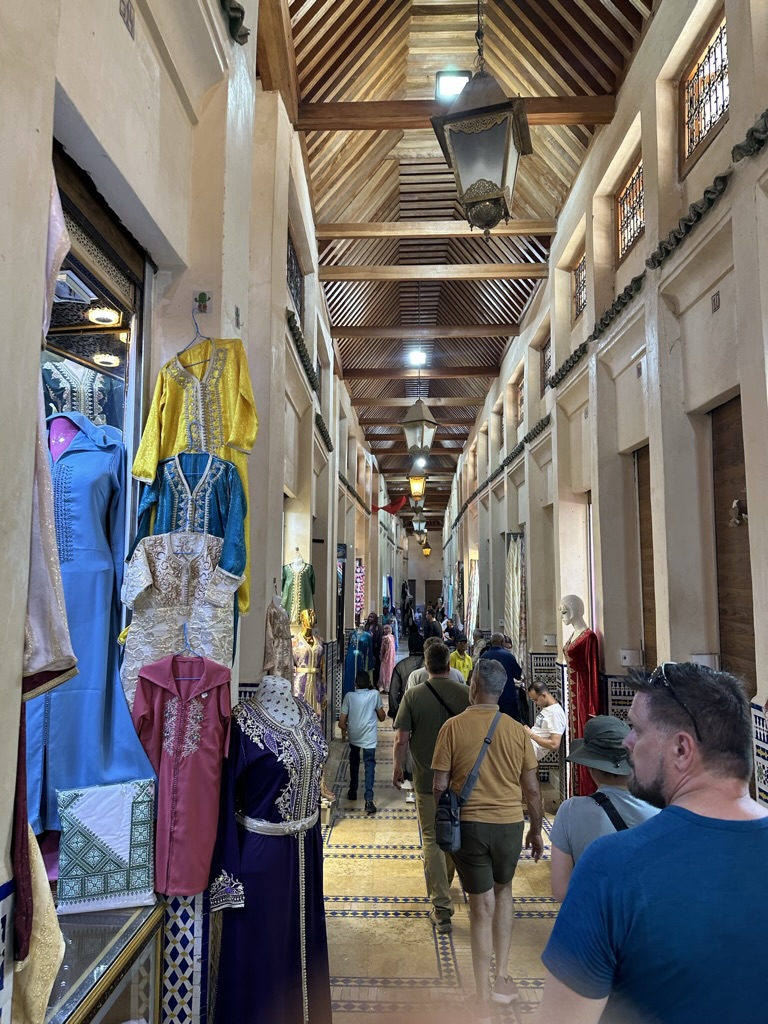
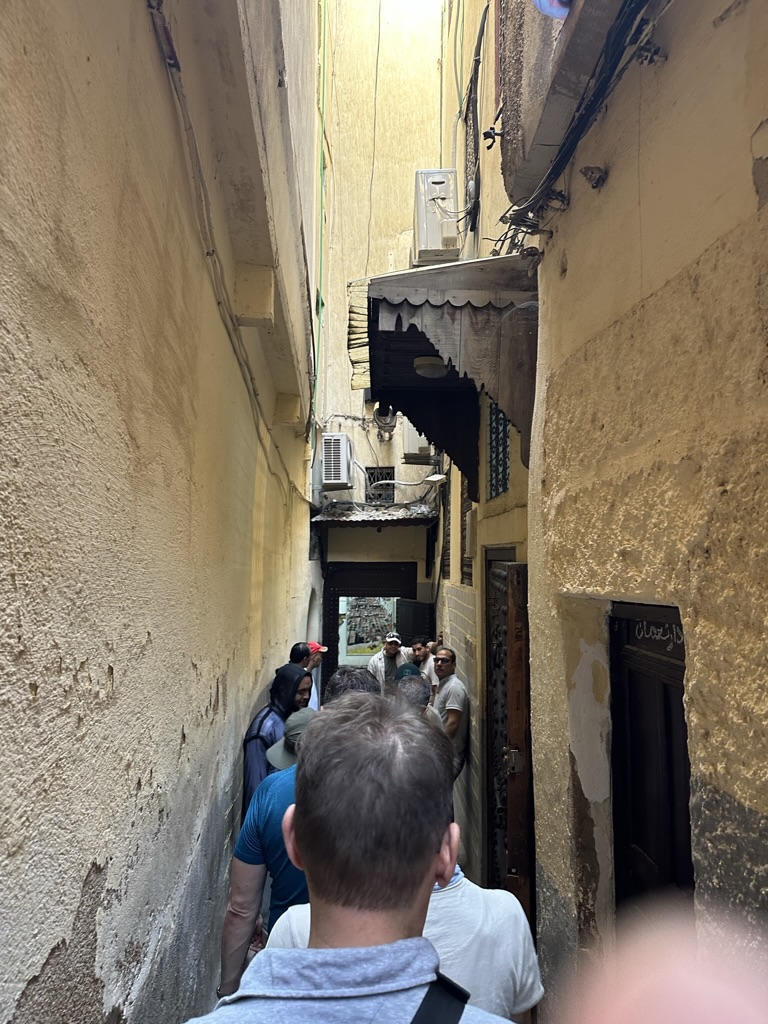
The sun peeks through from above the scene occasionally, and sometimes the streets are covered with lattice for shade. The high building walls provide cover for the spaces that lurk behind this organized chaos. The streets are truly a labyrinth, sometimes wide enough for the donkey cart, and sometimes barely more than shoulder width.
At one point along the way, I noticed there was a guy in a blue shirt in the background. At first, I thought it was my imagination, but there he was again. And then gone, but there again later. It was slightly unnerving, although he seemed harmless. But why was he following us?
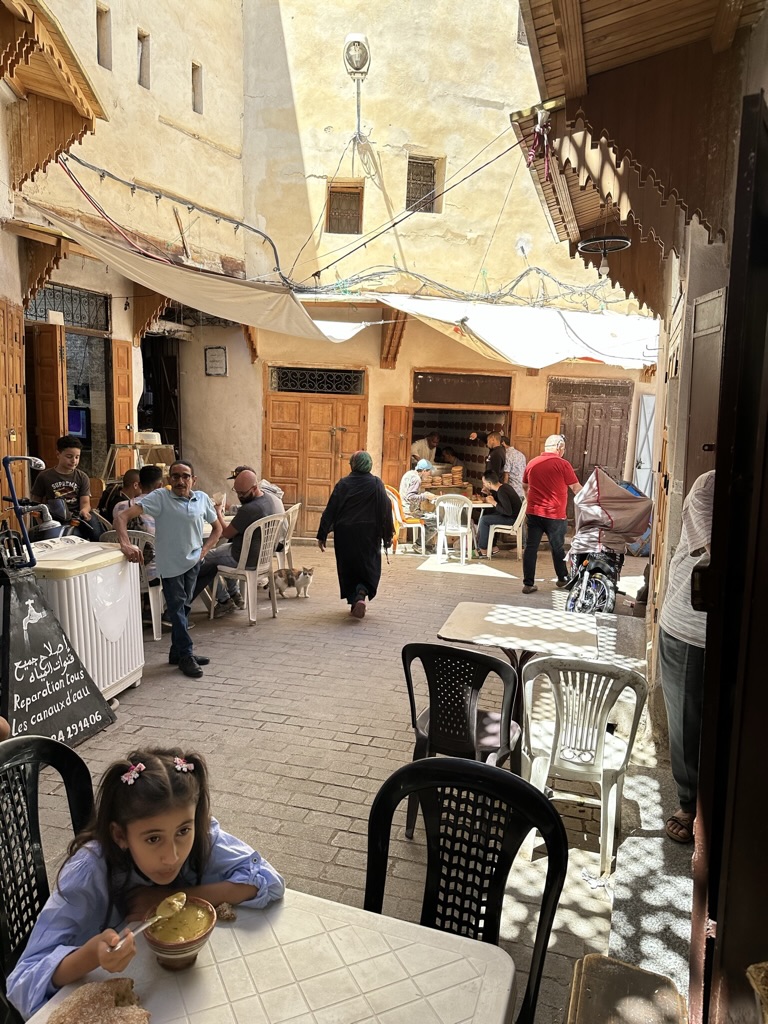
Turns out he was actually our tour leader, not Hasan who was taking us around to the food stalls! Adil hires the guy in the blue shirt, and he hires the Hasan. Abdul was his name – super nice and helpful, not only bringing up the rear (making sure no one is left behind and then lost), but also protecting us from the aggressive children and the occasional crazy drunk person.
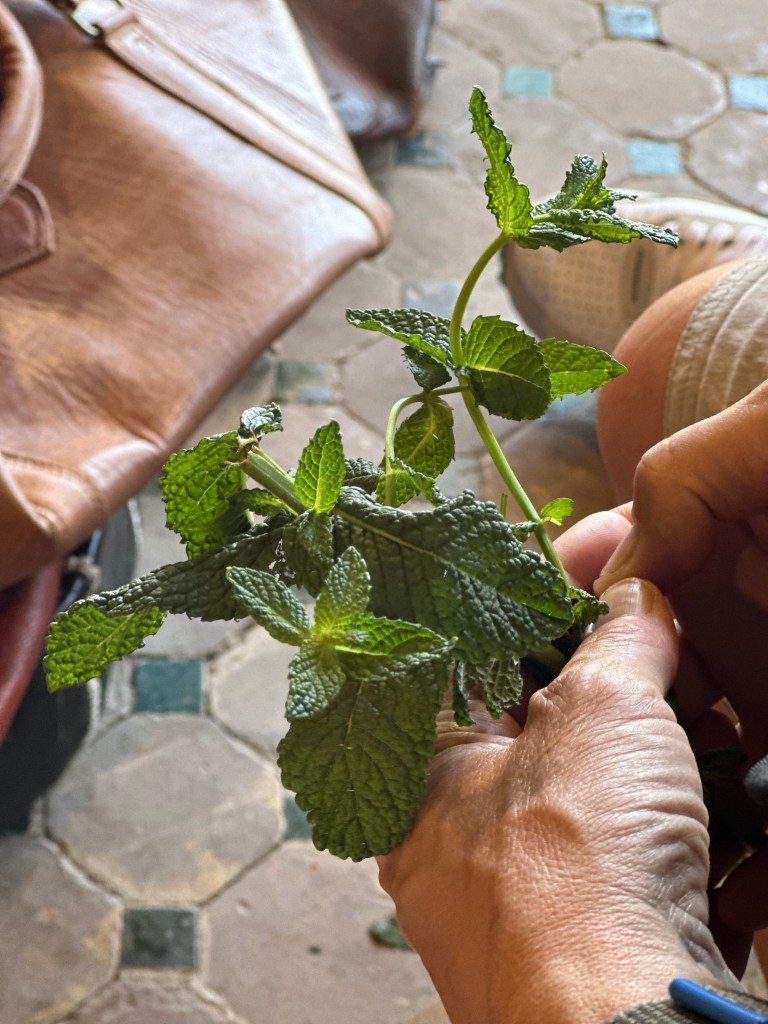
Our foodie tour comes to an end, and we bid farewell to Hasan. Abdul stays with us, we keep walking, and all of a sudden the air is thick with an incredible stench that words cannot capture – some mixture of rot and chemical. We all look at each other – “what is that smell?!” Adil explains that just on the other side of the wall is the tannery. Who knew that tanning leather attacks the olfactory senses like this?! We go in to see this operation, and as we enter, they give us a handful of mint. “Squeeze this below your nose to help with the smell.” Thankfully, this helps immensely. I’m not sure we could do this otherwise. They say you get used to it. Ummm…yeah, right.
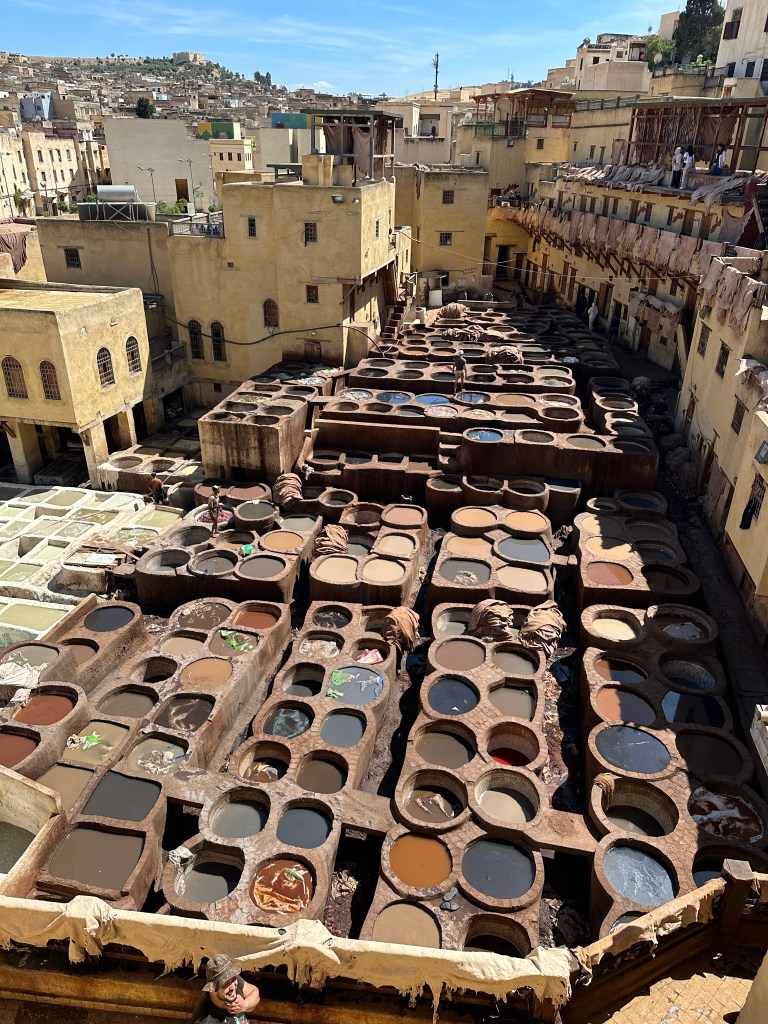
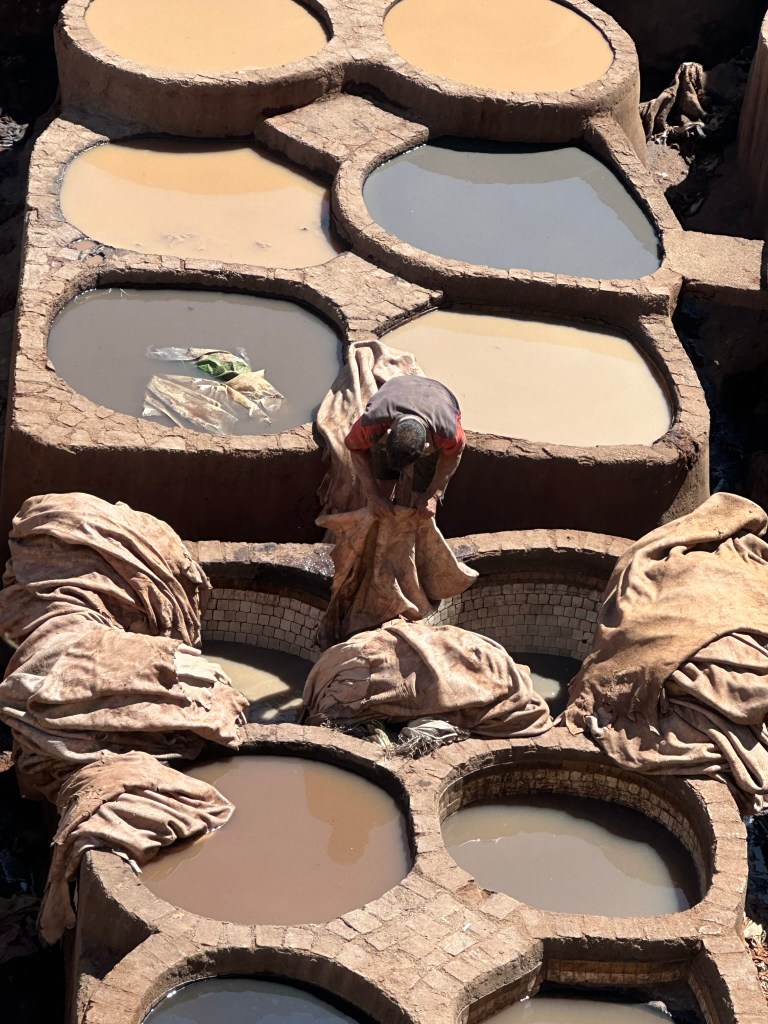
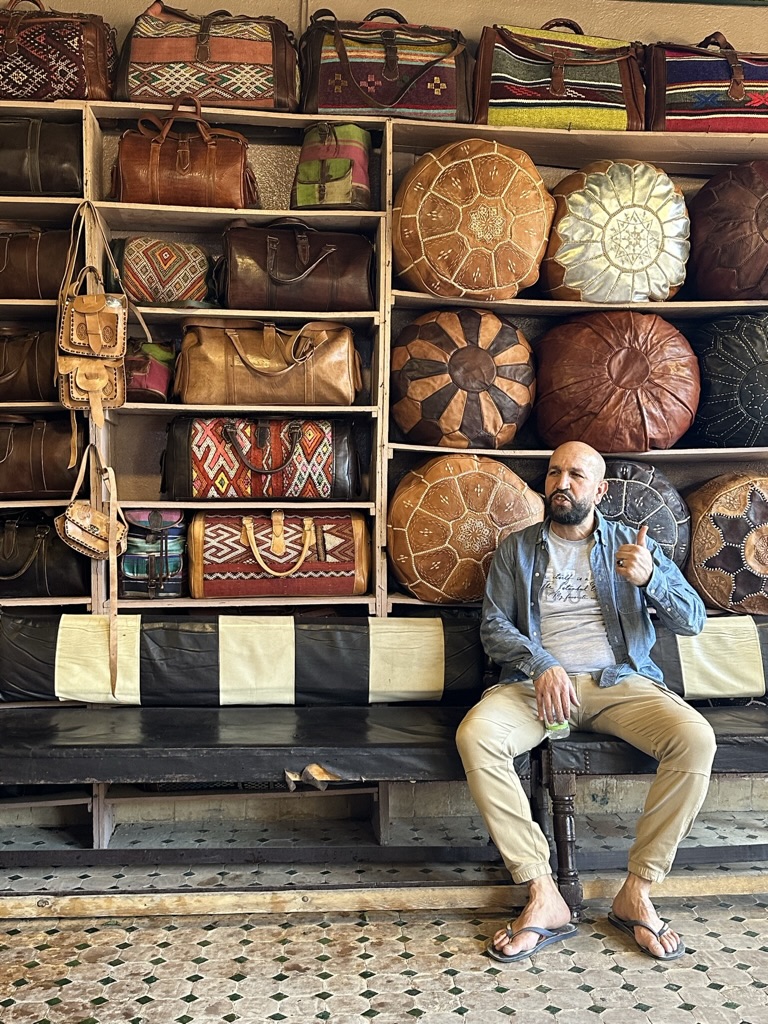
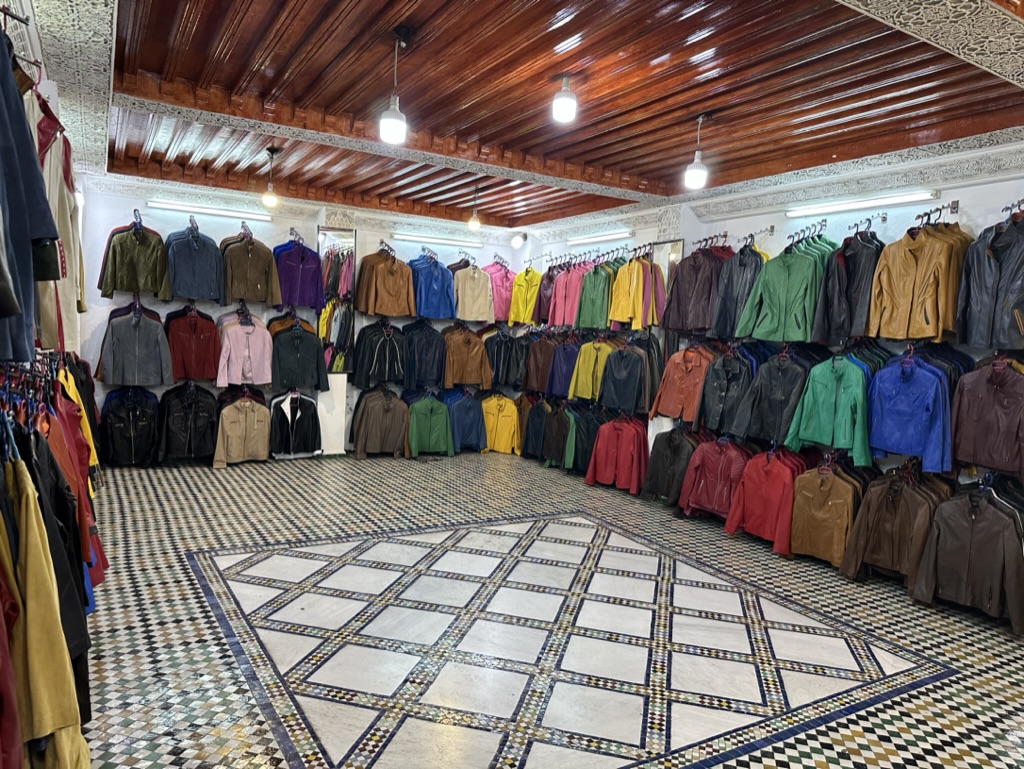
As you can imagine, this is back-breaking work, especially in the hot sun and in the midst of the smell. The leather starts in limestone tubs (removes the hair), shifts over to a mixture of pigeon shit (for the ammonia) and water to soften the leather, then ultimately it gets dyed (natural dyes like saffron and indigo). Once dried, it’s ready to be made into one of the many products they sell – jackets, big and small bags of all shapes, shirts, poofs, briefcases and such. It’s quite the operation. Liz buys a beautiful travel bag – and I later regret not buying the same one.
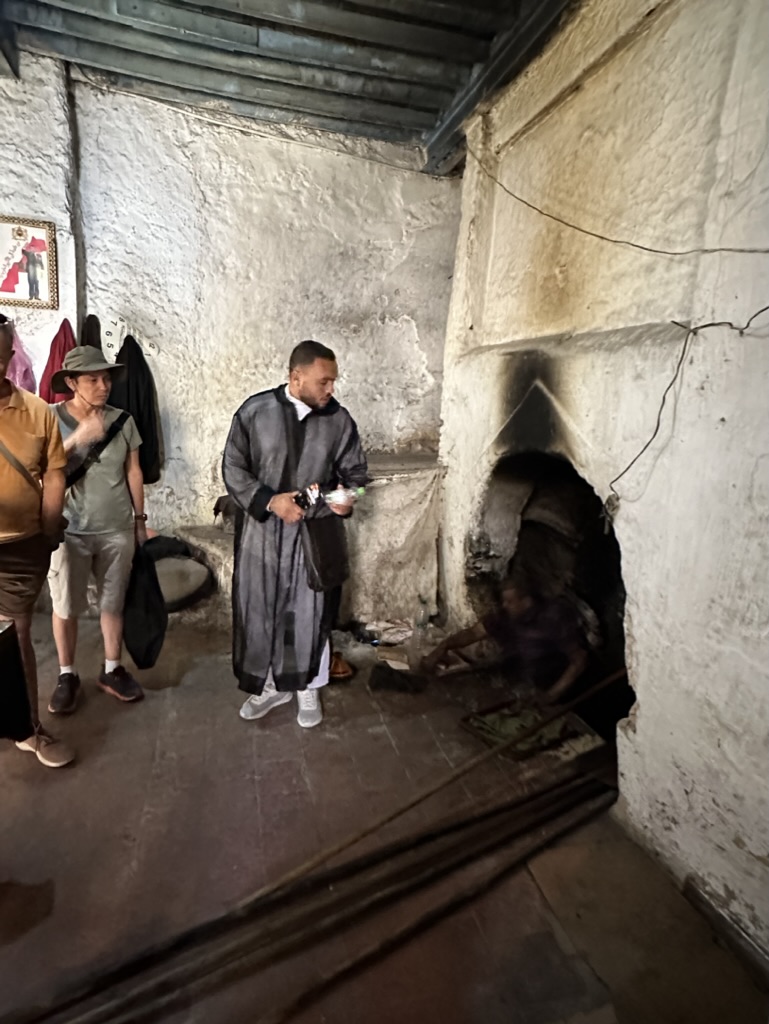
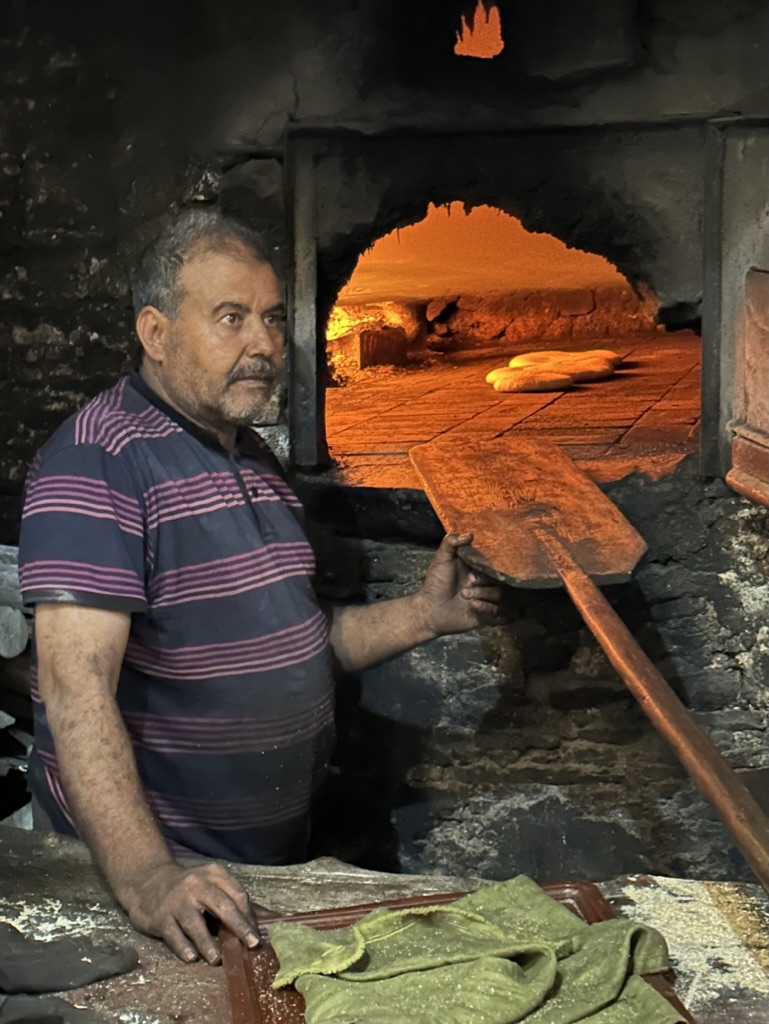
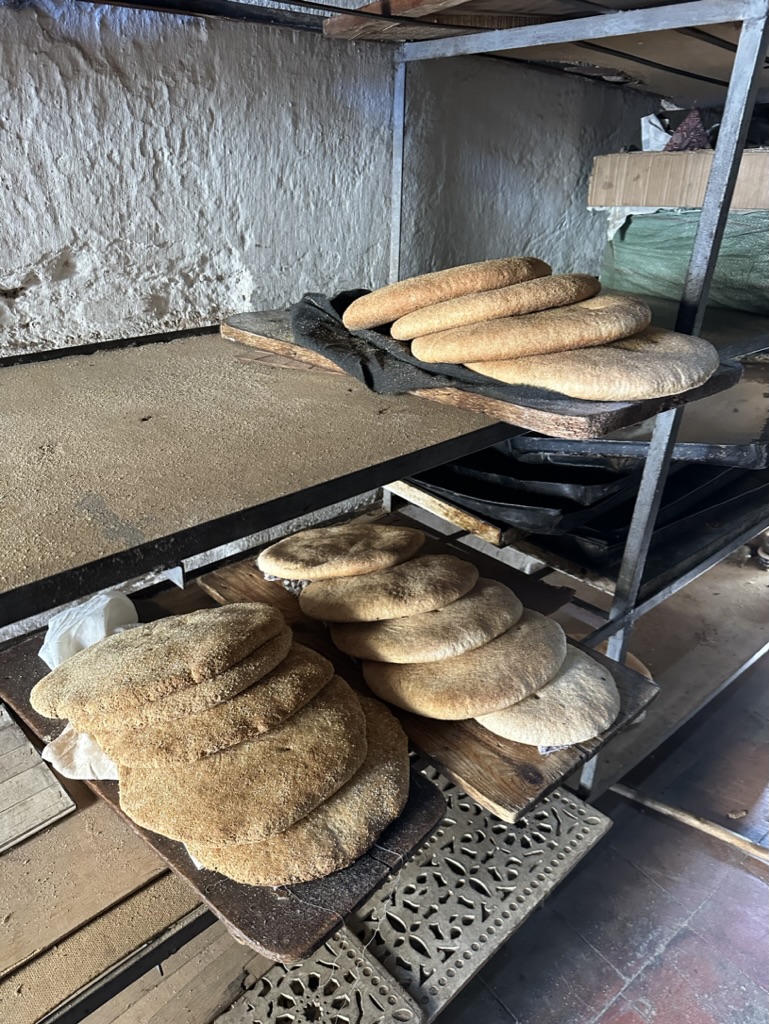
As if all this wasn’t enough for the day, our next stop is the textile weavers, with a stop along the way at a community oven. These are in many places around Morocco and have been in operation for hundreds of year (if not more). It’s a tiny space with a cavernous oven, kept hot by a man tending the wood fire and watching the bread. He is paid with tips; there is no stated fee to have your dough baked.
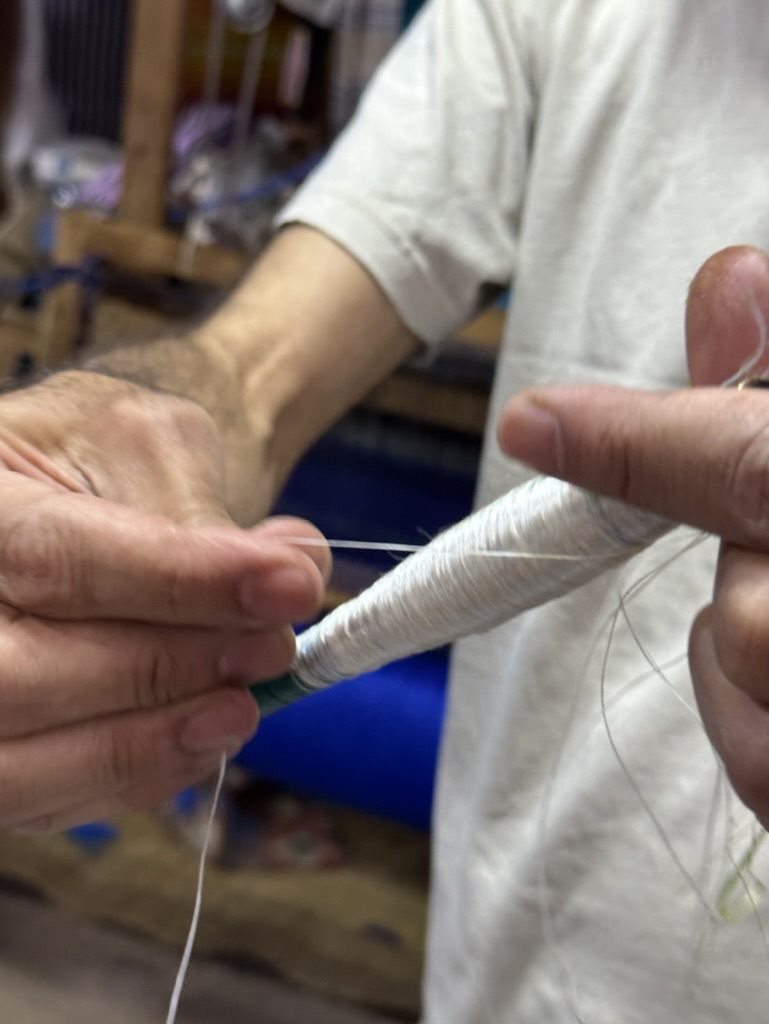
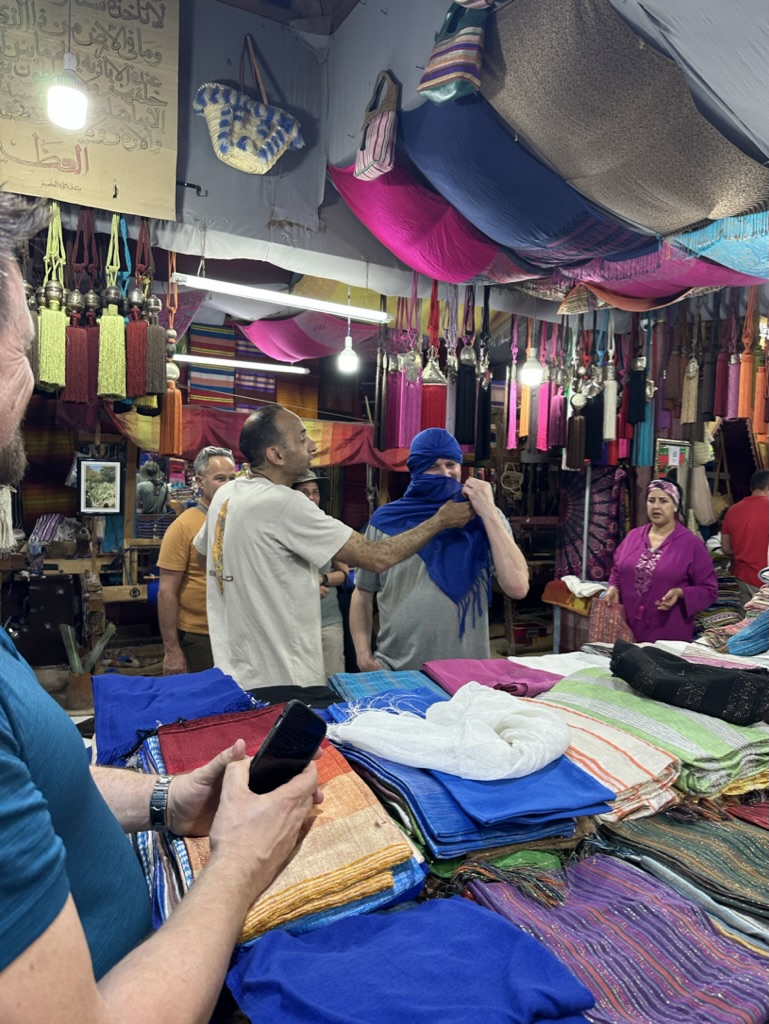
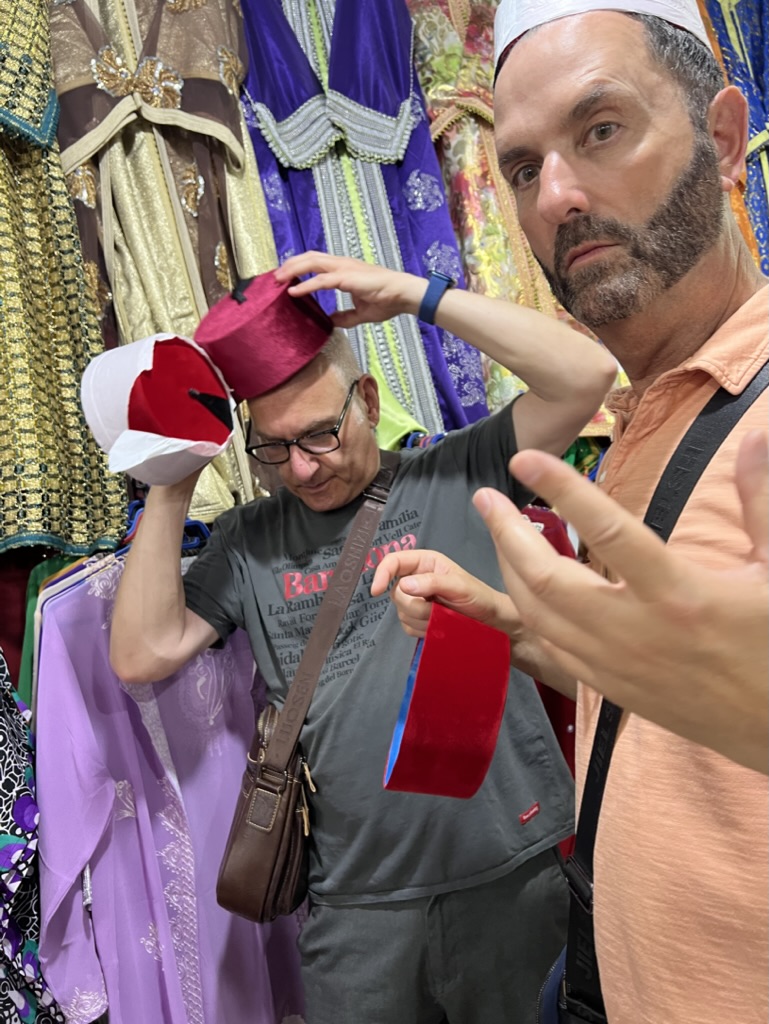
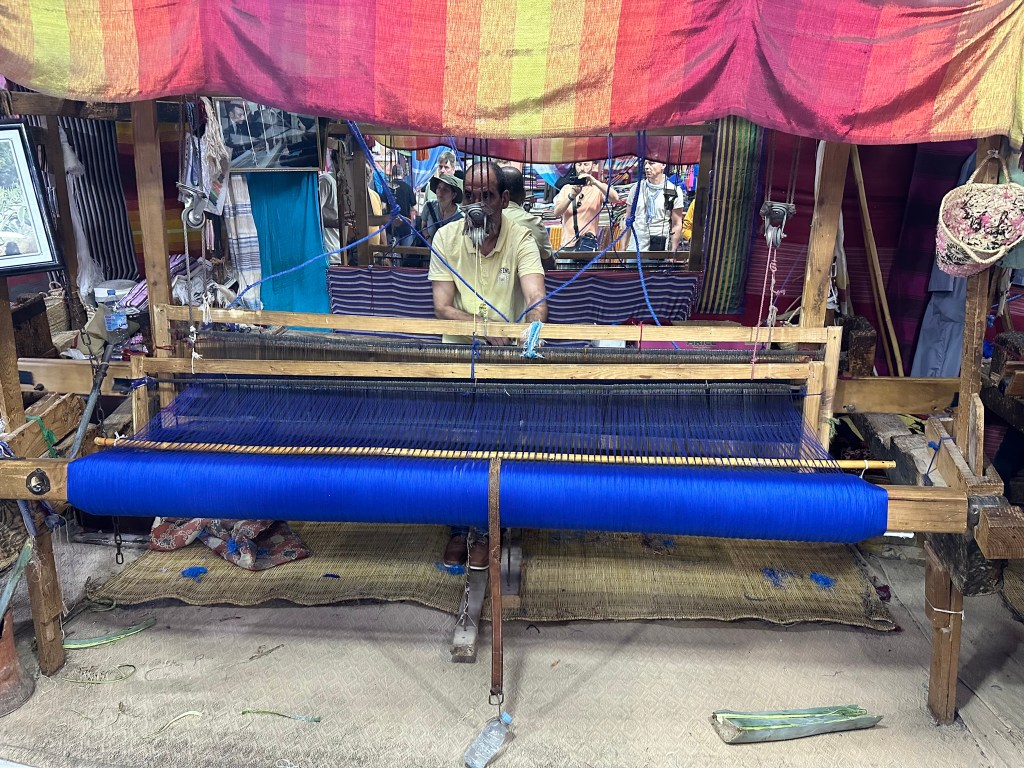
The nasty tanning smells having been replaced by that of fresh-baked bread, we visit the weavers. They are not making rugs (that will come later in our trip) but scarfs and fabric, sewn into dresses and jalabas (traditional clothing for men). The weavers are working the looms in this windowless crammed room, and it’s really cool to watch. Today they are weaving agave silk. Farmers grow a particular cactus that can be stripped down to threads that are then dyed and spun just like wool or silk. It’s surprisingly soft and super strong. The shopkeeper treats us to a scarf-tying demo, including how to quickly protect your face from a sandstorm (props to Martin for being our model!). AND – they have fezes for us to buy! Bobb and I can’t resist (Halloween costume starter?!). They are different sizes, but not sized, and two colors, so it takes forever for us to find some that fit. We get the traditional red…
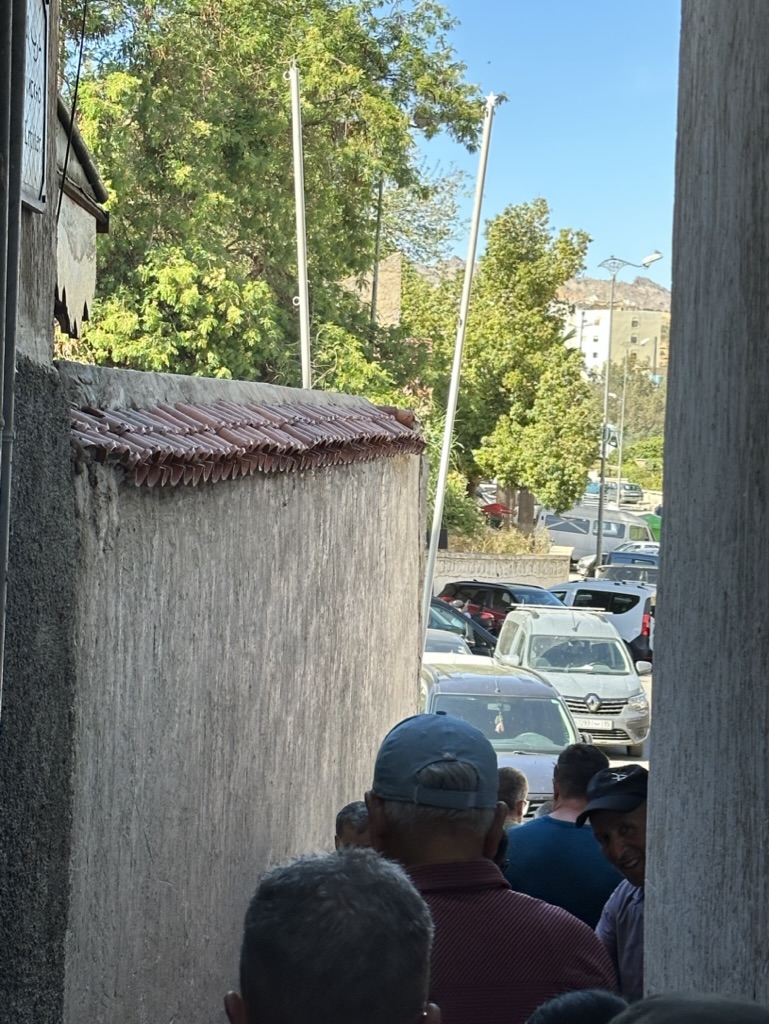
Down some stairs, around a corner, and then some more stairs (all the interior spaces are like this), we exit from the weavers. Turn left and walk…and suddenly ahead of us the light changes and we see open air! We emerge from this maze, a sense of relief washing over us.
Abdul bids us good travels, and we thank him for taking us through the world of Old Fes. Its people, food, history, art, faith, traditions, crafts…what an amazing culture, surviving while evolving over the centuries. We are privileged to be given a taste of it all.
 Dirt Roads and High Rises
One response to “You Will Get Lost In Here”
Can’t wait to visit the leather tanner!
Hal Glassberg Sent from my iPad
<
div dir=”ltr”>
<
blockquote type=”cite”>
LikeLike