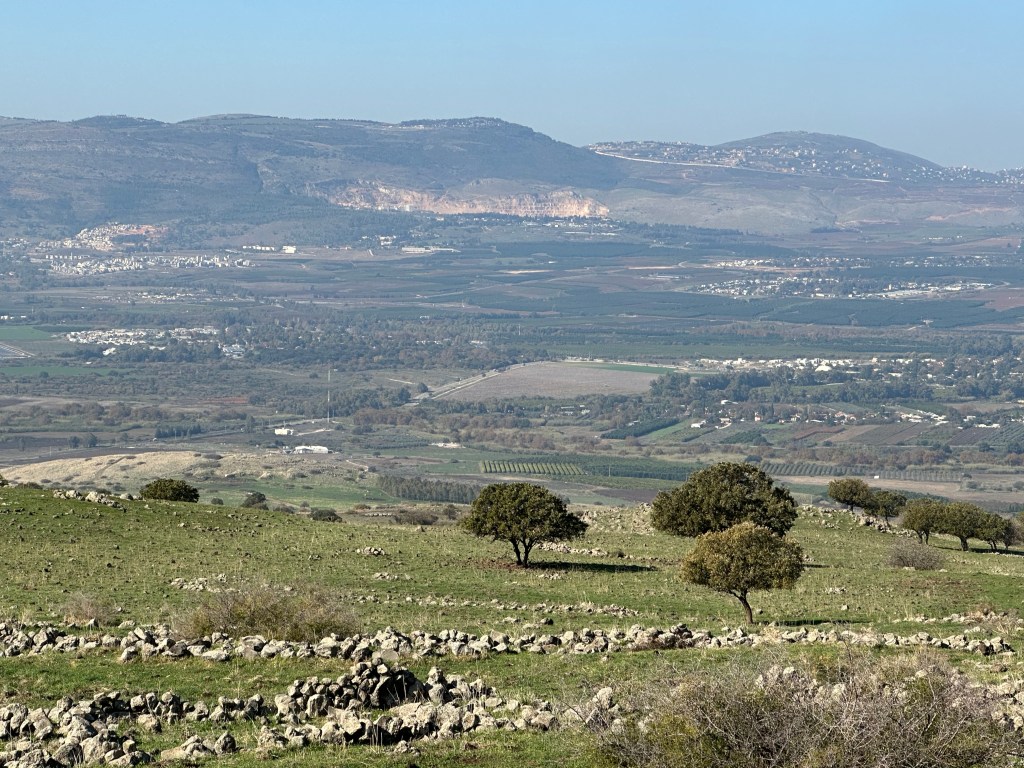
In the chilly haze of morning mist, we bid a fond farewell to our kibbutz hotel, the Hula Valley ahead of us. We saw it from up on the Golan Heights – beautiful fields of agriculture carefully laid out to take advantage of the fertile earth – and today we will see it all close up. And hear about the environmental disaster from the 1950’s.
So a bit about that: this massive lowland was essentially a swamp. Far too wet for agriculture. With the view from above, it’s not hard to see how Israeli leadership, with their newly formed country, said “we should be able to farm this and provide for our people.” And so they drained it by digging channels along the valley’s edge that would divert the abundant fresh water, which worked really well. Too well, in fact. The land became so dry, the underground peat would catch fire. The valley’s entire ecosystem was nearly destroyed and the water in downstream lakes was polluted with runoff from the farming operations.
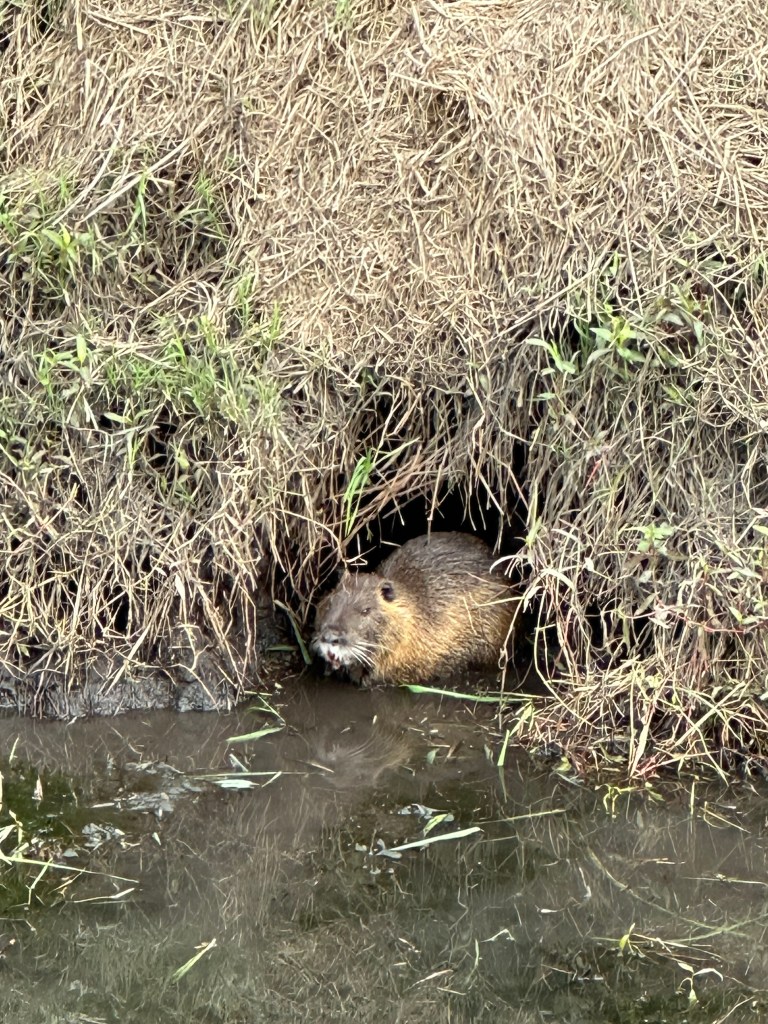
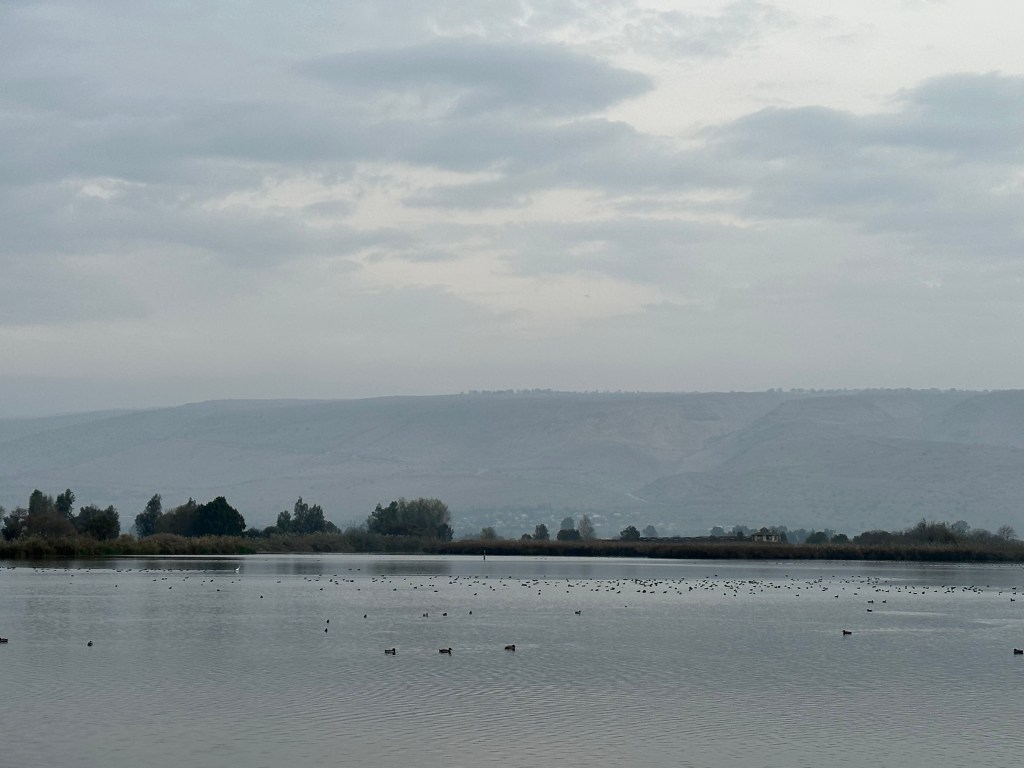
Fortunately, it didn’t take long before restoration efforts began in the late 1960’s, and it is now abuzz with wildlife and native plants, a good portion of it a protected nature reserve. That said, they still have issues – the thousands of migratory cranes were destroying the farms, so they are now fed corn in an open field, spread by a tractor. The channels and lakes are full of catfish that have no natural predator (and are not kosher, so not eaten). The nutria multiply in uncontrollable numbers…
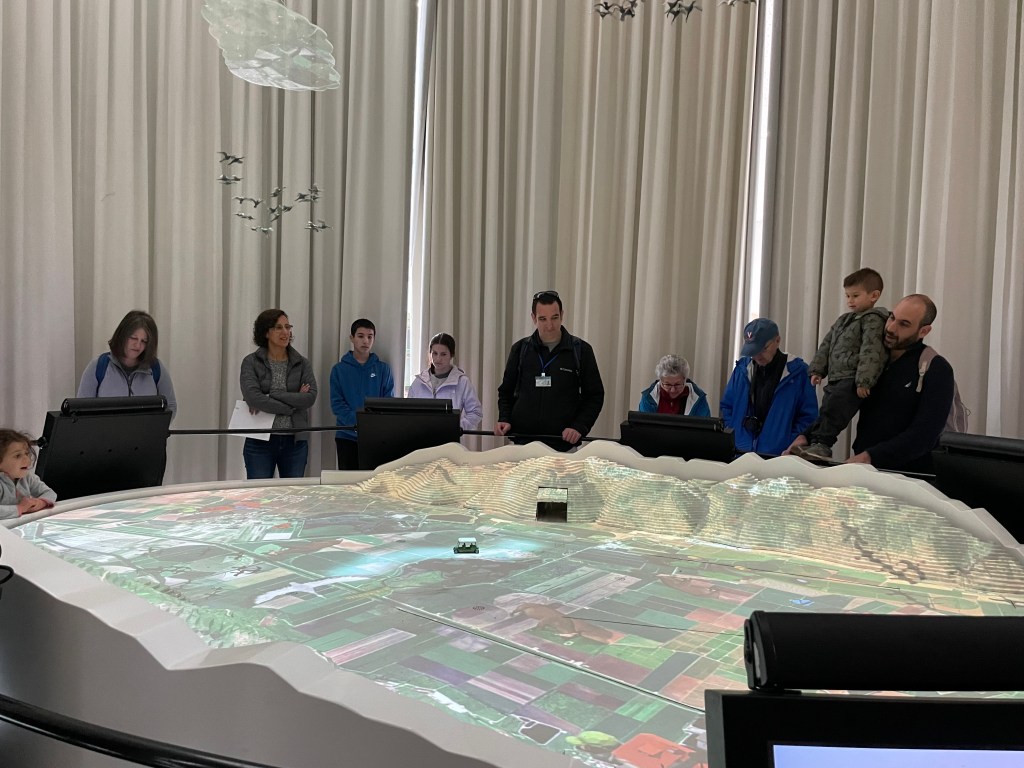
As we descend into the valley, it’s not a long drive before we are pulling into the Agamon Hula Nature Reserve. It’s a fantastic operation, with a clever presentation explaining the history of the valley and the reserve. It is a sort topographical “table” of the valley that comes to life, first with tractors that emerge to drain the swamp, and then again when restoration efforts began. Birds and clouds descend from the ceiling while all this is going on…
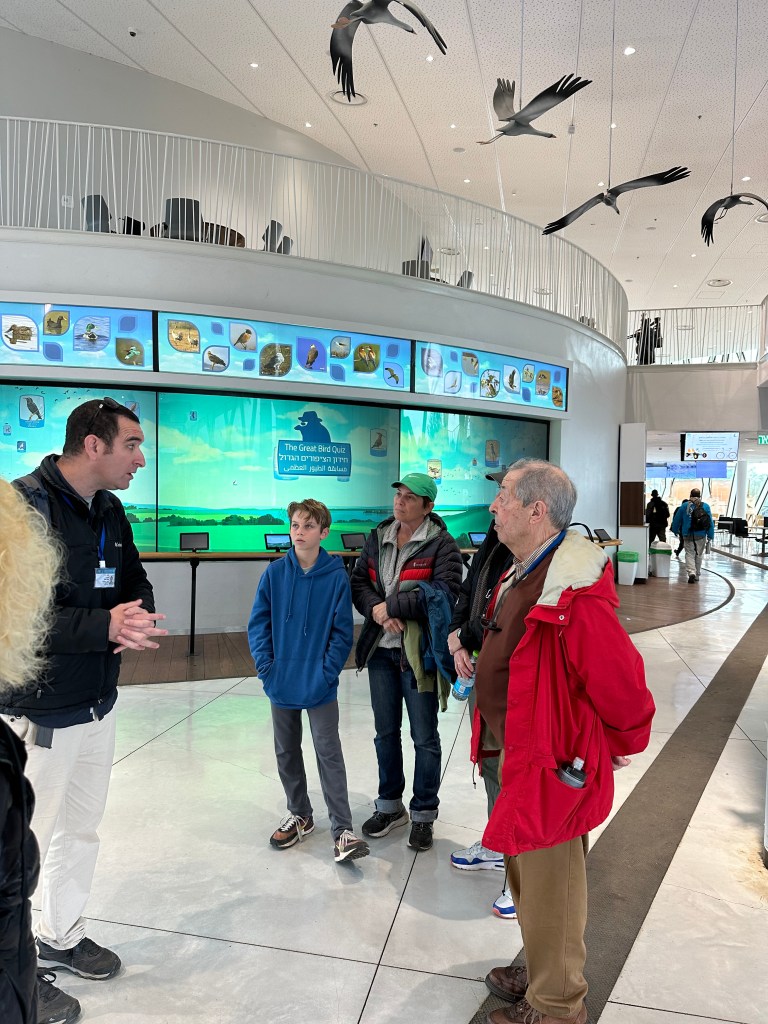
After gaining an appreciation for what happened, and how it is being fixed, we are shuffled outside and climb into a one-sided open air trailer fitted with seats that give everyone a great view (a bird-watching bleacher on wheels, you might say). We settle into the rickety chairs, and are given some rules of the road…stay in the vehicle, no sudden moves or sounds, turn off your phones.
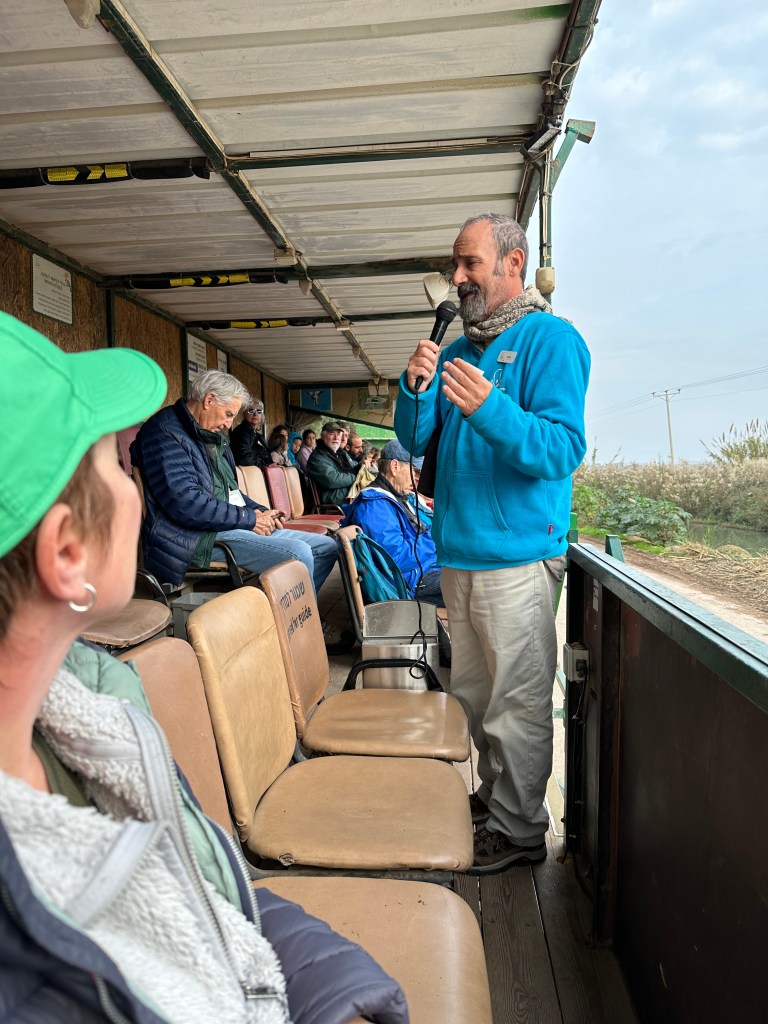
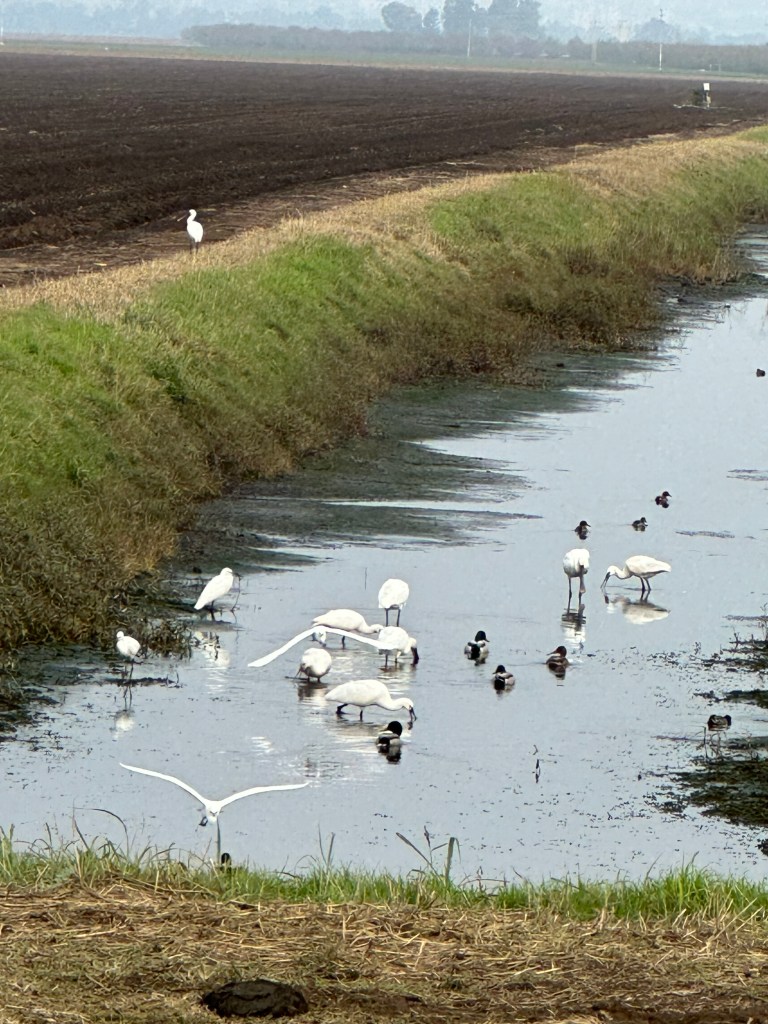
The guide who takes us through the reserve has the most soothing, velvety Irish-accented voice (we all comment on this later), quiet and clear, doing all he can to not disturb the birds while pointing out various sightings along the way. In hushed tones “…see the spoon-billed egrets…and there! pygmy cormorants…that’s a treat to see a lesser spotted eagle flying over the lake…”
We meander through the preserve, the marshes and wetlands passing by slowly against the calm backdrop of the guide’s voice, the papyrus reaching to the sky as if to say it will not be tamed. Birds all around us chirp and fly and eat, the nutria peek from their burrows – and then we come to the field of cranes. They are cackling ceaselessly, calling to their young, the cacophony of it all piercing the serenity. It’s a remarkable scene.

As we return to the visitor’s center, we get another look at the restored Hula Valley Lake, a testament to what we can do if we act quickly enough…
We are all feeling communed with nature as we take off for the hilltop city of Safed (“Tzfat” in Hebrew). The valley passes by our windows, stretching out in all directions, orchards and plowed fields showing off their abundance. We trundle along, and soon are climbing up to Safed. Our co-pilot, Mr. Solomon Steinfield, gives us altitude progress reports as we ascend through the winding streets, and asks that we remain seated until we come to a complete stop. 😃 When we do, it’s next to a busy traffic circle in front of a community center…seems odd…until Hilik explains it’s the only place to park! He gets us a couple taxis that take us to the town center.
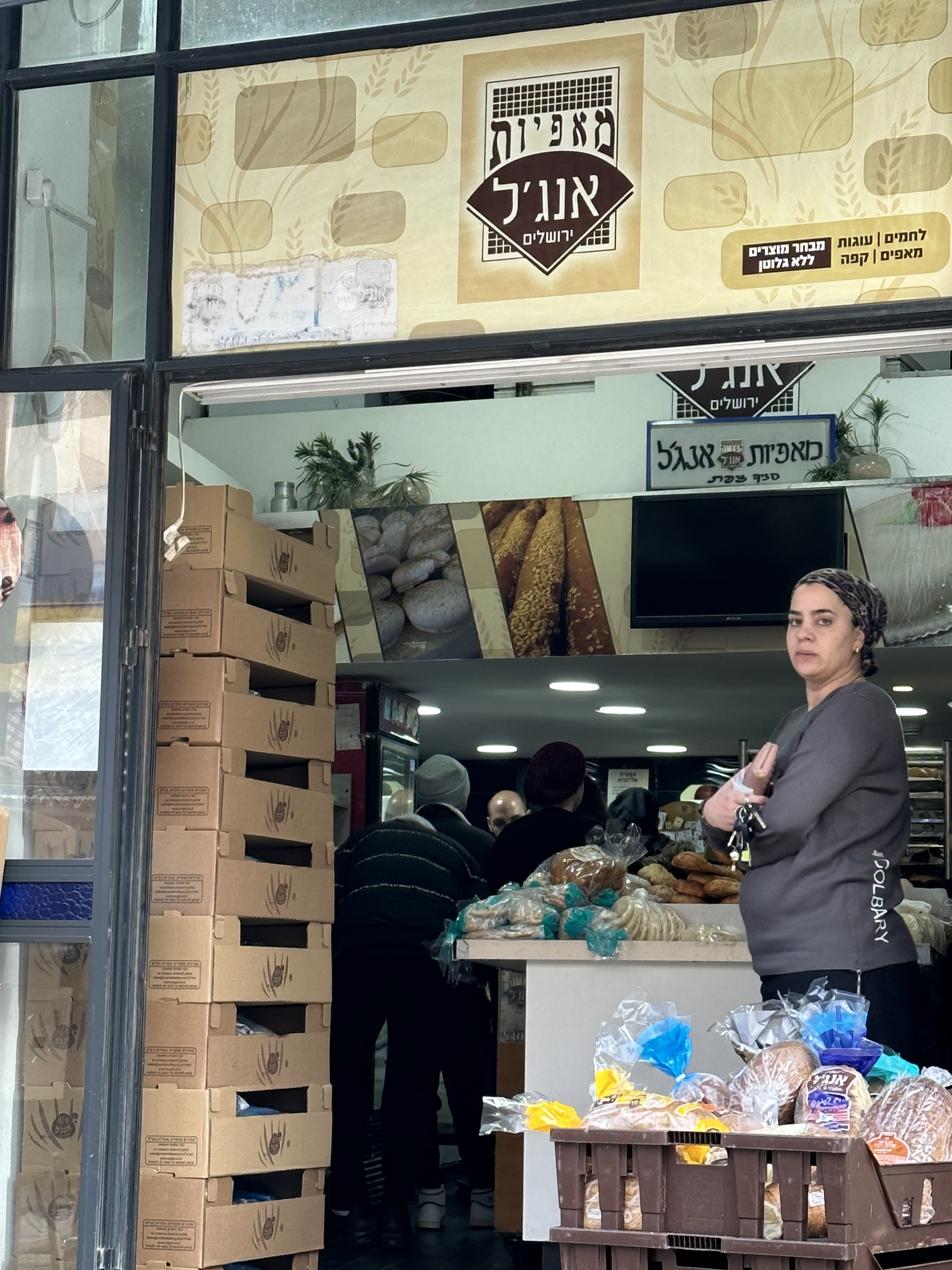


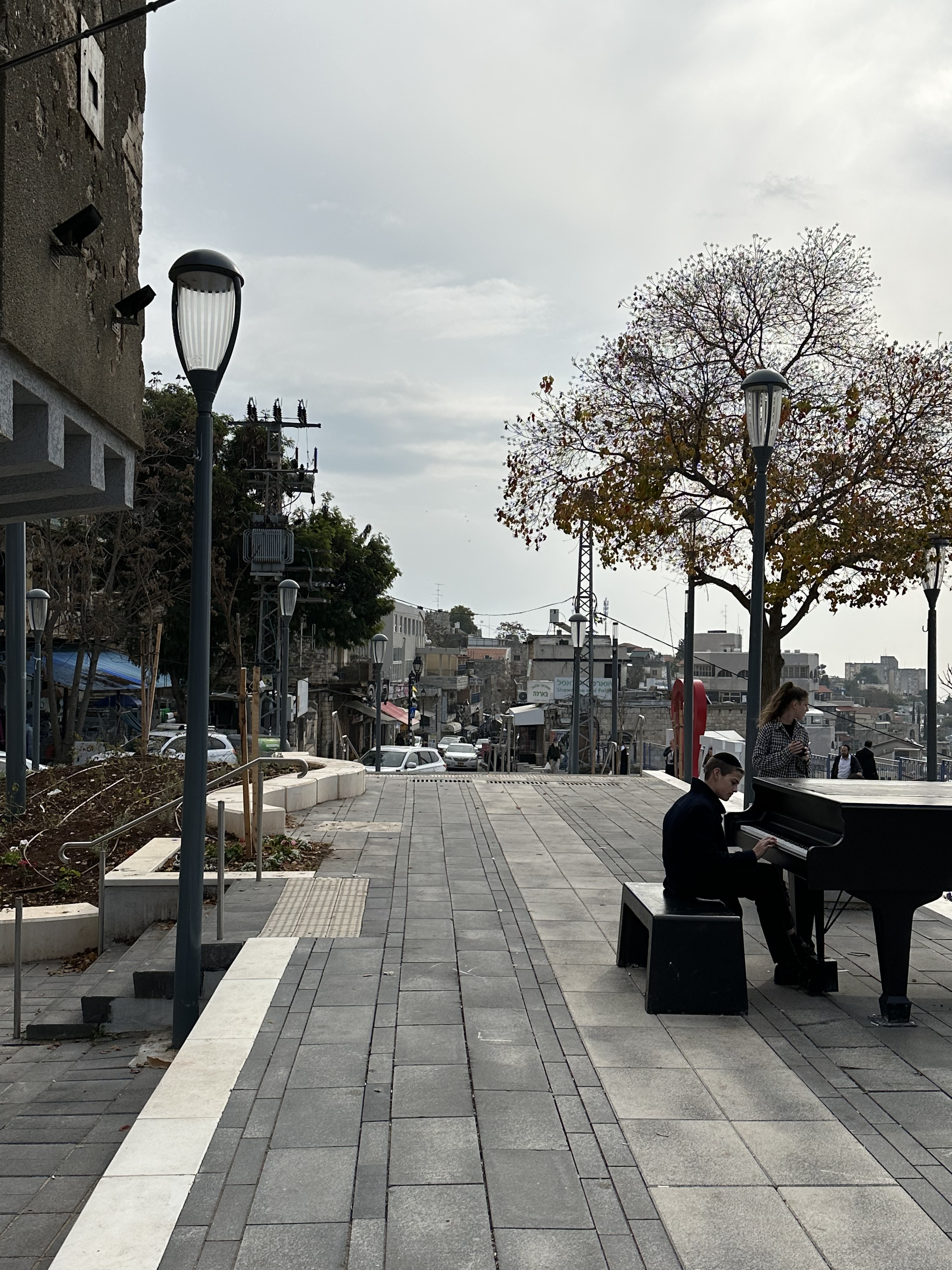

It’s chilly in this hilltop hamlet, and a bit overcast, obstructing the amazing views below us, but it’s spectacular nonetheless. We are headed for the old part of the city, on foot, and along the way we find everyday life. People in the shop doorways, kids hanging out, babies in strollers, someone playing the public piano. It’s all quite picturesque, and as we make our way through the narrow cobbled streets lined with limestone-clad buildings, I am reminded of the hilltop villages in Italy. It’s strangely familiar in that way.
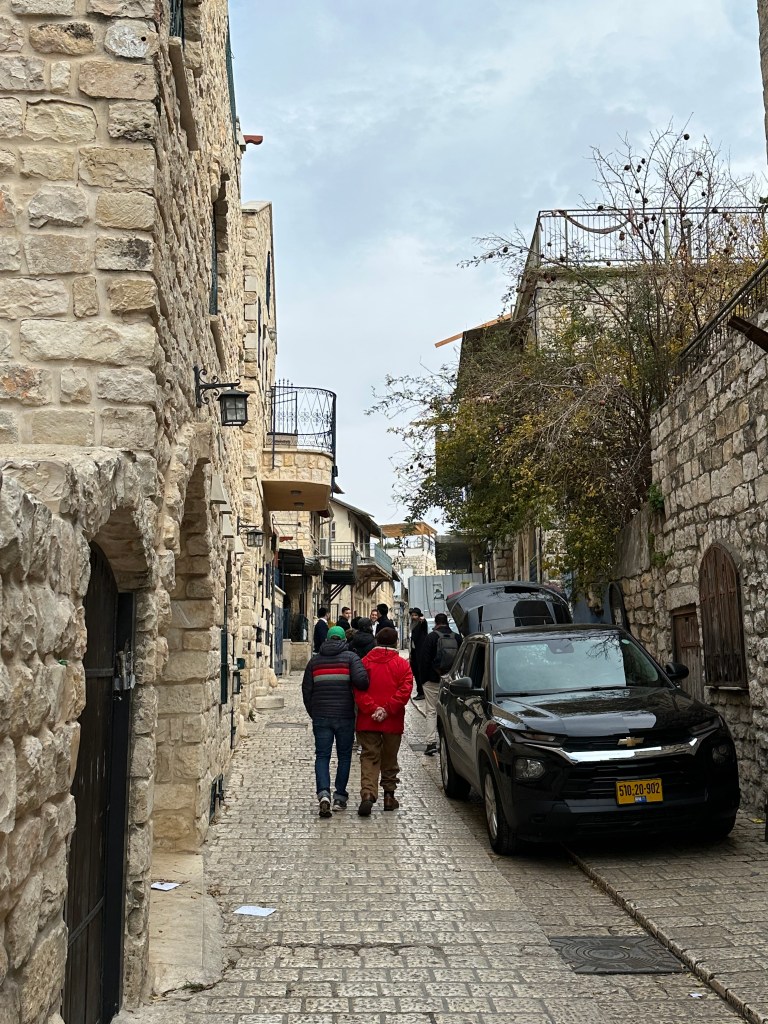


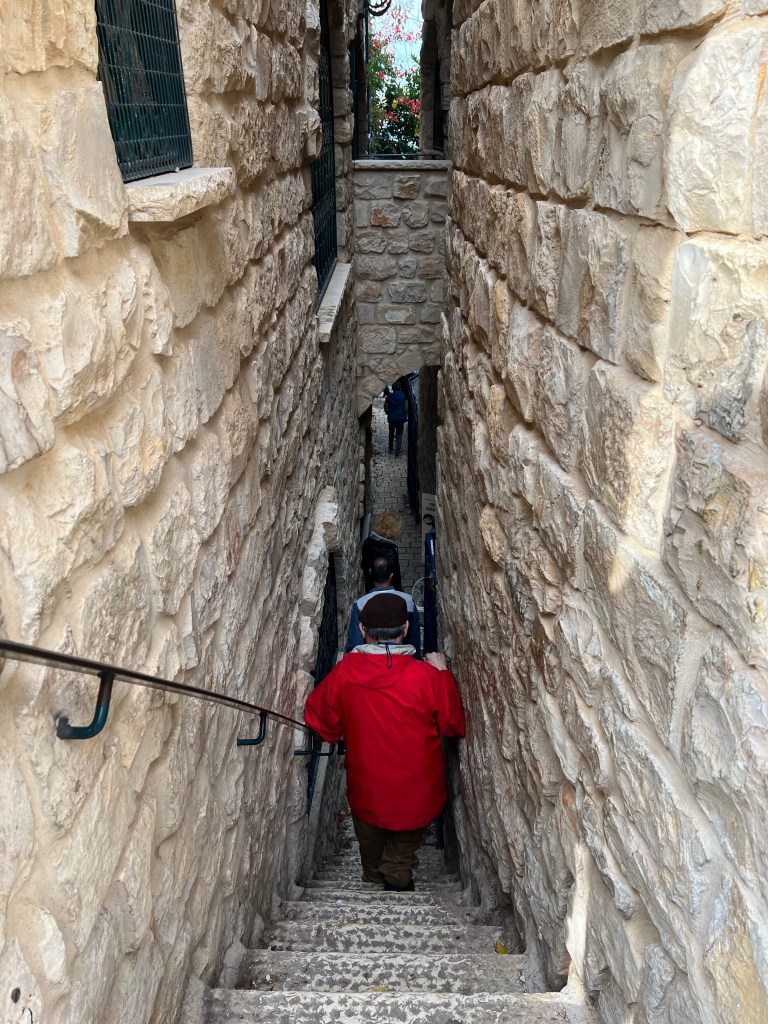
Above a steep and skinny staircase, Hilik tells the story of a woman who would sit every day at the top of the Messiah Stairs with two cups of tea, one of which was for the messiah (who never came). It’s so easy to see the ghost of her perched there…hopeful and patient.
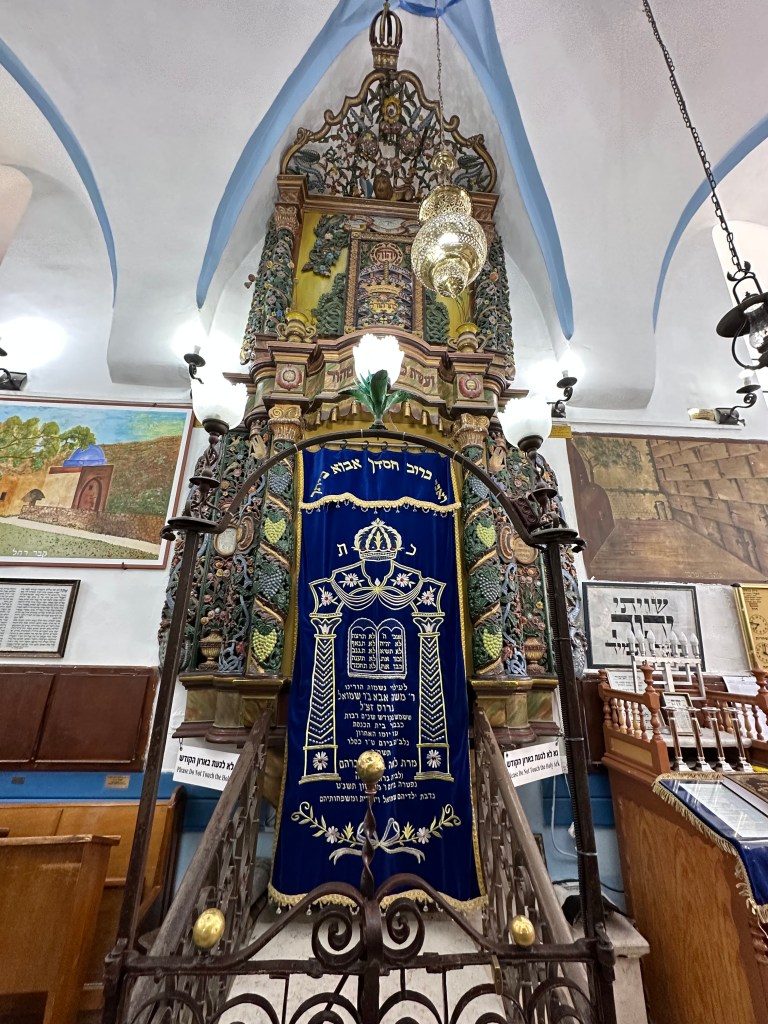

We visit the ancient Ari Ashkenazi synagogue that is tiny and cramped, laid out unusually in that the ark is not directly behind the bima. Bullet holes in the plaster testify to this house of worship’s resilience. We crowd into a corner and listen to Hilik tell us about the place, and I am quickly approached by a congregant asking if i’ve done my tefillin for the day. It’s an orthodox practice of putting a small leather box containing scrolls on your head, securing it with a leather strap that wraps its way down your arm. Not my thing, nor do I really understand it, and Hilik comes to the rescue. The guy leaves us alone.
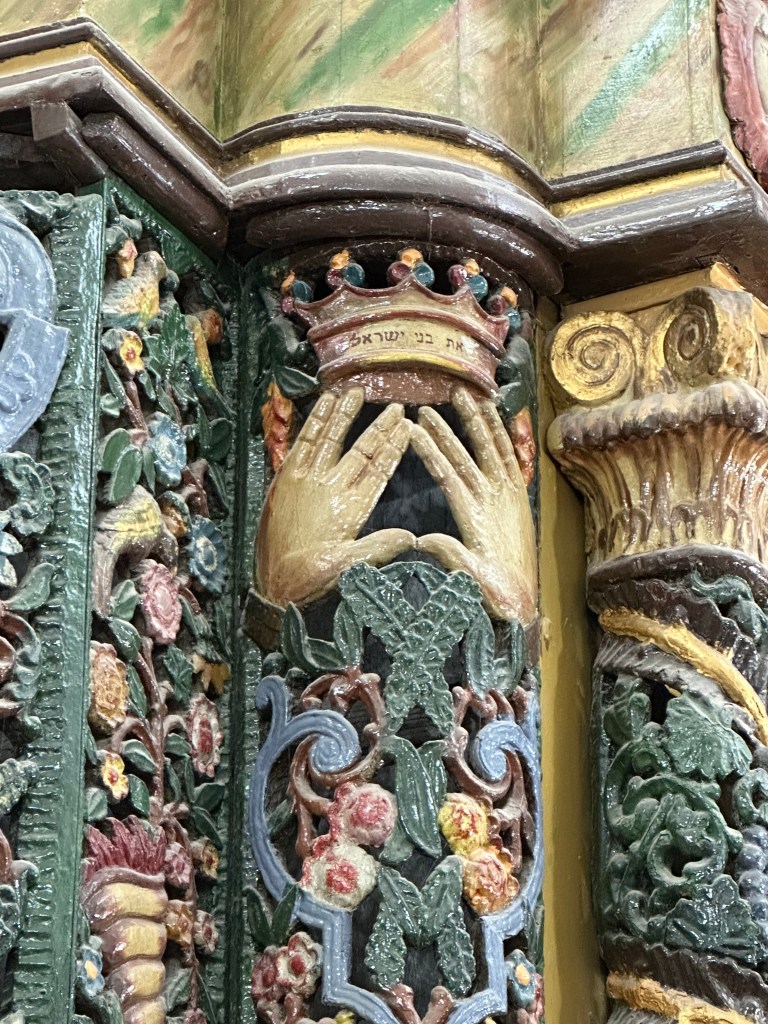
Aside story: When Star Trek was in development, they needed some sort of hand gesture to accompany Spock’s saying “live long and prosper.” Leonard Nimoy, being Jewish, knew of a way some of the ancient high priests would spread their fingers when giving a blessing. He suggested it, and you know the rest. Here it is in the detail around the ark:
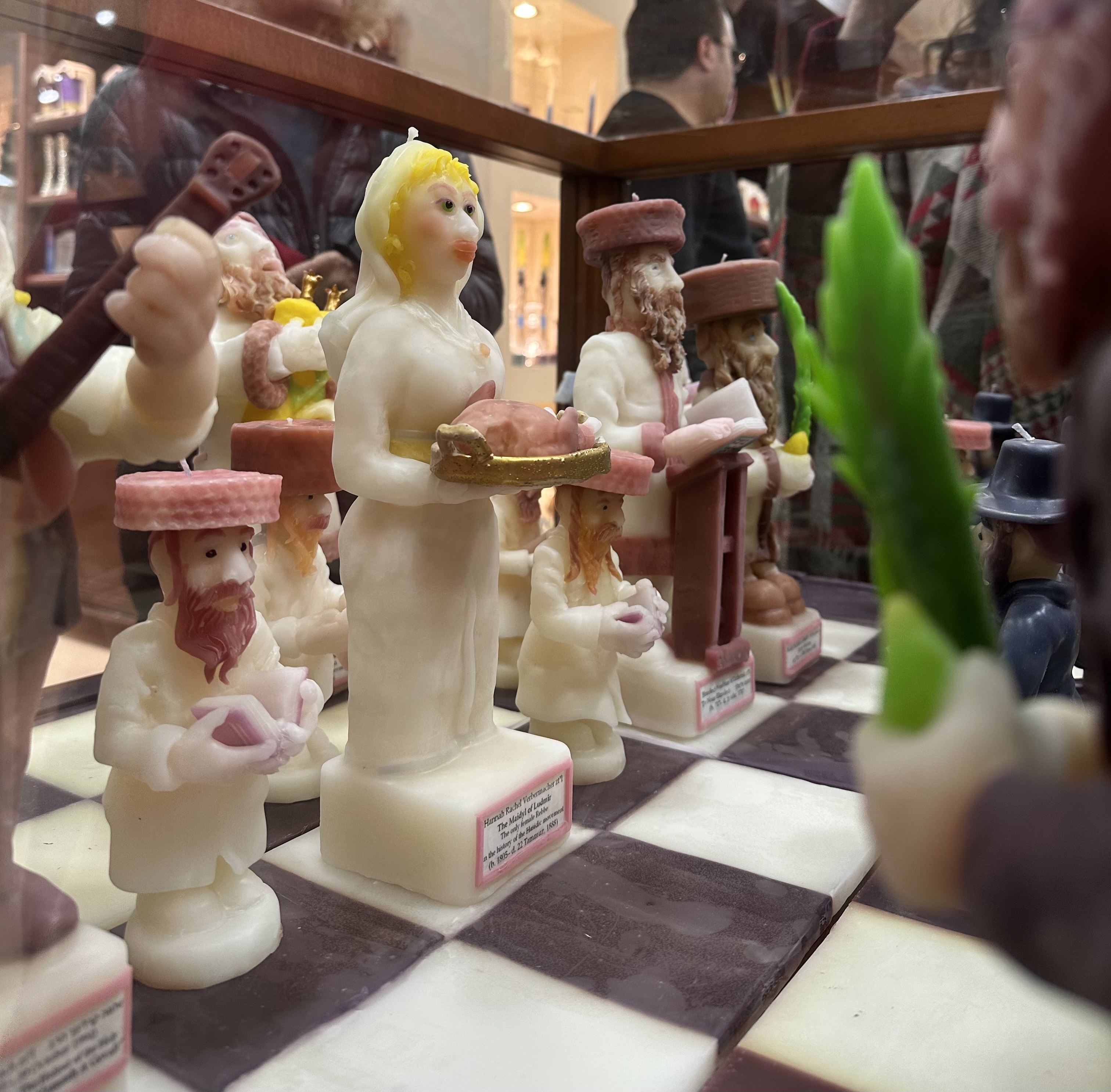
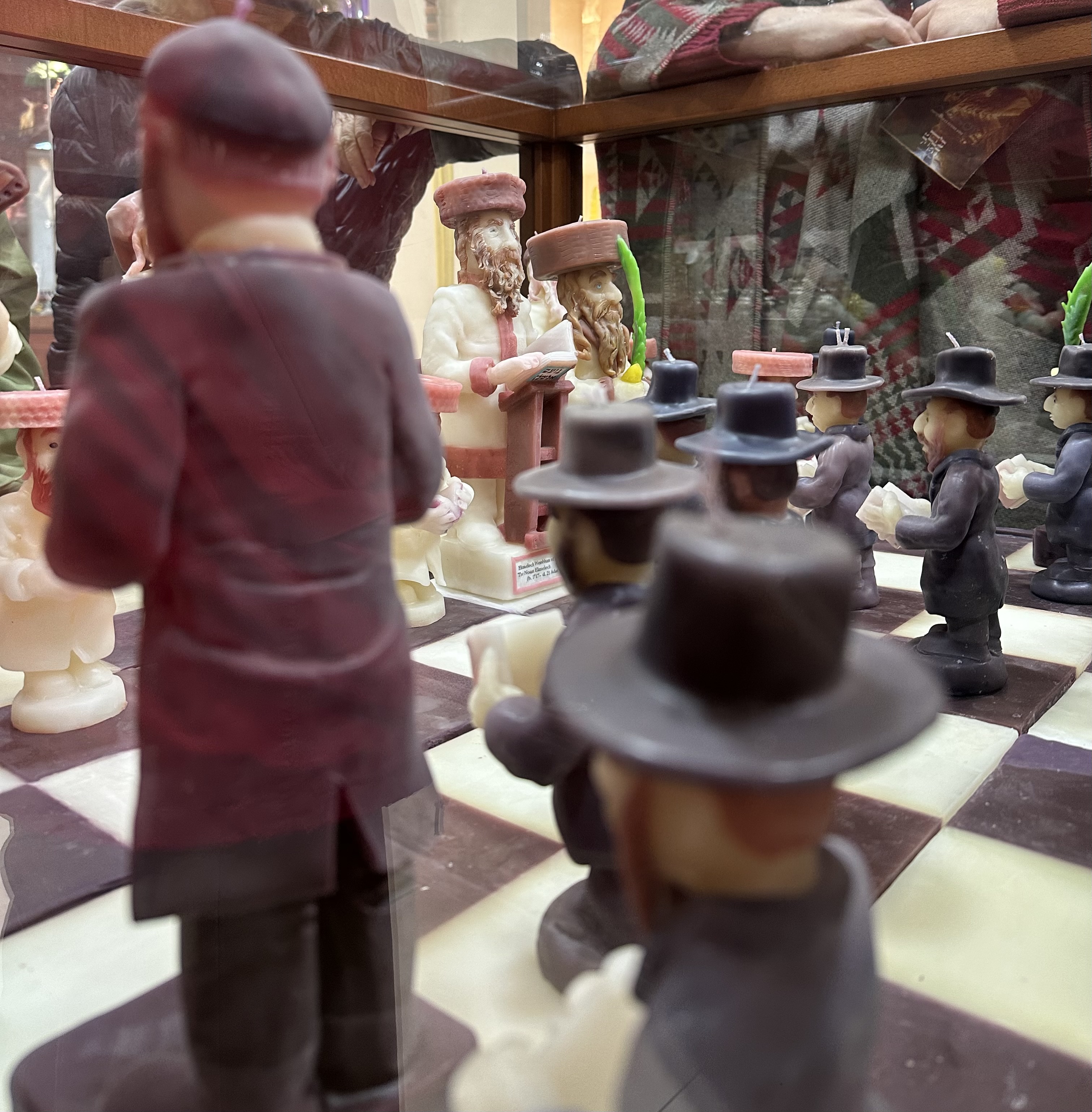
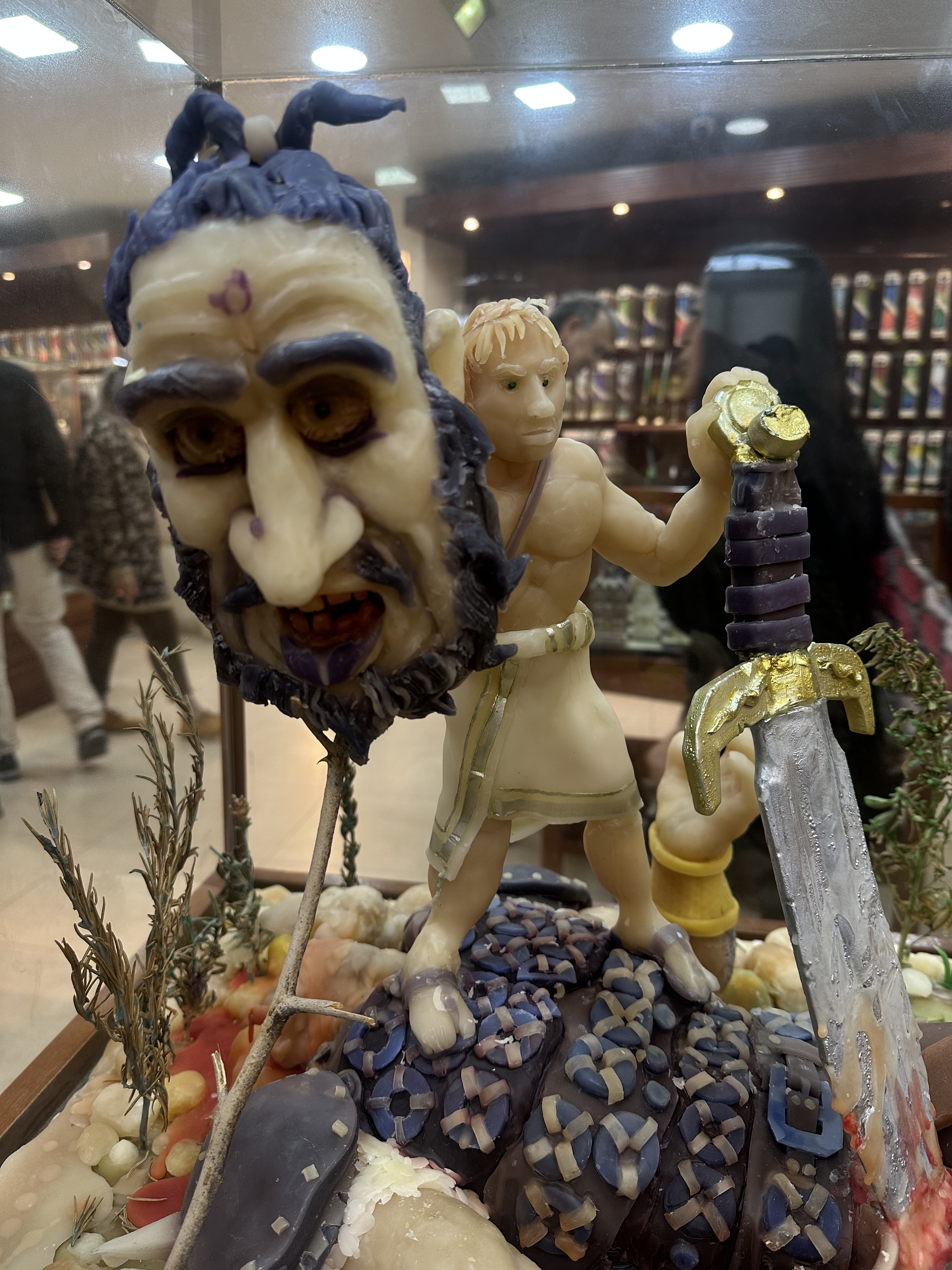
Safed is among many things an artist community. We stop into a big and crowded candle shop that has the most incredible wax work (in addition to the expected chanukah candles, shabbat candles, yarzheit candles – colorful, some braided, large and small). The chess set of orthodox jews (different sects) was probably the best, David & Goliath a close second…
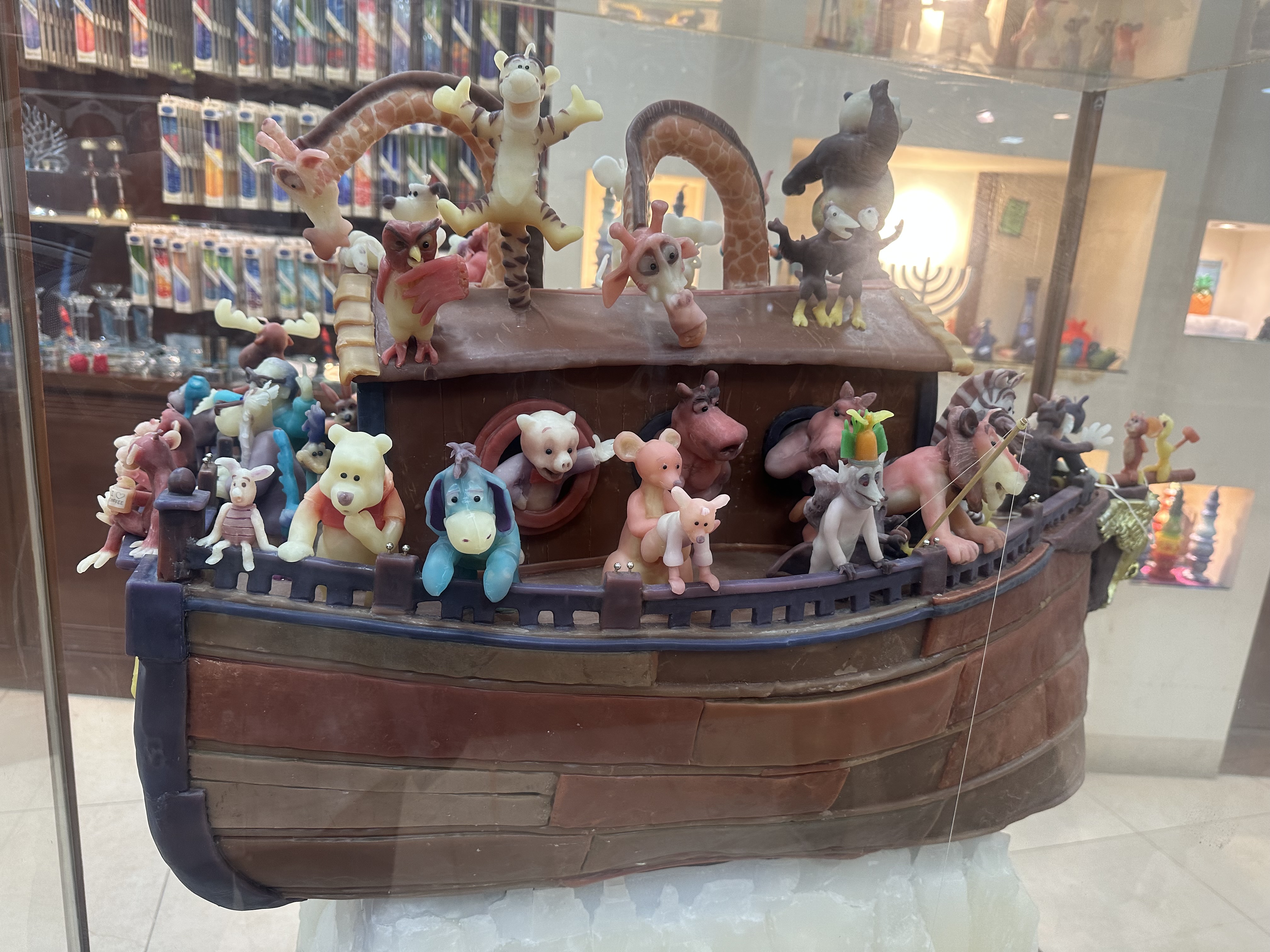
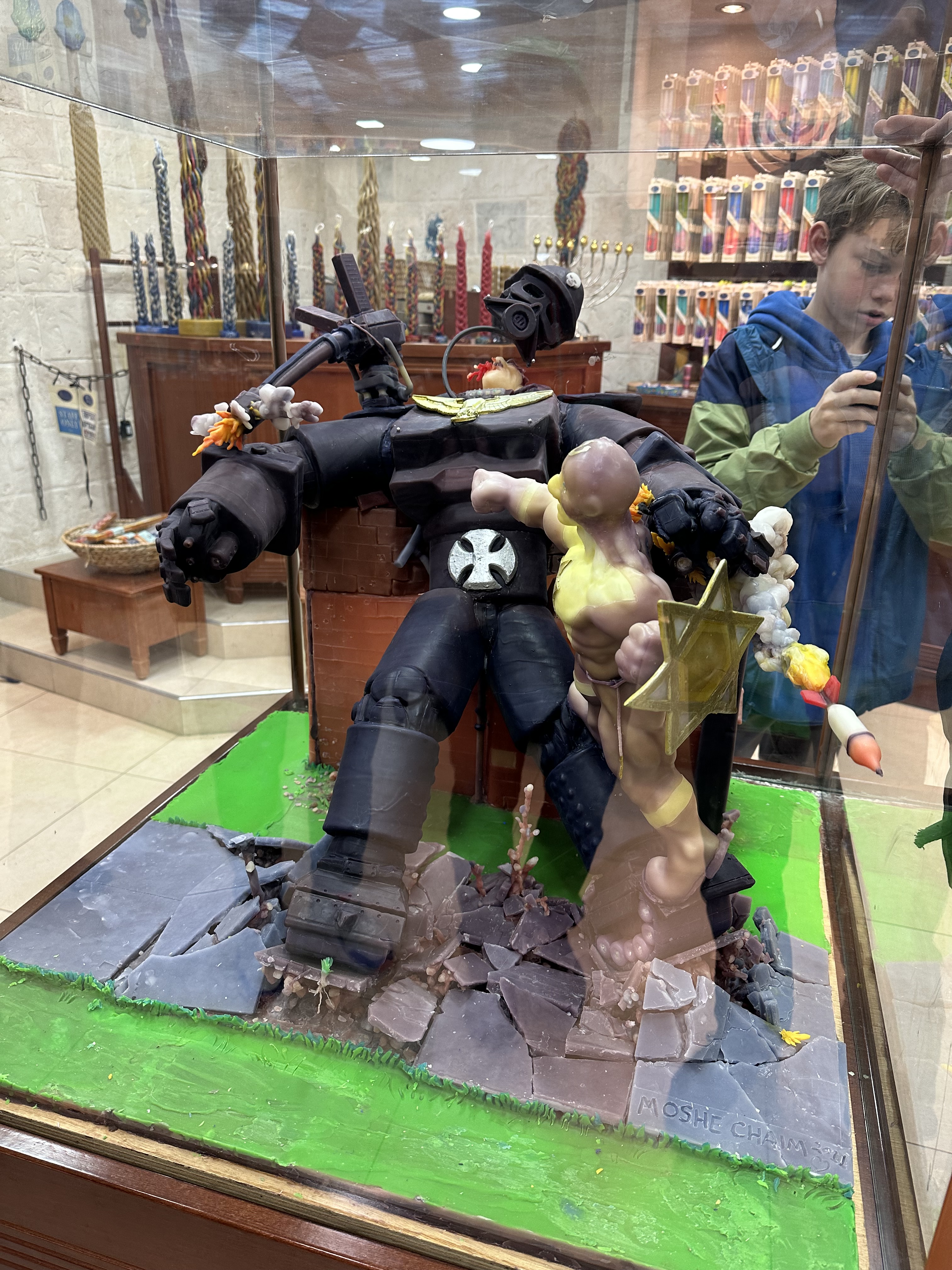
We make our way back to the car by way of a narrow “street” lined with galleries and shops. It’s bustling with curious tourists, distracted with each passing doorway, and easy to lose sight of each other amongst the crowds (including many American kids here on birthright trips). The art and jewelry and such runs the gamut – some questionable and some amazing. Liz and Janell admire a particular painting that we all love but the shopkeeper is nowhere to be found…we wait a bit, but eventually must move on.

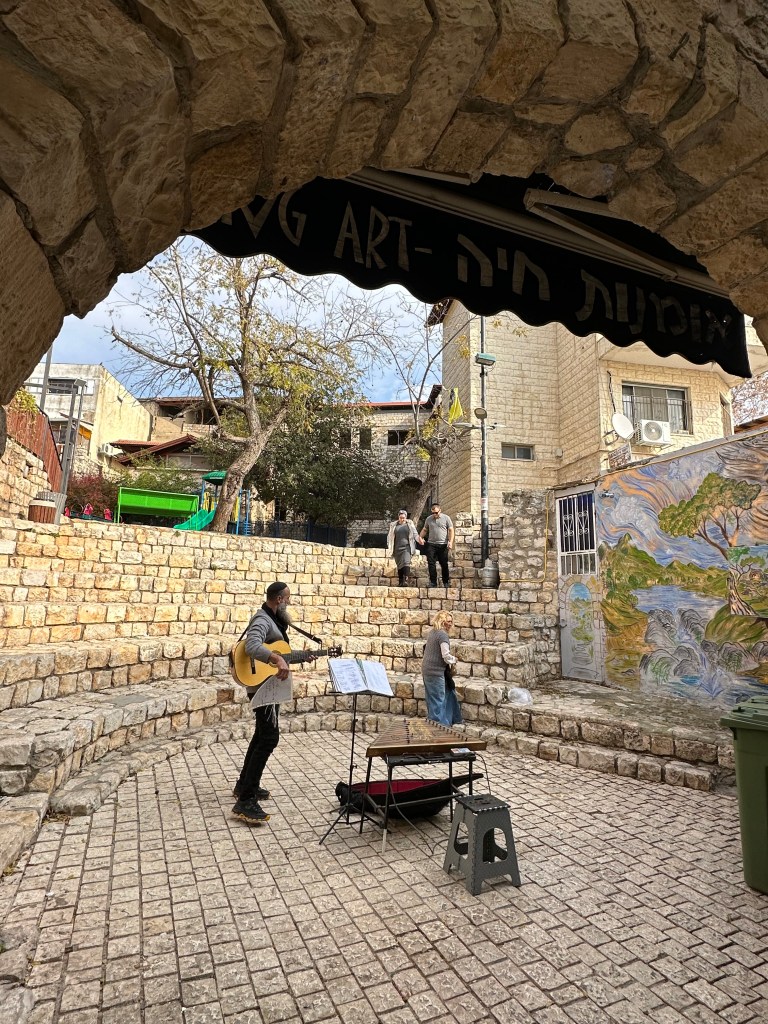


We somehow reconvene the group at the bottom of all this, and Hilik amazingly navigates the van around a motorcoach that has lost its way and is completely blocking everything in these hairpin streets. Tempers get short, horns honk and drivers yell, but we emerge, descend to less congestion, and are bound for Jerusalem.
We arrive after nightfall when the lights of the season have lit up the city beyond its usual splendor. We pass by the Christian Quarter where a Christmas market buzzes with kids and parents and shoppers and music, the air filled with the smell of roasting chestnuts. We pause for a moment, realizing – pinching ourselves – we are in Jerusalem…on the 6th night of Chanukah…and tomorrow is Christmas eve.
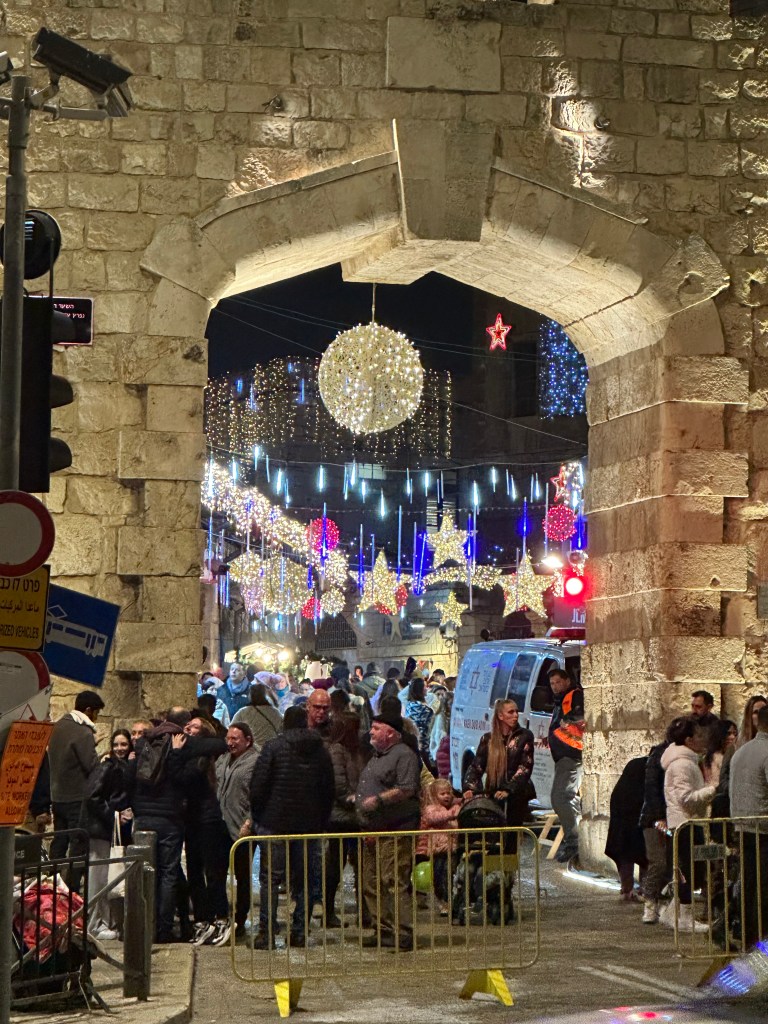
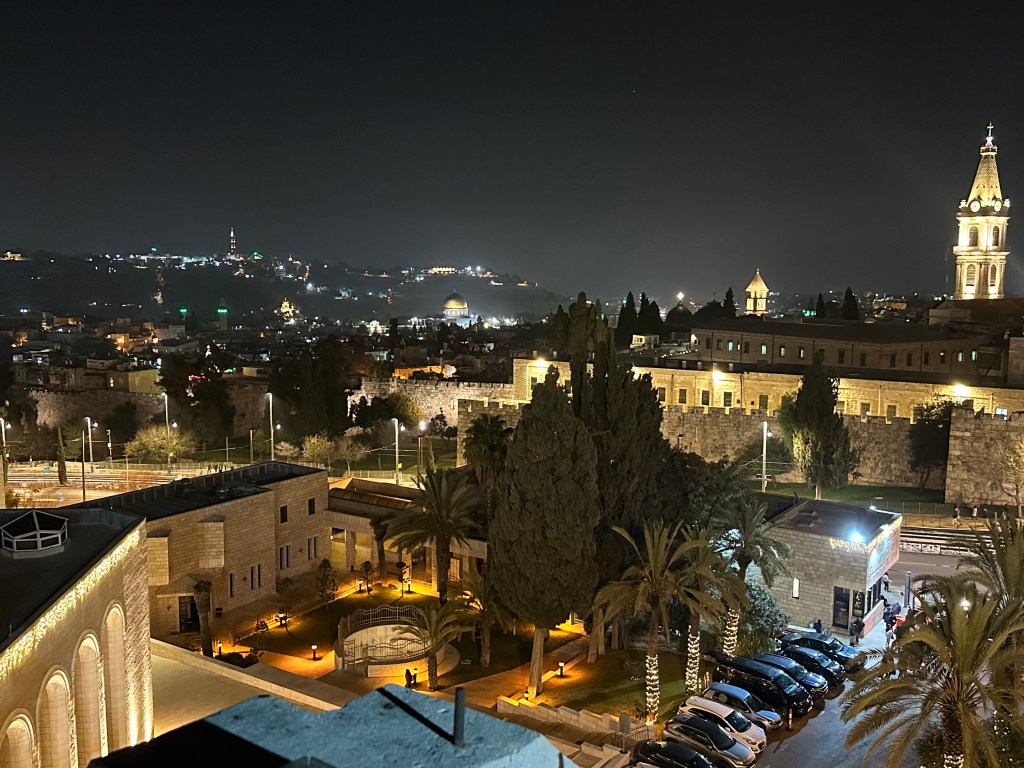

What a magical time to be in such a holy place. We are blessed.
 Dirt Roads and High Rises
2 responses to “Down to Hula, Up to Safed, and On to Jerusalem”
You are most certainly blessed, dear Michael, and so is your mom! How lucky she is to have you as her son!
LikeLike
Love the hands with the Spock story.
LikeLike