Still mesmerized by the Luxor Temple’s sophisticated majesty, we made our way back to the ship and gathered for a disembarkation briefing, always a bittersweet affair signaling our journey is coming to an end. It made us begin to reflect on the entire trip…dinner conversation centers around each of our highlights and lowlights. We are already reminiscing, but still have one last place to visit tomorrow before we head back to Cairo, so we dine and slumber…
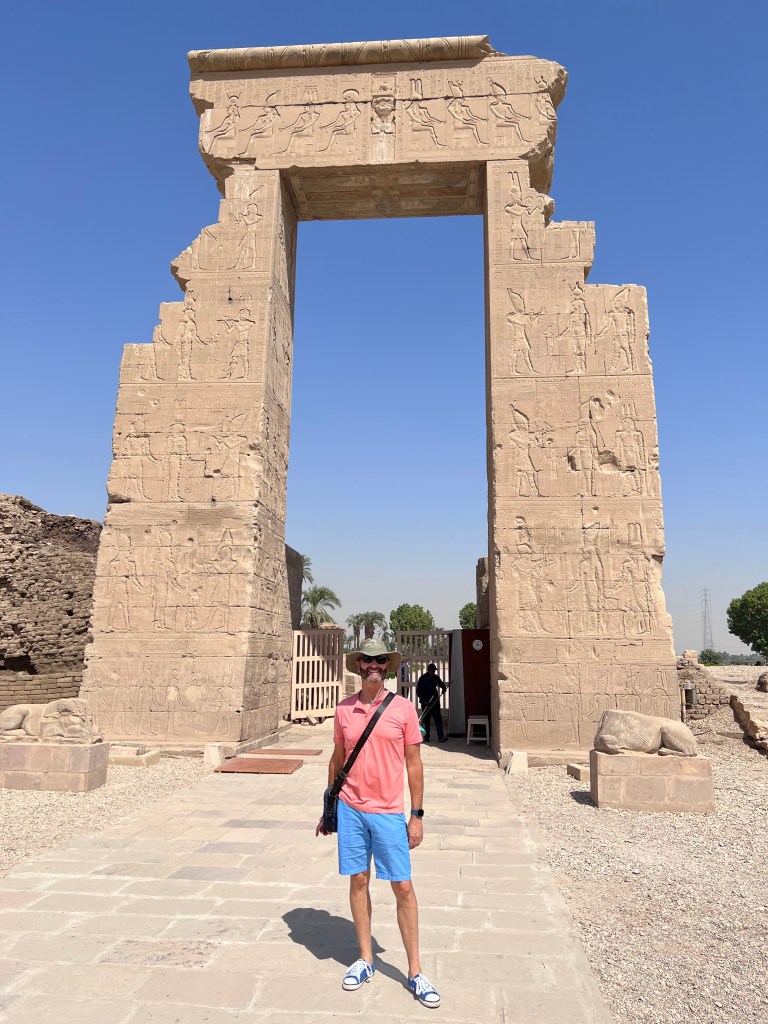
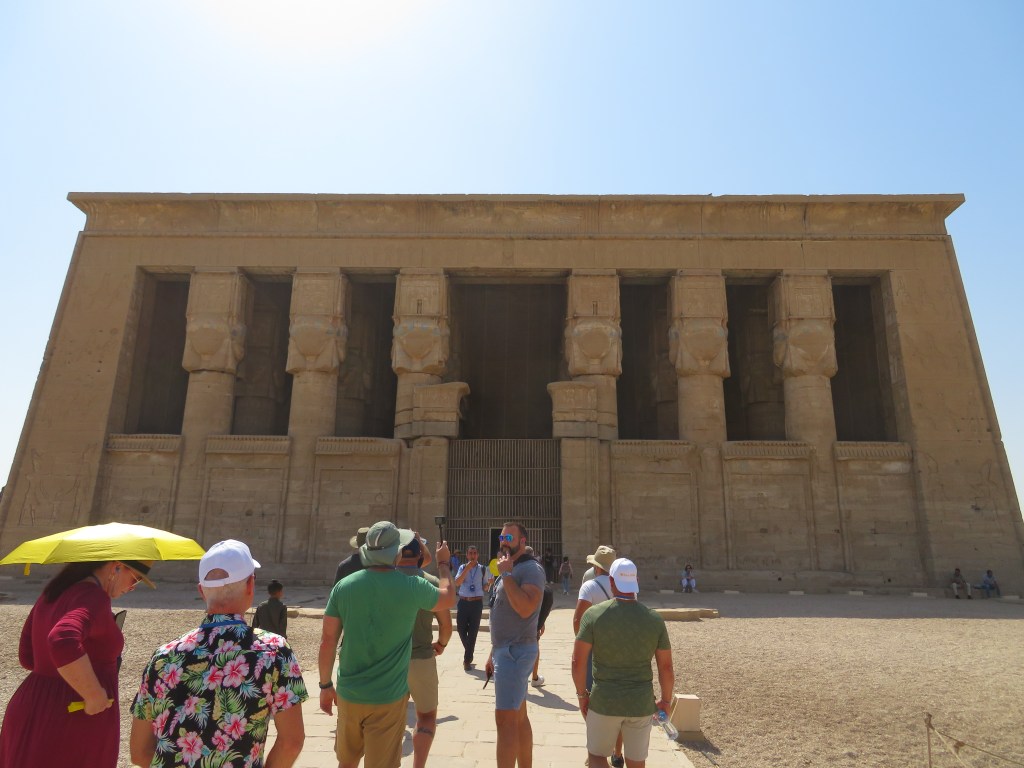
As the day breaks, we cruise a short distance to Qena, bound for the Dendera Temple Complex, the best-preserved in Egypt. The Temple of Hathor (within the complex) is what we’re really here to see, and while we reluctantly boarded the busses once docked (“…another temple?…”), our mindset quickly changed when inside the “turquoise temple” as some call it.
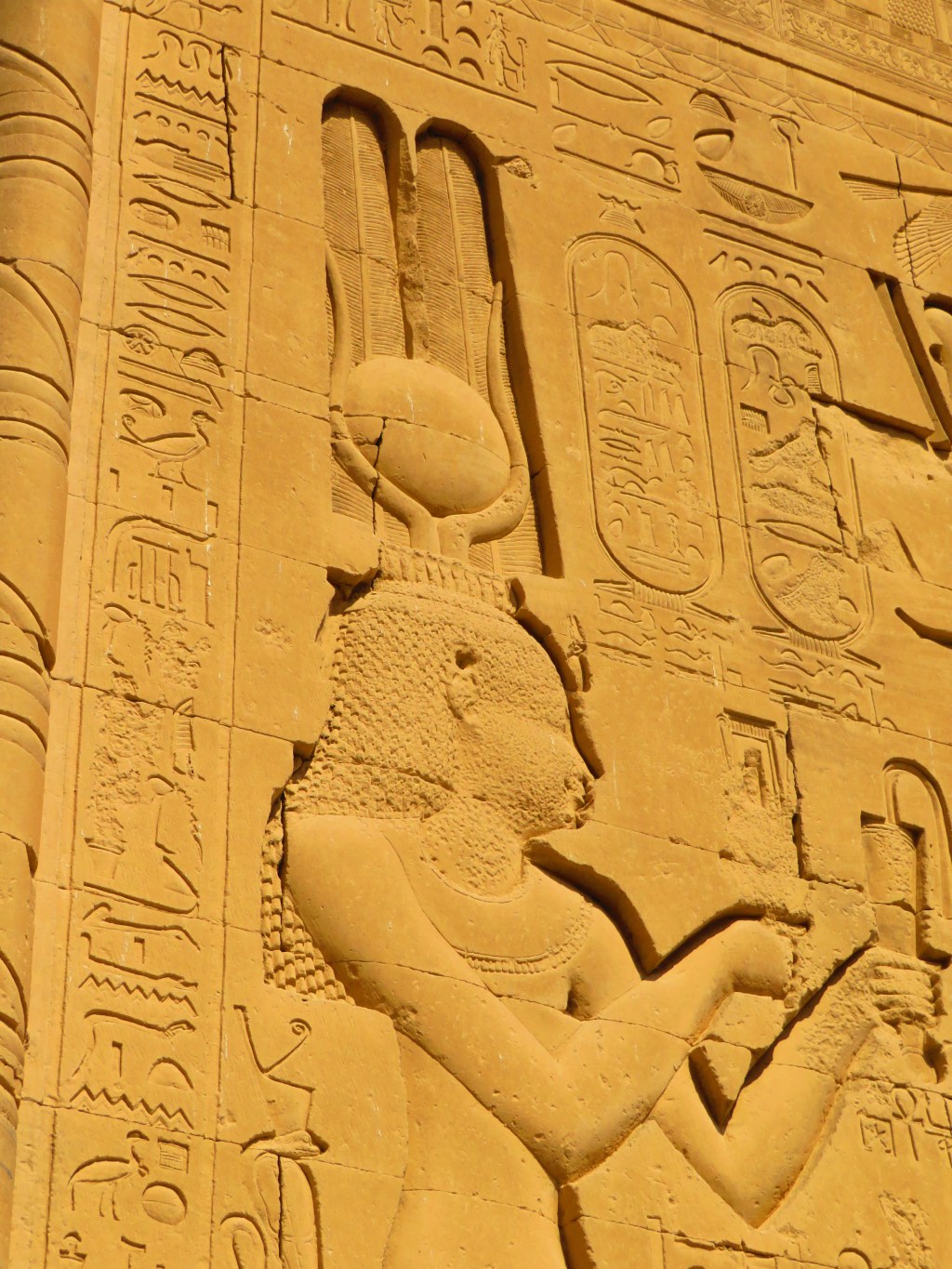
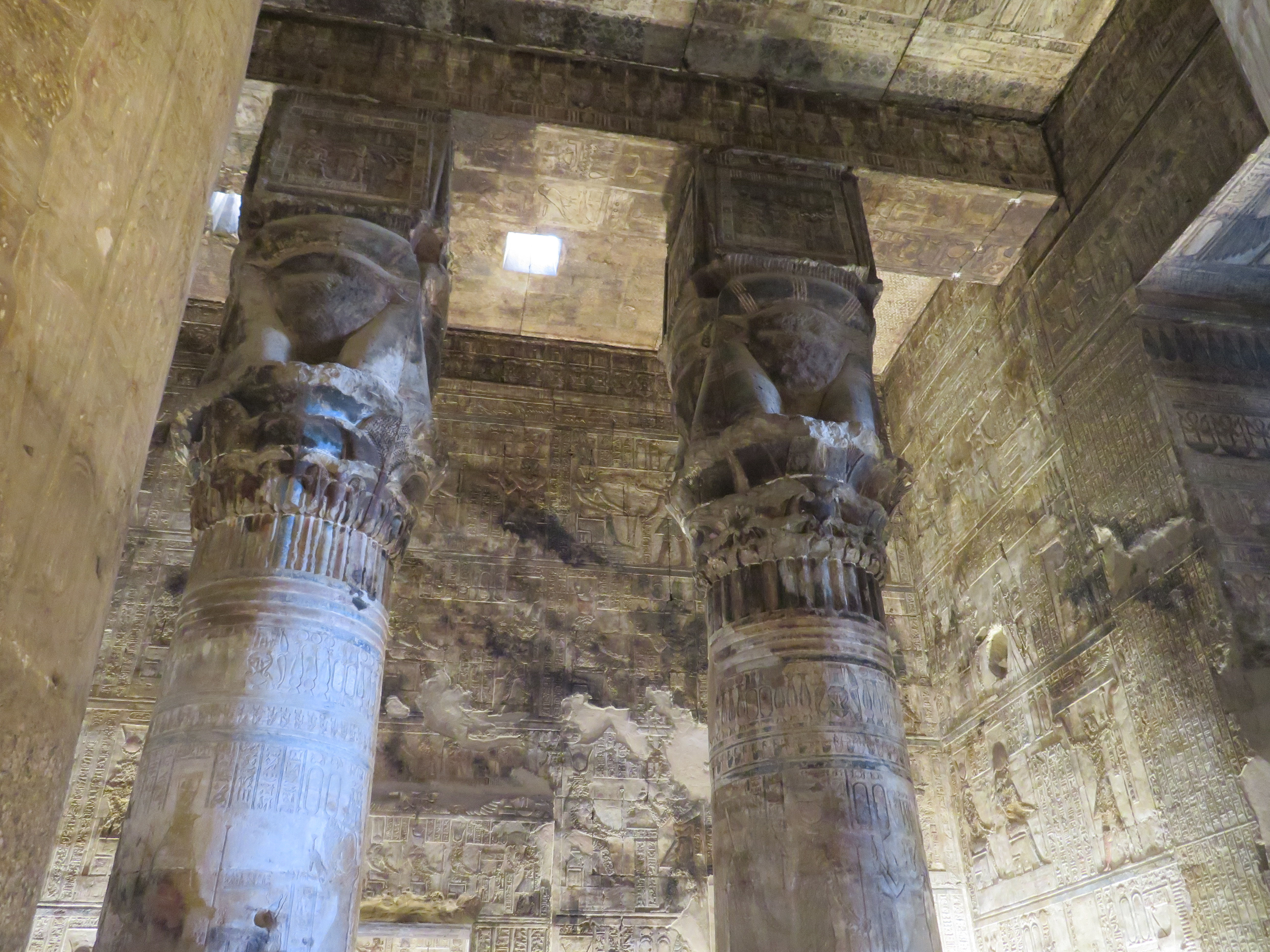
While evidence exists of a temple dating to 1500 BC, what’s here today only dates back to about 350 BC (funny how 2,400 years old becomes “only” so old…). Hathor was the mother of Horus (the falcon god) and the sun god Ra, and thus represented motherhood as well as music, dance, joy, love and sexuality. She could travel between worlds and helped the dead transition to the afterlife. Her temple does great justice to her importance. It is – spectacular. The colors, the hieroglyphs, the scale of the pillars, the weight of the stones, the omnipresent visage of Hathor mothering over us earthly beings…


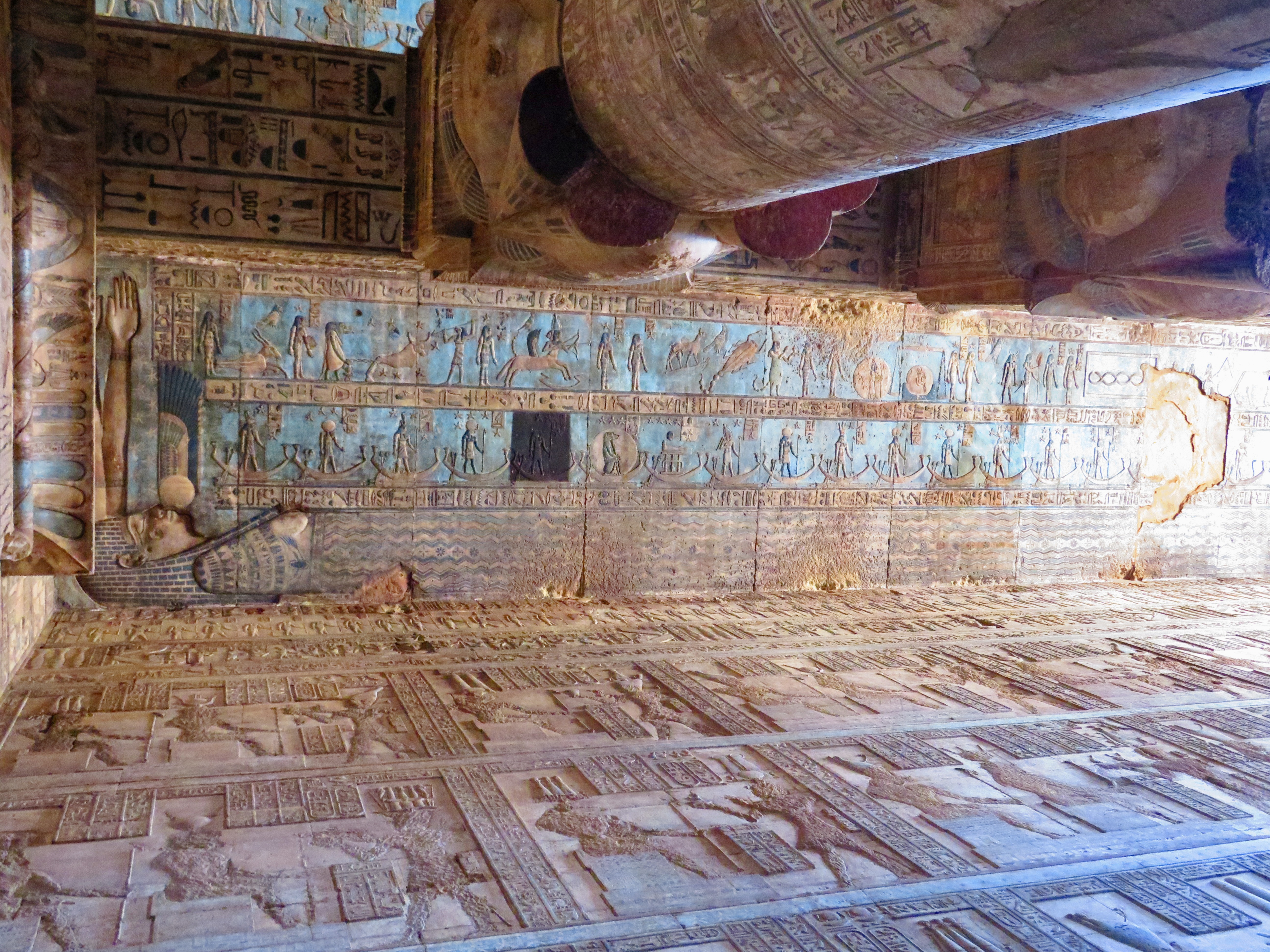
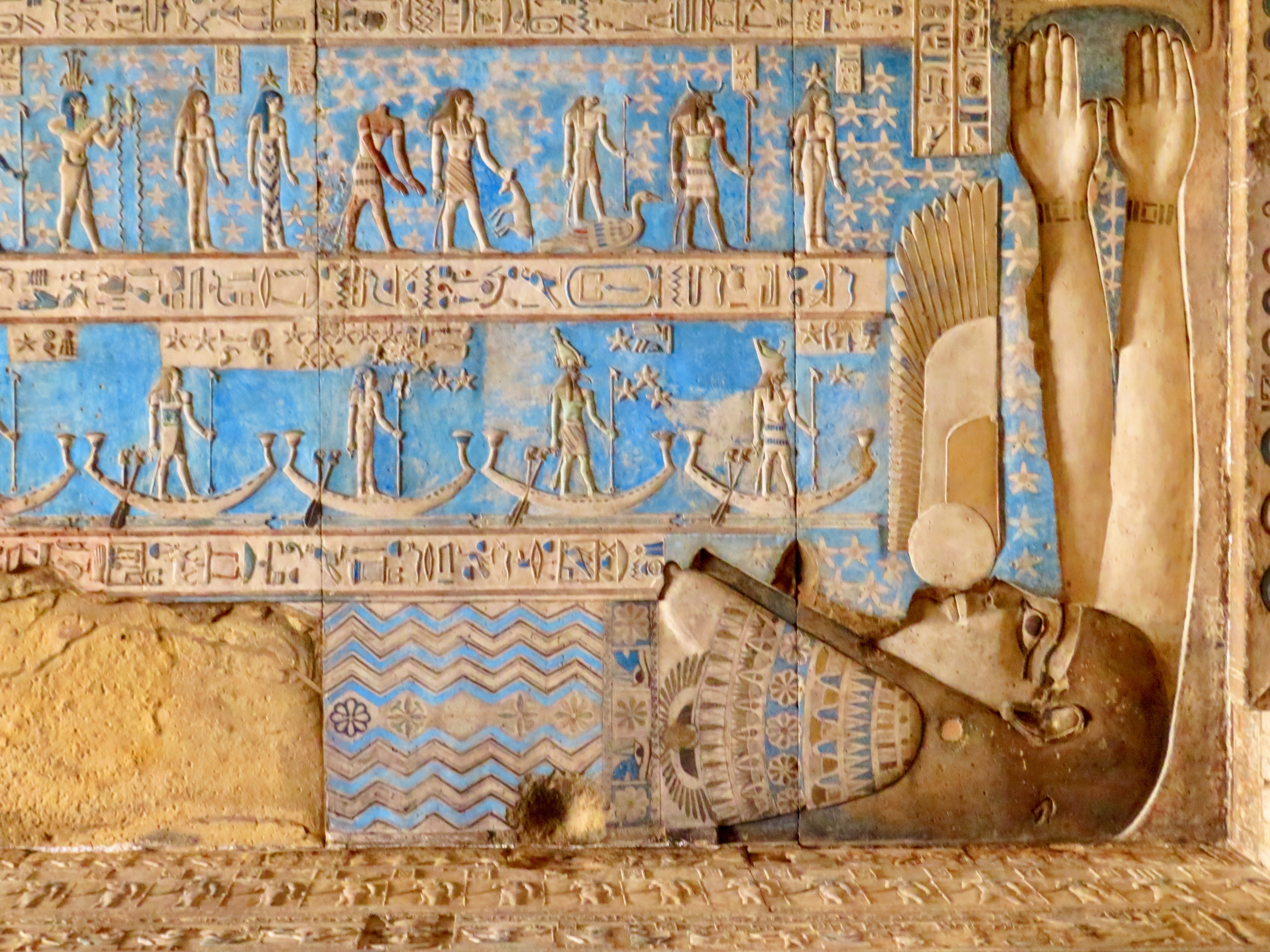
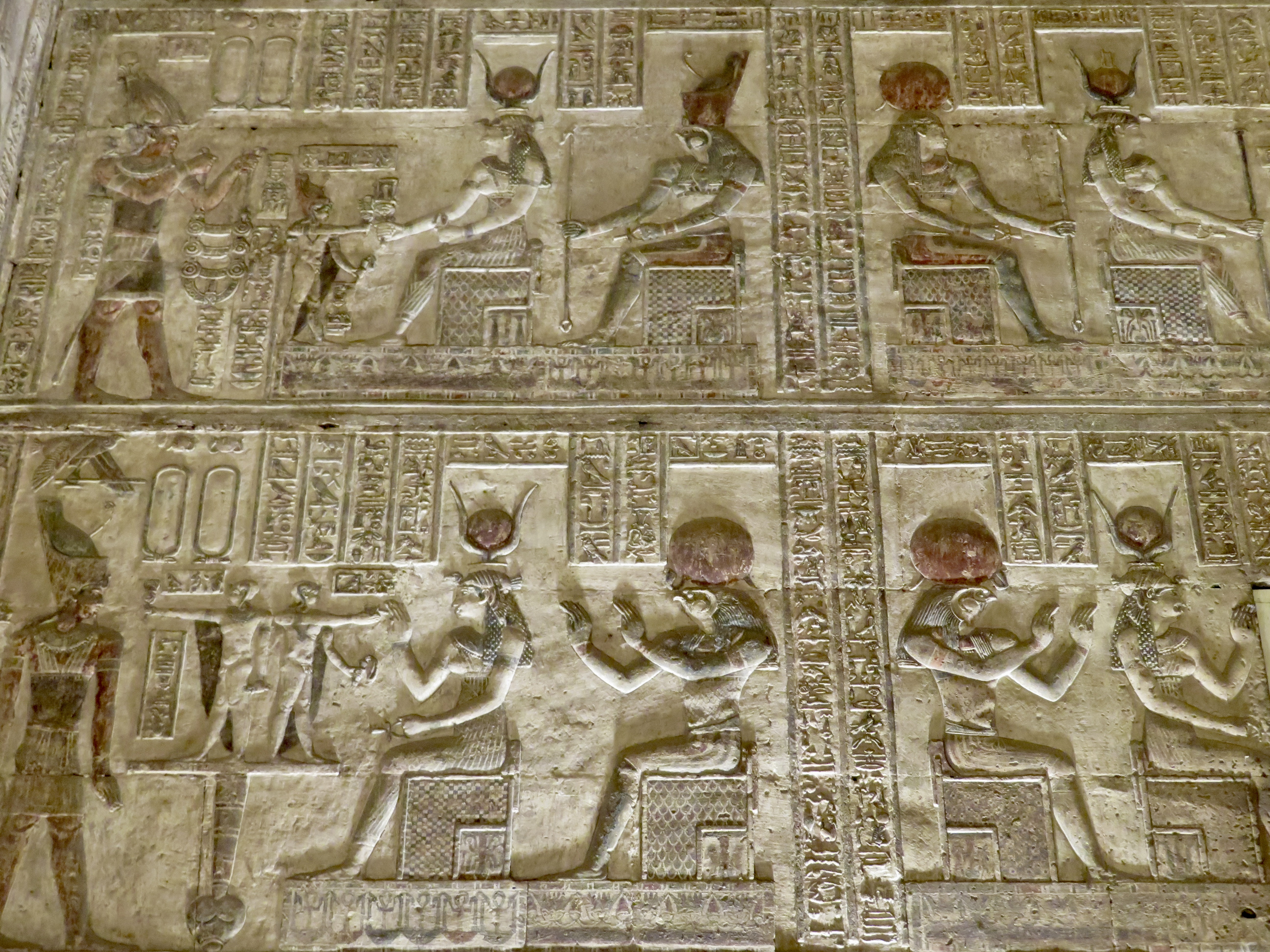

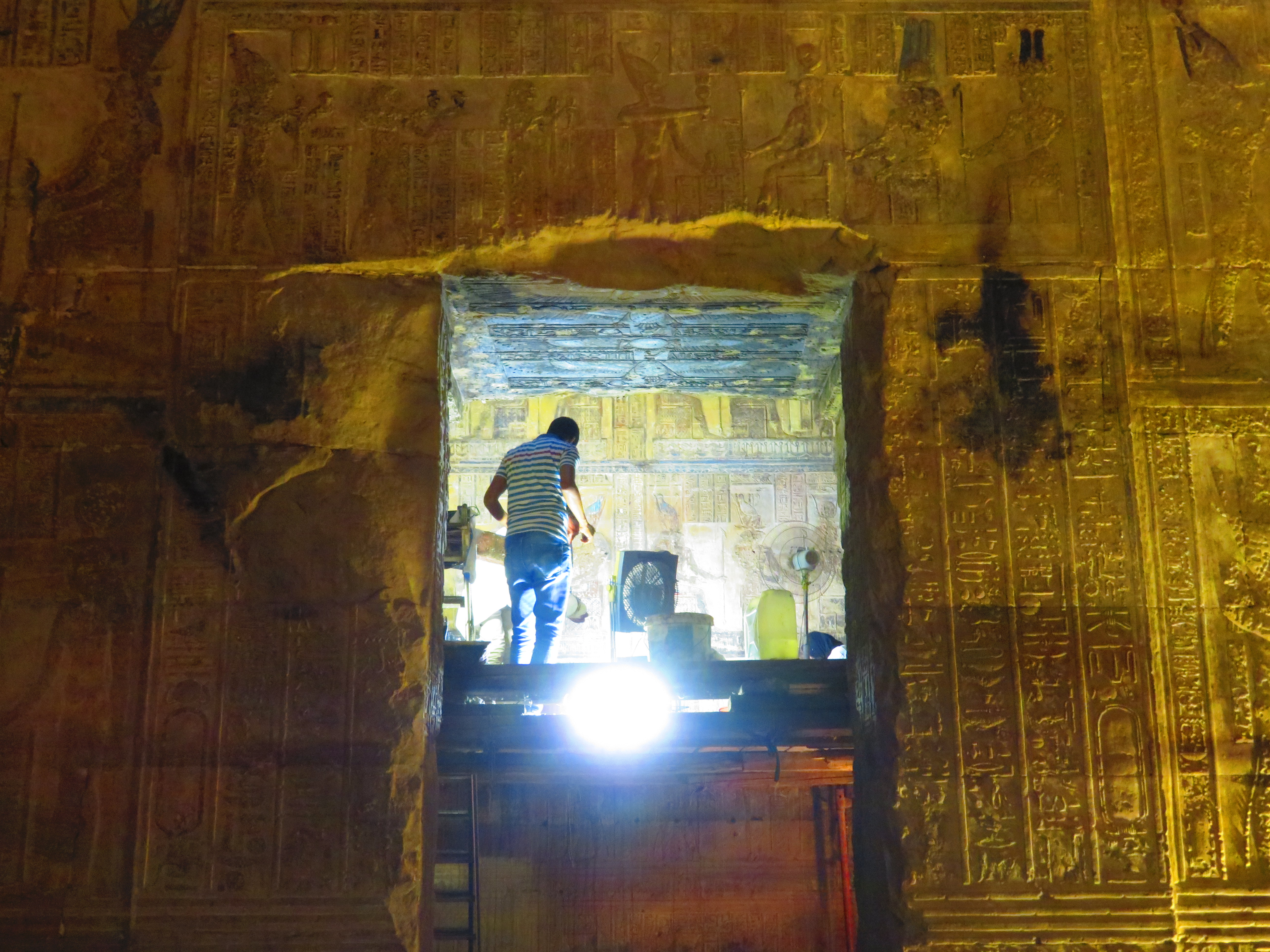
We came across some restoration work underway, which was really cool to see. It is slow and painstaking work. The pic below with the grey coloration shows what it looks like before it’s cleaned.
As Ahmed guides us throughout, he takes us to the roof via a series of stairways and tunnels, of course carved on every square inch. You’d think temple fatigue would have fully set in, but it just never ceases to amaze. We emerge from the stairs onto the roof, where it’s unusual to be, most of them long ago crumbled to the ground from earthquakes, pillaging, and erosion. Ducking to enter a small chapel up here, we find the famous Dendera Zodiac on the ceiling, believed to be the basis for later astronomy systems, although dating it has never been agreed upon – 2500 BC? 300 AD? And then – it turns out what we are looking at is a copy. The original is in the Louvre (and the French ain’t givin’ it back 😊).
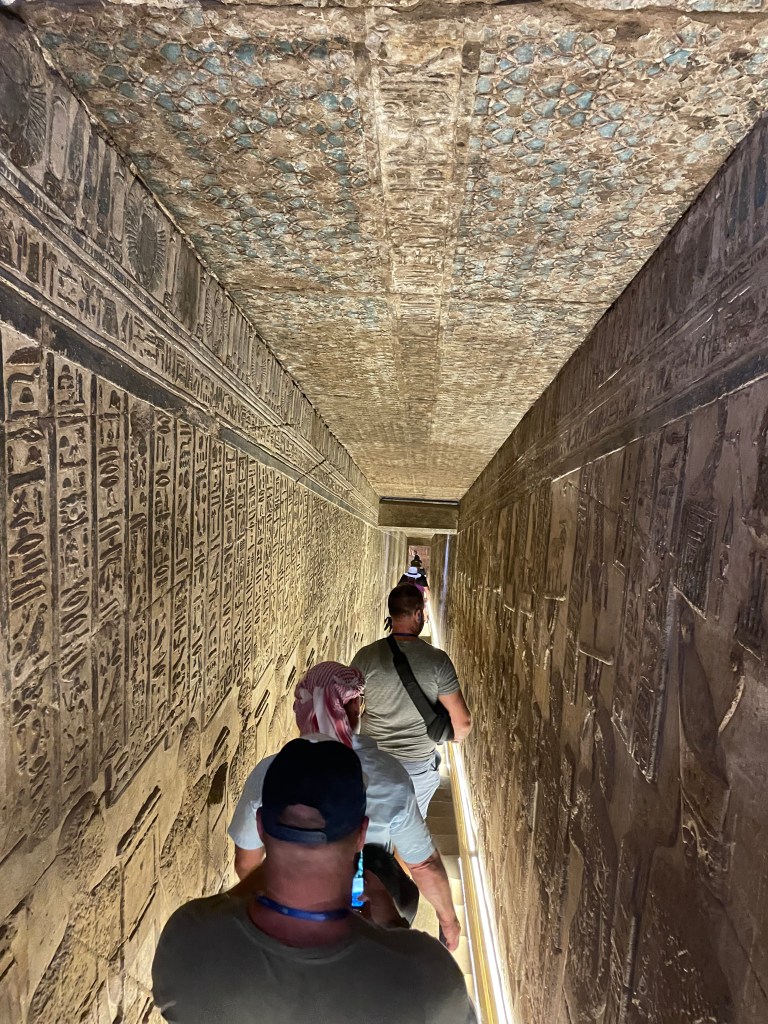

Before we emerge from the temple into the hot sun, Ahmed shows us that in one of the side chambers the mummification process is clearly laid out. So cool. Venture along with this quick video:
As we make our way out of the temple, someone asks “Ahmed! Where’s Cleopatra?” “Let’s go, I will take you to see her.”
A few times during our Egyptian adventure we’ve been wondering about the lack of Cleopatra sightings, or even trinkets. And then we are reminded where she fits into the historical context. She is perhaps a bit of a footnote to the millennia of Ancient Egypt, not quite the prominent figure us Westerners grow up thinking she is. She ruled for about 20 years and was indeed Egypt’s last active ruler before it became a province of the Roman empire in 30 BC. For some time-span reminders, the Great Pyramid was built around 2500 BC, and Ramses II was around 1250 BC. Our girl Cleo was over a thousand years later…
While Cleopatra closes out the many chapters of Ancient Egypt over a rather short period of time, she’s certainly not forgotten – she’s here! Ahmed leads us to the rear of the structure and there’s Cleopatra on the back wall. Note the very small figure that comes up to her knee. That is her son Caesarion who succeeded her as the Egyptian sovereign. He reigned for just 18 days.

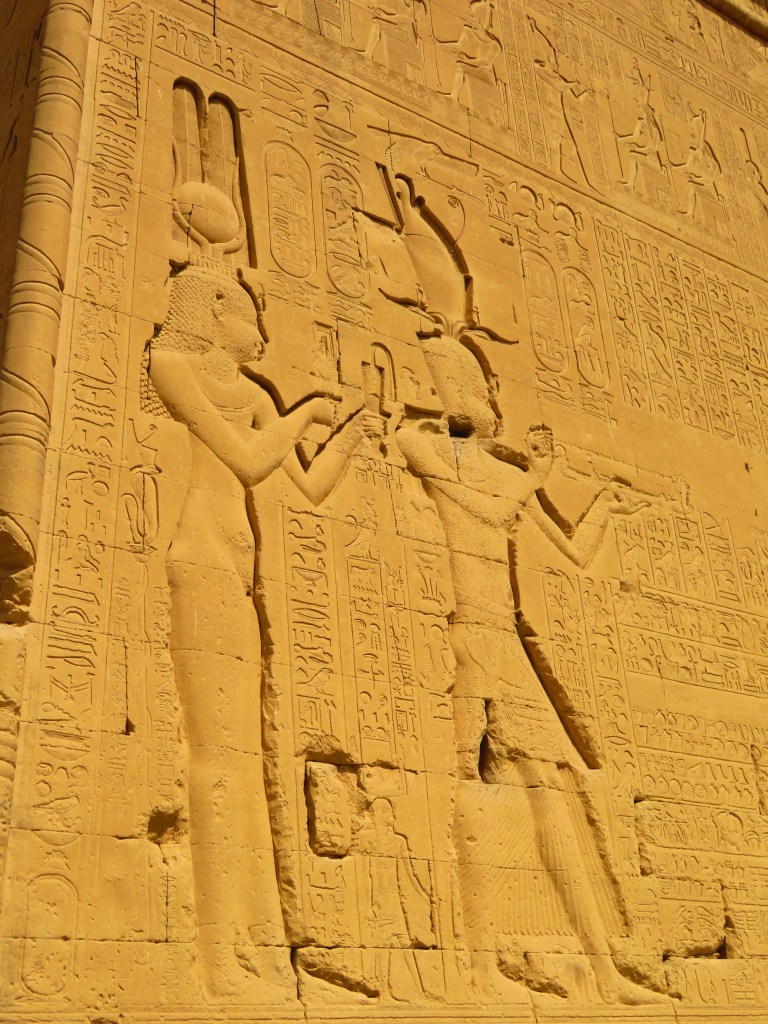
Finding Cleopatra was a fitting capstone to this time-traveling adventure we’ve been on. It leaves us all quiet on the bus as we head back to the ship, our attention unfortunately turning to the painfully early disembarkation tomorrow (off the ship at 5:15 am for a flight to Cairo). We have one more day in the city but no one is too enthusiastic about it; how will anything we do in Cairo compare to what we’ve seen over the past week?
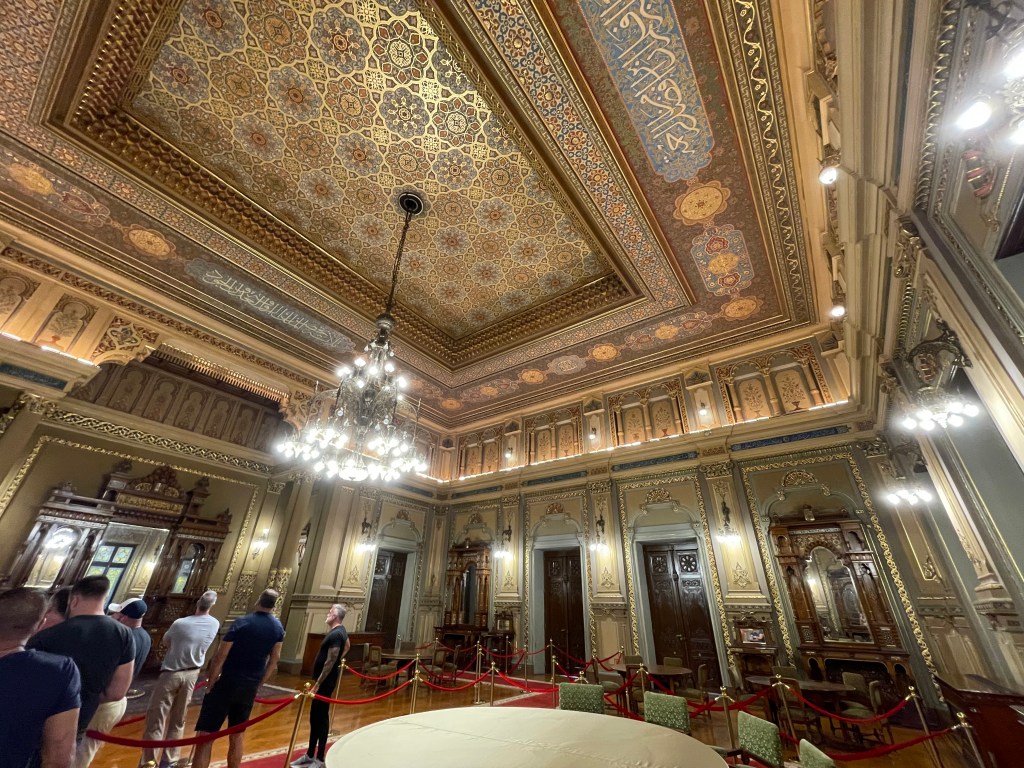
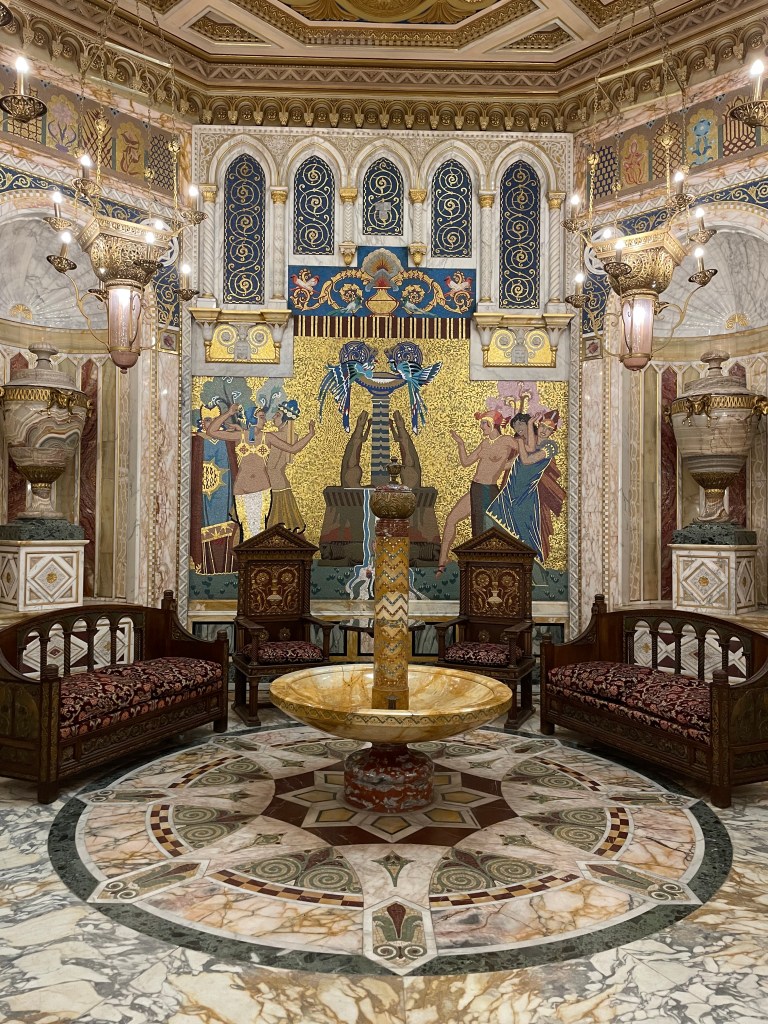
The next morning’s travel passes quickly through the fog of sleep-deprived travelers awakened too early, and we are soon piling onto the busses at the Cairo airport. We visit the Abdeen Palace (the royal family home until 1952), which is stunning, and have lunch in one of the many dining halls. It’s impressive and interesting, but still feels like we’re just killing time. Everyone declines the planned visit to Coptic Cairo and a church. We can drive by the synagogue but it’s closed for renovations so we can’t go in. I ask about Jews in Egypt and learn there are three. Yes, just three. A rather large population was vilified, persecuted, and driven out in the 1950’s and 60’s.


On the way to the hotel, our adventure turning to the travel home, the history lessons are done and Ahmed shares a personal story of him and his wife’s courtship. His eyes sparkling and his grin wide, he tells us he had to ask three times – through a friend – before she agreed to go on a date, and even then, she said “only a phone call when my parents aren’t home.” That eventually led to in-person dates, but secretly – or so they thought. Ahmed’s father confronts him one day about “this girl he likes,” and Ahmed feigns ignorance until his father says “everyone in the village knows you are seeing each other. Do you want to marry her?” Unbeknownst to his future wife but with Ahmed in the know, the fathers arrange a meeting. She gets wind of this and is none too pleased for it be done behind her back! Not being an arranged marriage per se, her father seeks her consent before agreeing to the union…and the festivities begin. They’ve been married 15 years and have two children. Ahmed is just giddy and filled with love when sharing this tale. The smile and sparkle never left his face.
How different was Ahmed’s story from that of his ancestors? Through that lens, a connection emerges between the common era and the ancient…an inescapable duality in Cairo. Our journey found us looking 4,500 years into the past, through millennia at lightning speed, and with a jolt landing us back in a dusty crowded city…one inextricably linked to its past. It is a city of modern times whose people bear witness every day to the long-ago, the Great Pyramids on Cairo’s horizon a gateway to the ancient temples and tombs further up-river. And it is that life-giving river – the magical, eternal Nile River – as the constant, connecting it all through the ages.
What an amazing adventure this has been!

 Dirt Roads and High Rises
5 responses to “Where’s Cleopatra?”
Where was the start of trip, middle and end? no order that I could tell
>
LikeLike
Well the whole trip started in Dubai (see the post titled “If We Build It, They Will Come?”), then to Cairo, then cruising the Nile from middle to upper Egypt, then back to Cairo. All the separate posts hang together in that sense.
LikeLike
Spectacular travelogue, Michael. Thank you so much for sharing this incredible trip with your followers. xoxoxo Gail
LikeLike
Thanks Gail! So happy you enjoyed it. Israel next up in Dec!
LikeLike
I know all about that! Your mom was with us for a movie and an overnight last night. I know she’s excited about that adventure!
LikeLike