
Not all travel goes as planned, and today was a reminder of that. Our 12:30 EgyptAir flight to Luxor was cancelled; we all got bumped to the 6:30 pm. It was disappointing, as we were looking forward to leaving the hustle and bustle of Cairo for the AmaDahlia, our ship on the Nile and home for the next week. It is what it is, as they say, so let’s make the best of it.
A leisurely breakfast at the hotel buffet – at which one can’t help but eat too many Egyptian delights – and a chat with the concierge about taxis vs a hired car, and we set out for the National Egyptian Museum of Civilization. We opted for the driver, who was a charming man, very proud of his city and country, eager to share historical and cultural tidbits along the way and answer our questions. He took a short detour to show us Coptic Cairo (you’ll have to google that) and not long after dropped us at the museum.

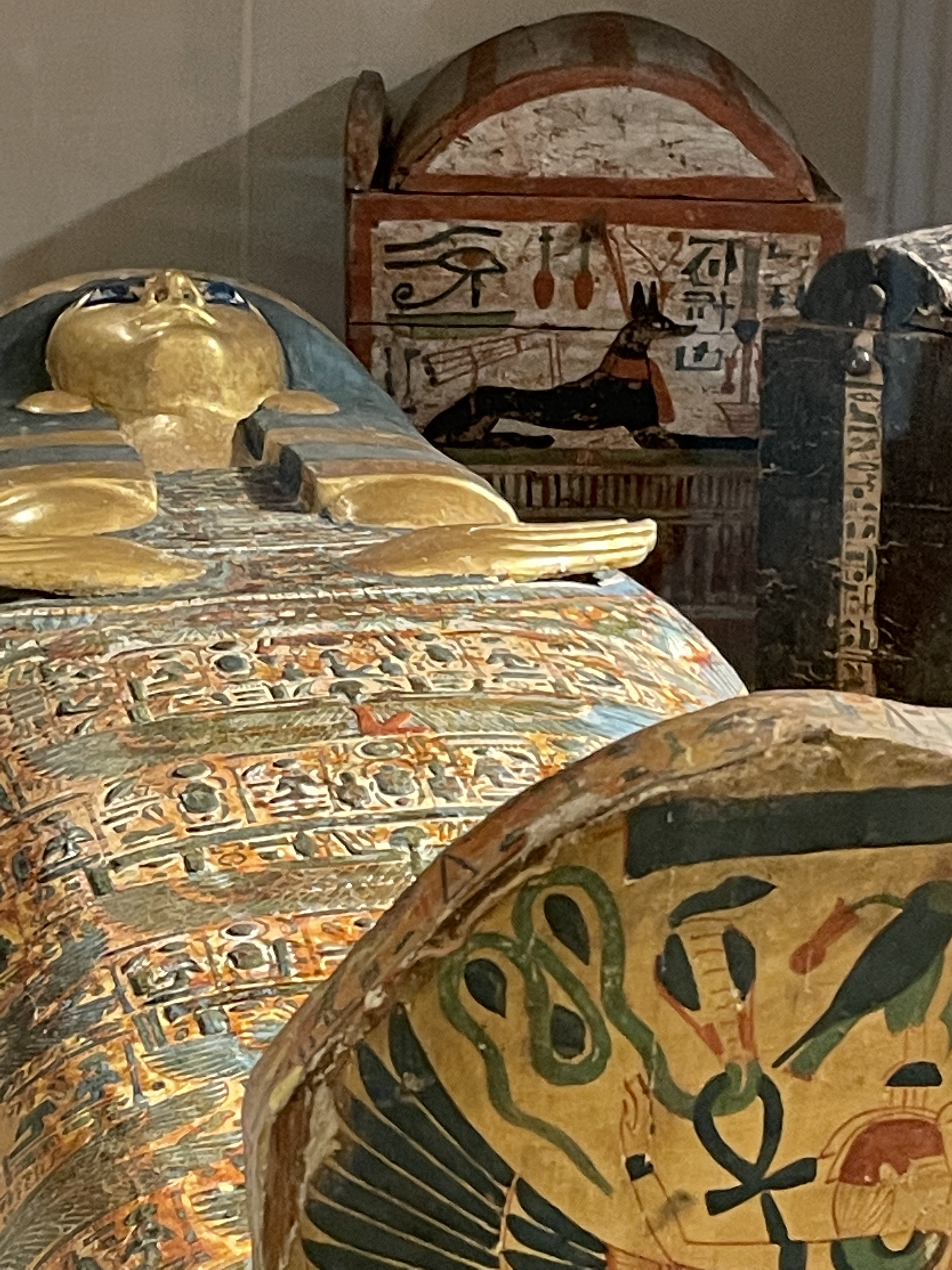
This was the place, we were told, to see mummies…and a lot of them! They are displayed in a subterranean floor, accessed – silently – through a dimly lit, black granite hallway as if descending into a tomb. False doors that allow the gods to come and go are on either side as you enter. The feeling is one of discovery and eternity as you follow the path through thousands of years of mummified kings and queens, so well preserved it is both astonishing and slightly creepy at the same time, their darkened skin drawn tight over bones that seem too small to be human. Yet they are, and they speak back to us of an ancient time of wisdom and worship. “No pictures” is strictly enforced.
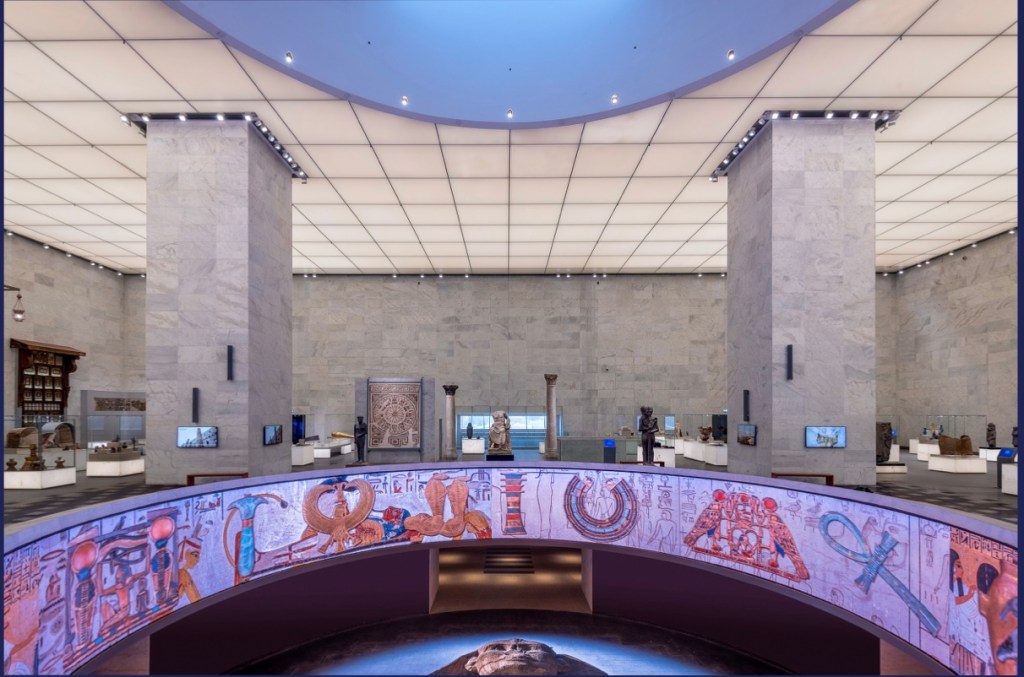
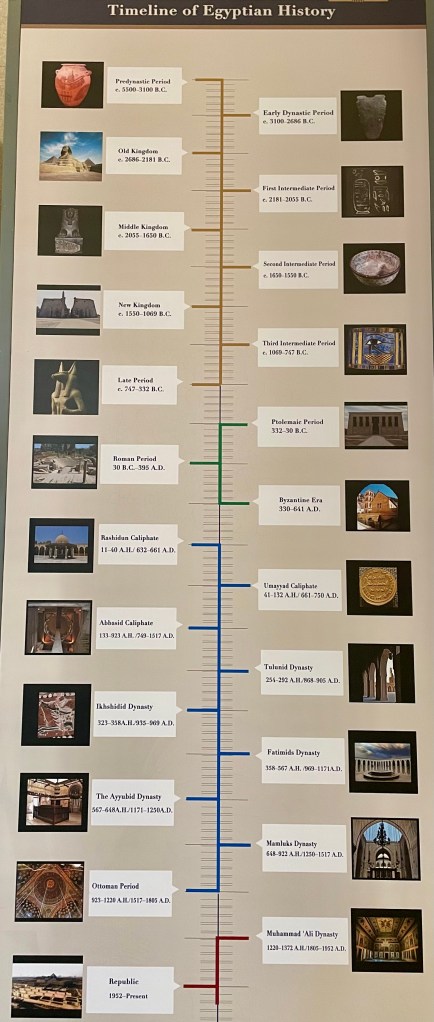
The rest of the museum is fantastic, a cavernous, modern space with very select displays arranged in a counter-clockwise timeline. It begins with early man and proceeds all the way through to a modern era.

Fast forward through the airport transfers and flight to Luxor, and we are finally boarding the ship. It’s nicely appointed and our cabin is great. A total of just 34 cabins, so it’s pretty intimate. Perfect for a floating journey on the Nile going up-river from Luxor toward the Sudan border (we will get very close at Abu Simbel) – perhaps counter-intuitively that “up river” means going south. Yes, the Nile flows north toward the Mediterranean; “Upper Egypt” refers to the upper part of the Nile, and is actually the southern part of the country. It’s a bit of a brain twister for sure.
After the quick stop at our cabin, a safety briefing, and a small bite to eat, we drift off to sleep. Our slumber here is peaceful, the water beneath us imperceptible and the banks of the river silent.

The sun comes to life early on the river’s Eastern bank, as do we, excited for today’s adventure to the Valley of the Queens, the Valley of the Kings, and the Temple of Hatshepsut. Sleep-eyed but ready to go, we head out to our “yellow group” bus awaiting on shore, hearing the oft-repeated phrase “don’t forget your whispers!” These are the radio devices we use to hear Ahmed’s talks and guidance when exploring the sites. They are an indispensable part of enjoying this whole adventure.
As the day warms from an already hot start, a 30 minute ride takes us from the Eastern bank to the Western. It’s farmland, mostly, as agriculture is the top source of economic activity in Egypt*. All of the tombs are on the Western bank, as the ancient Egyptians believed that the sun was born every day in the East, died in the West, only to be re-born the next day in the East. It is said that they lived life under the same idea – that you are reborn each day, anew and refreshed, with the eyes and wonders of a curious child.
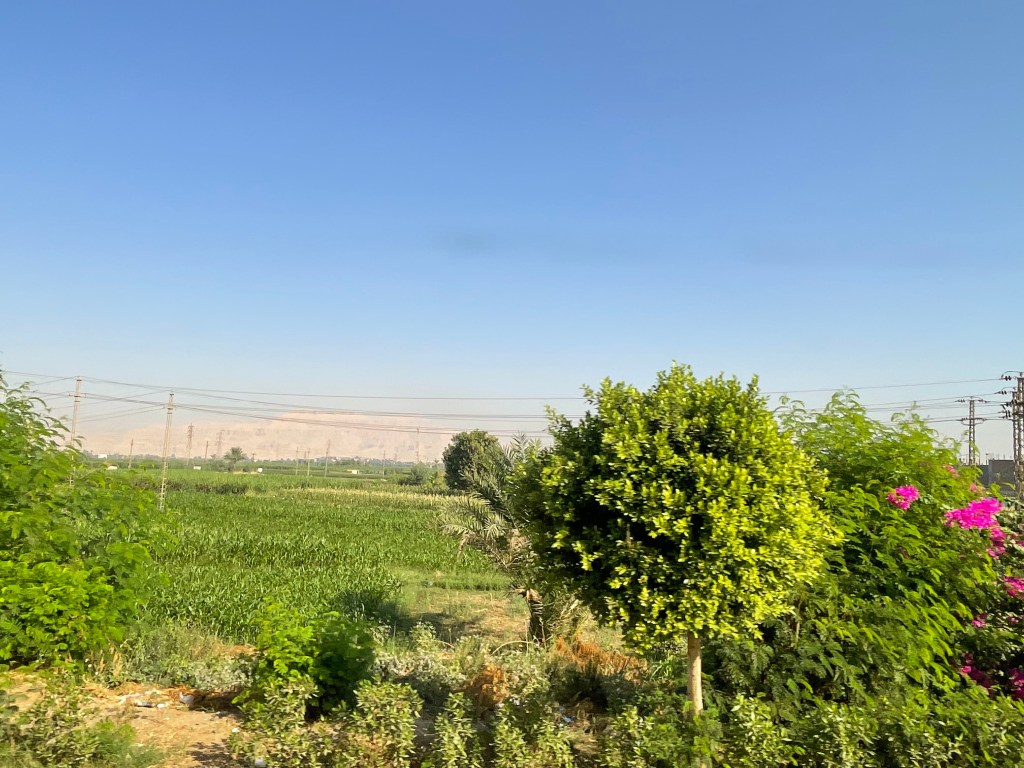

We trundle through the arid landscape, the oatmeal-colored hills to the West rise above the plain, and we can see the small but busy teams of people carefully excavating the dust and rocks. This is painstaking work done by hand, of course, in the scorching Egyptian heat, sometimes under the shade of a canopy, but mostly not. This activity dots the landscape wherever you look, and you can’t help but wonder what the next great discovery will be. They estimate there are more than 20 tombs in this area yet to be found.


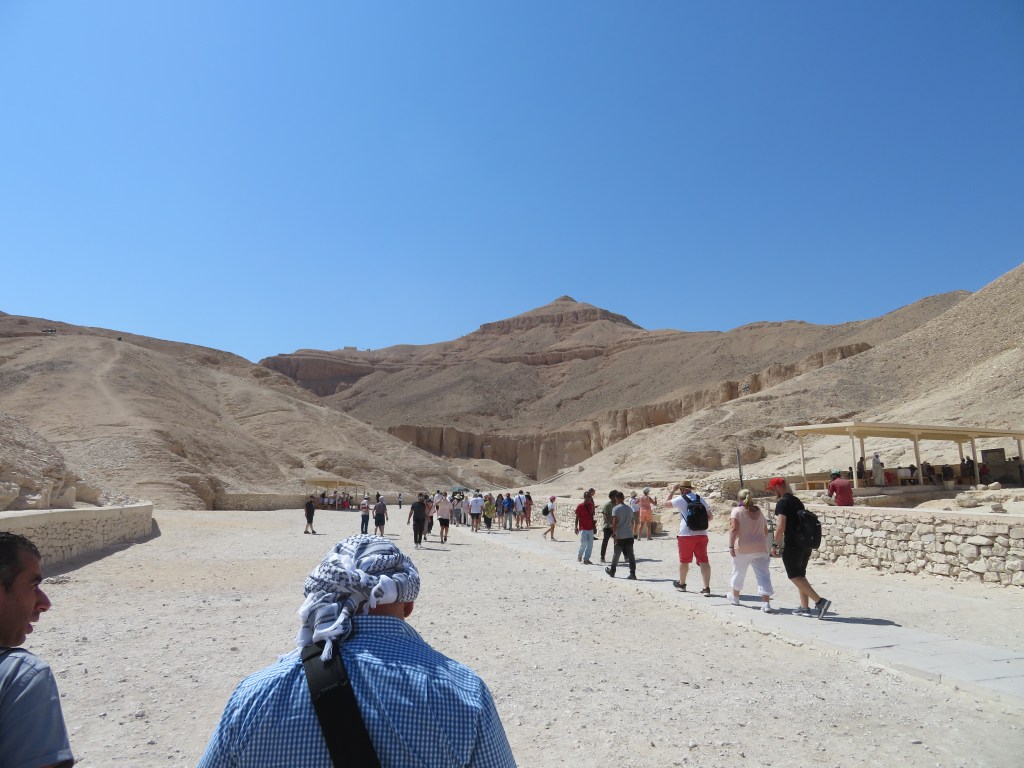
Ahmed has selected the highlights to visit here, starting with the Tomb of Titi. It is truly astonishing, its nearly 3,000-year old walls adorned – not an inch spared – with fantastic images portraying stories of the kings and queens and gods, their offerings demonstrated in elaborate detail that one need only think about for a short time to understand. The Egyptians believed life here is short, but continues after death, and thus prepared their royalty for that journey and the eternity to follow. With our visit, it’s impossible not to think they were right; here we are thousands of years later, paying homage to these Queens and Kings. Does that not keep them “alive” in some way, us royal subjects in reverence at the sight of them?

We emerge from the tunnels of Titi’s tomb, and walk a bit further up the hill to the Tomb of Nefertari. She was the “first wife” of Ramses II, who ruled for over 60 years in the 13th century BC. Her tomb is so elaborate and so beautiful it is hard to even comprehend. I shook my head and closed my eyes for a minute to awaken to – and believe – what I was seeing. When you first step in, before descending to the lower chambers, you see the walls covered with brightly painted hieroglyphics and gods in so many forms…and the royal family as gods…and both human and animal-headed gods receiving offerings and providing protection…and it just takes your breath away. It is so well preserved – the colors clear, the lines sharp, the glint in the eyes of each figure still animated, and the skeptic in you says this must have been restored, but it hasn’t been. Egyptian law permits only cleaning inside the tombs. No restoration is allowed.
So this has been here, preserved like this – these still perfect depictions, the colors unfaded – for over 3,000 years?! (mic drop, head explodes)
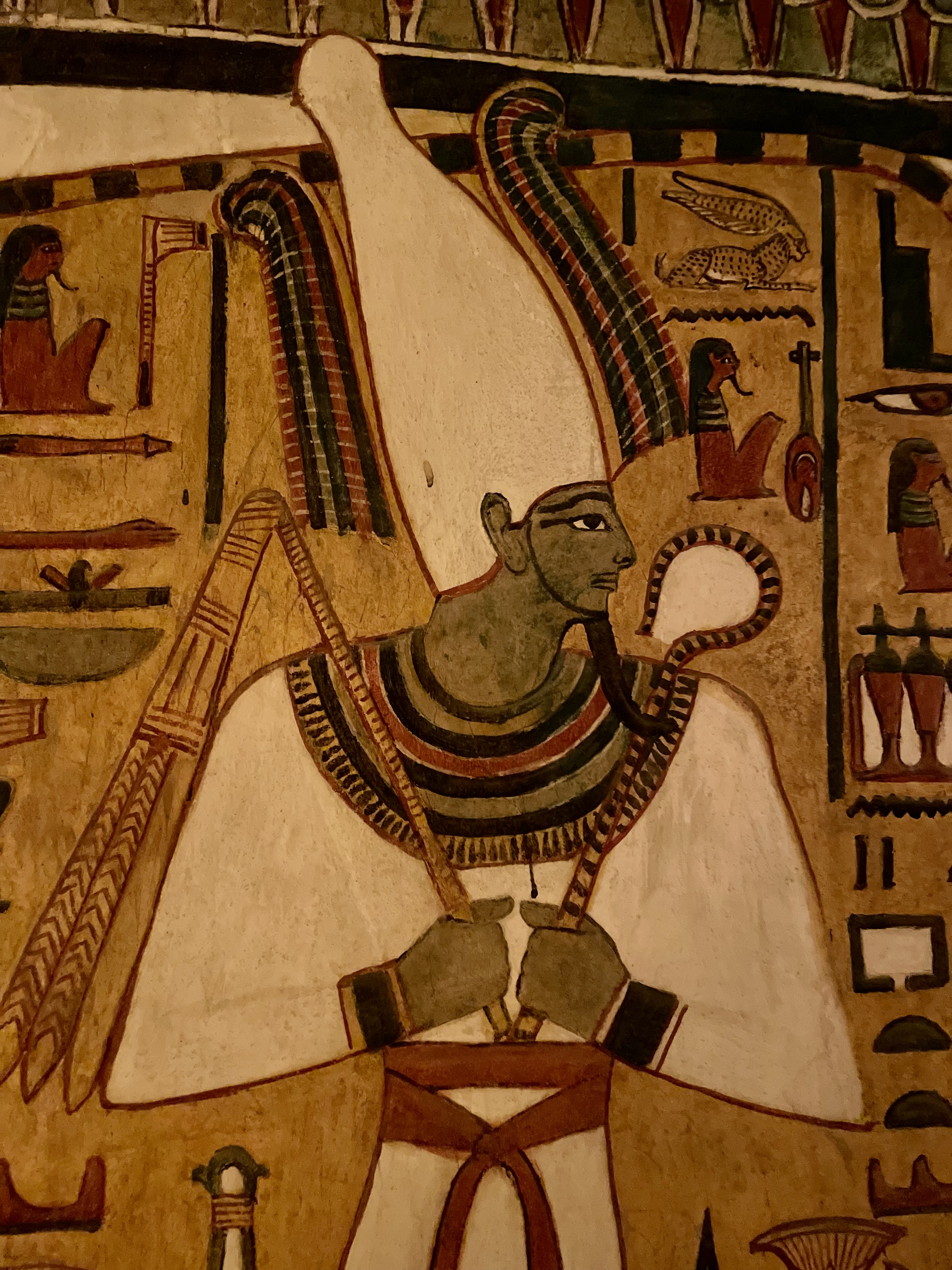


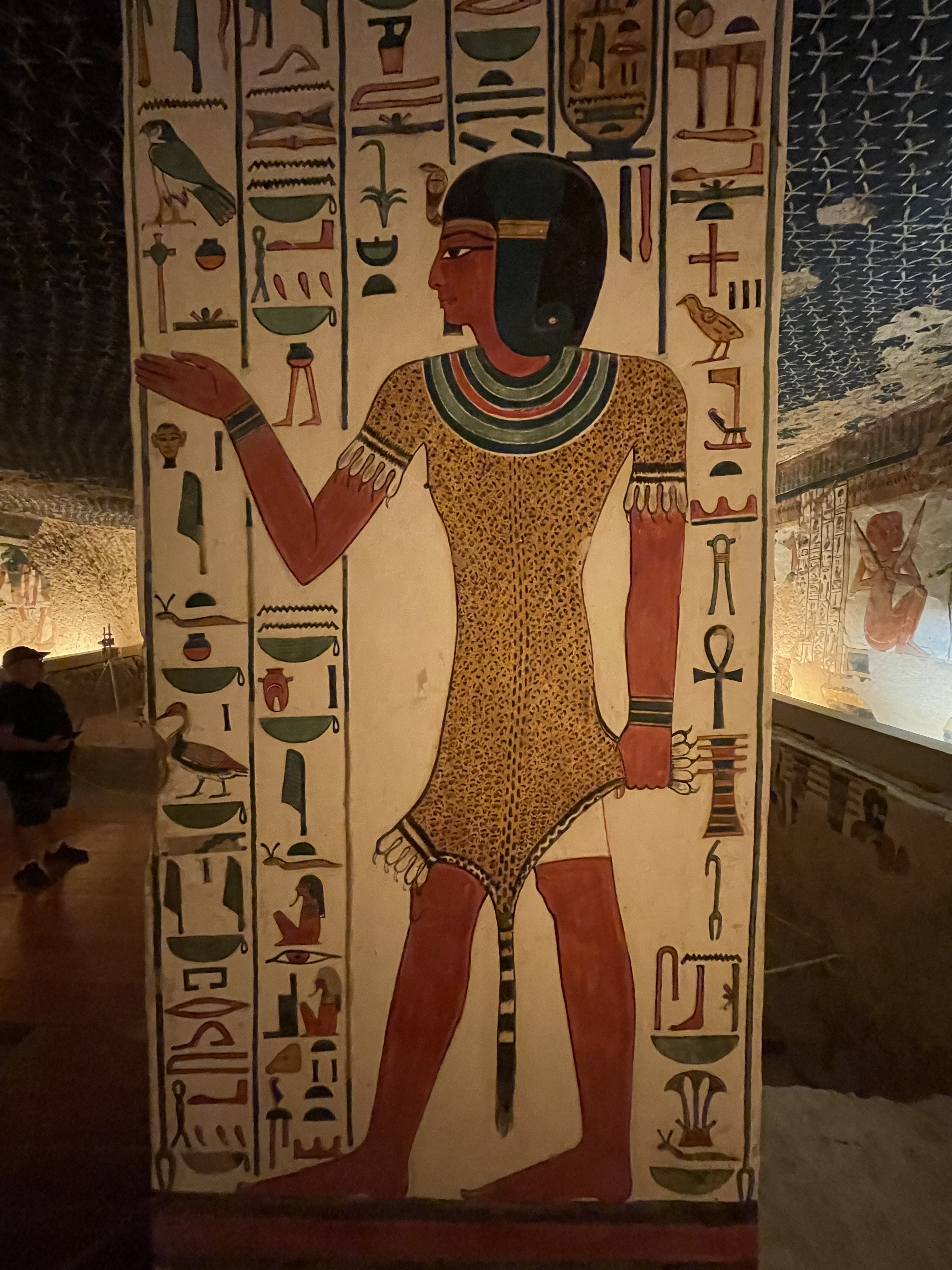
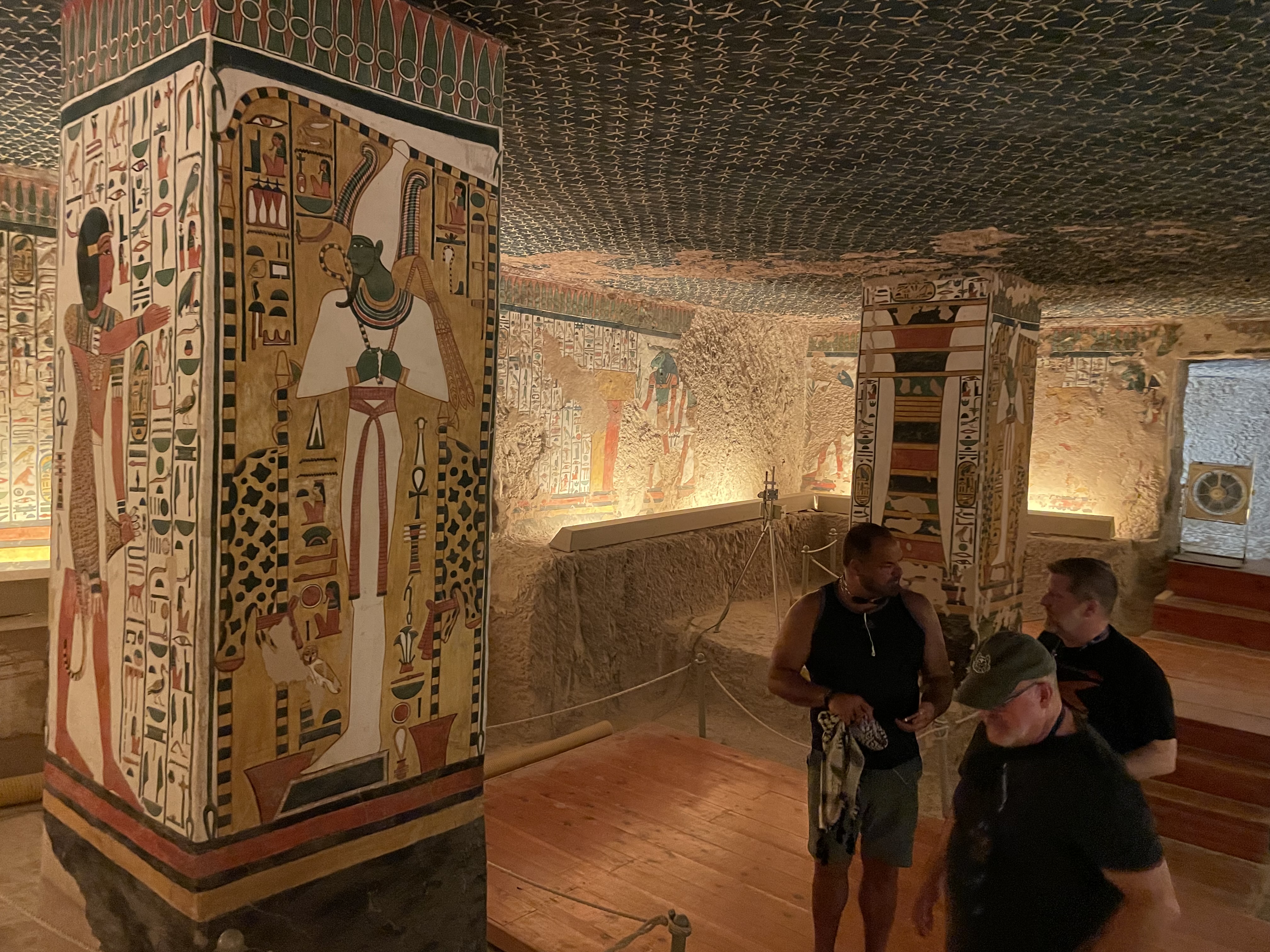
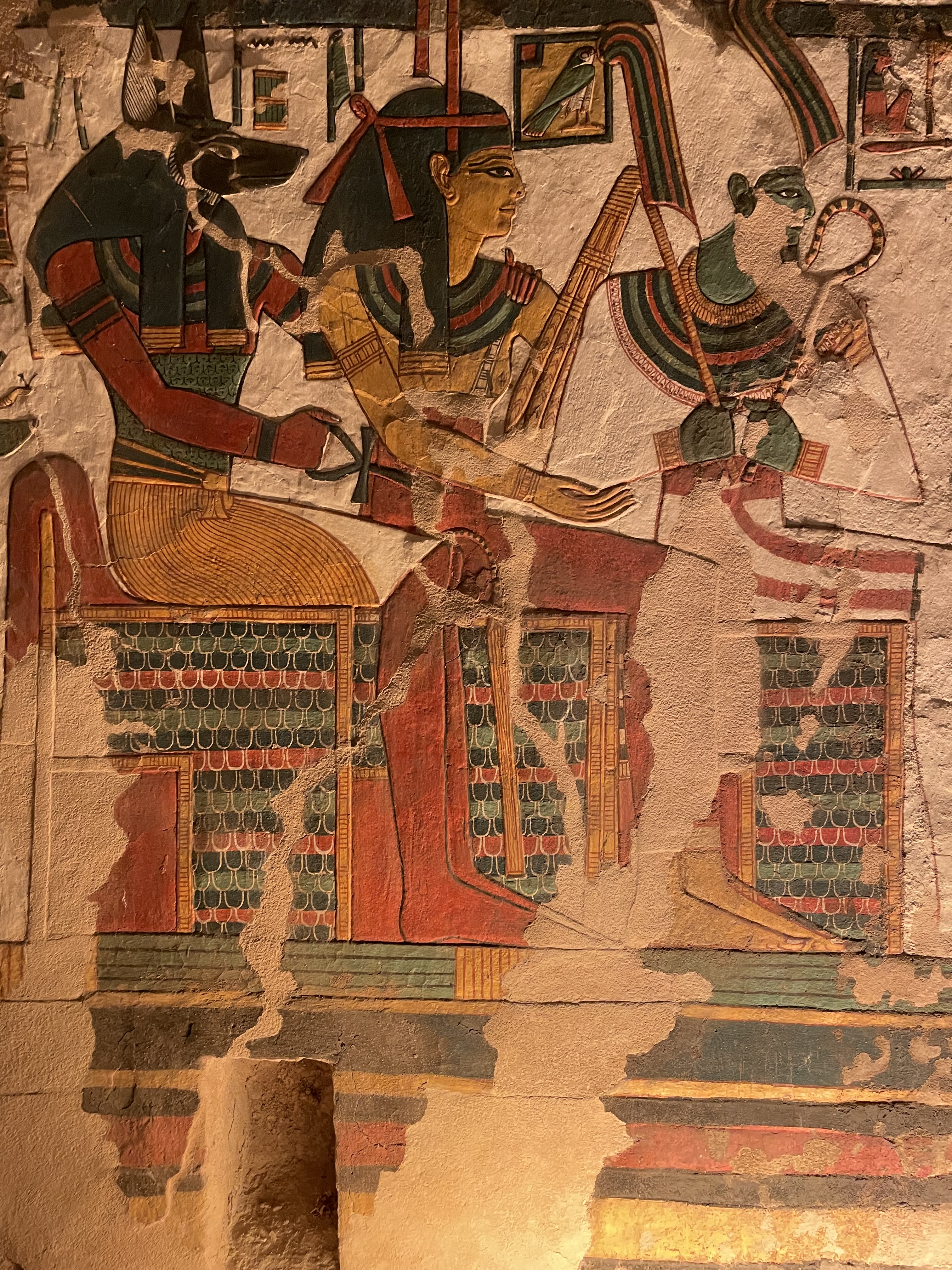
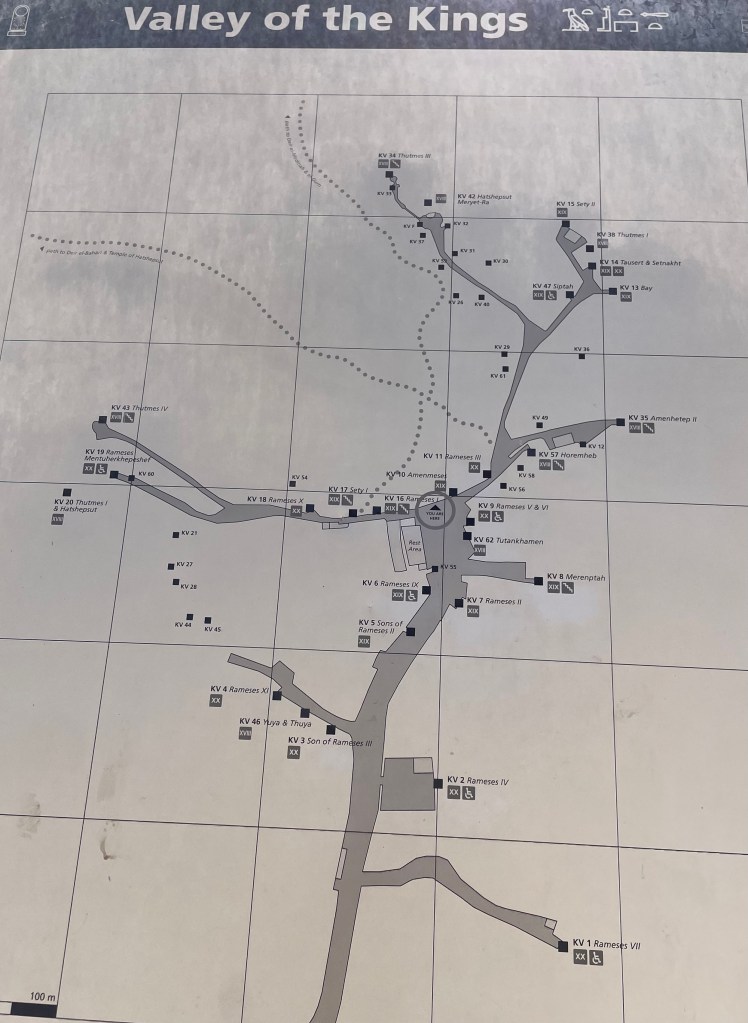
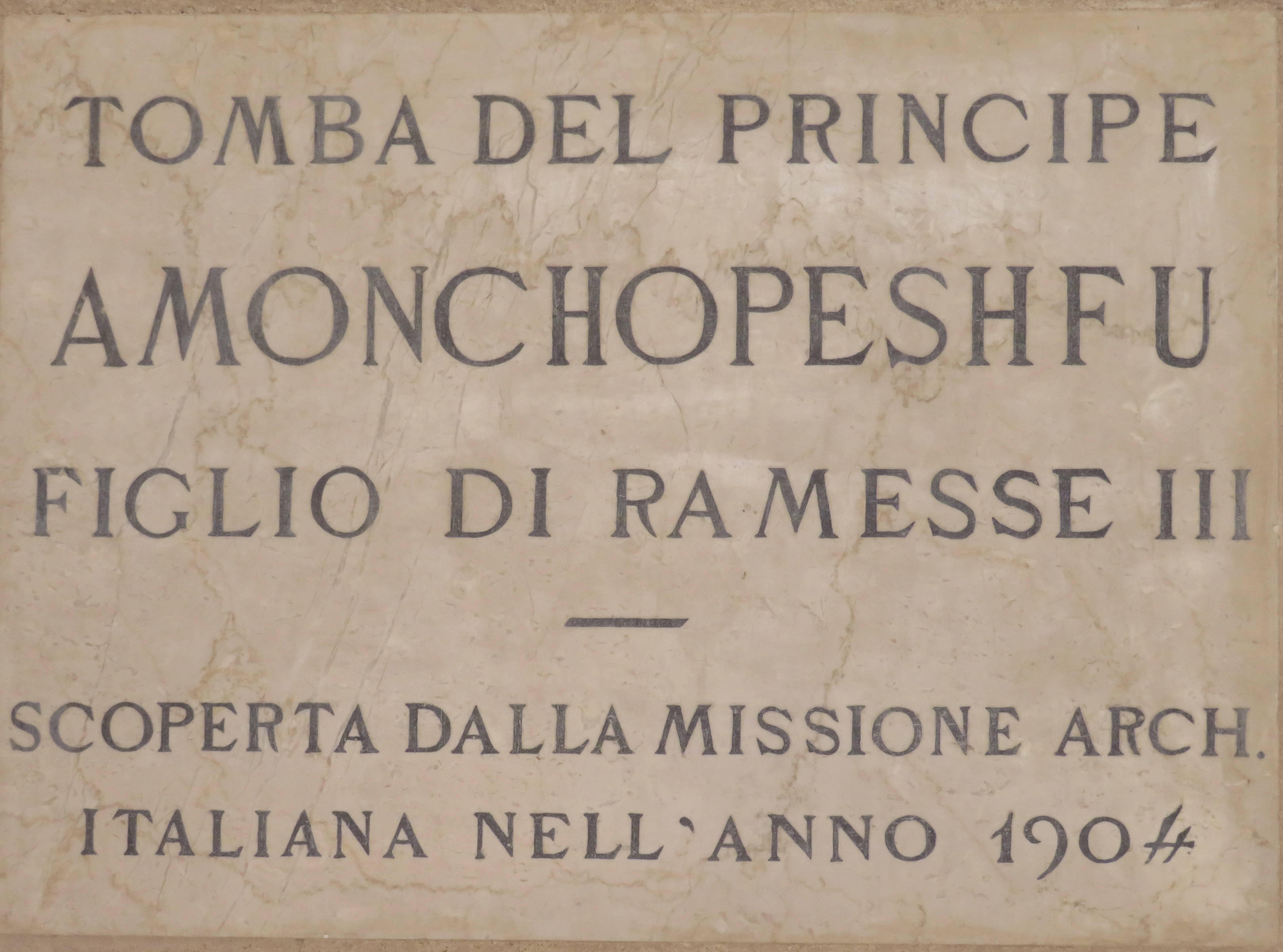
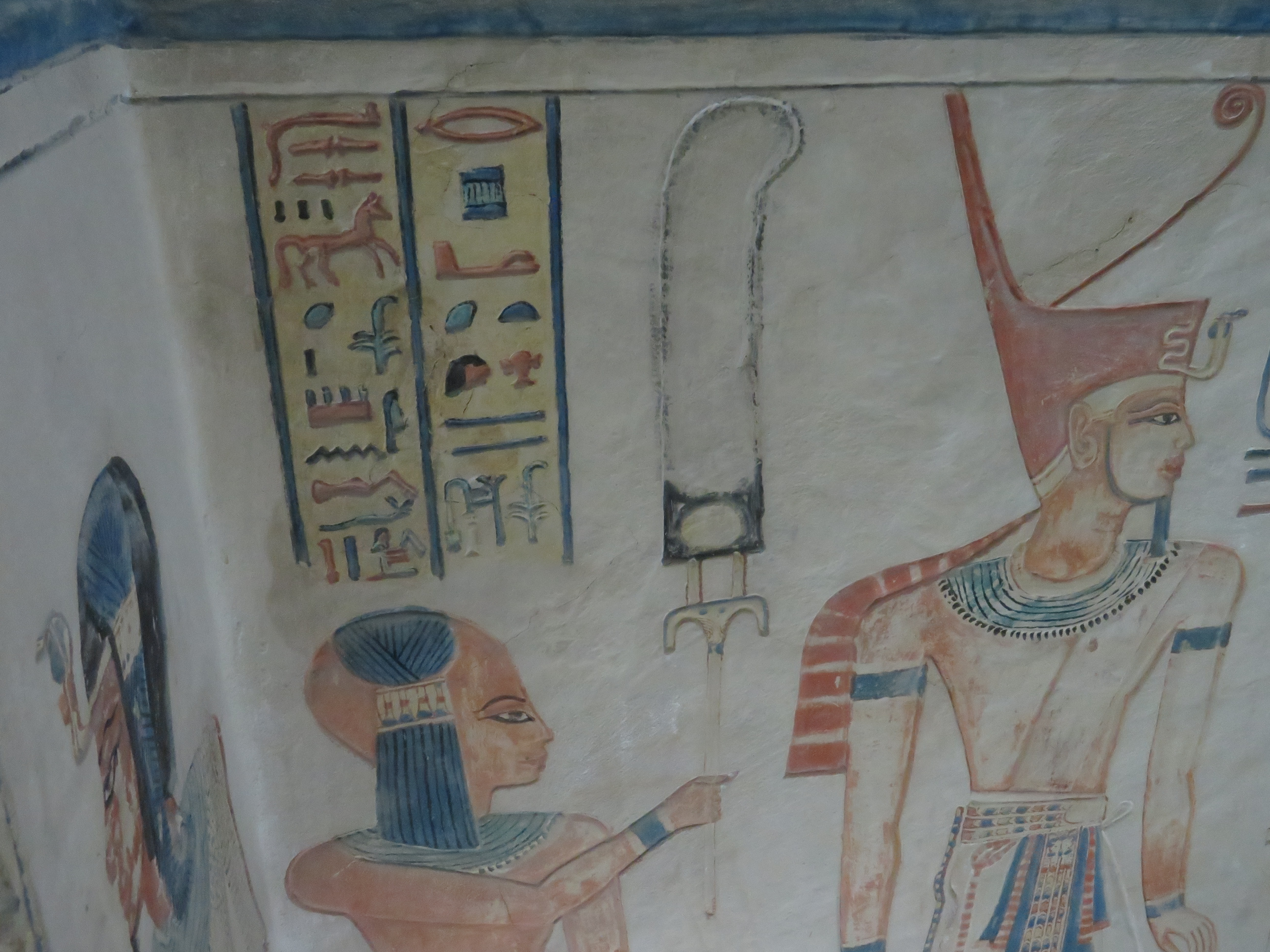
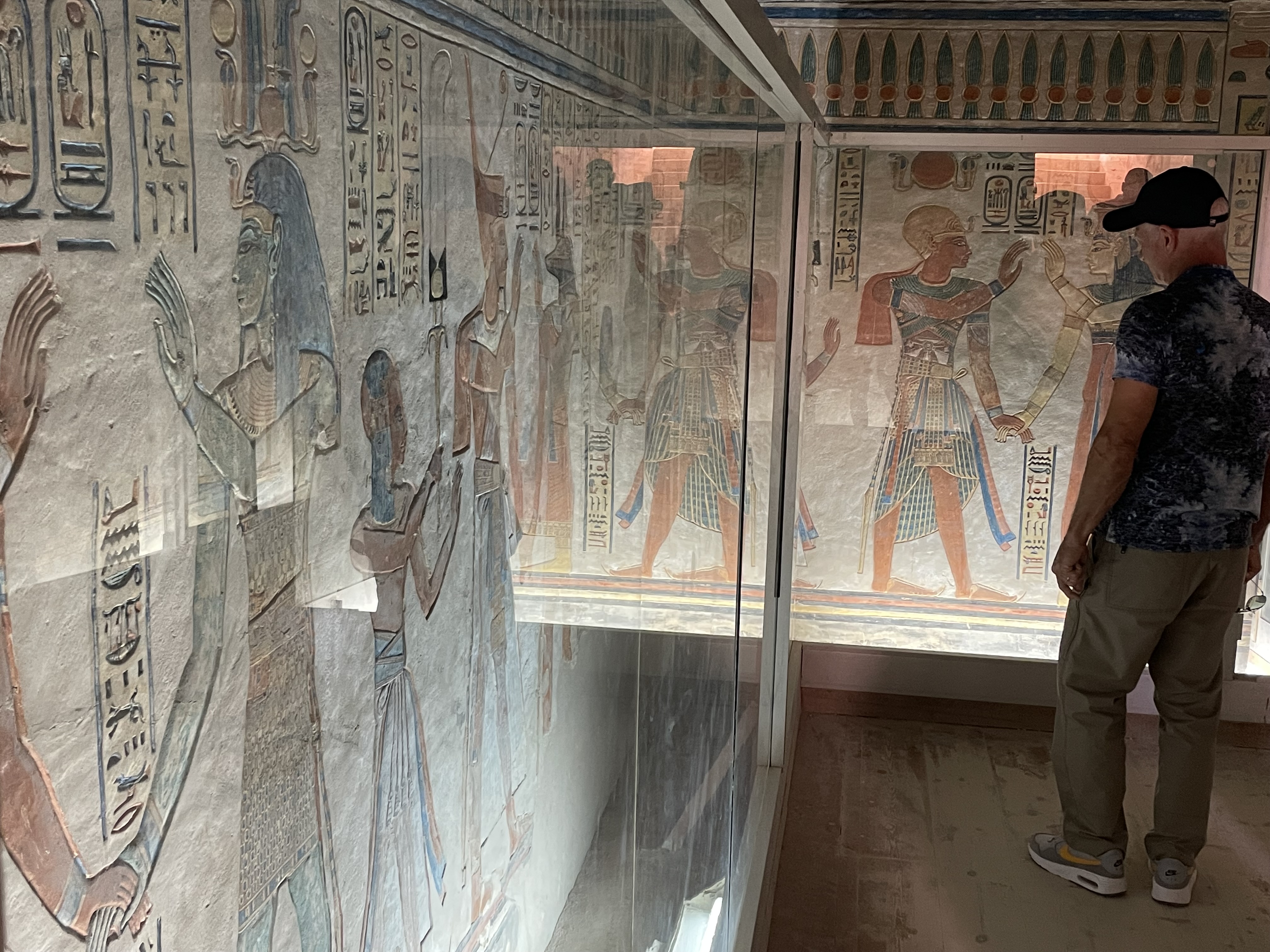
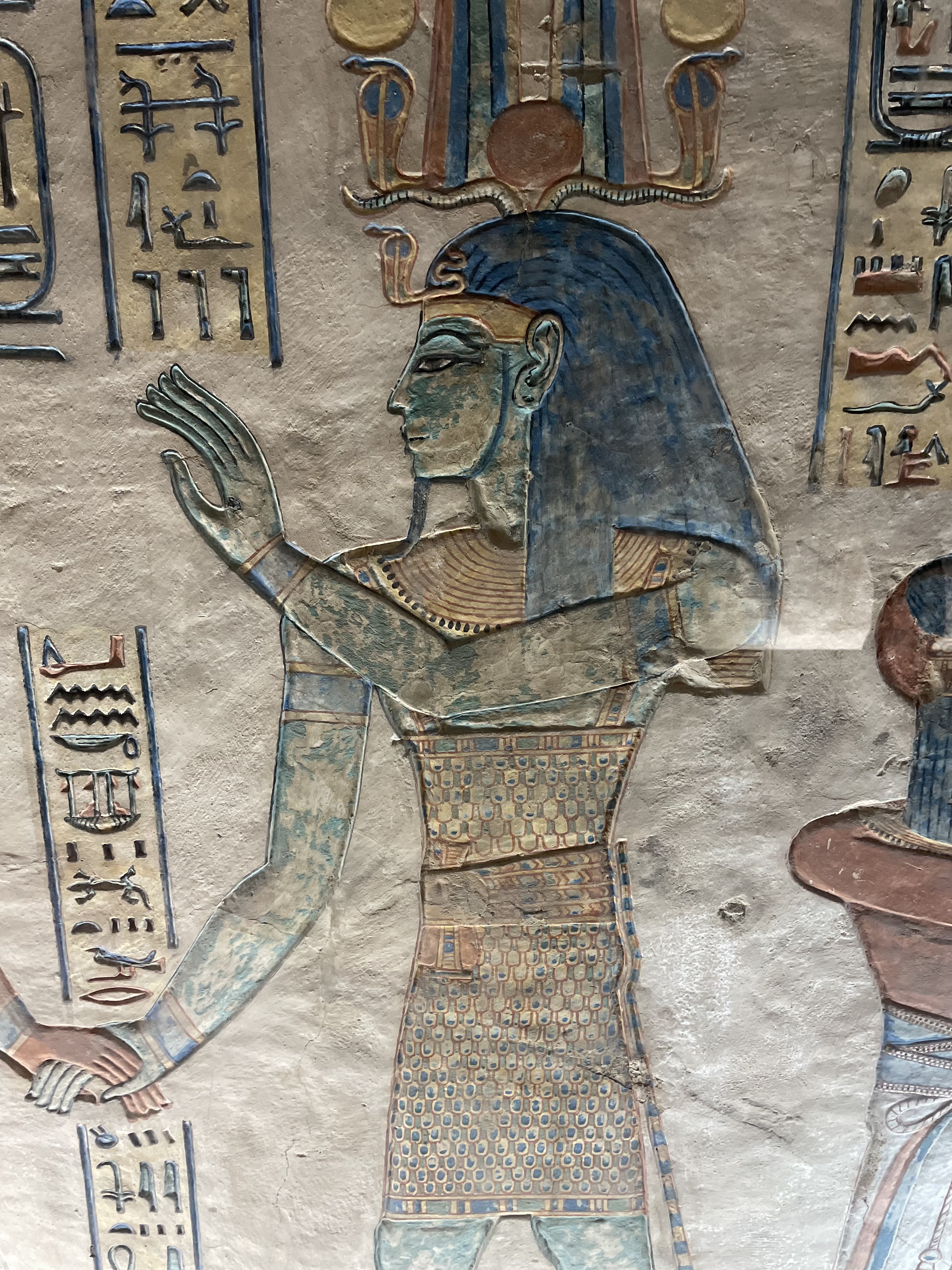
We visit another tomb here, that of Prince Amen Khopshef, not as remarkable as Nefertari’s, but astonishing nonetheless. And interesting in that princes were buried in the the Valley of the Queens, not the Kings…where we are headed next.
“…Born in Arizona, moved to Babylonia…” (had to!) Indeed, we are at probably the most famous tomb of all, King Tut. WOW. Are we really here?! The boy king’s tomb was discovered in 1922 and has such great notoriety because it was mostly intact, not having been raided by thieves over the millennia. Tut himself was a rather unremarkable King, attaining the throne at the age of just nine, and thus Egypt was ruled by a regent, who happened to be his eventual successor Ay. His mother (who was also his aunt; his father’s sister) is believed to have had significant influence in the running of his kingdom. He died at 18, some say at the hand of his mother who was not happy when the teenager wanted to exercise his power as king. Perhaps it was at Ay’s hand, who actually succeed him, or a plot by the two of them?


When you enter Tut’s tomb, your heart races a bit because, well, it’s King Tut’s tomb and you are in it. The layout of the tomb itself is not that elaborate. Royal burial chambers began construction upon ascension to the throne, so the longer a king or queen lived, the more time there was to dig and paint. We saw tombs where the paintings and side chambers were clearly unfinished, death coming sooner than expected.
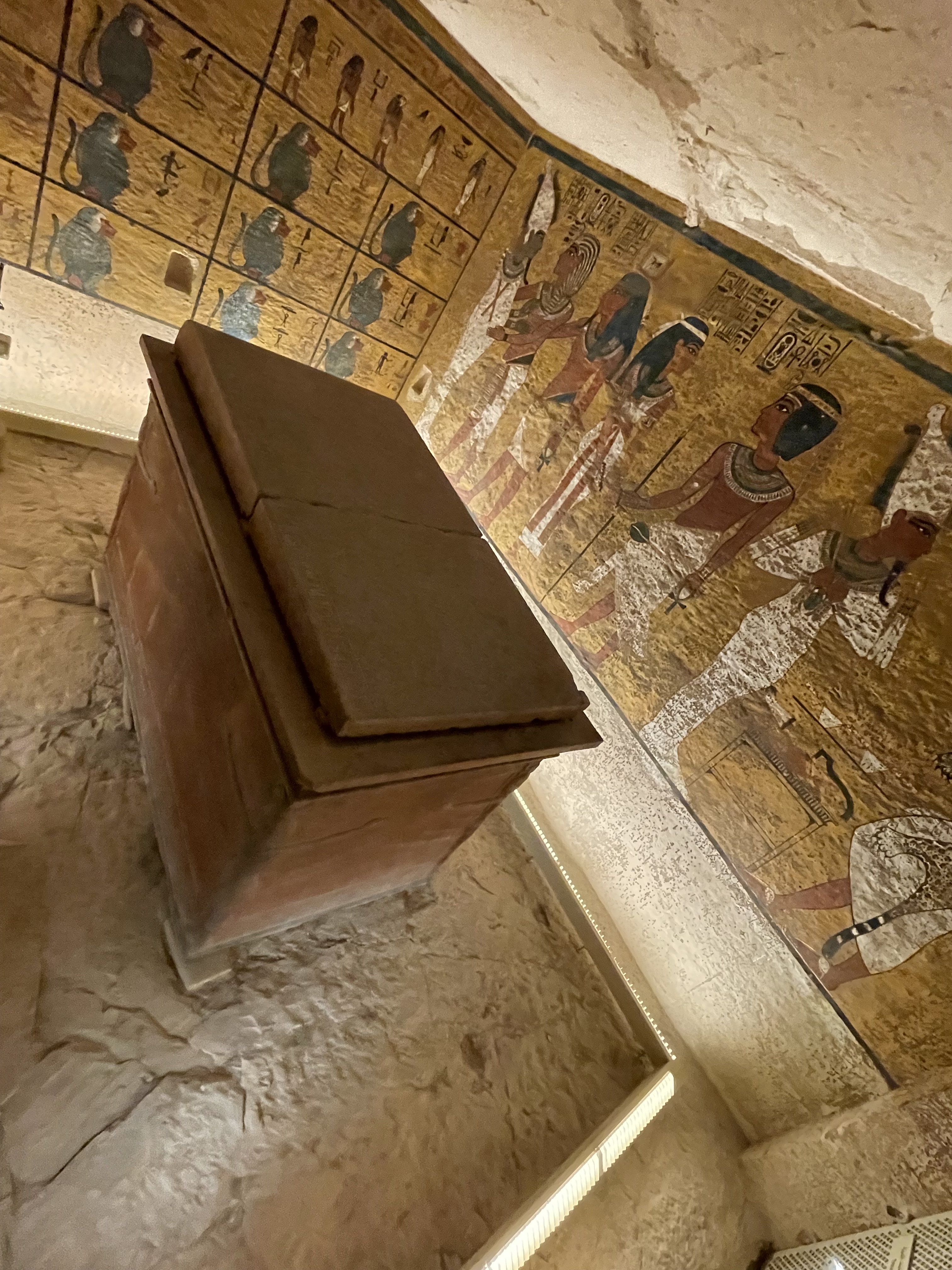
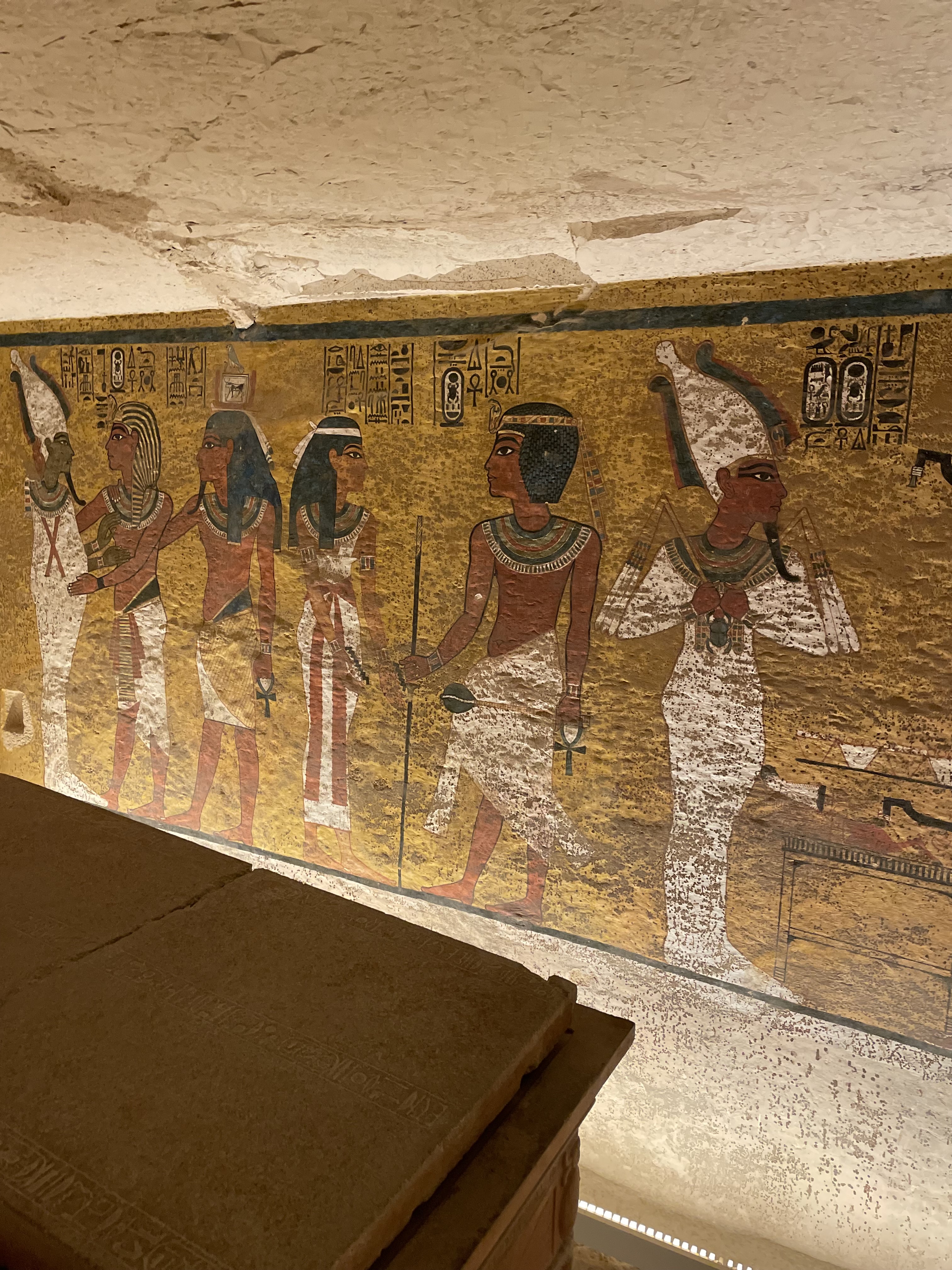
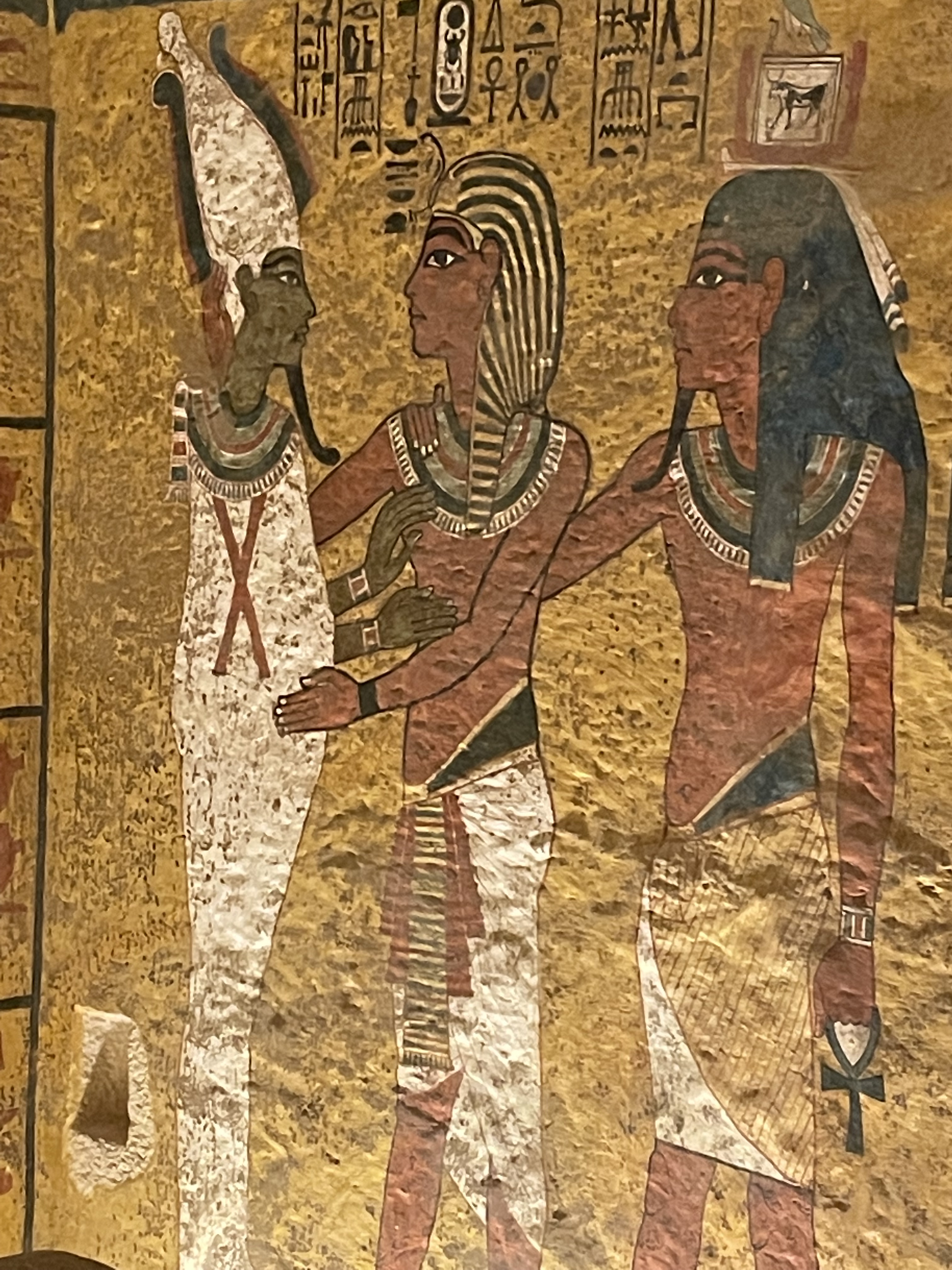
Tut’s tomb is adorned with more gold in the painted walls than others, gazed upon by us modern explorers from around the world, breathing the stale hot air of millennia past. You can’t help but be in awe amidst this artistry and reverence as you come upon the burial chamber that still contains the outermost coffin made of granite (how’d they get that in here?!). The multiple sarcophagi we all know are in the national museum’s care. But you know what is still here? Tut himself. Yep, his mummified body, preserved for thousands of years, lies in this chamber of the afterlife. It is both disturbing and beautiful as your mind imagines a living being – and a child, really – hungry for power that his mother won’t concede.


We explore more tombs, both guided and on our own…Ramses II…Ramses IX…each a bit different and each just as spectacular as the next. When you emerge from the nondescript tomb entrances, a bit winded and sweaty from climbing the stairs in the subterranean stone, there is yet another tomb and yet another and another…left, right, behind you and in front. Fellow explorers are disappearing into and emerging from small doorways that dot the hillside, and you know there are even more further up the dusty road, both discovered and still hidden. It is just overwhelming and unbelievable.
Squinting against the bright sunlight, we once again push our way past the aggressive vendors under the blaring heat, chatting with each other in amazement of what we had just seen. The air-conditioned bus and a cold drink are welcome refuge as we head to the Temple of Hatshepsut, our last stop for today. Her mortuary temple is supposed to be truly amazing, and we are excited to continue our adventures. Stay tuned…the story will go on…
As the sun dies in the West, we will wait for it to be born again tomorrow.
 Dirt Roads and High Rises
One response to “Tombs, More Tombs, and Tut”
Last sentence is beautiful!!
LikeLike