
The phone rings at 8:30 am, startling the deep sleep that feels like it began just moments ago. I answer sleepily. It’s the front desk saying we should be in the lobby at 11 am. Perfectly reasonable…time for breakfast and such before meeting our guide and the new friends with whom we will spend the next nine days.
We pile into our mini bus (a very nice one) and introductions are all around. Tom and Matthias from Bern, Switzerland; Martin and Ted from Victoria, Canada; Chris from Norfolk; and Joe from Boston (who will actually join us tomorrow). Makes for a group of nine, which is great. We meet our guide Adil and our driver Yusef, smiling and charming and friendly as they greet us.

We get comfy in our seats as we set out for the Hassan II mosque. We first stop at the Mohammed V square, for a view of the city…and to commune with the pigeons? This is one of those places in the world – like the Piazza Navona in Rome – famous for its massive population of pigeons. I am curious about the two old men in traditional dress, who turn out to not be in any sort of traditional dress at all. It is simply an attention-getting spectacle to engage tourists for photos (and a tip, of course). Gotta love human entrepreneurialism, so much the same around the world.

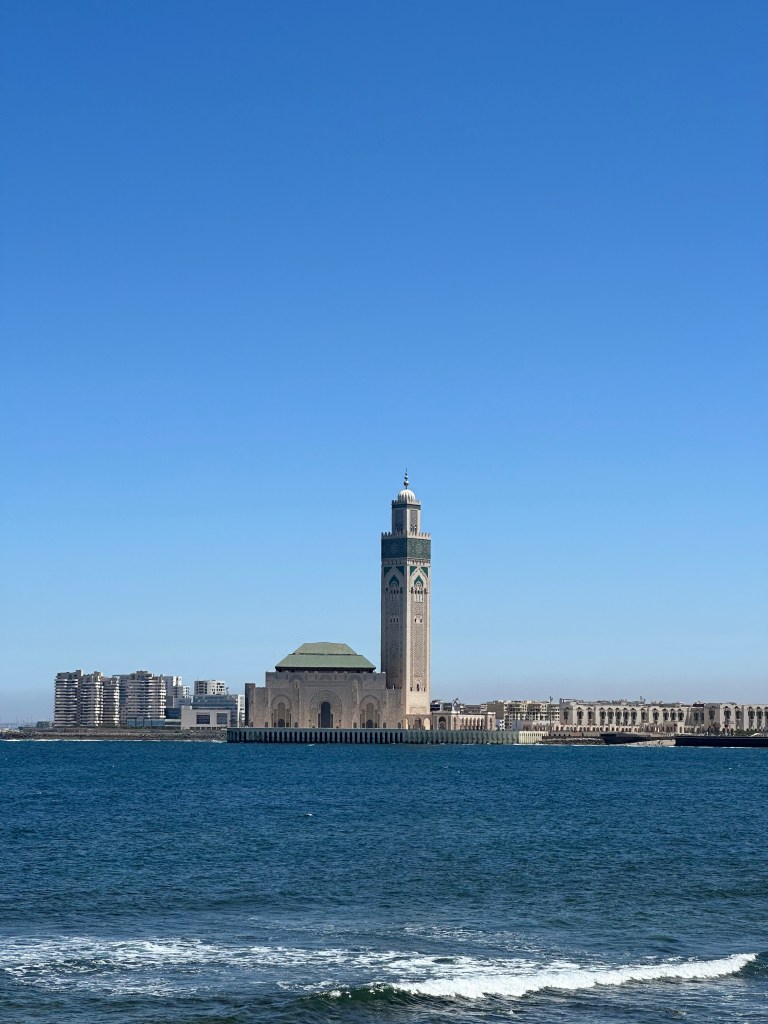
The Hassan II mosque is not far away, sitting at the water’s edge. In fact, 1/3 of it is constructed on the water. In the Quran, it is said that Allah’s “throne is built upon the water,” and thus this was the perfect location chosen in the mid-1980’s to build one of the world’s largest mosques. Including its plaza, 105,000 people can worship here.
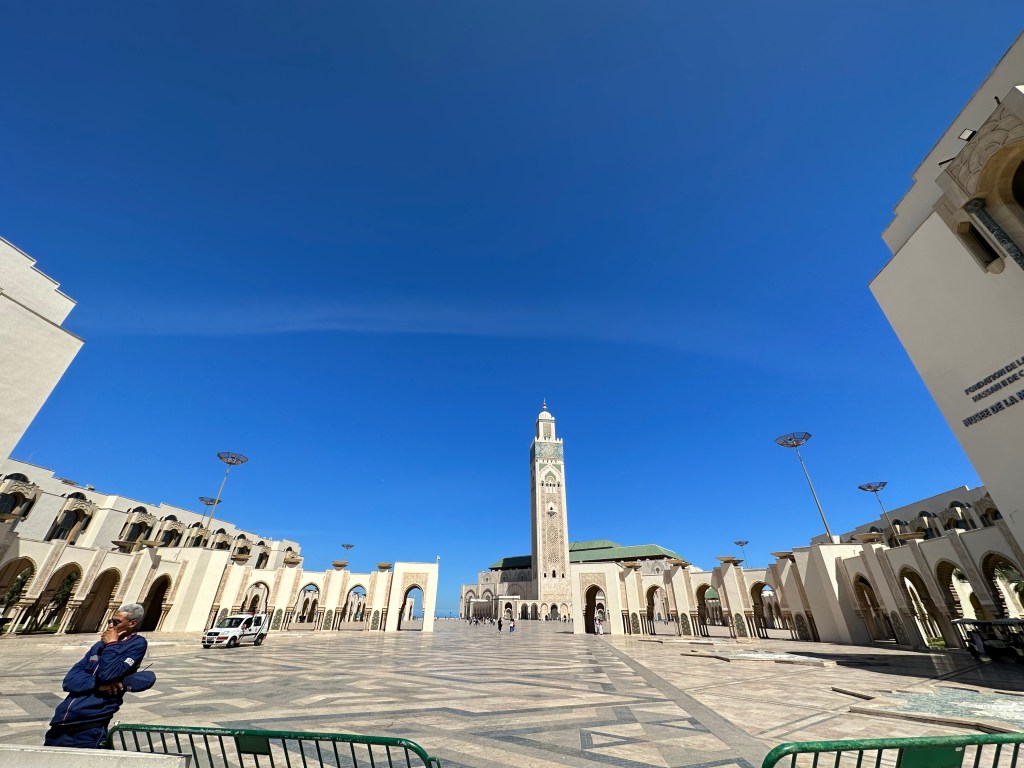
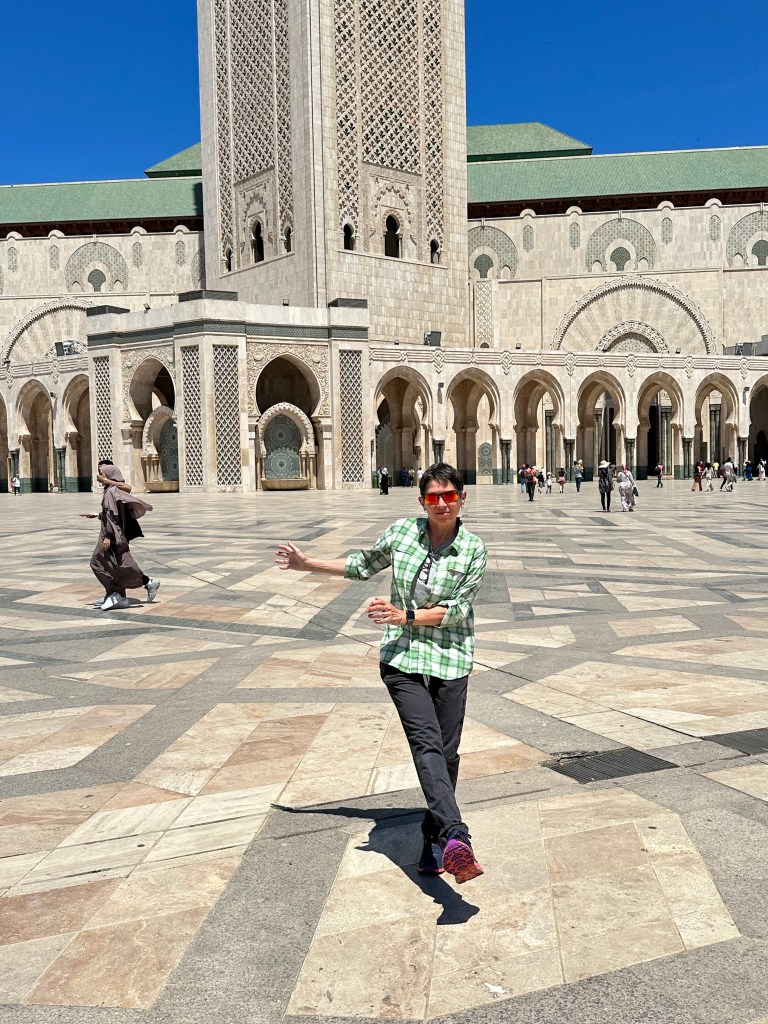

It is truly spectacular, a testament to faith and artistry inspiring each other, coming together in spiritual harmony. It is somehow at once grand and humble, awe-inspiring and welcoming. It wants to be admired but also engaged with for prayer; it is first and foremost purposeful.
Tidbits: construction began in 1987 and lasted just six years. 10,000 workers toiled 24 hrs a day, in three shifts. It cost nearly $800 million…paid for with a required tithing that many considered a tax, some government funding, and private donations.
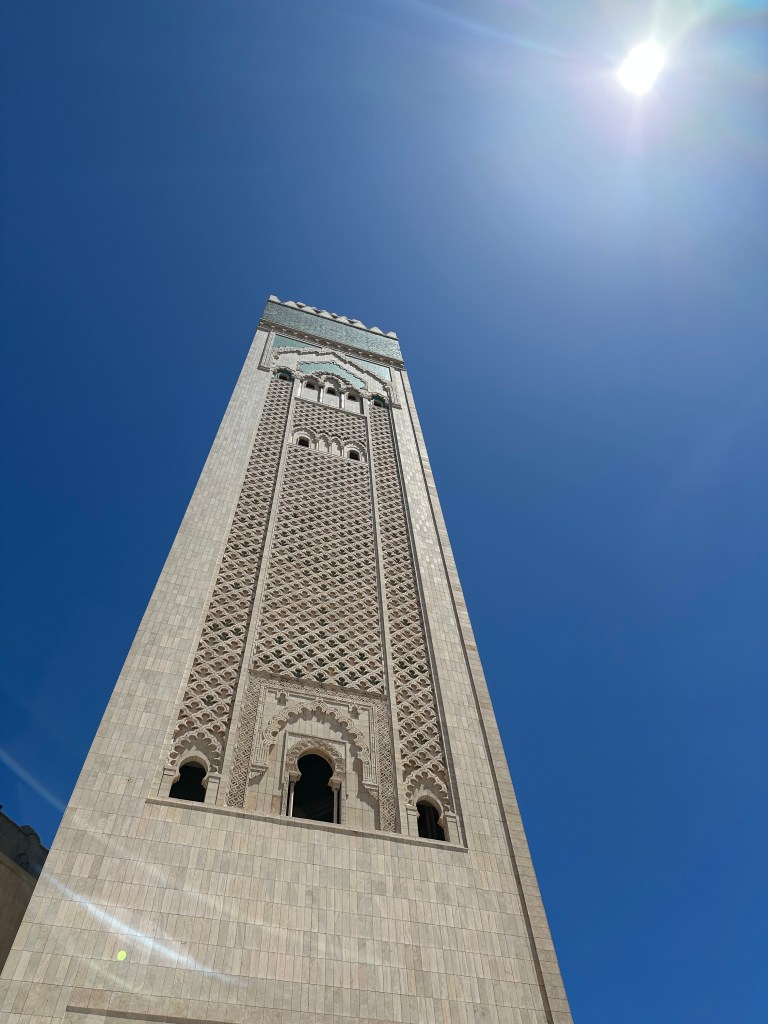
We approach through the expansive plaza, coming first upon the mosaics and hand-carved plaster that adorn so much of the exterior. It is a wonder. The patterns, the colors, the craftsmanship, all just amazing.

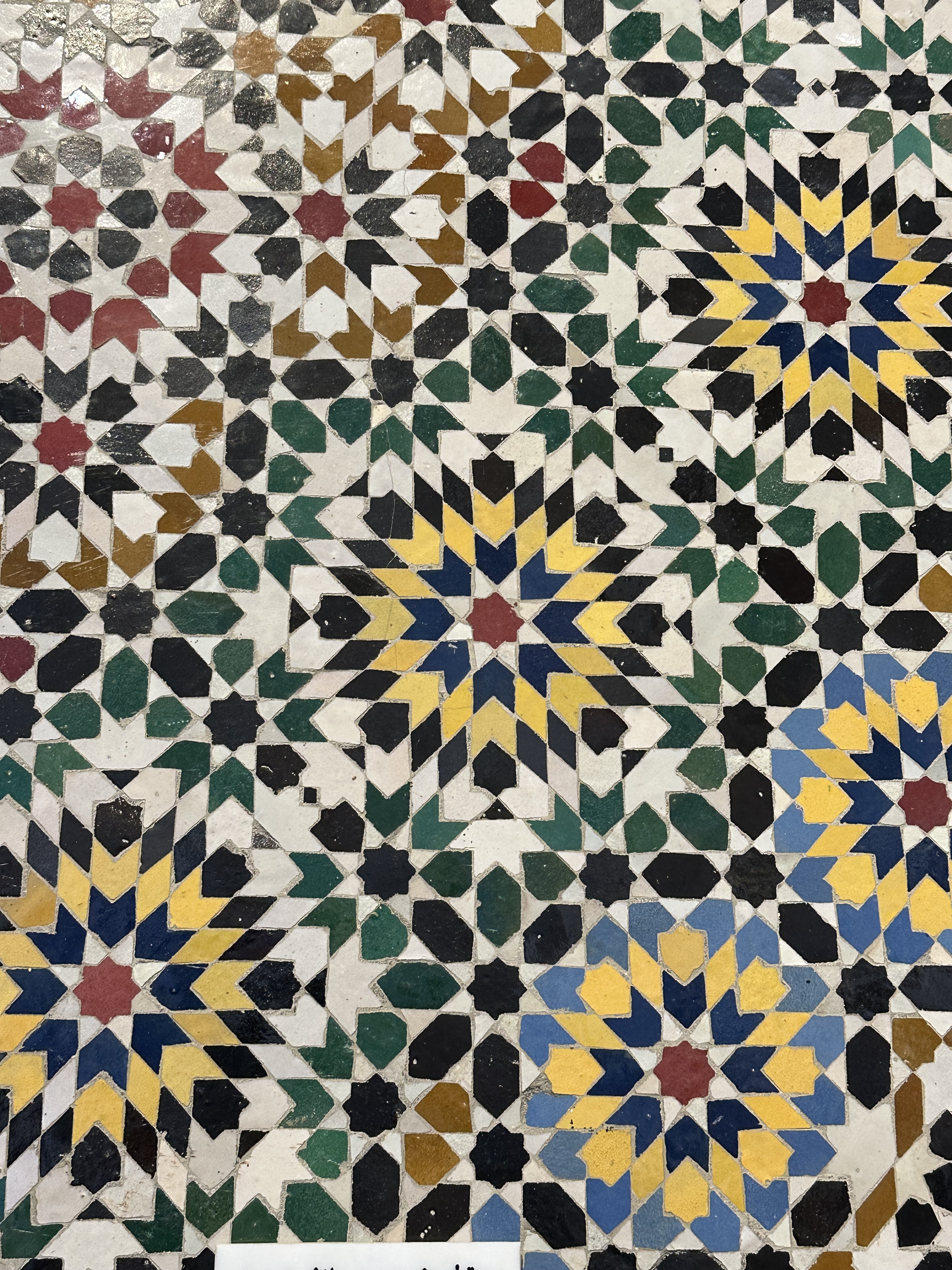


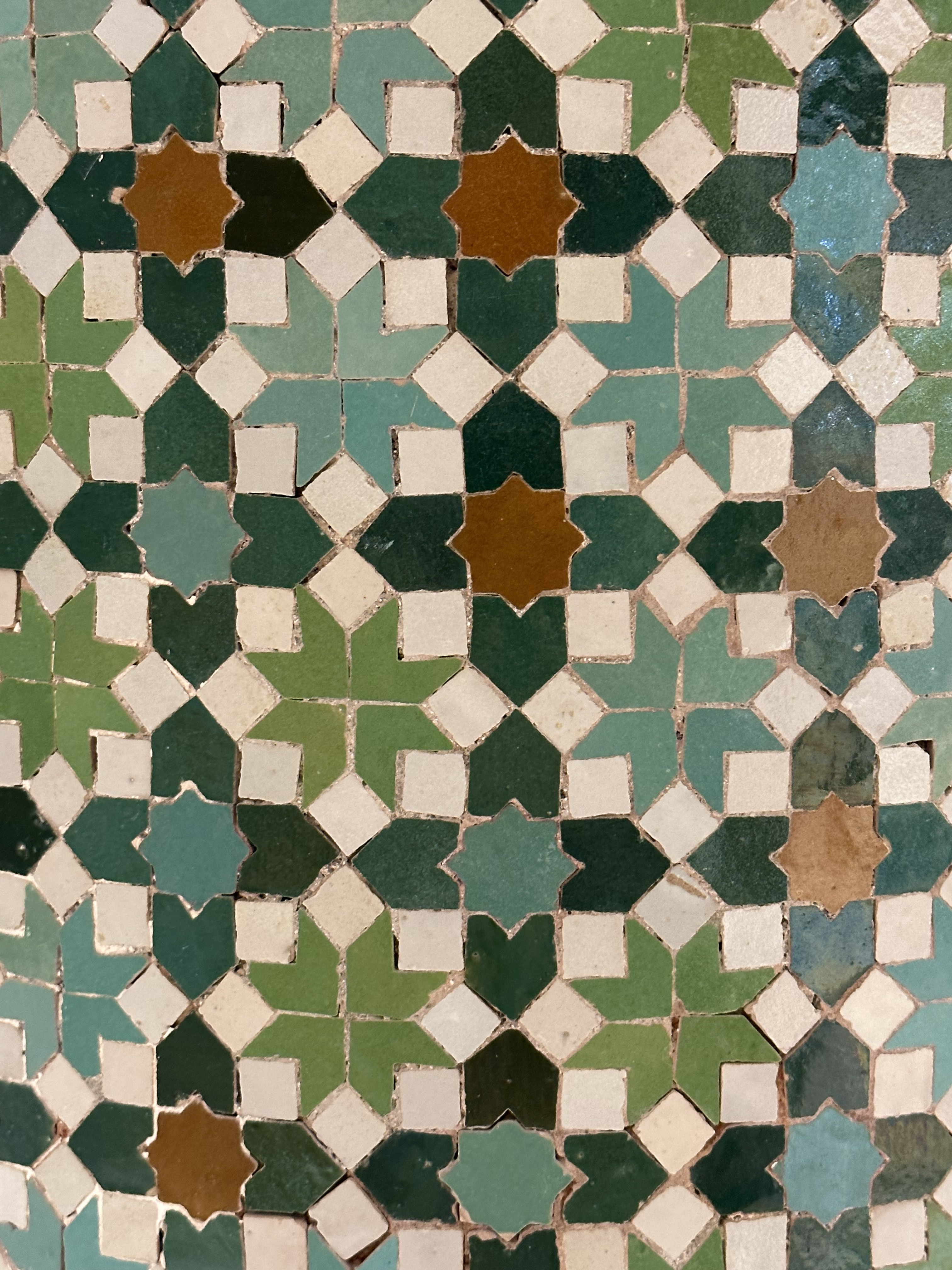

Adil shows us where to go inside, and leaves us for the docent tour. As with many places we will visit, our guide is not permitted to take us through – or defers to the expert on site. We are left to gaze around the mosque, empty at the moment between prayer times, and take it all in while we wait for the tour to begin. There is the chatter of low voices among the visitors, the hushed tomes seemingly required by the space. It is just amazing…the stone floors, the mosaic details, the carved-plaster columns, the painted-wood ceilings, the chandeliers, the windows and doors to the sea that open to let the cool breezes flow through…

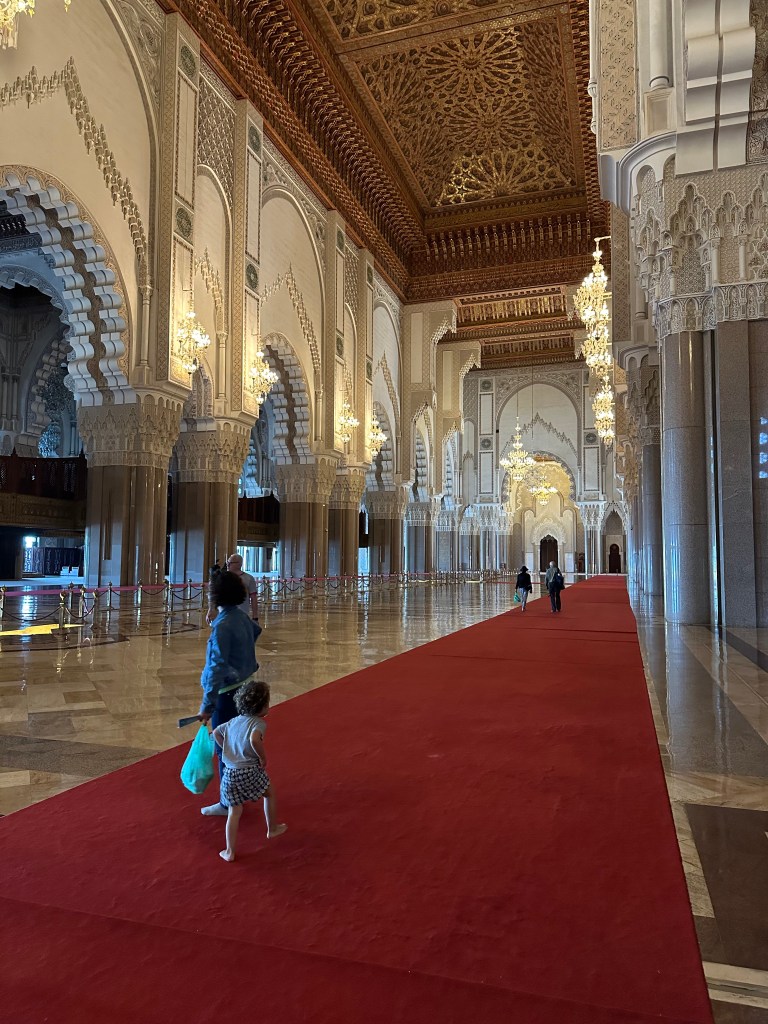

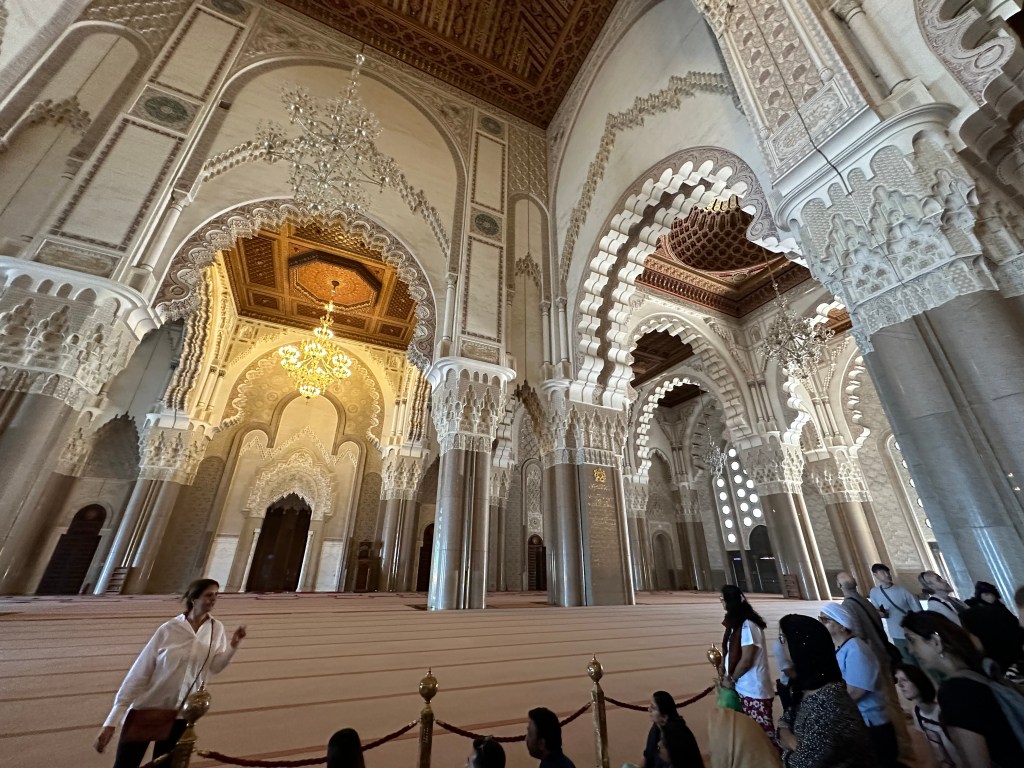
Our docent gathers up the English group and takes us through, describing the fantastic house of worship we are in. Looking up, she points out the ceiling that opens to allow more air flow (and we imagine how necessary it is when 25,000 people are inside with no air conditioning). I ask about the ceilings, and she explains that they are painted off-site and then installed with helicopters. The detail is just mind blowing.


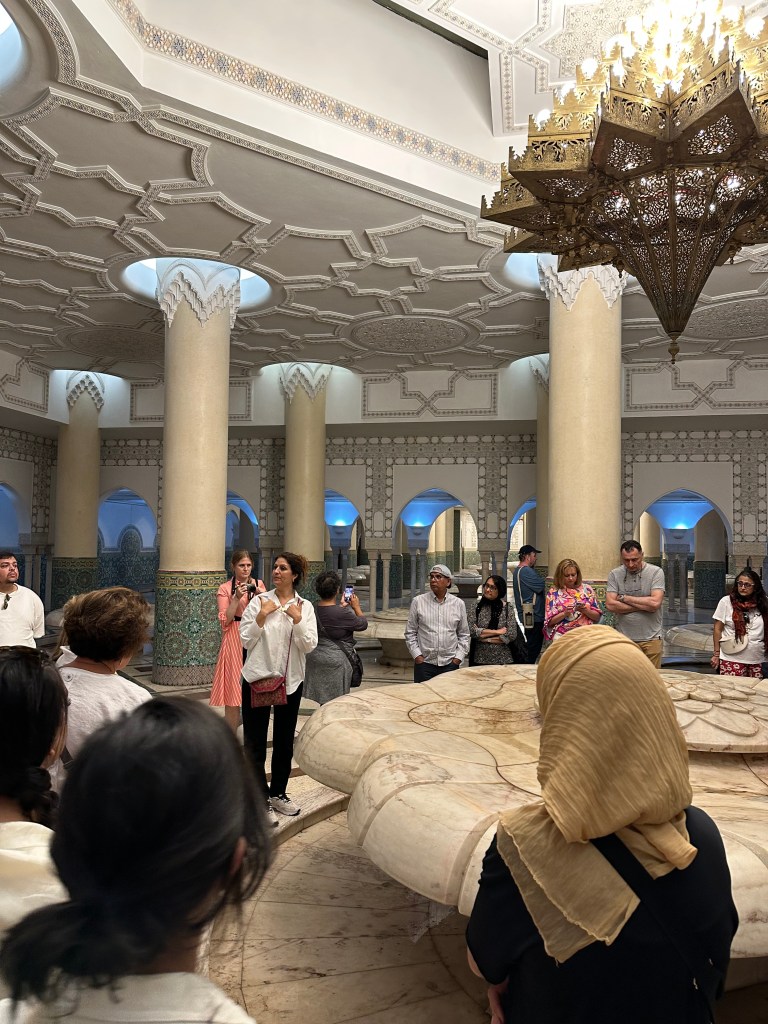
We are taken downstairs to the ablution room, another spectacular space beneath the prayer hall. Muslims wash before prayer; most will wash at home before coming to the mosque, so this only accommodates about 1,000 men. Another ablution room is for the women.

We exit to the blinding sun and bright blue sky, the Atlantic’s natural air conditioning cooling the hot day. We turn back to admire this amazing place, so perfectly placed along the seashore, its scale for the masses, its purpose individual.


Lunch at El Cenador, around the bay from the mosque, follows our visit. It will be first of several restaurants where it is almost exclusively seafood. A challenge for those of us who don’t – or can’t – enjoy the fruits de mer. We do our best, have a bottle of Moroccan rose, and retire to the hotel before our evening adventure.

“Play it once, Sam. For old times’ sake”
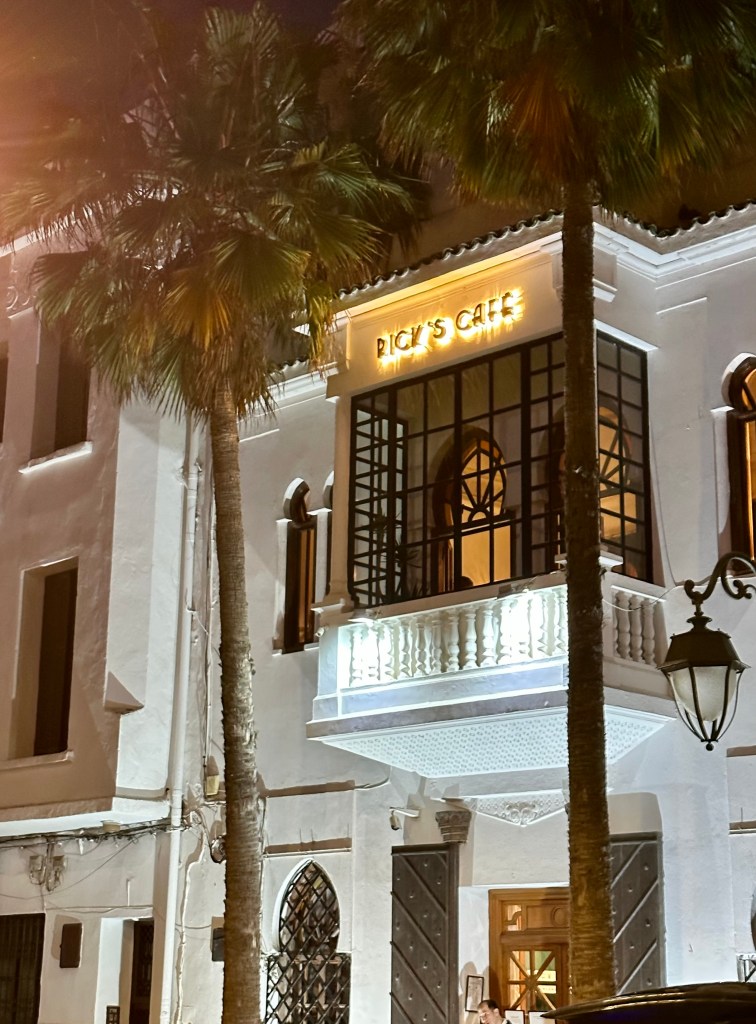
We are in Casablanca, after all, so can we dine anywhere but Rick’s cafe? Some of us are skeptical that it’ll be a hokey tourist trap (you can count me in that), and…it sort of is. It is not a movie-shoot location, and in fact, wasn’t even opened until 2004 (the movie was 1942). Nonetheless, once we get past the bursting crowds outside the single-door entrance (do all these people have reservations?), we are transported to another place and time.

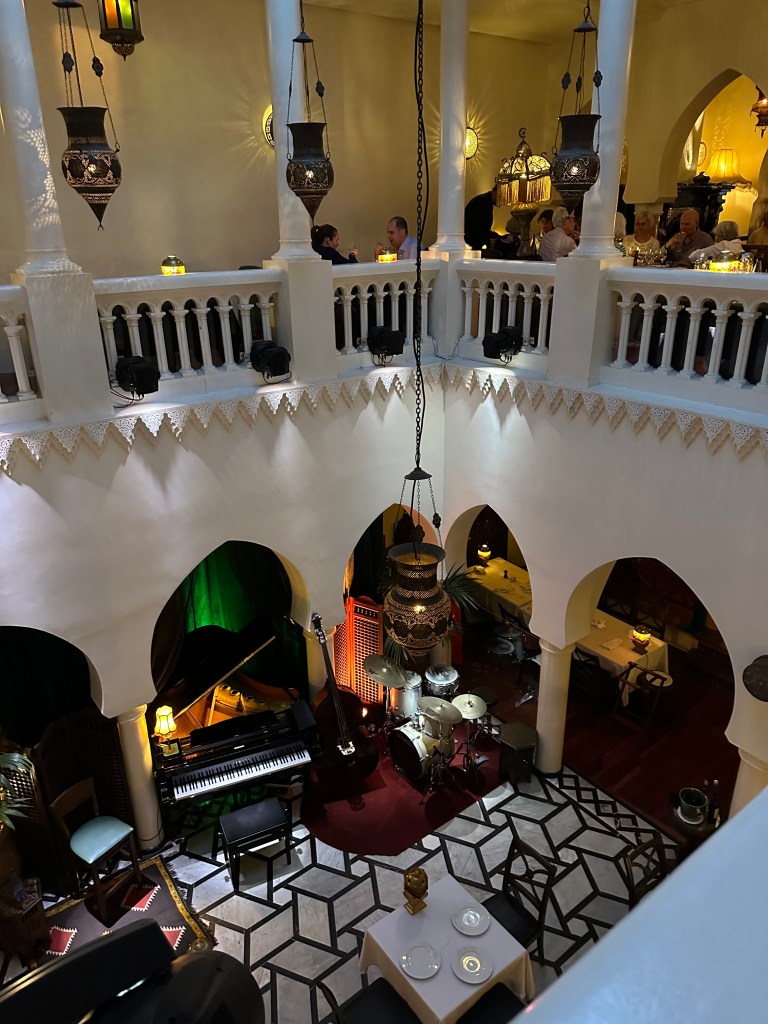
Music plays, low lighting bounces off the yellowed-from-age white walls, waiters bustle about in style wearing classic fezes. The patrons chatter in low voices, their conversations indistinguishable from one another. A piano in the atrium’s center waits to be played and the bartender stirs up a martini, dry and cold.
As time goes by…
 Dirt Roads and High Rises
One response to “A Throne on the Water”
That mosque is unbelievable. Thanks for the description and the visuals.
LikeLike