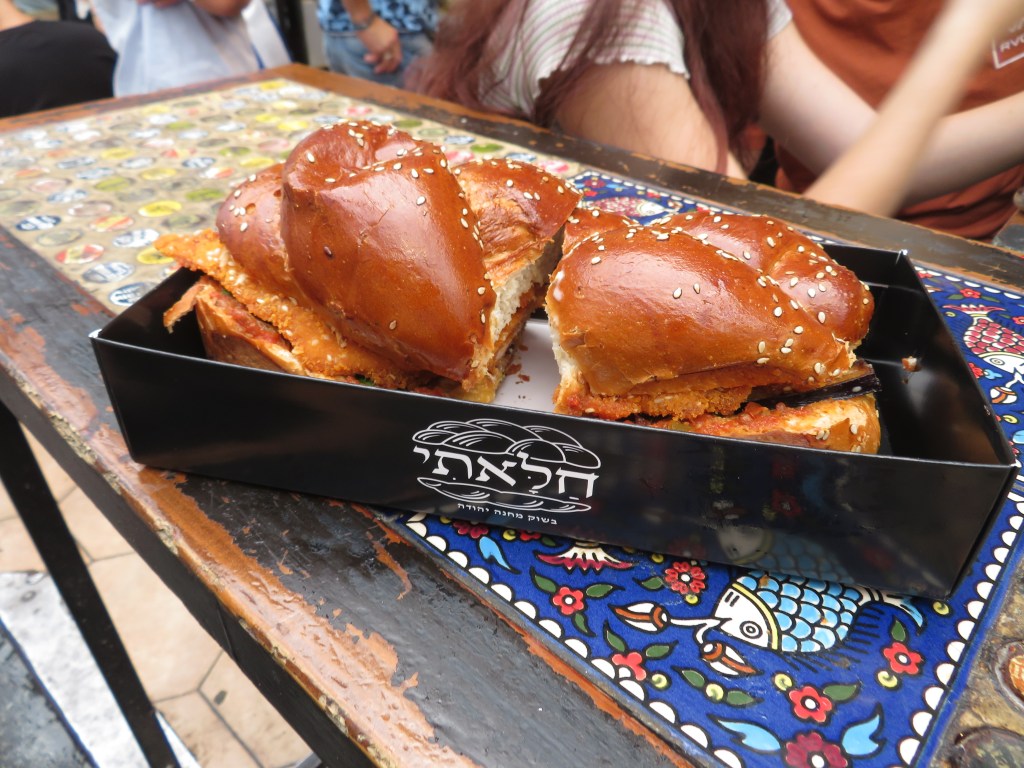
After our emotional visit to Yad Vashem, we sought some levity – and a late lunch – at the Machane Yehuda market. When I was here last, we were taken to THE best place for chicken schnitzel on a challah bun. A repeat was definitely in order, although I must confess to a little apprehension that it would not live up to my memory (we can so easily romanticize fond memories, right?). Fortunately, we were not disappointed. I would go back to Jerusalem just for this!
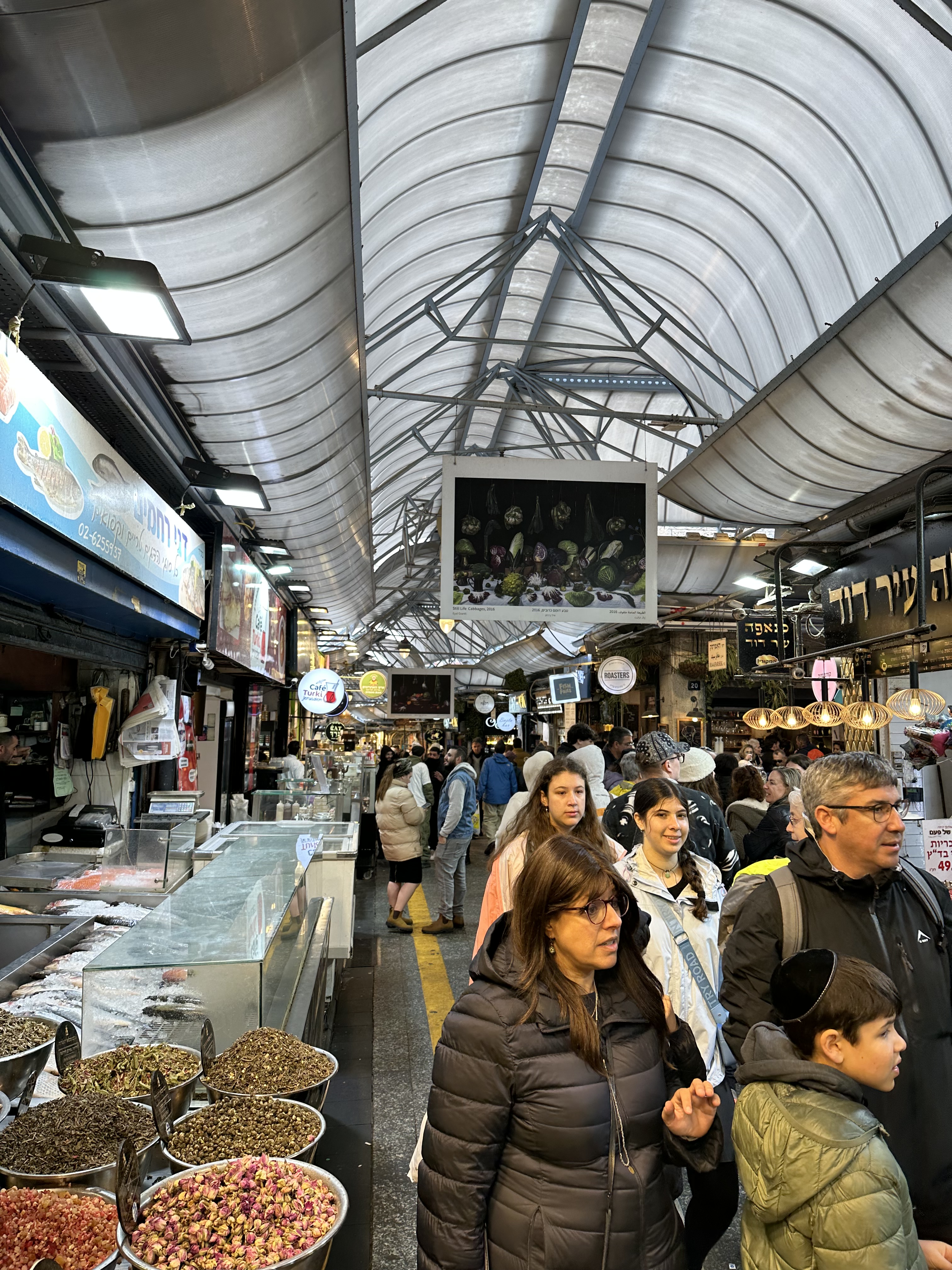
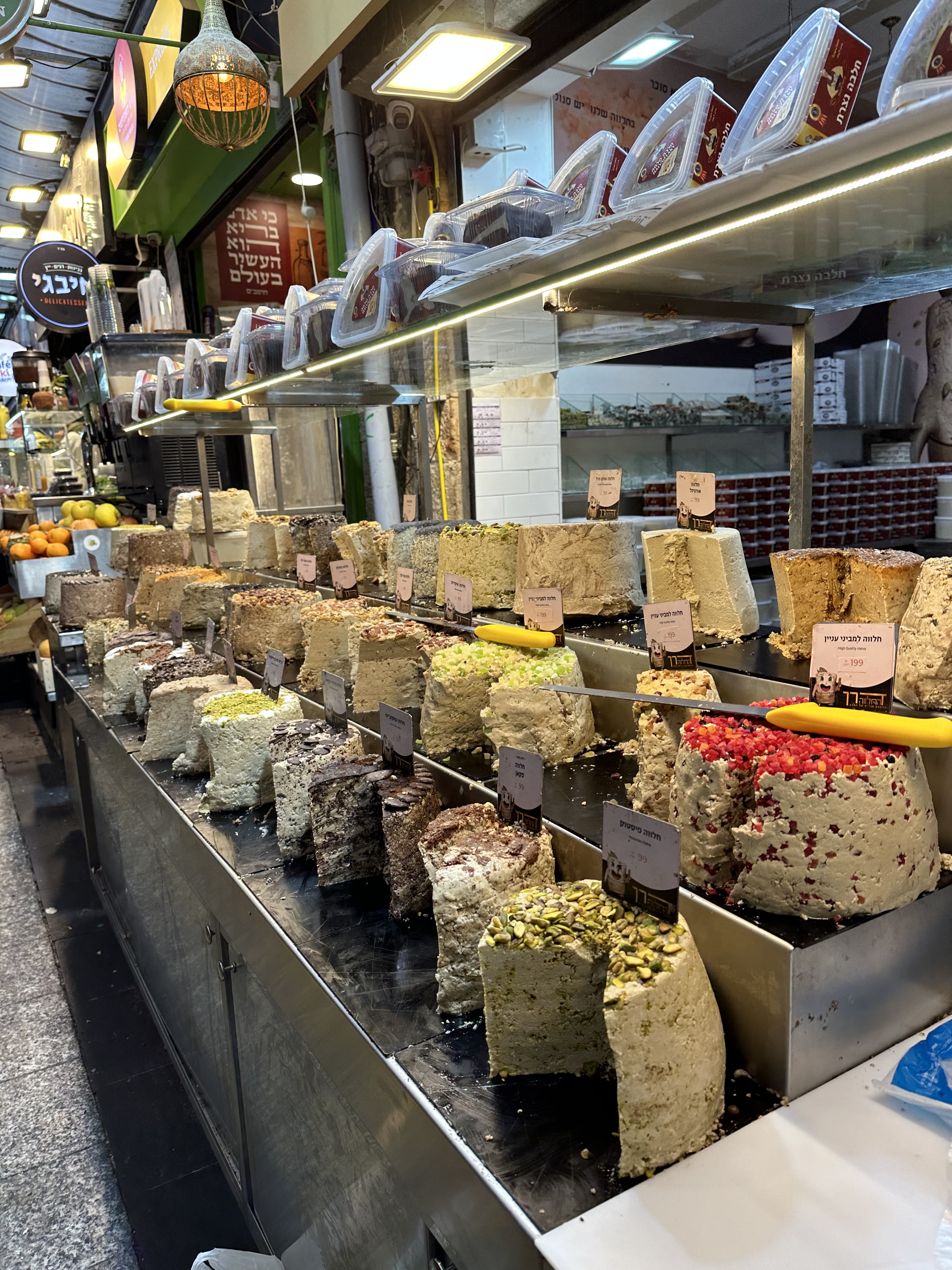
Joe and Hilik had gone for soup (borscht, anyone?), and then joined us for market explorations. It is noisy and crowded and colorful and brimming with abundance, row after row, aisle after aisle, locals with strollers and wide-eyed tourists angling to get by each other. Markets are such a fantastic window into cultures and peoples…I could wander around here for hours, and have to buy some spices and halva. Hilik treats us to a sweet Turkish dessert – sort of a thin corn pudding served warm with cinnamon. Delish? We were a house divided, I’d say.

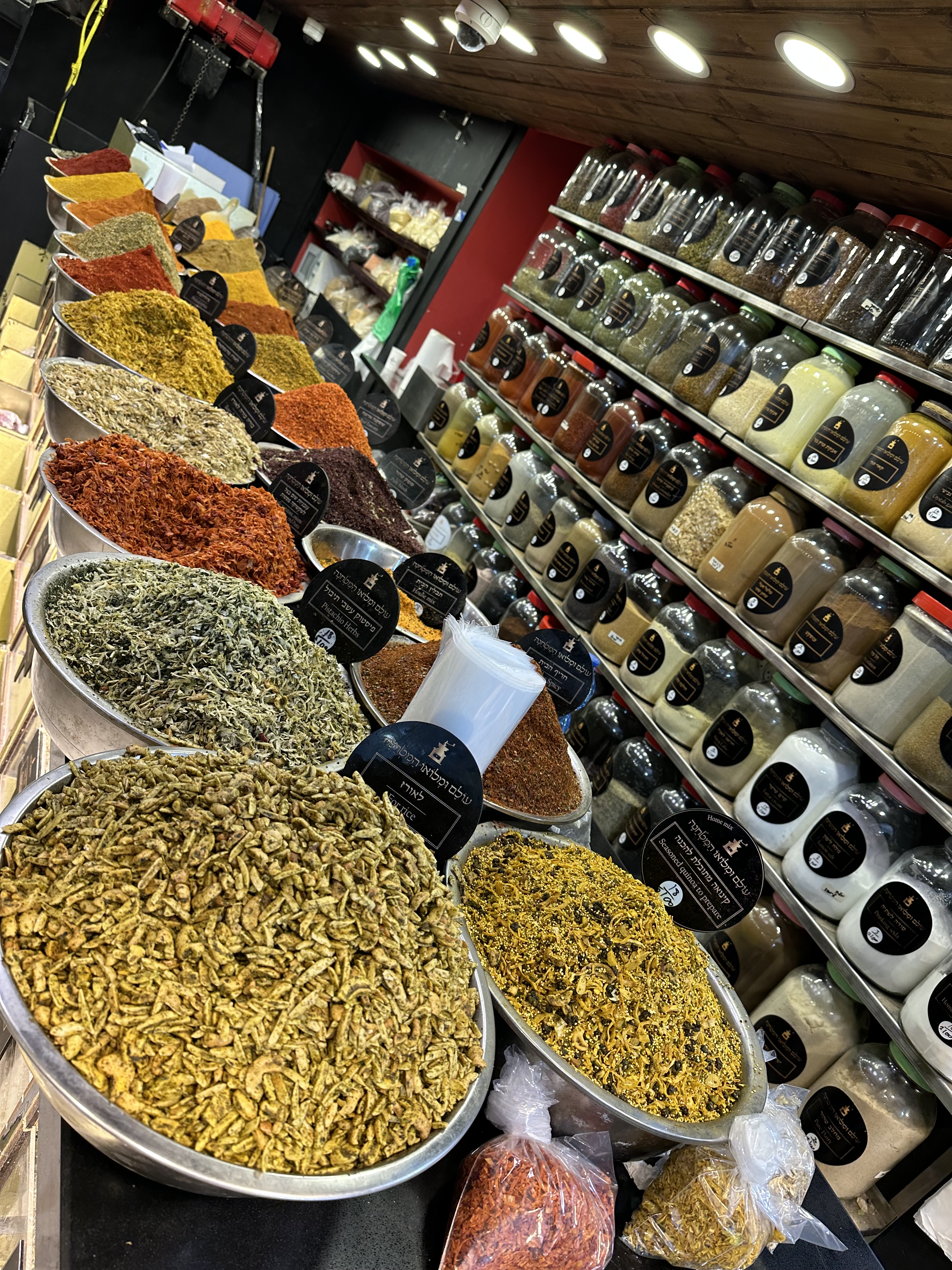
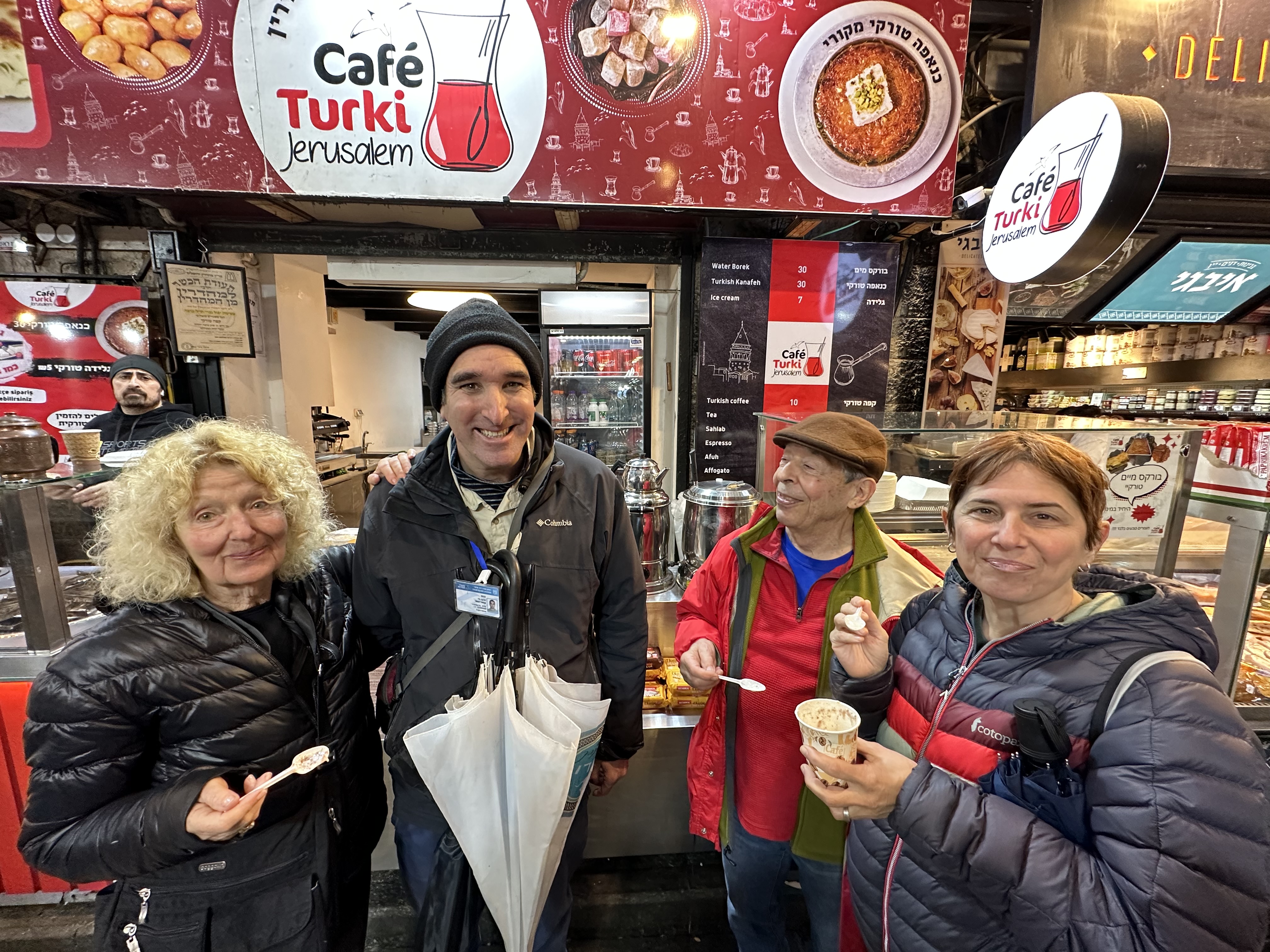

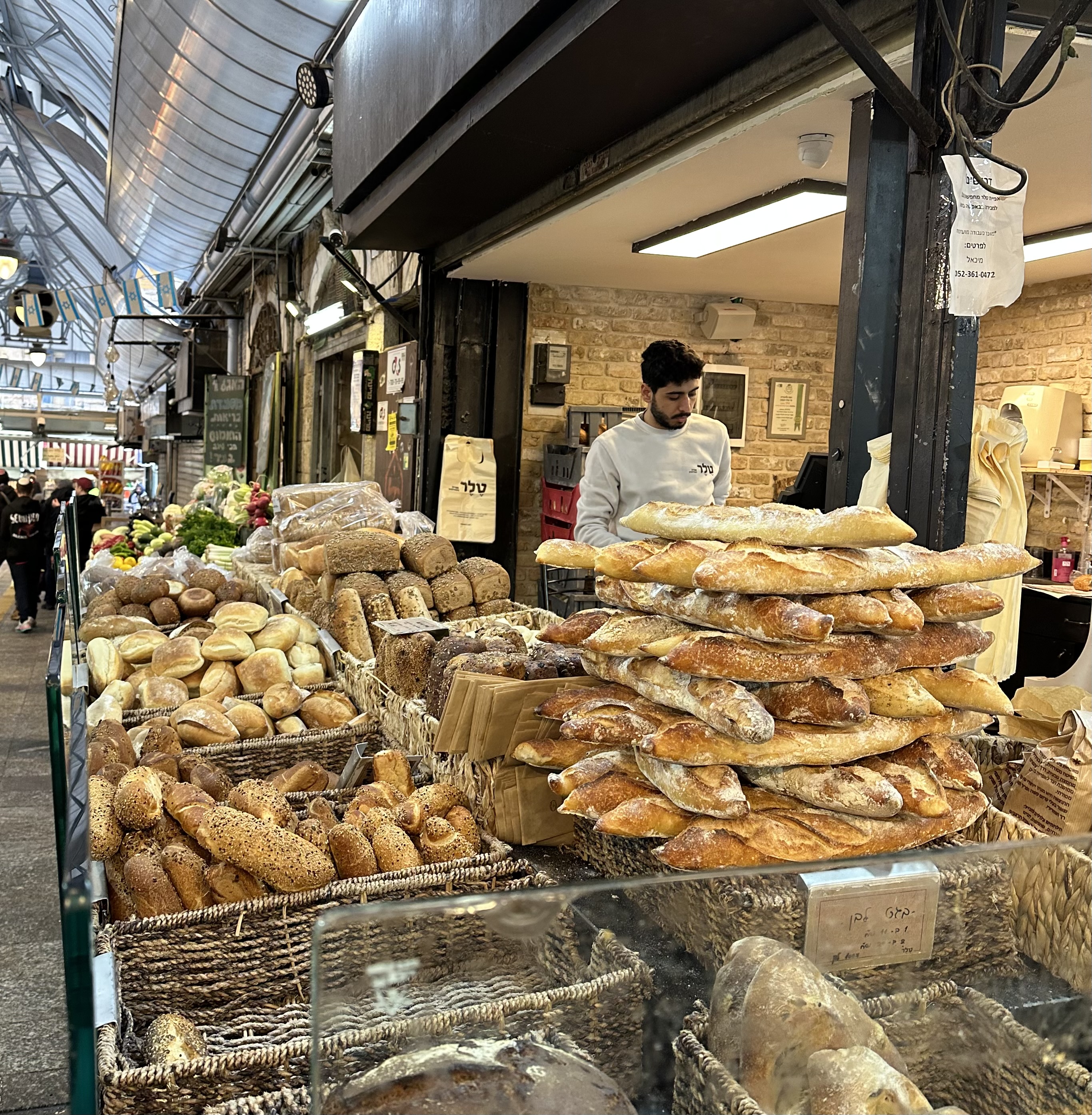
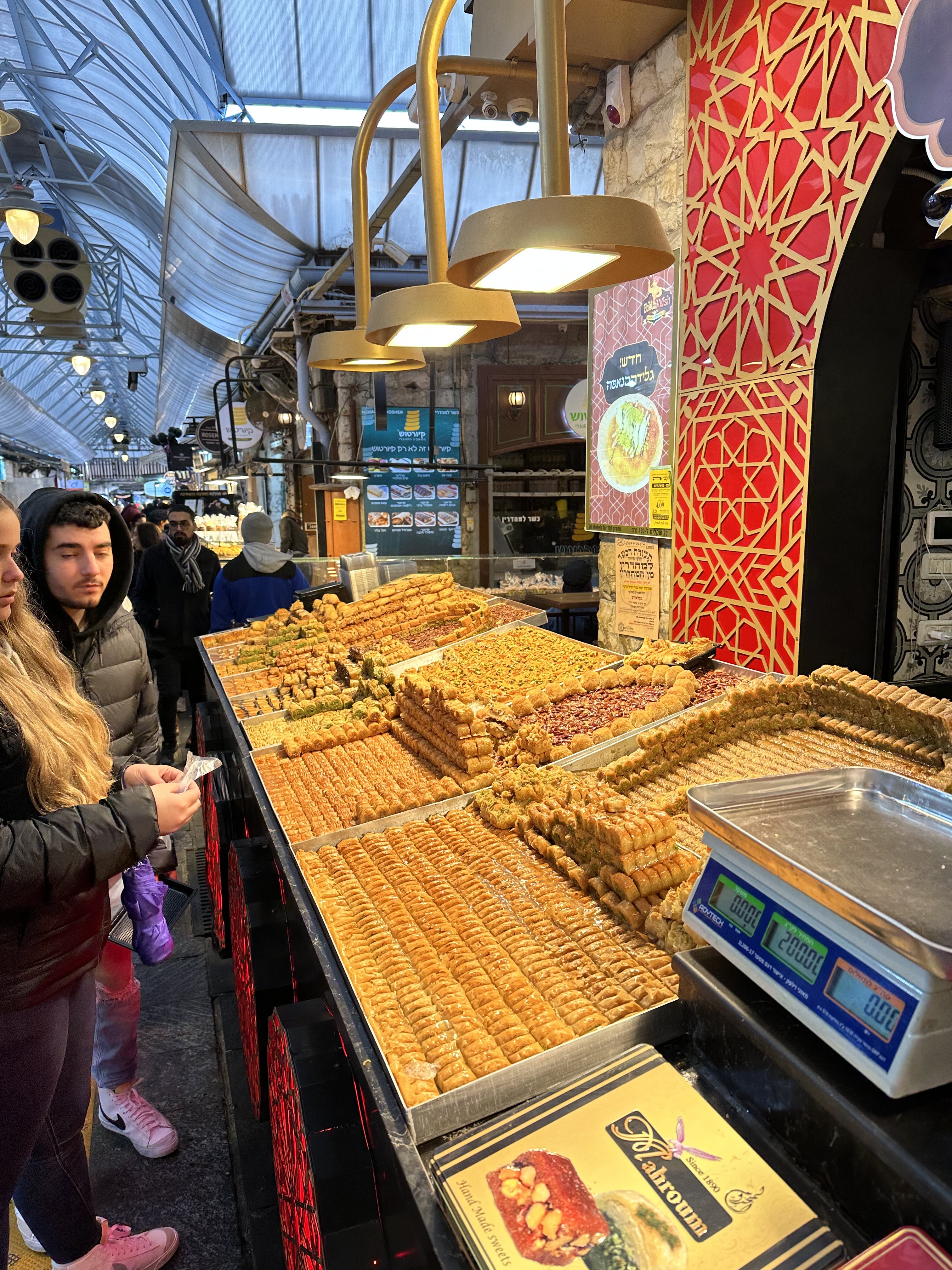
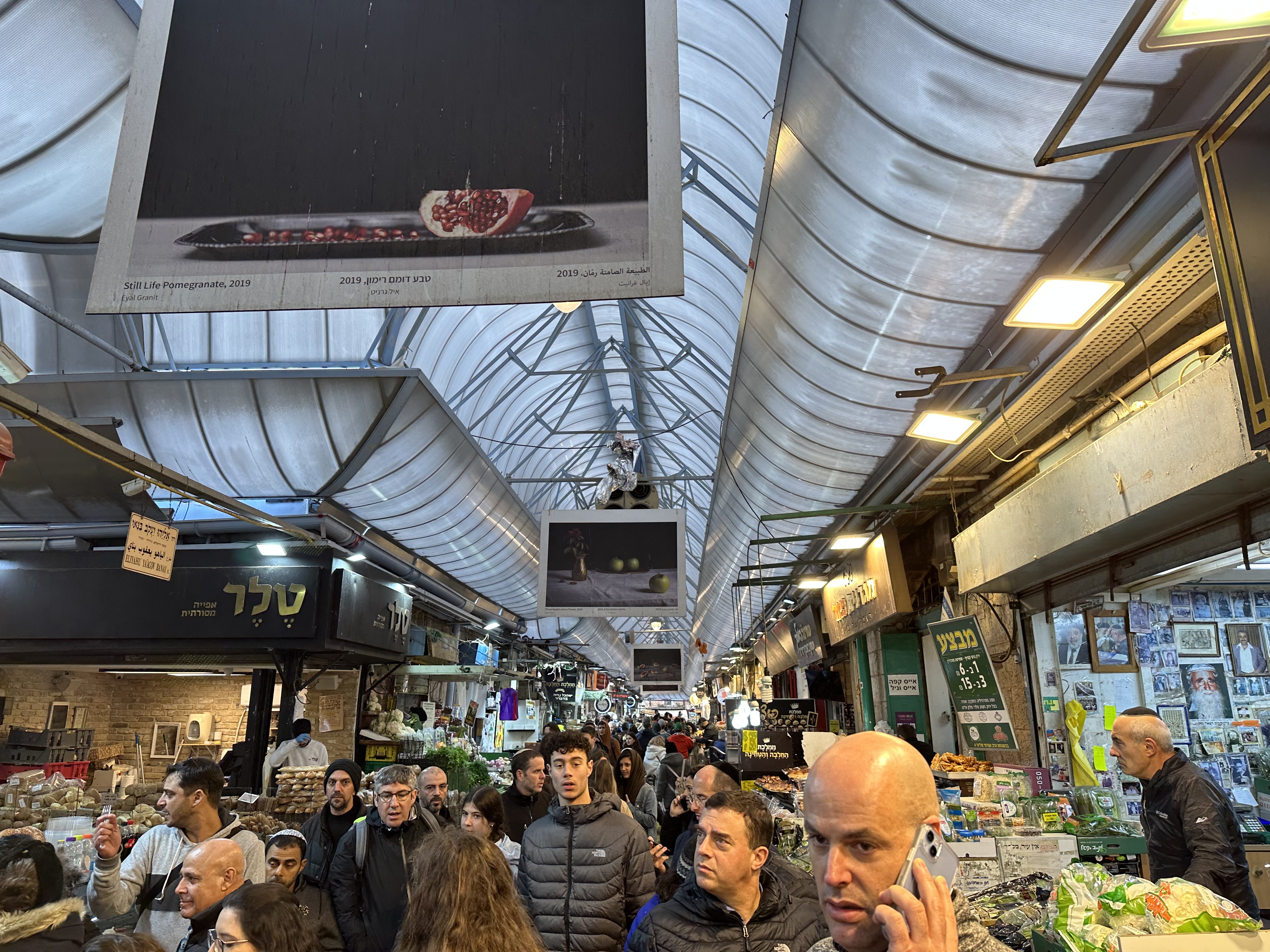
Here’s a link to an earlier post that touched on markets, and Machane Yehuda in particular, if you want to dive a little deeper: Markets, Pride & The Military
Somewhat reeling from the sensory overload the market delivers, we walked back to the hotel, window shopping along the way, hoping not to get lost (we didn’t). It was nice to have a few unplanned hours…the only thing left on the agenda our evening meal and negotiating taxi rides to the restaurant (another story all together).
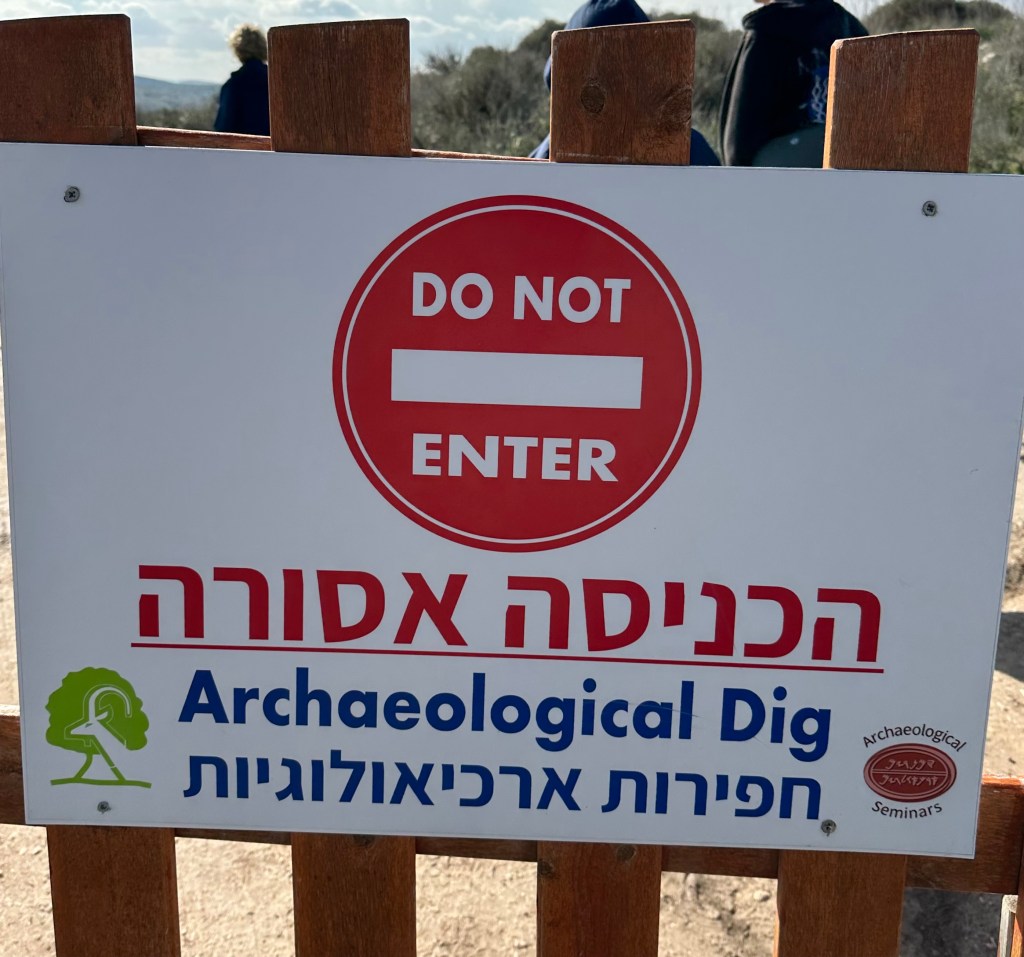
We get a break from the rain the next morning, heading south under clear skies. The Land of 1,000 Caves, only about an hour outside of Jerusalem, is where we will get to be archaeologists for a day. It’s kind of ingenious – have tourists pay for the privilege of helping the archaeology team carefully sift through dirt and carry it out of the caves. We are happy to oblige…maybe we will make an amazing discovery?!
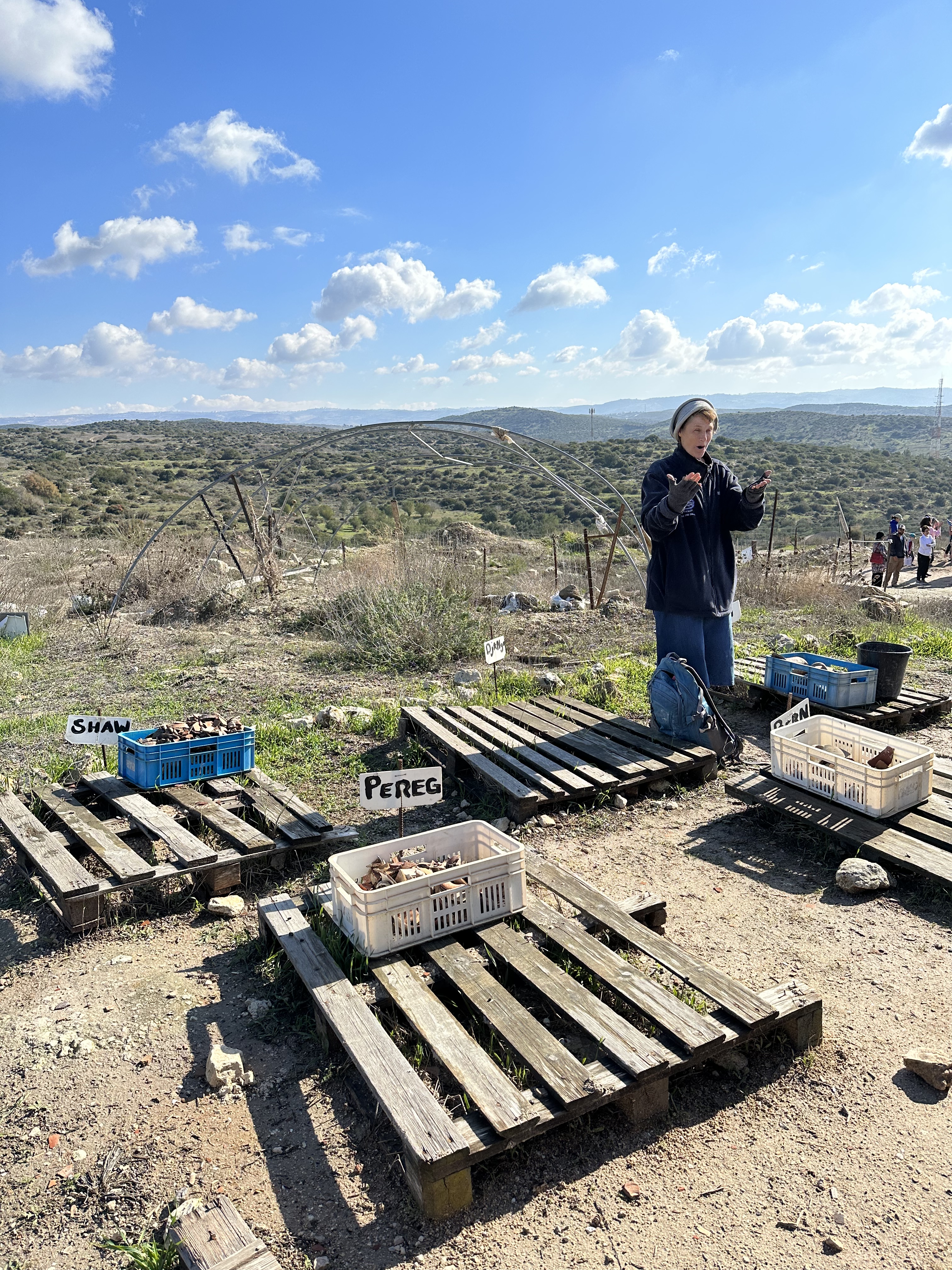
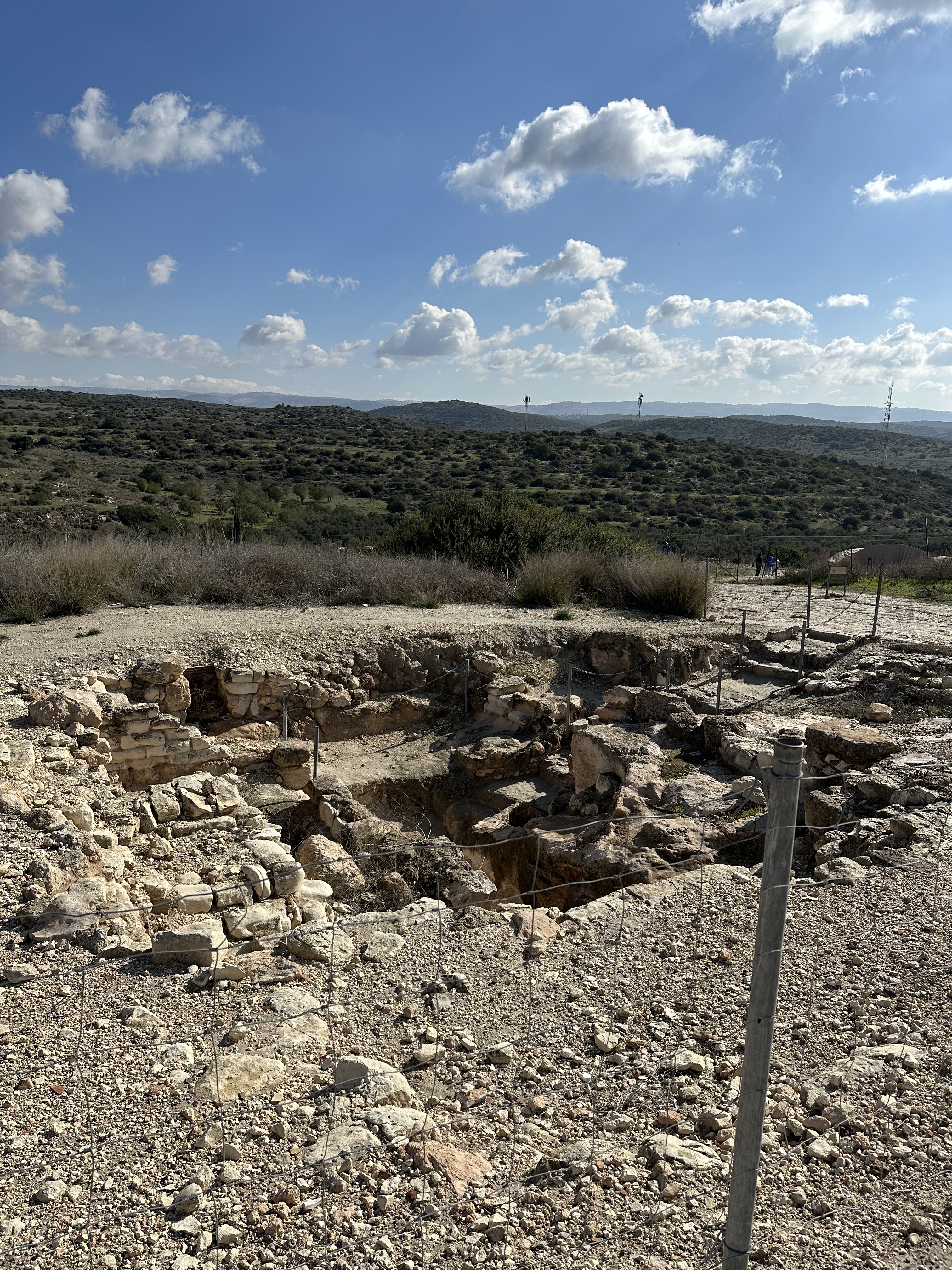
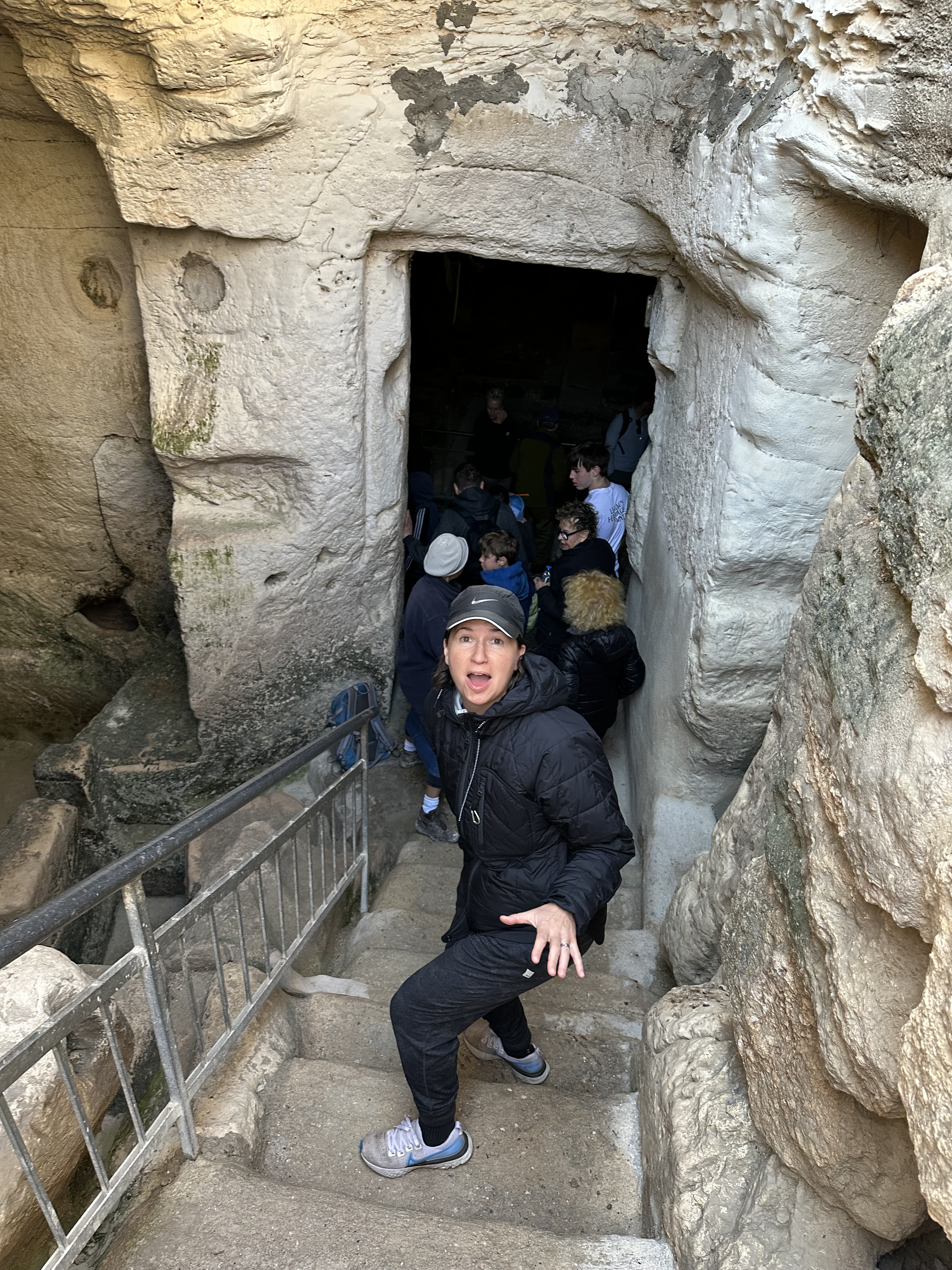
This was once a key trade route to Mesopotamia and Egypt, and thrived over many centuries. It is old – mentioned in the Book of Joshua for you bibliophiles. More than 3,500 underground chambers, carved into the thick chalk and limestone of Lower Judea, hide beneath the landscape. The community in these rolling hills flourished until the 2nd century when the Maccabees (Jews) revolted against the Greeks who wanted to ban the practice of Judaism. As they fled, they filled in these caves to prevent their conquerors from using them. And in that historical tale there is a connection to the real story of Chanukah, which originally commemorated the Maccabbees’ capturing Jerusalem as part of this revolt and rededicating the altar in the 1st Temple. Nope, Chanukah isn’t about the oil lasting eight days when there was only enough for one…
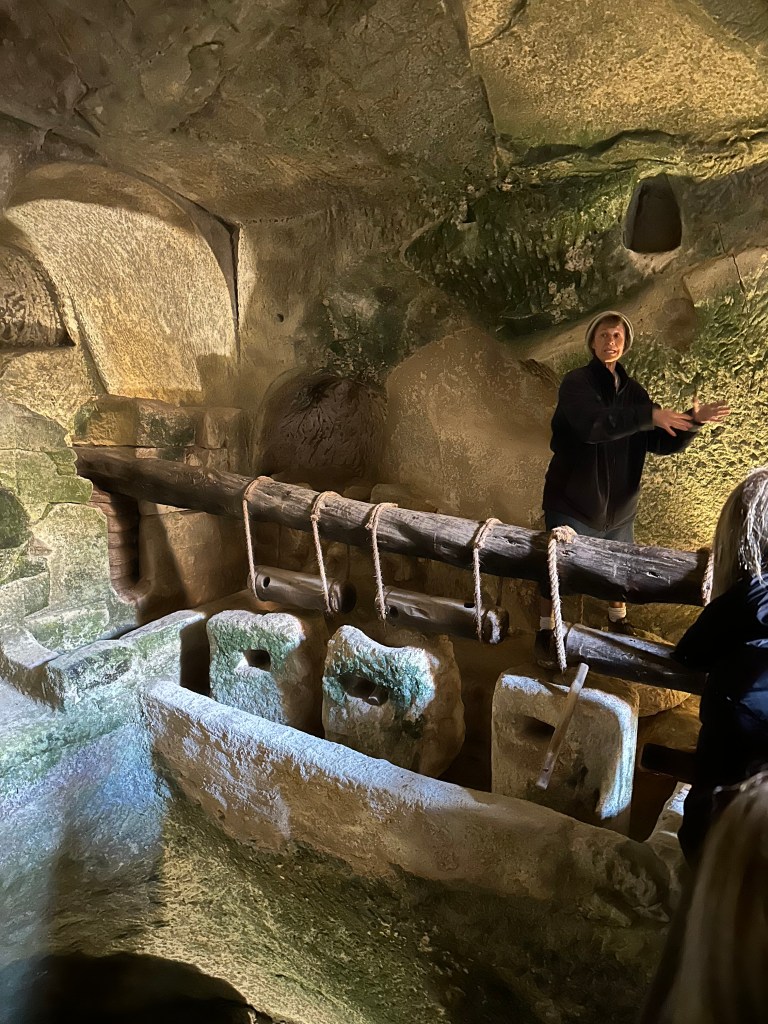
Roll the tape forward a couple thousand years, and we get to dig into their lives…literally. In a cave that was once an olive oil press and processing room, our energetic guide gives us a brief introduction to this place and its history. We are reminded that olive oil was used not just for cooking, but also lighting and ceremony, so they needed a lot of it.

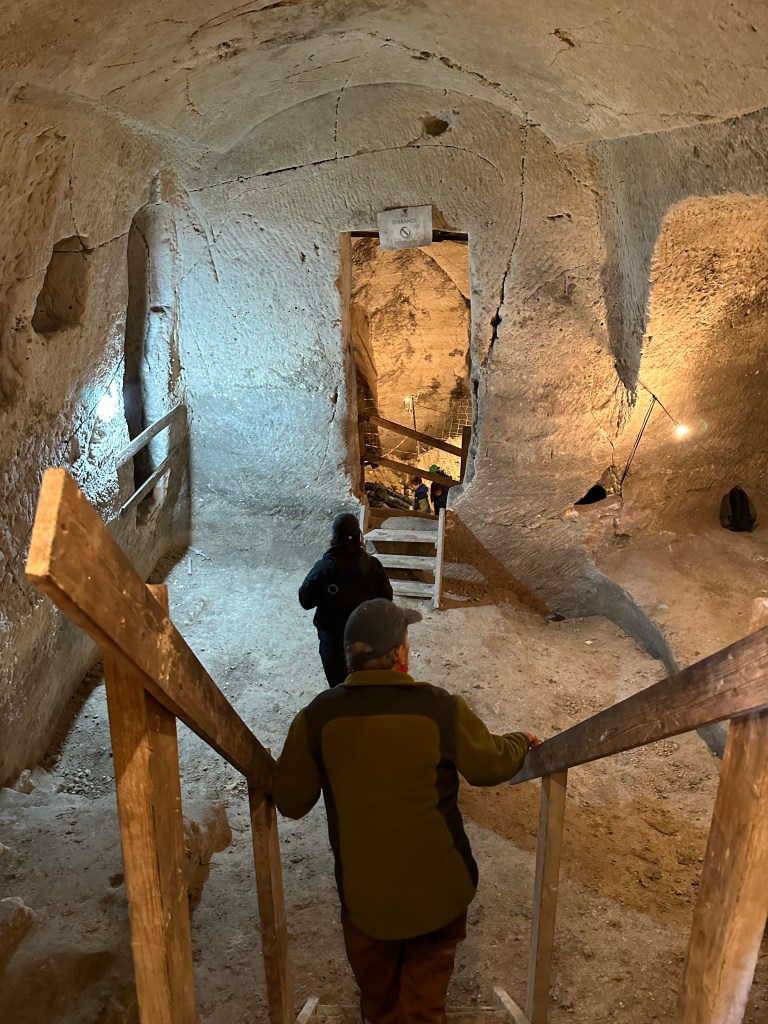

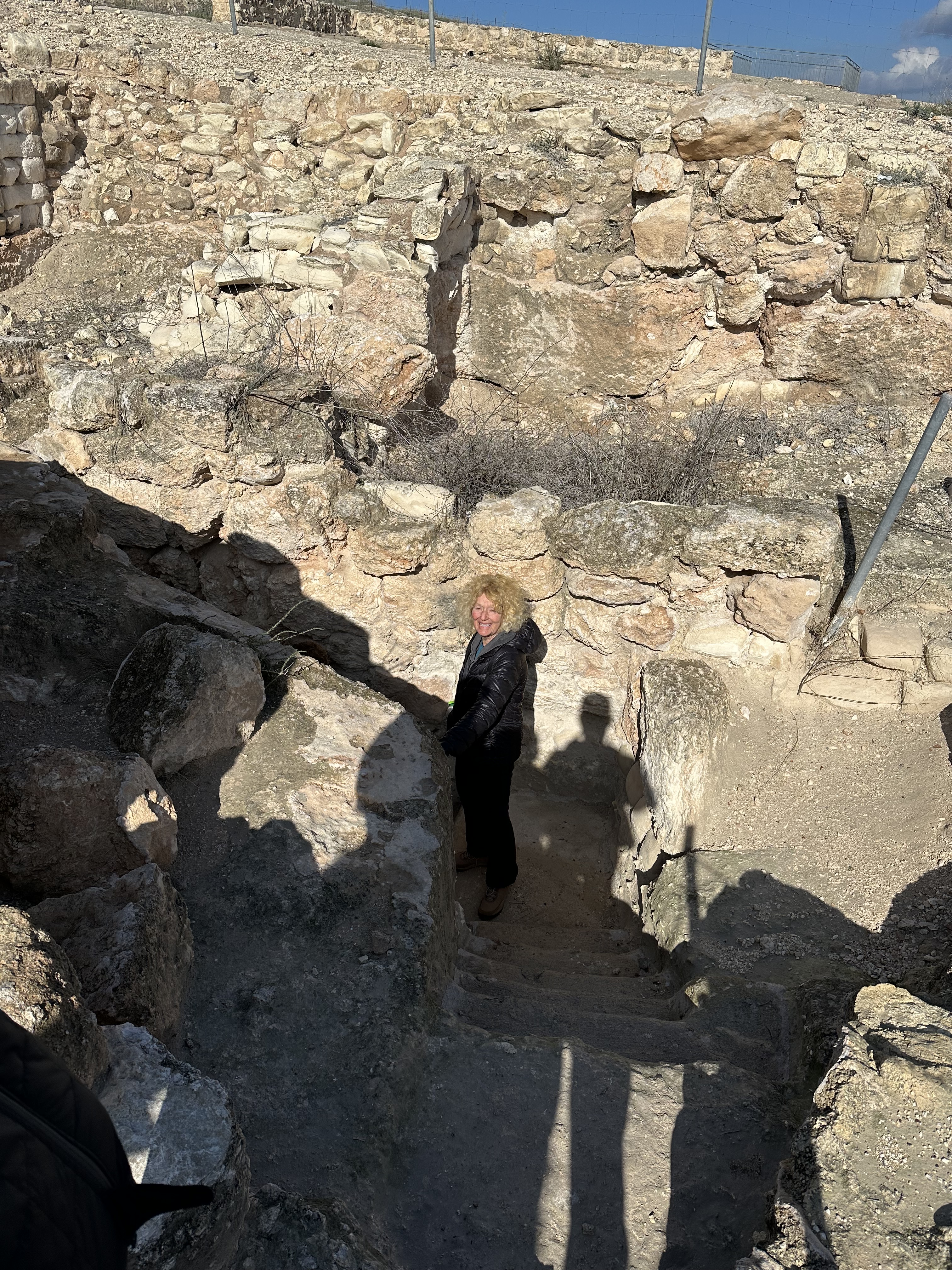
From there we went into the excavation area we’d be working in (wearing dirty clothes, per Hilik’s advice). A rickety set of makeshift steps take us down to the main dig, lit by bare bulbs strung about the place, the air dry, stale and motionless, tinged by the dustiness of the dirt. We get a quick lesson in how to use the pick and not break things we might find, and advice to fill buckets no more than 2/3 since we have to schlep these things out of here (via a good ole bucket brigade lineup).
We scrape, we trowel, we move dirt to buckets bit by bit…handful by handful…and we find stuff! Small shards of pottery and some bits of bone, each discovery met with a quiet squeal of delight. We of course feel incredibly accomplished, and then we hear another group has found a cooking bowl with large pieces almost intact!
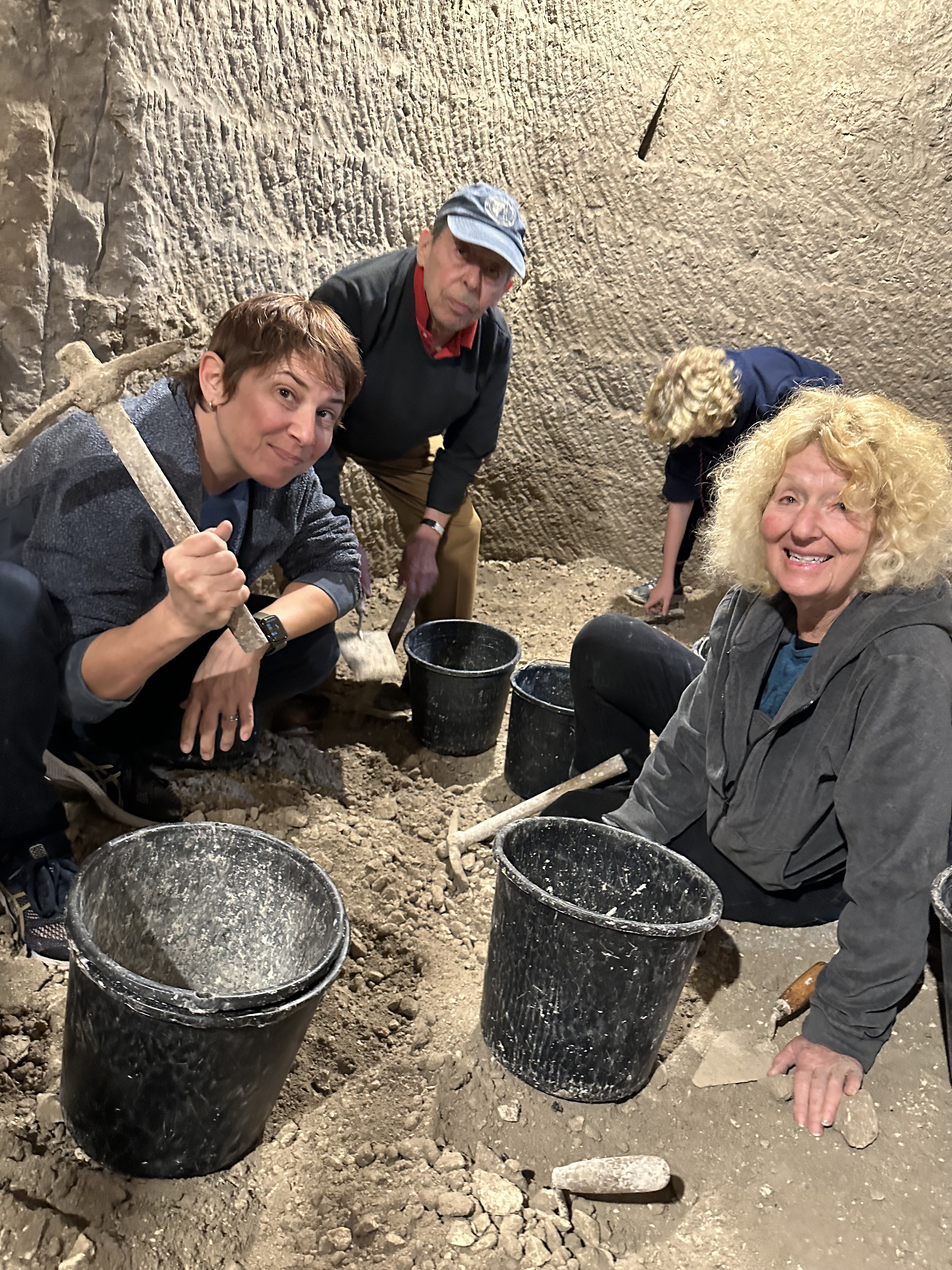
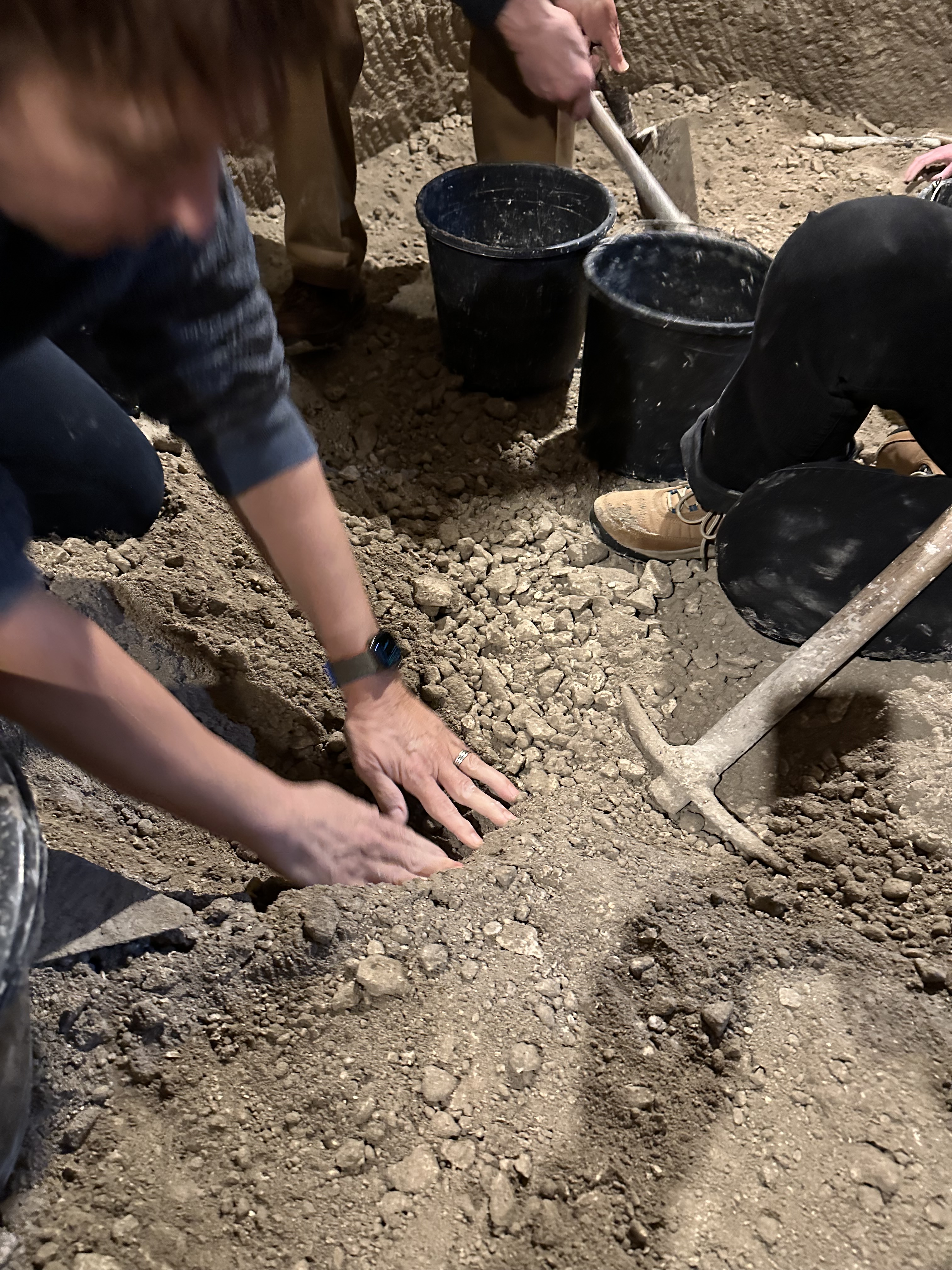

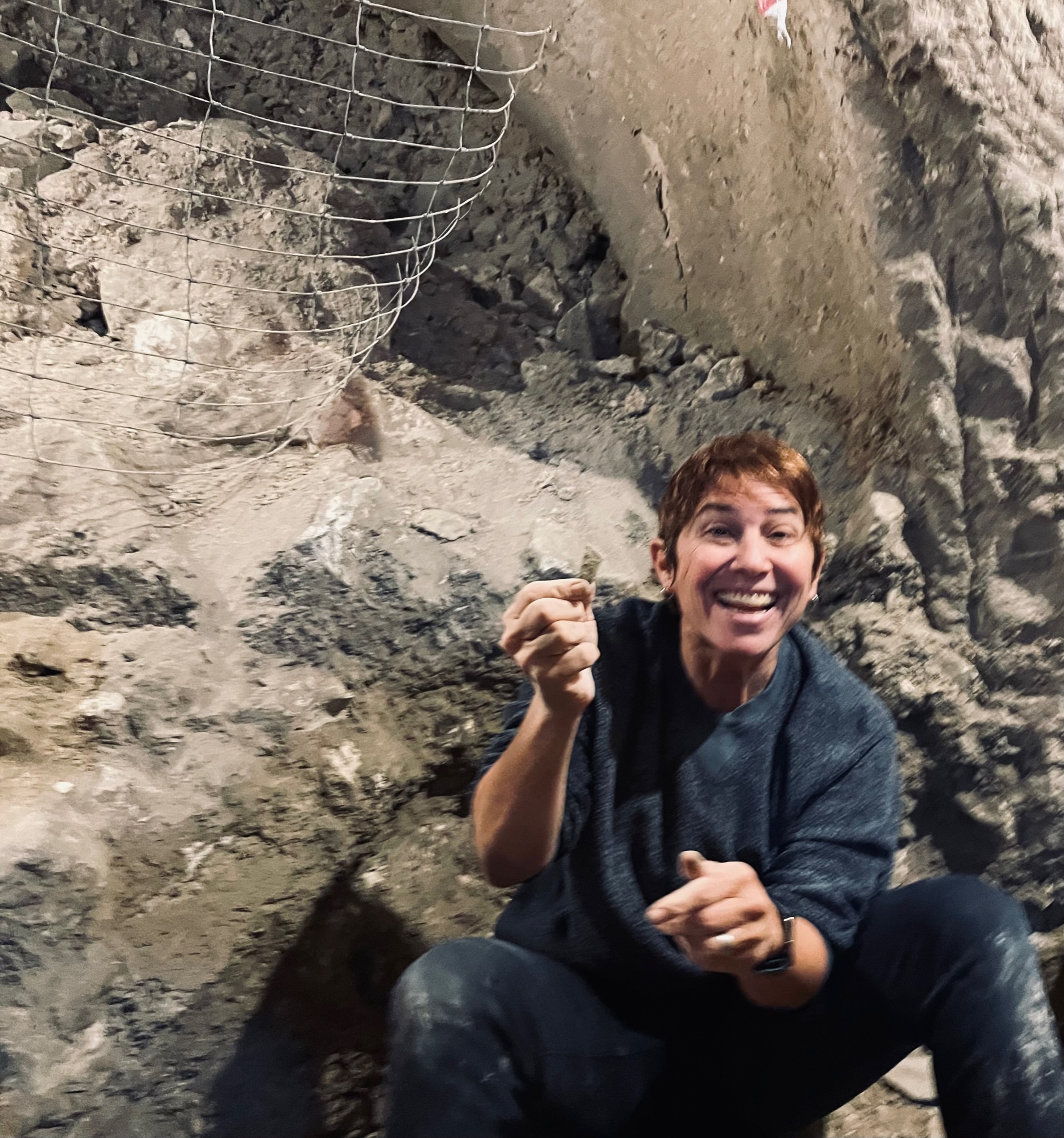

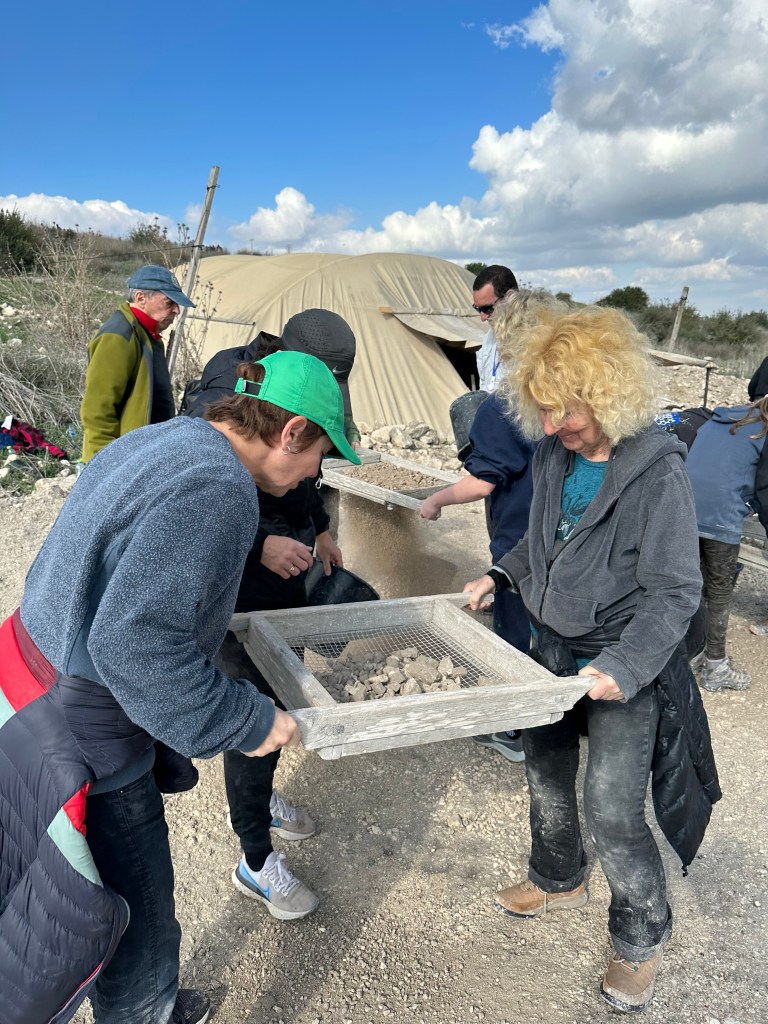
We spend about an hour digging and then head back to the surface for the next step – sifting through the buckets of dirt we just gathered. The light in the cave is not great, so inevitably you miss things, we’re told. We were surprised at how much more we find as the dirt is shaken through a metal screen stretched across a wooden frame.

We wonder if anything of significance has been found here, and for sure, it has. Early in the excavations, the caves were robbed and no one knew what was taken but soon a tablet turned up on the black market that must have come from here. Shortly thereafter, more writing was found in the ransacked cave, and sure enough, the pieces fit together…
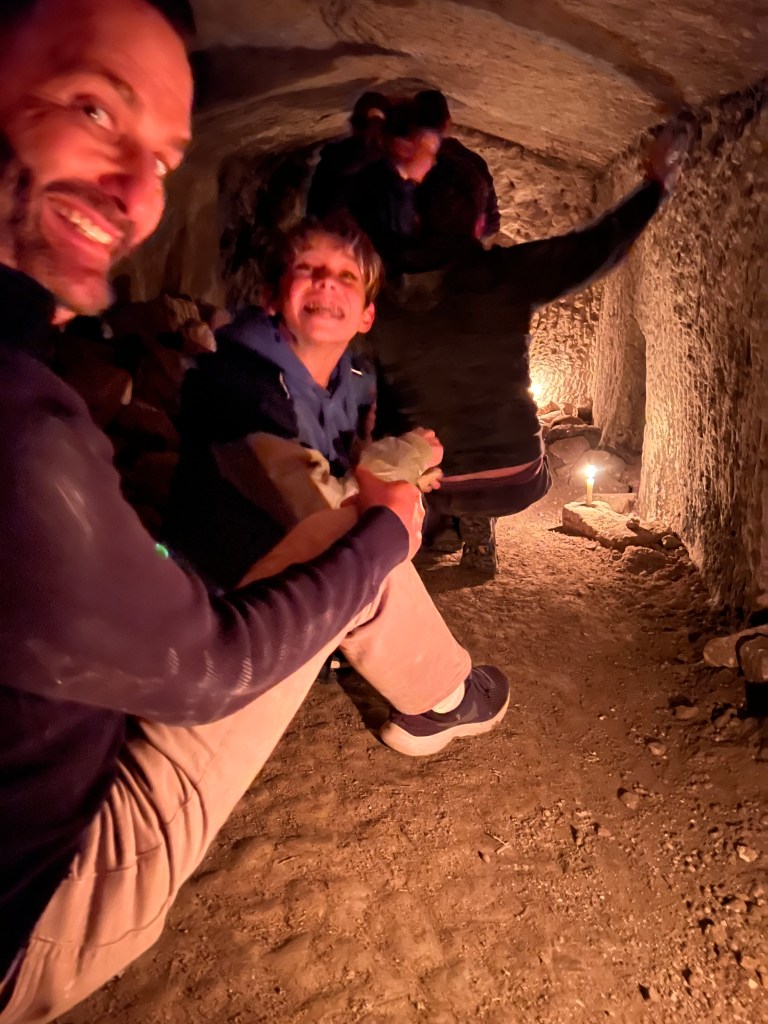
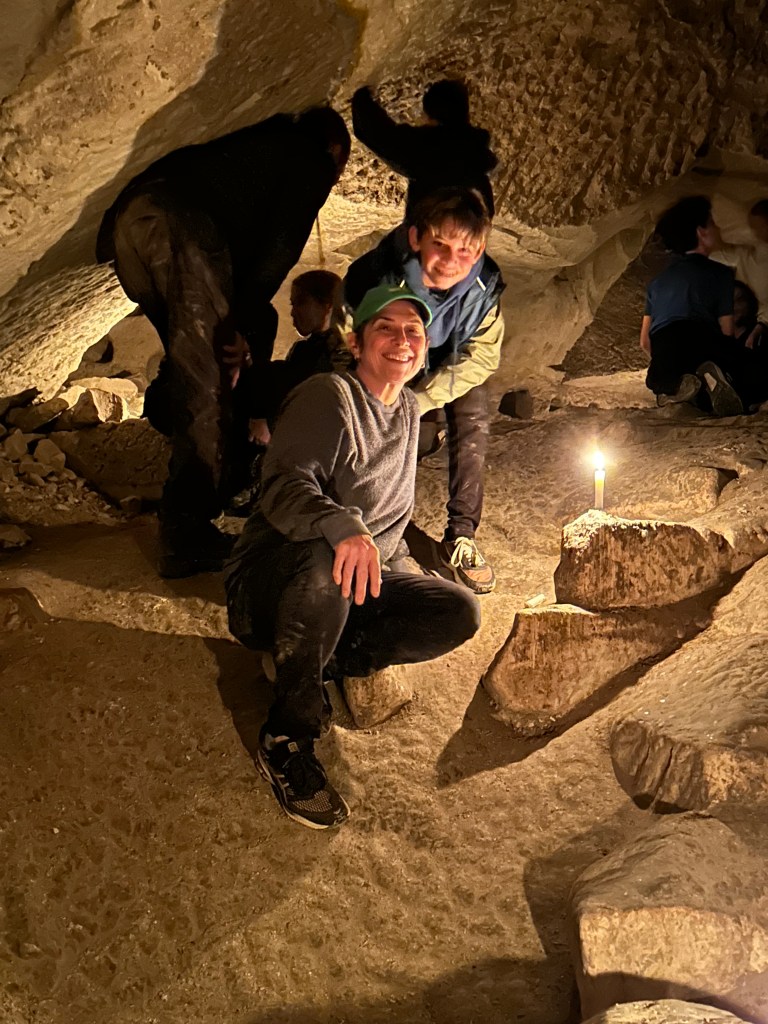
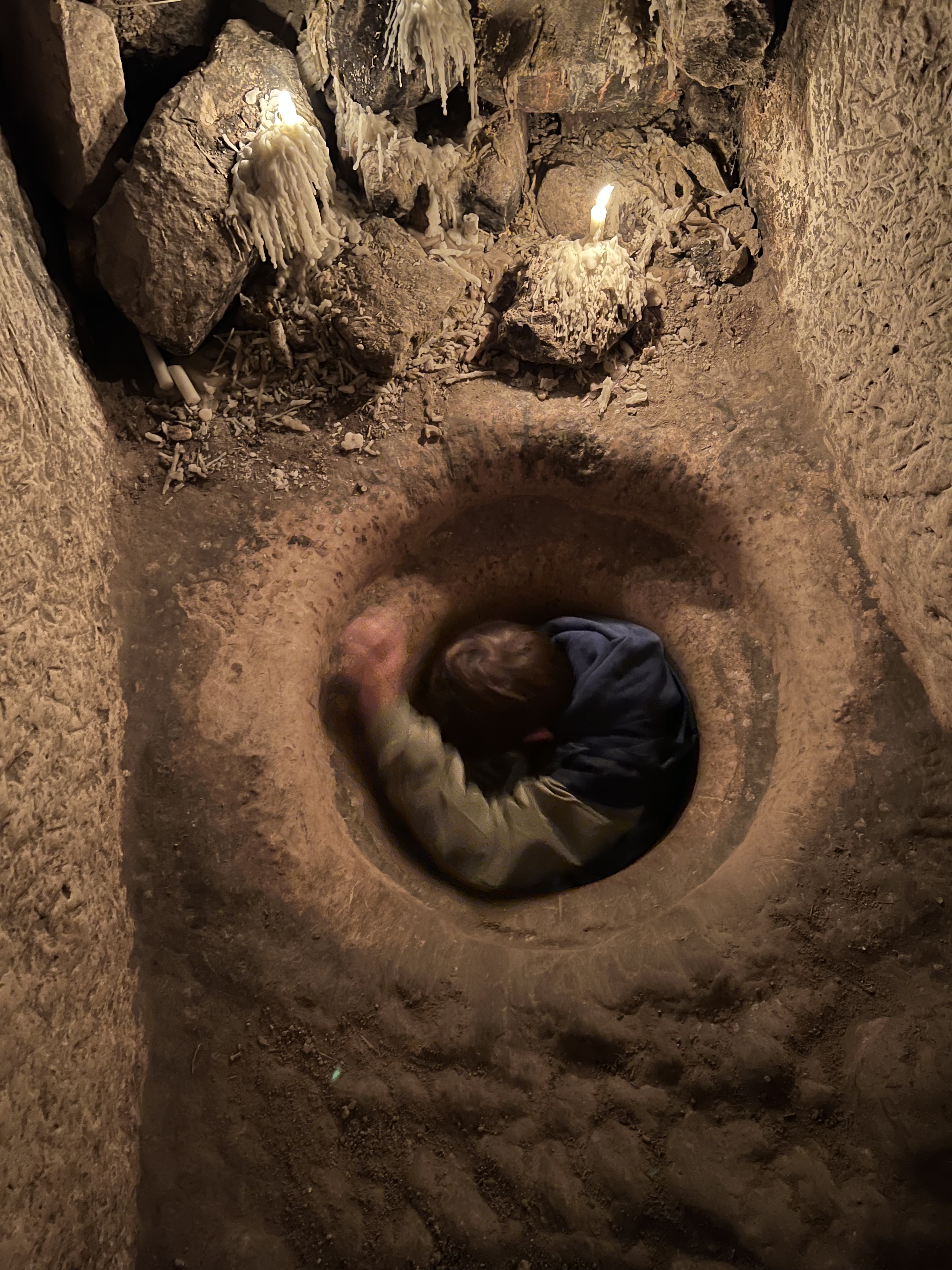
Now that we are experienced archeologists, we are invited to do a “cave crawl” at a site that has been dug out just enough to make it through. Not for the claustrophobic! There are places where we have to slide feet-first on our butts, and a spot where we have to lower ourselves through a hole. It’s all lit by candles, no stairs, no path, no real sense of which way is out. We have become discoverers of an ancient civilization.





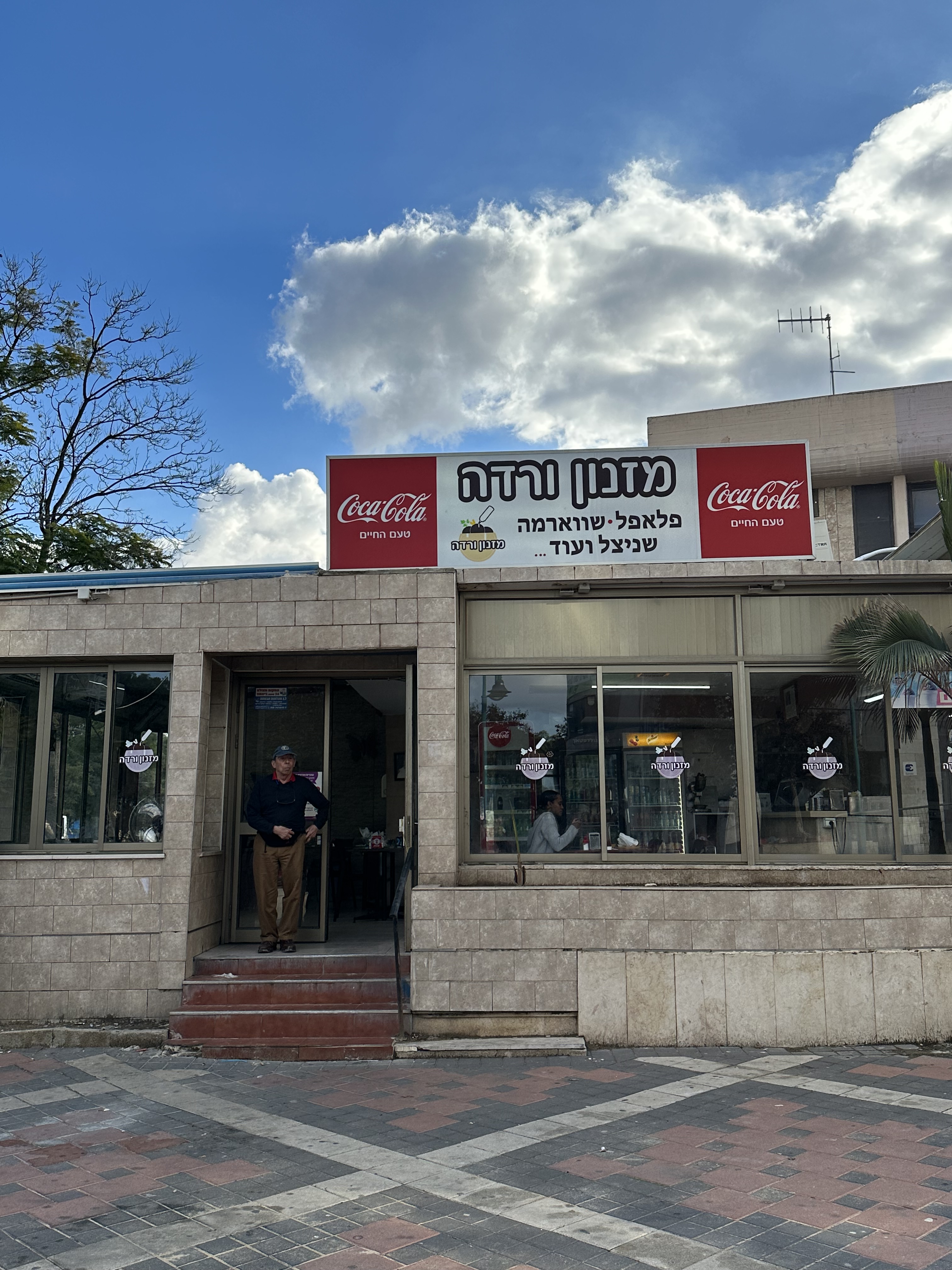
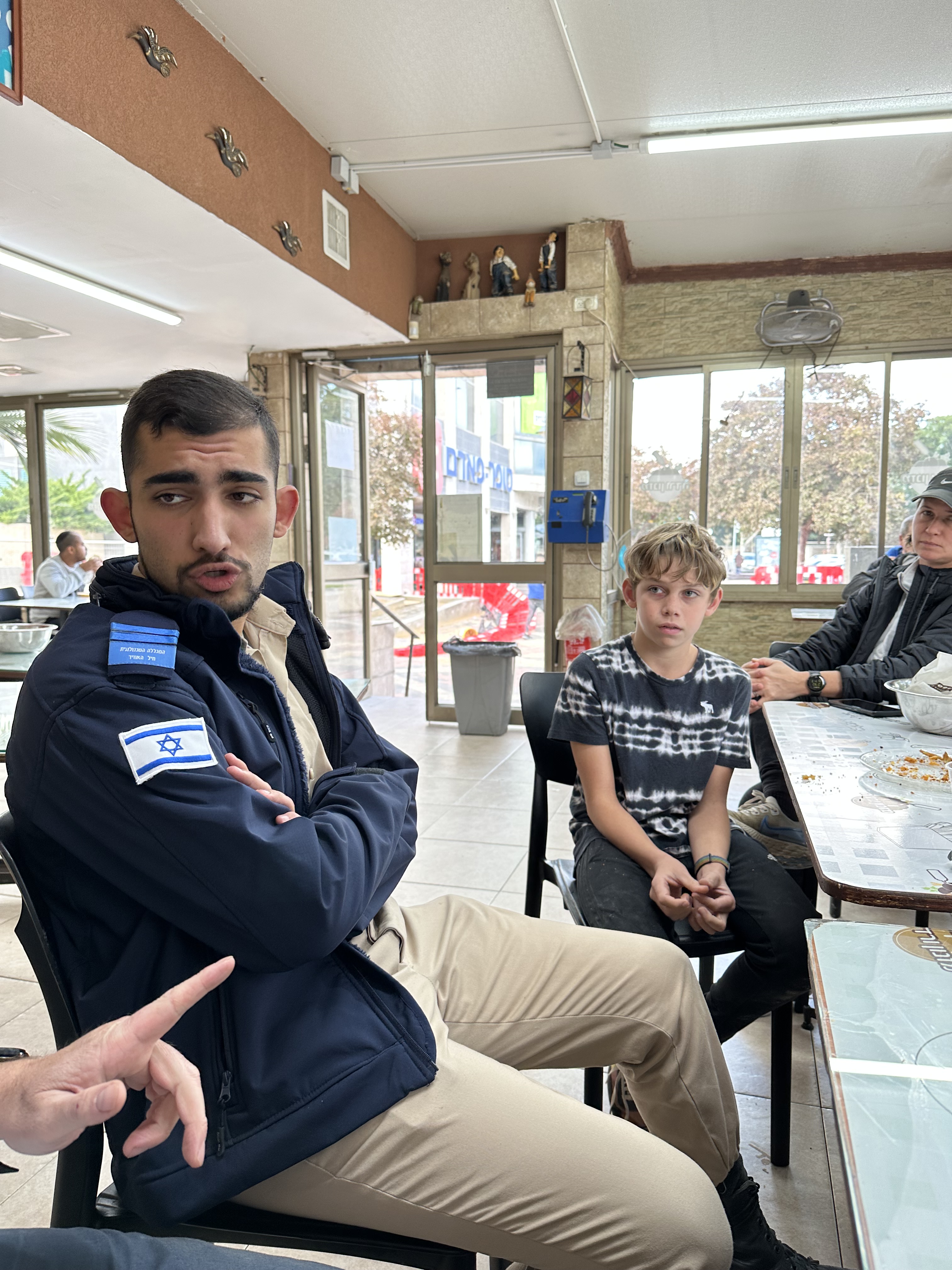
Having proudly contributed to the understanding of our ancestors, we stop for shawarma and falafel at a local eatery. A young guy in a military uniform – he turns out to be 17 – is at the next table with his father. Soli has been somewhat obsessed with the military, and it’s everywhere, and mostly young people since Israel has mandatory service (two years for women, three for men). Hilik asks the guy if he would chat with us, and he’s happy to do so (with Hilik translating). He is studying at the nearby air force academy, preparing for his military service that will focus on technology. He does not plan to have a military career, but will stay longer than the minimum as that provides advanced education benefits. To hear a 17 yr old kid be so clearly on his path is just amazing, and makes us all wonder about our American youth…

Traversing time from ancient history to modern, we then venture to Sde Boker, a kibbutz in the Negev Desert that was the retirement home of David Ben-Gurion and where a memorial to him sits on the edge of the Makhtesh Ramon (more on that in the next post). It’s a beautiful spot – perfect to spend eternity – with sweeping vistas and herds of ibex to keep you company.
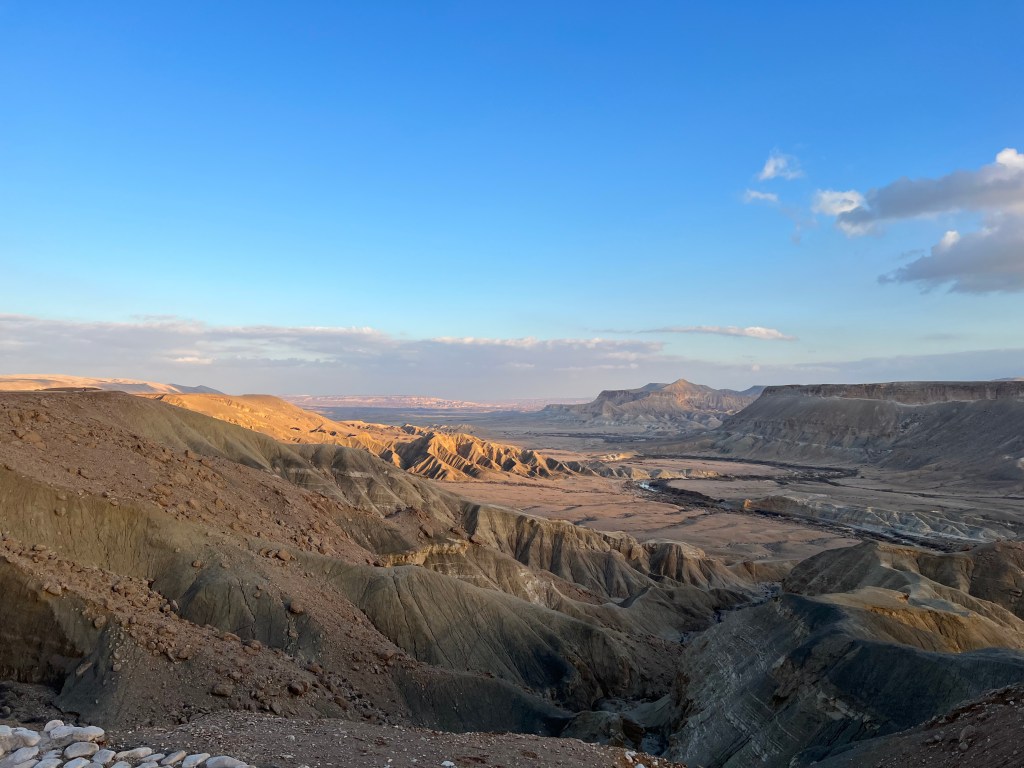

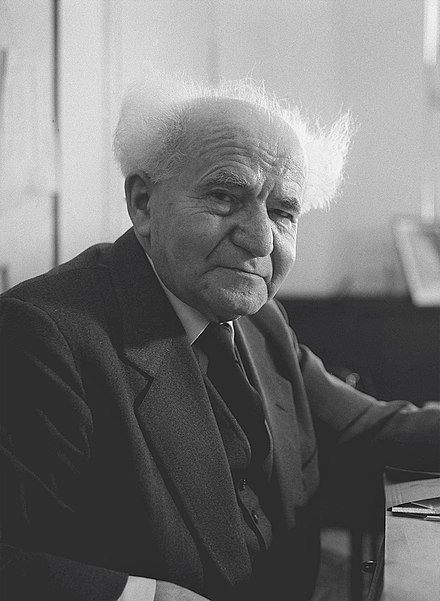

David Ben-Gurion was essentially Israel’s founder, and its first prime minister. A humble visionary who was known to do semi-clothed yoga on the beach in Tel Aviv, he led the Jewish community in Palestine from 1935 (under British control) then served as Israeli PM from 1948 to 1963. While an unbelievably accomplished man, he wanted no grand monuments to his life and work, and is buried in a simple grave next to his wife. He left his entire estate to Israel.
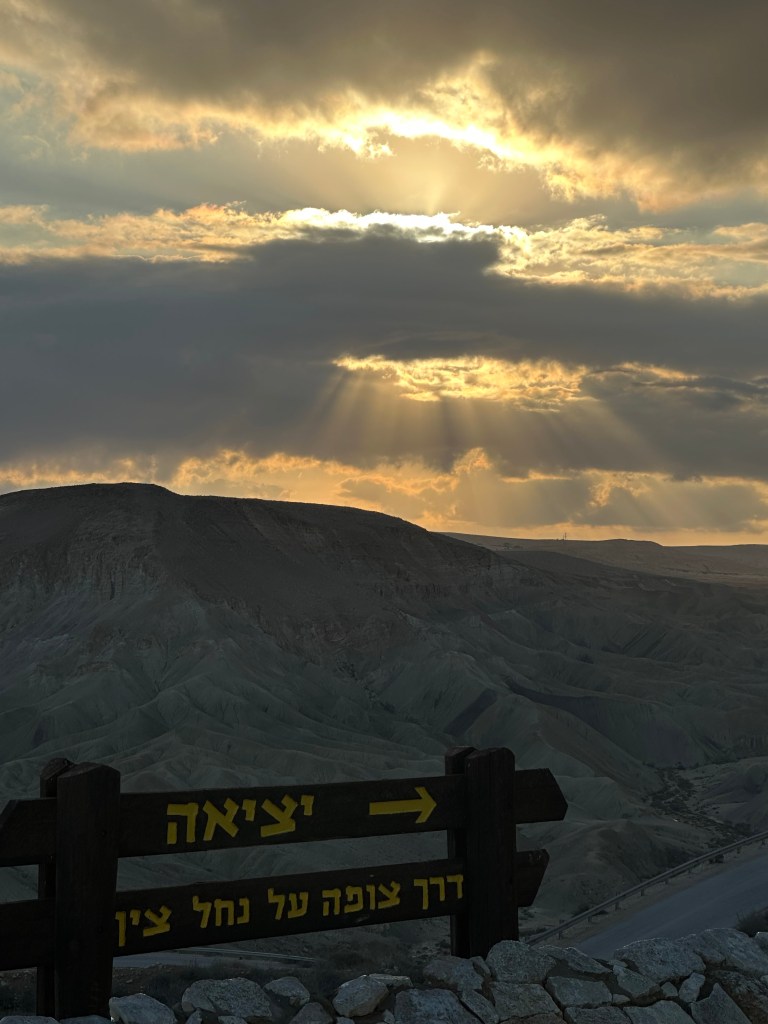
We are here as the sun goes down, the sky turning that amazing combination of faded turquoise and pinks and oranges and warm golden rays that pierce the clouds. It’s quiet, not very crowded…a scattering of other visitors wandering the paths with us…a group of young people covered in mud from the canyon’s river way below.


We walk slowly around the memorial park, navigating the mud puddles and pathways, gazing to the horizon, a peacefulness settling in as we watch the day turn to night…
 Dirt Roads and High Rises