
We get to unpack! Four nights in Jerusalem means we settle in for just a bit. Like Tel Aviv, I was recently here and therefore relax into a somewhat familiar city. It’s all new for my traveling companions (although Joe was here 35 years ago) and I am happy to play modestly-knowledgeable host. Fortunately we have Hilik, who will whisk us out of the city for the day as we are destined for Masada and the Dead Sea.
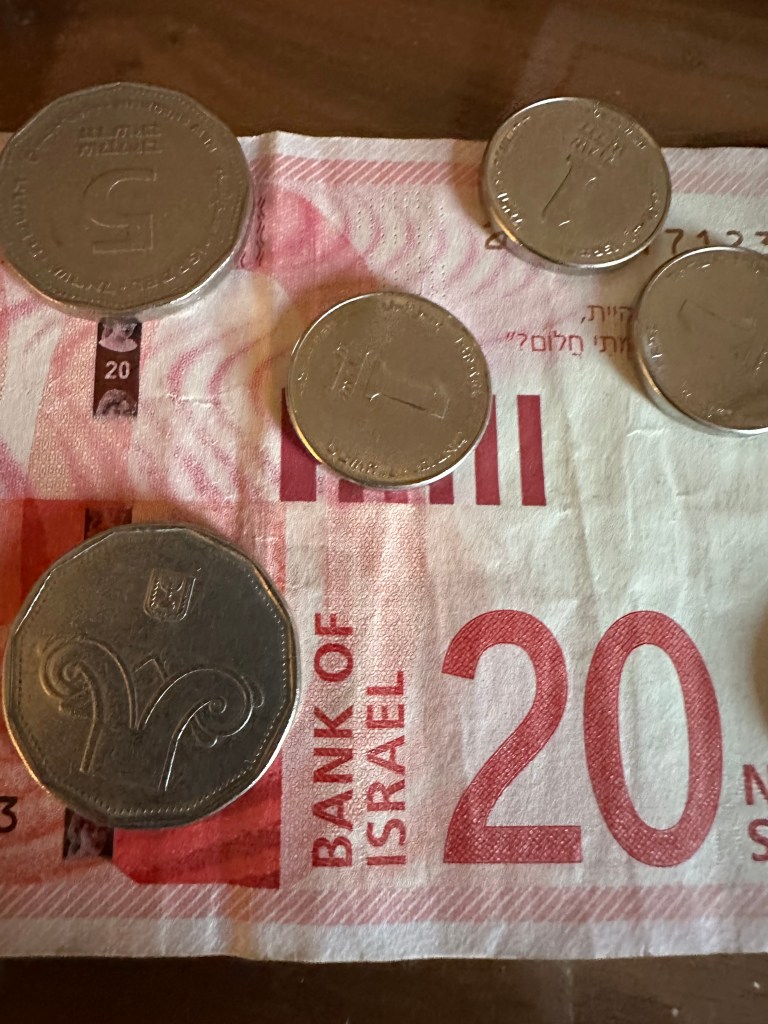
As we head to the van, I happily make my daily tithing to Soli (also known as our fearless co-pilot). When we arrived in Israel, he was very curious about the coins, and I had a few, so we studied them…front, back, denominations. And the curiosity extended to the next day, and the next, and he decided he would gather up as much as he could to take home to friends. A shekel here, five shekels there, some 10 shekel coins thrown in and he has quite the treasure trove to share.
Tithing complete and seated comfortably, we head south. To the Negev desert. And to the lowest place on earth. We have a bit of a drive, so we settle into some driving games (which super power would you choose and why?)…start the first of many conversations about the Israeli-Palestinian conflict…fall silent for a bit, watching the world pass by the windows…
The Northern hills and valleys, green and fertile, have turned to rolling dry vistas, the rocks and dust and tumbleweeds stretching out as far as you can see. It’s a harsh environment seemingly inhospitable to any living thing but it’s punctuated nonetheless by the occasional farm (dates, pomegranates, apples) and bedouin village. We wonder where the water comes from.

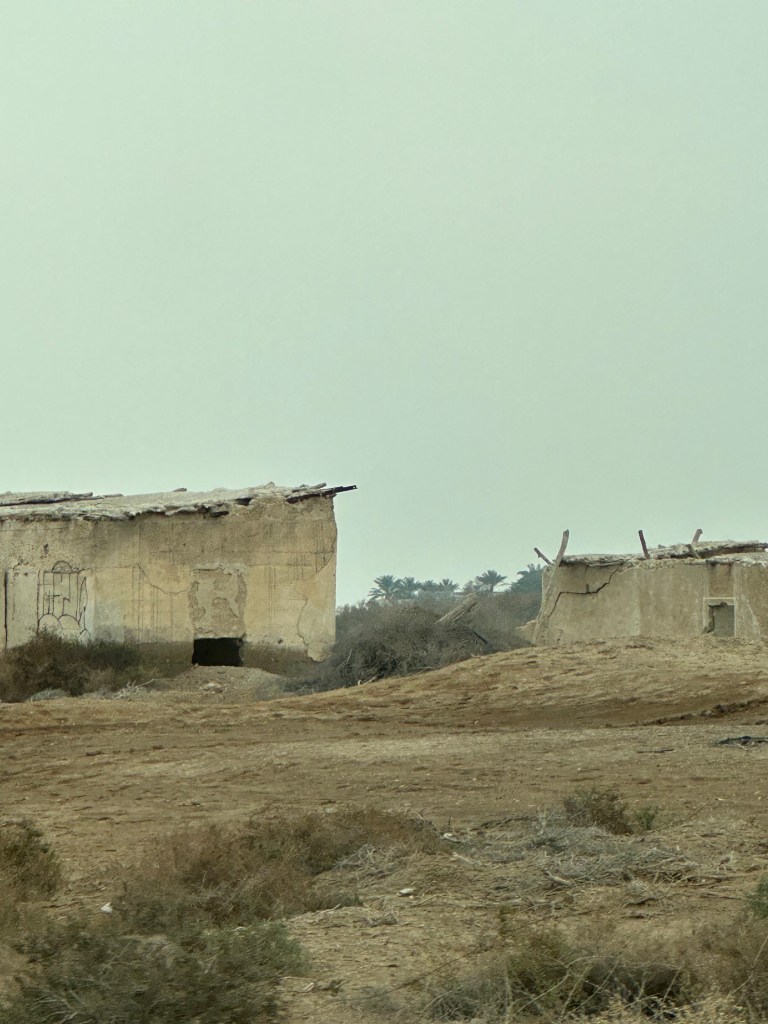

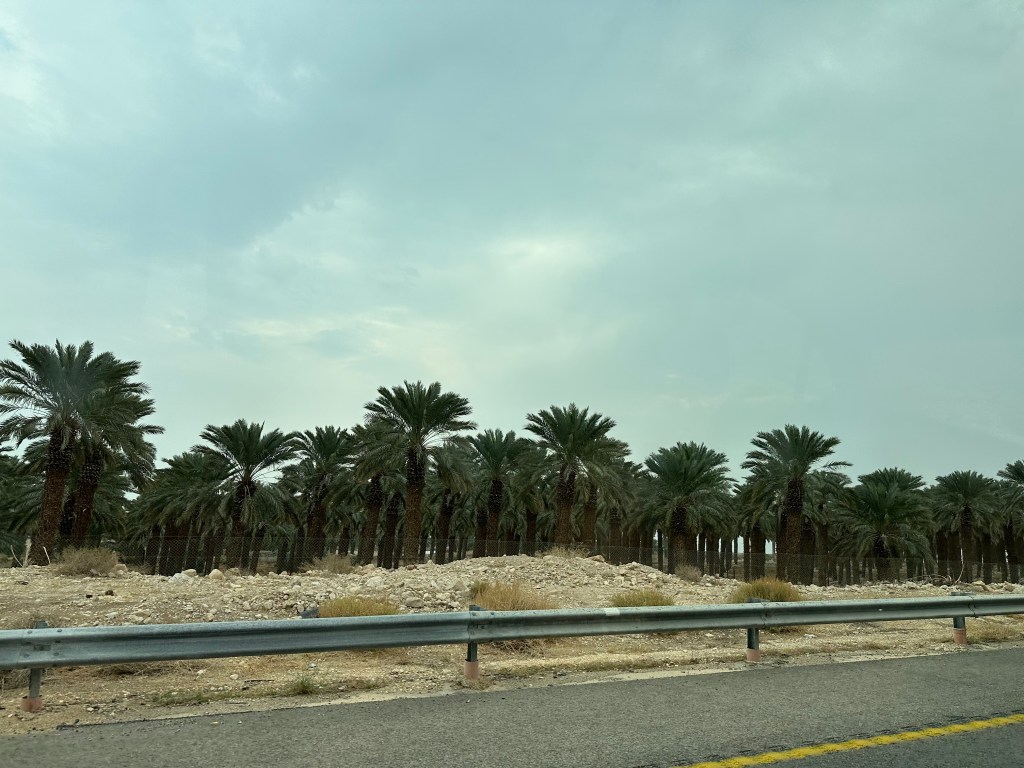
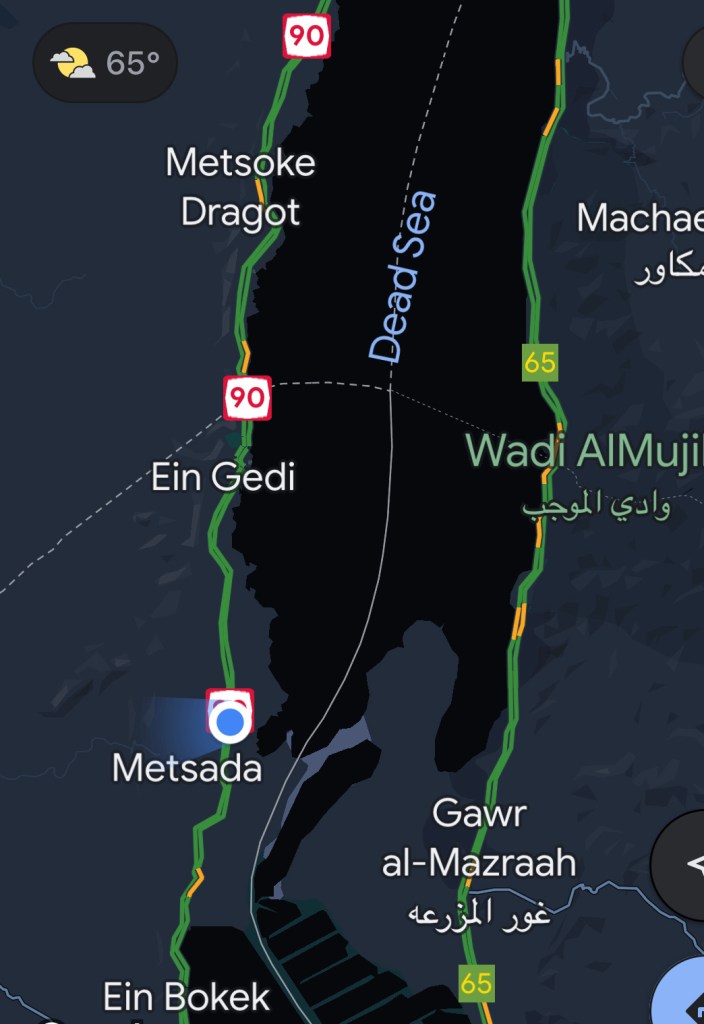
Aside: we pass a sign for Wad Mujib, which is right across the Dead Sea in Jordan. That’s where we went canyoning in June 2022. It was incredible! The Dirt Roads & High Rises post about that adventure is here: Canyoning In Wadi Mujib.
The late morning sun has warmed the day as we pull up to Masada National Park and quickly see that this going to be AAAmazing. I also make a humble confession: I’ve heard of Masada, but don’t know anything about it. What exactly is/was it?
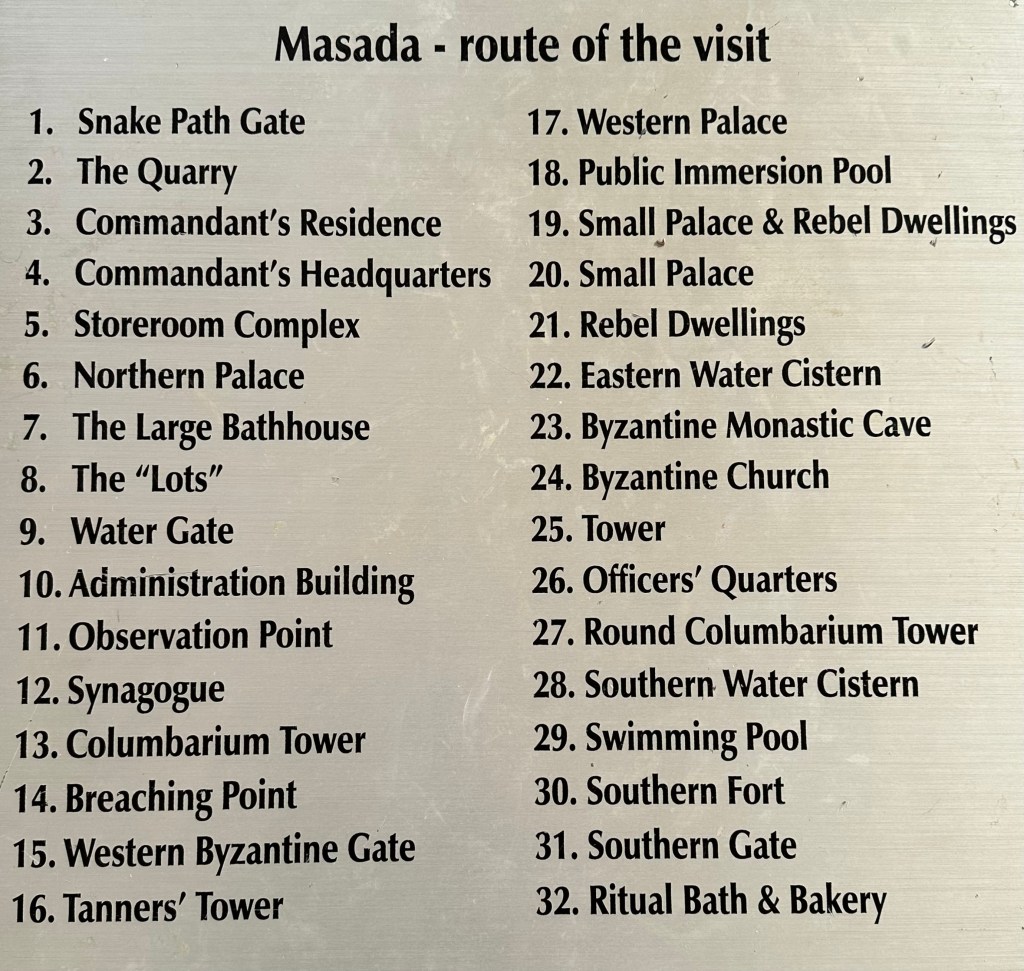
Although this soaring flat-topped plateau was initially fortified in the 1st century BCE, between 37 and 31 BCE King Herod built a large fortress and two palaces, and everything else that comes along for the ride…a vast complex including the palaces, bathhouses, smaller dwellings, a synagogue, officers quarters, store rooms, cisterns and even a columbarium for the pigeons.
In other words, it’s basically where he would come for a little R&R during the winters (it’s unbearably hot in the summer) with his entourage of over 1,000 people to, ya know, hang out and eat and drink too much and just, well, be a king. It also served as a backup plan for him in the event of a revolt (he was the King of Judea, appointed by Rome).
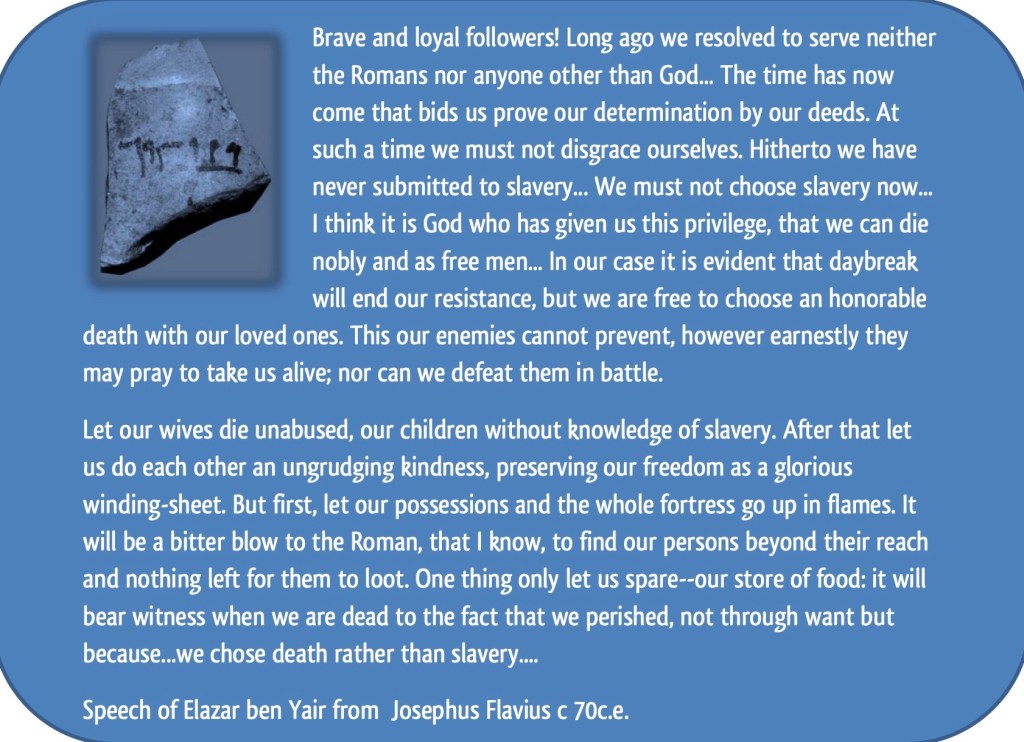
Many years pass (including Herod in 4 BCE), and shortly after the destruction of the Second Temple in Jerusalem (70 AD), Jewish rebels stormed the palace and took control of it. They miraculously held off the Romans for three years, and when it became clear the Romans would finally re-take Masada, the Jewish rebels killed their own families and then themselves. It was a mass suicide of nearly 1,000 people. Artifacts attest to who it was – their names were discovered on shards of pottery – the last holdouts who chose death over slavery. Take a moment to read the whole speech.
We pile out of the van and take a moment to look around. Above us is a towering mesa, wheat-colored stones leading to vertical cliffs walls, and below us the dead sea treats us to the pungent smell of sulfur and salt. Honestly, the place does not scream “let’s build a palace here!” but Herod did because…he could?
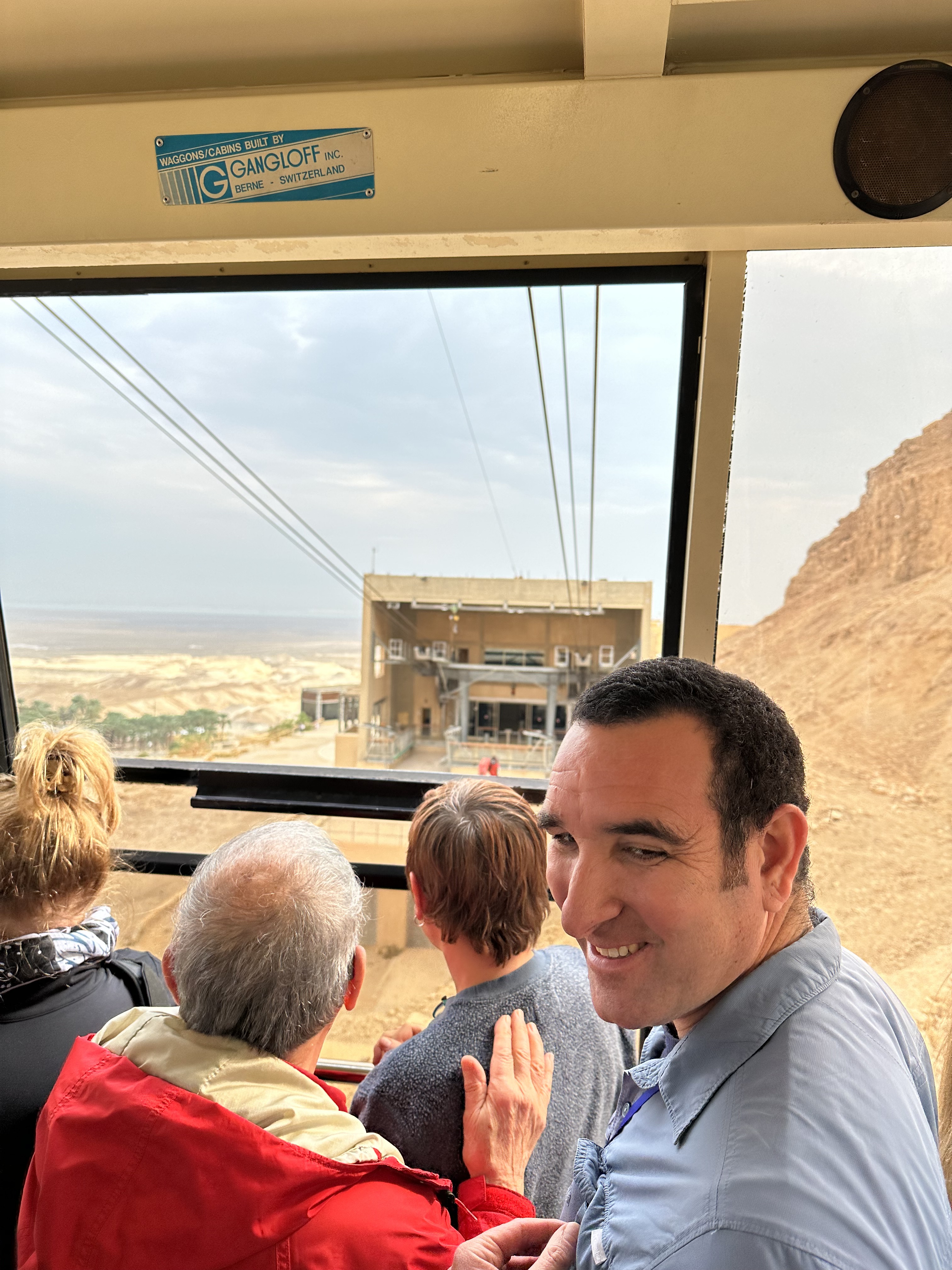
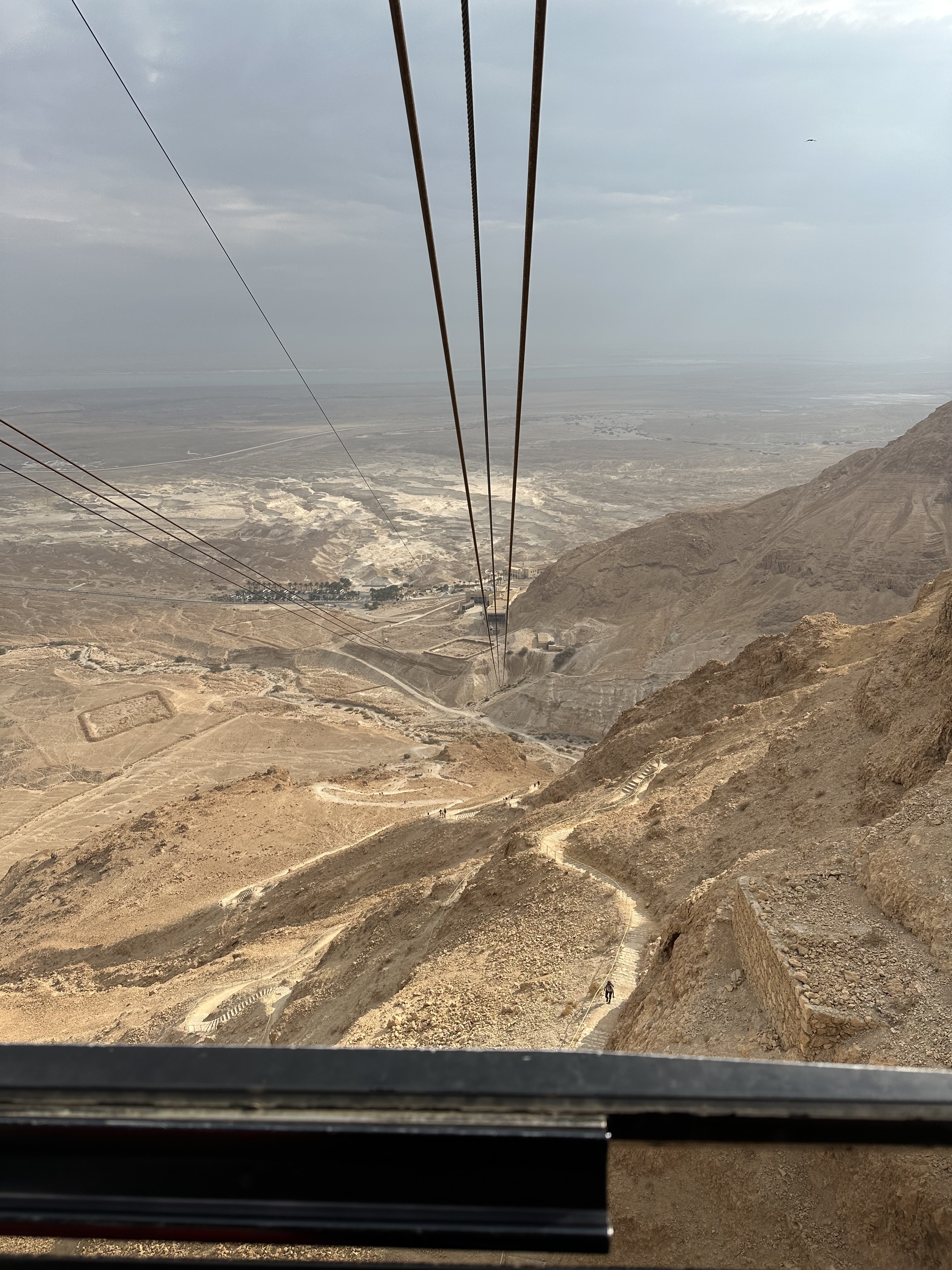
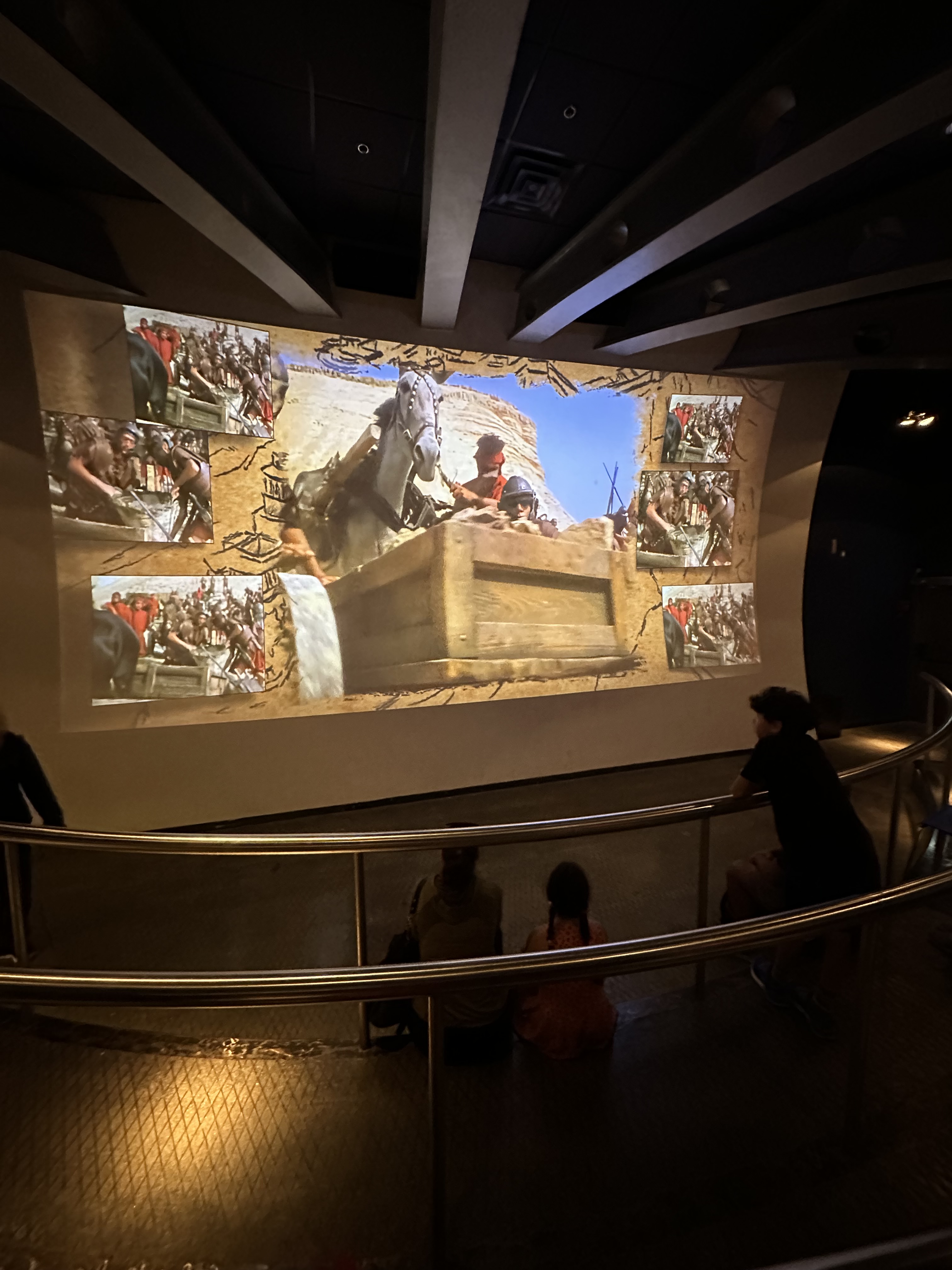

The adventure begins with a low-budget but entertaining movie about Masada’s history, the room only partially filled with tourists. The lack of crowds is great as we board the gondola quickly. Some of us remark that walking up would be very cool to do (arduous, yes), as would visiting at sunrise. Another time…
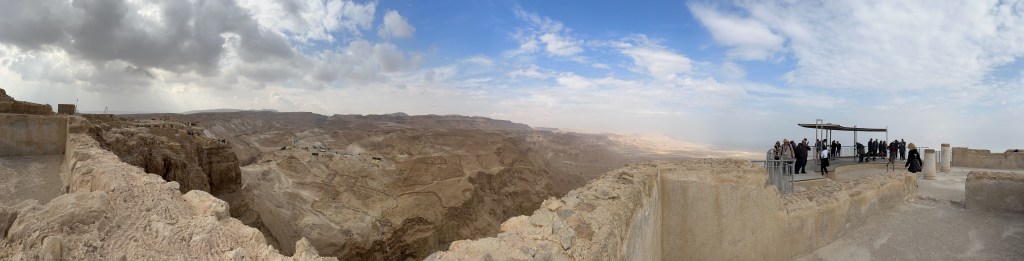
Exiting the gondola, the plateau stretches out in every direction, inviting us to look here, there, over there, over here and all around…the 360 views are just spectacular, and you begin to understand (maybe) why this was built here.
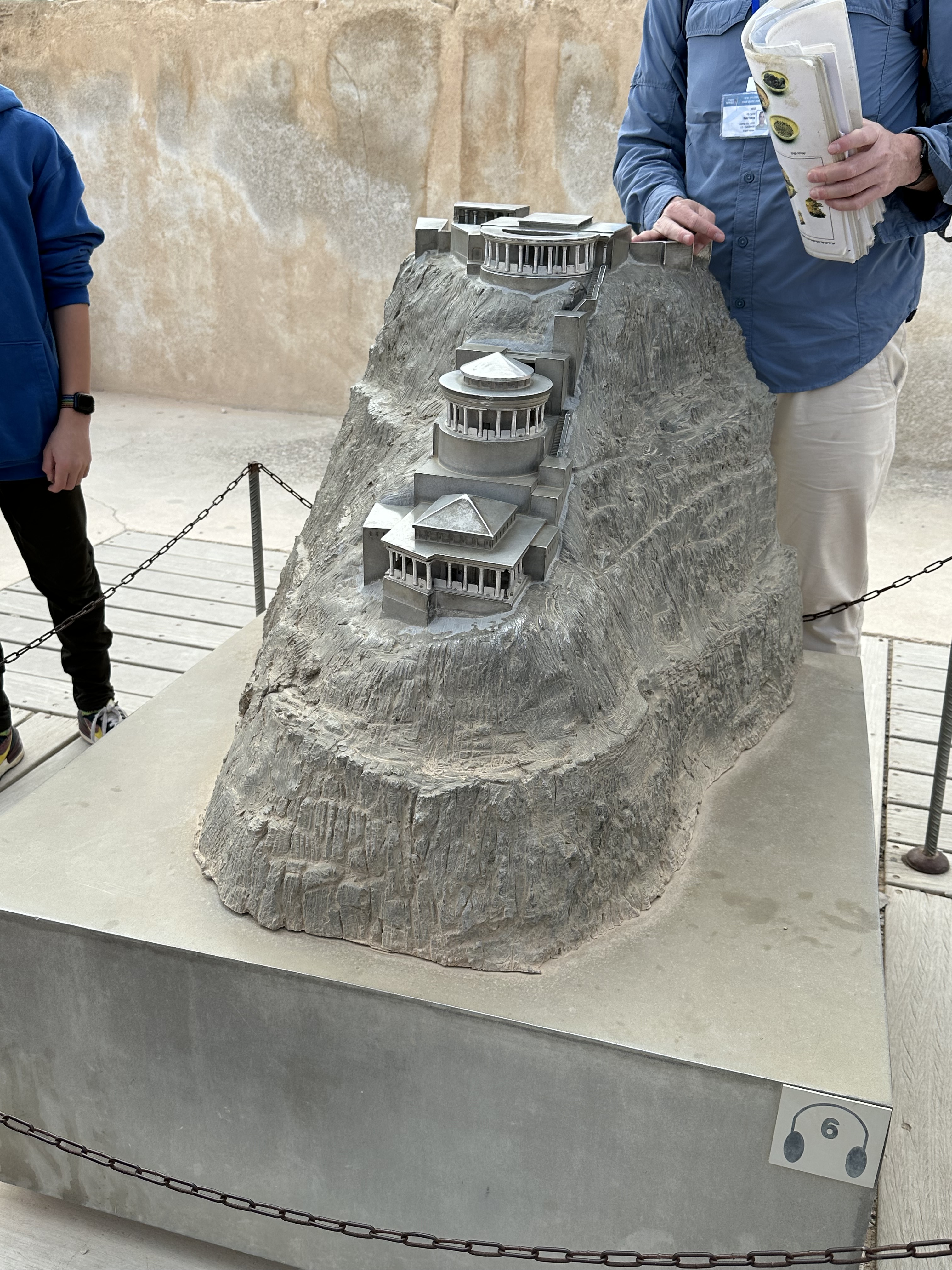
We venture to a scale model of the entire complex (there are several under separate shades for the guides) where Hilik begins the tale of Masada. But suddenly…the Romans are coming!
The ancient walls, partially restored, lead us through a maze of time gone by, painting a picture of what it was like here a couple thousand years ago. The bits of frescoed walls and mosaic-tiled floors that remain whisper of the past. And Hilik’s detailed descriptions bring the ruins to life as we wander about the palace, the baths, synagogue, reception halls, banquet rooms, and even the water system (it captured flash floods with an ingenious aqueduct system and stored it in giant cisterns).

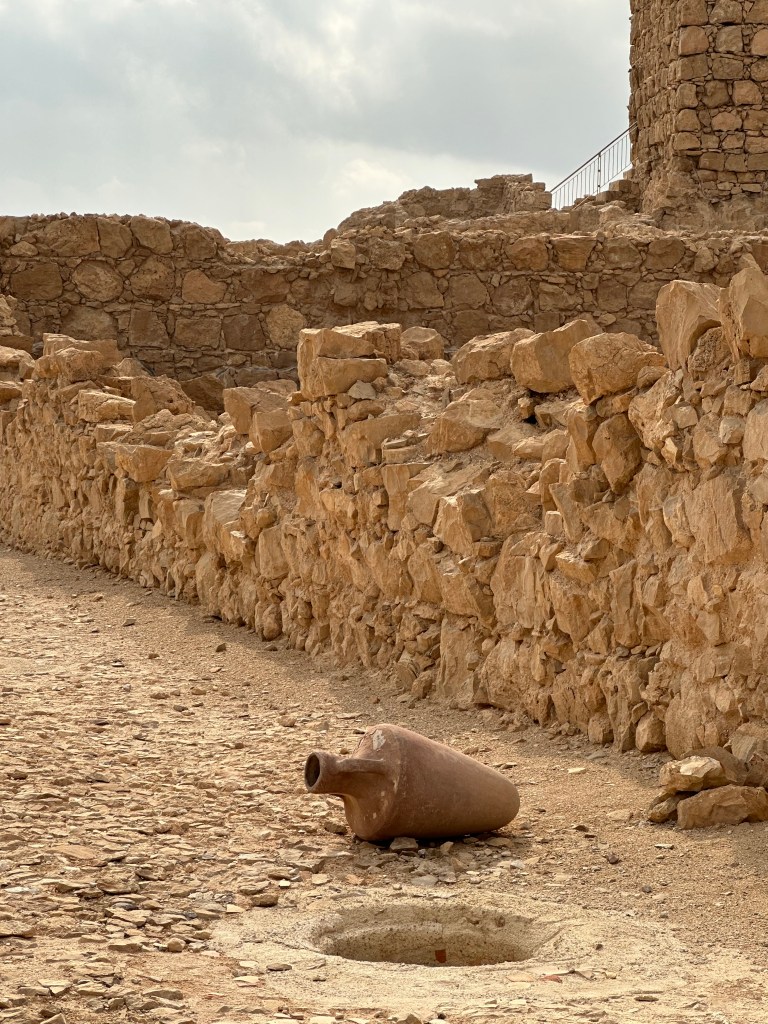

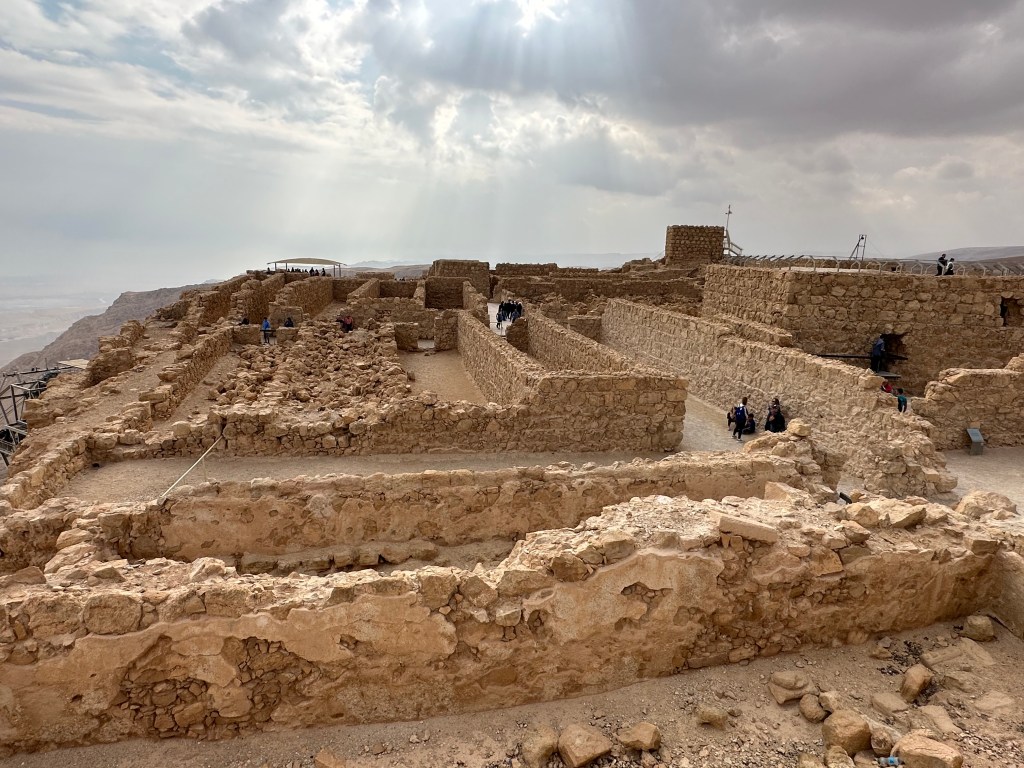
The Northern Palace, perched at the tip of the plateau, had three levels stepping down the hillside attached by exterior staircases. It is architecturally stunning and just massive (there’s a model in the pics above). Looking out over the Dead Sea, the Moab Mountains, and the oasis of Ein Gedi in the distance, words escape us as we stand at its edge…but we now understand “why here.”
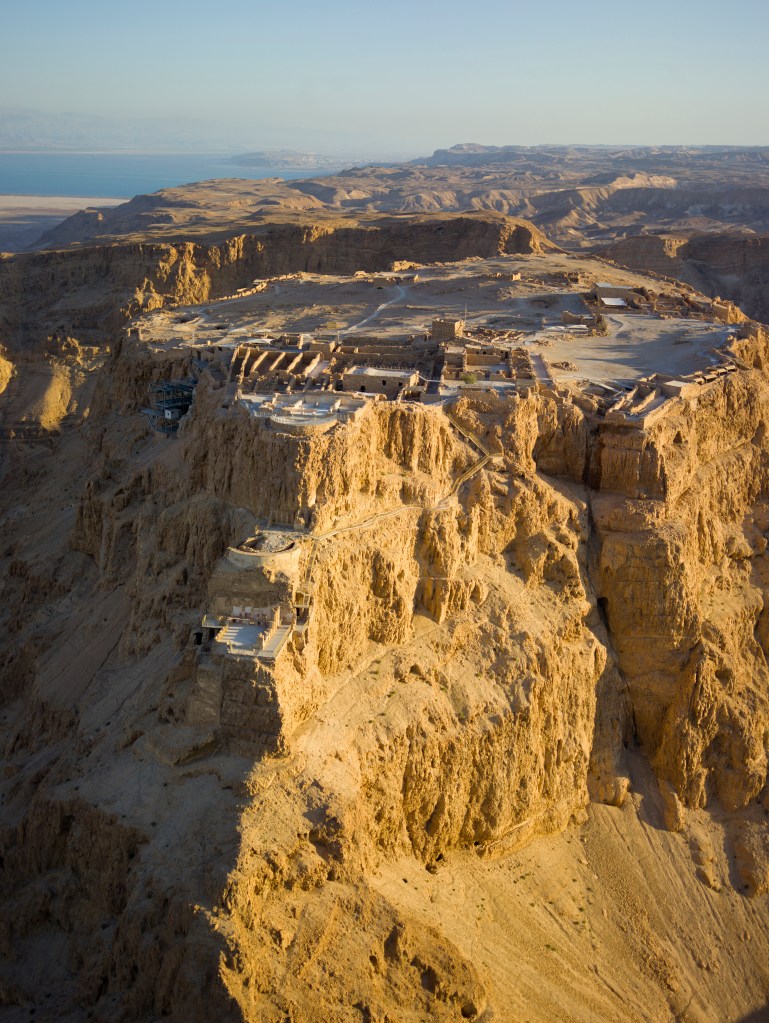

As we complete our circular traverse of this unbelievable place, Soli emerges victorious “Masada will not fall again!”…
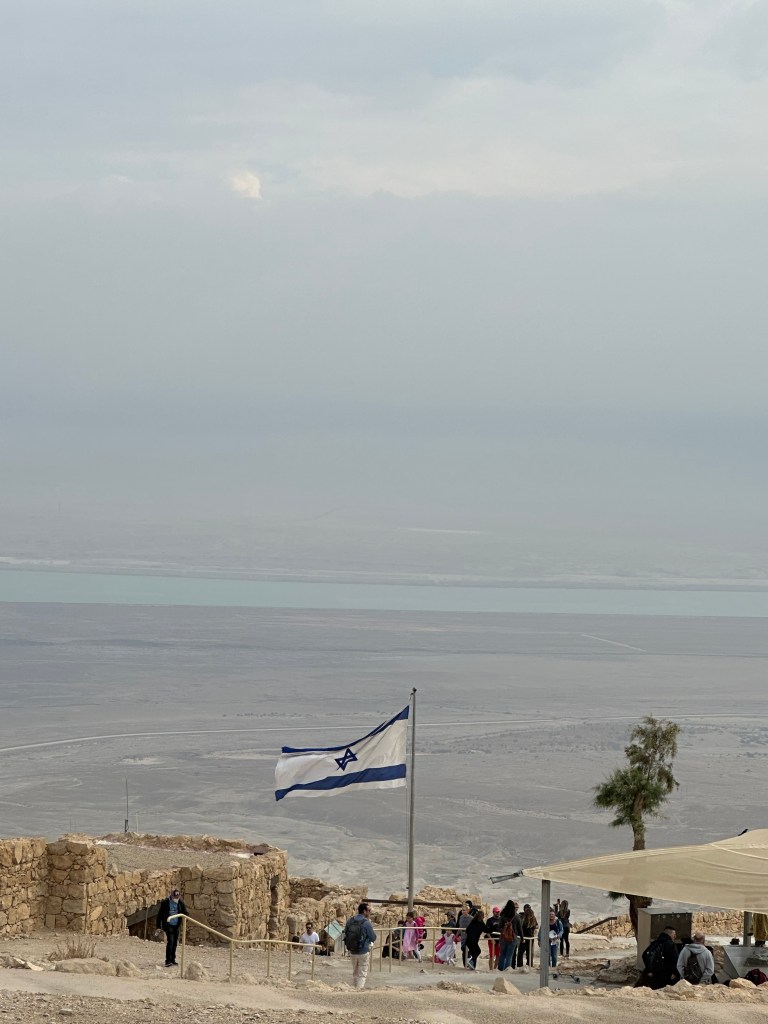
…and the Dead Sea comes back into view.
Let’s go! Hilik has made lunch – and beach – reservations for us at a hotel/spa just across the road from this calm, cloudy, and salty expanse, and we are chattering with excitement as we get closer. We plow through our meal, change into swimsuits and robes, and head for the water.
The smell of salt and minerals fills our noses with each step as we approach, and can then see that the pebbles in the water are actually little balls of salt. It’s just…crazy. The water is 10 times saltier than the ocean (and getting saltier all the time as the water levels fall quickly – about three feet/year).
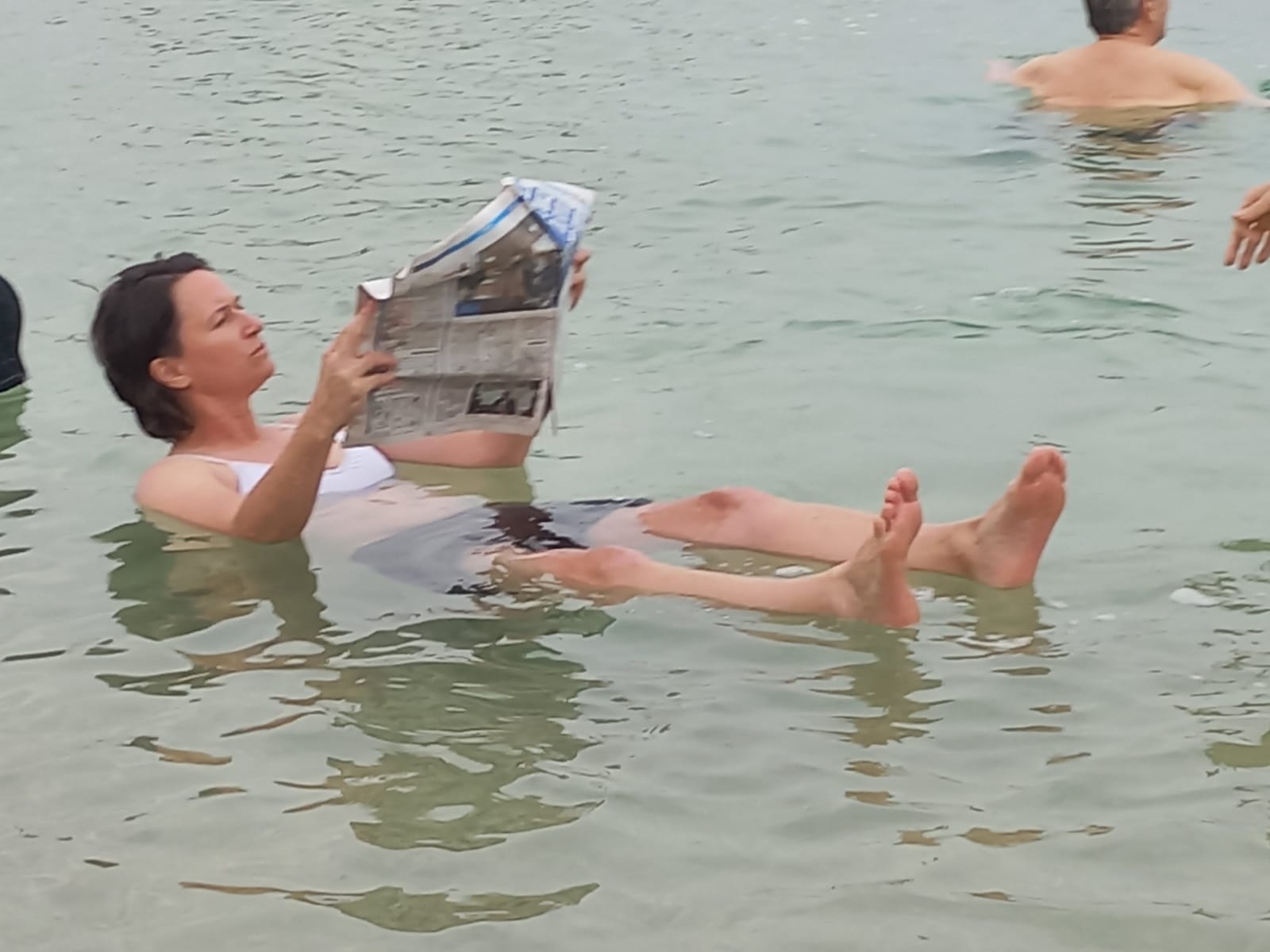
The air is cool and the water colder, but it’s bearable as we hesitantly make our way in and…FLOAT. You can’t help but float. In fact, if you try not to, you just can’t. Treading water is impossible – your legs get pushed up in front or behind you by some invisible force below. You can completely relax your body, floating without effort, and read a newspaper (just don’t get any water in your eyes!). Even the slightest scrape (did you shave this morning? hope not) burns like fire, the slimy water pointing out places you didn’t even know there was a tiny scratch.
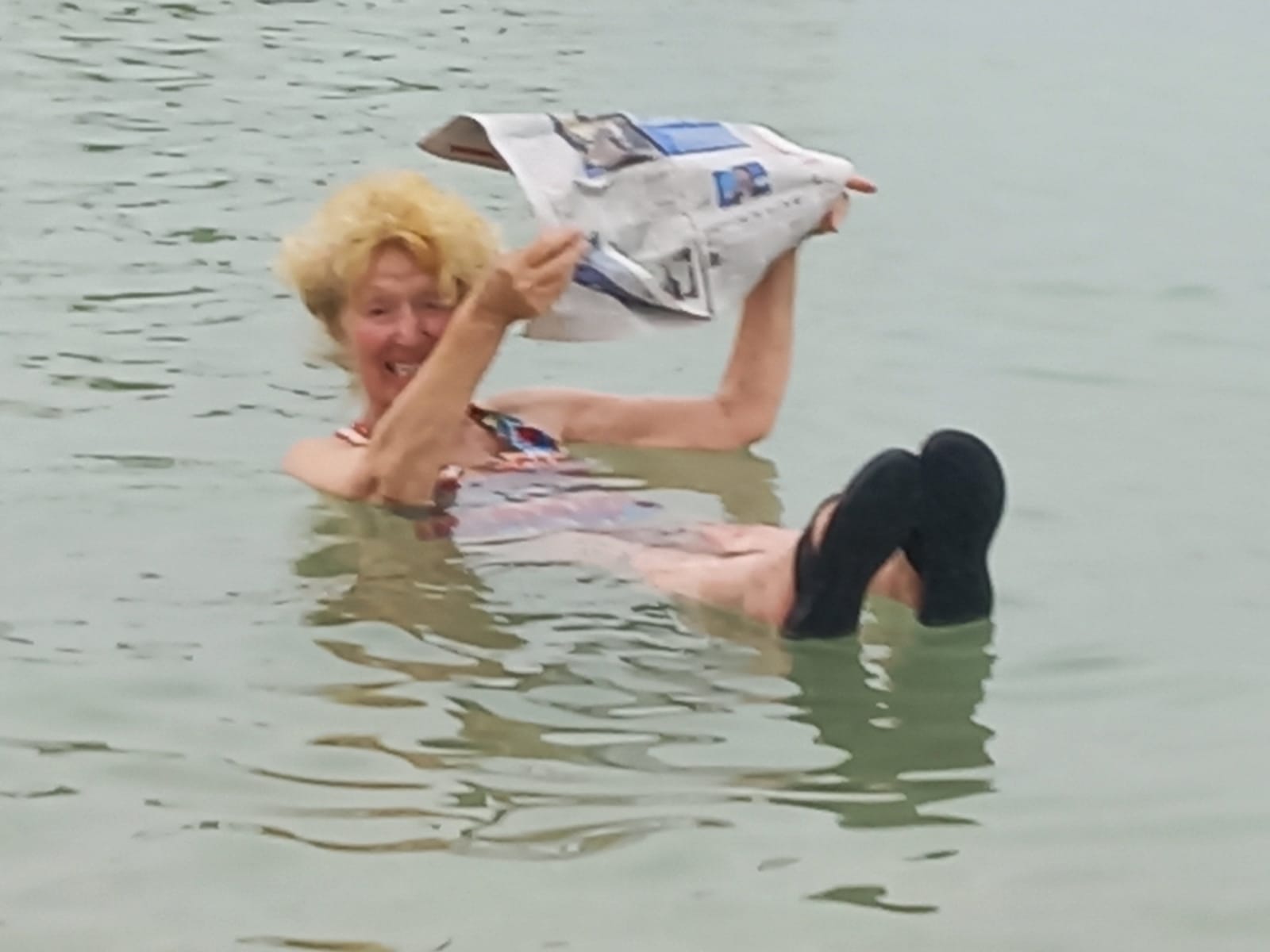

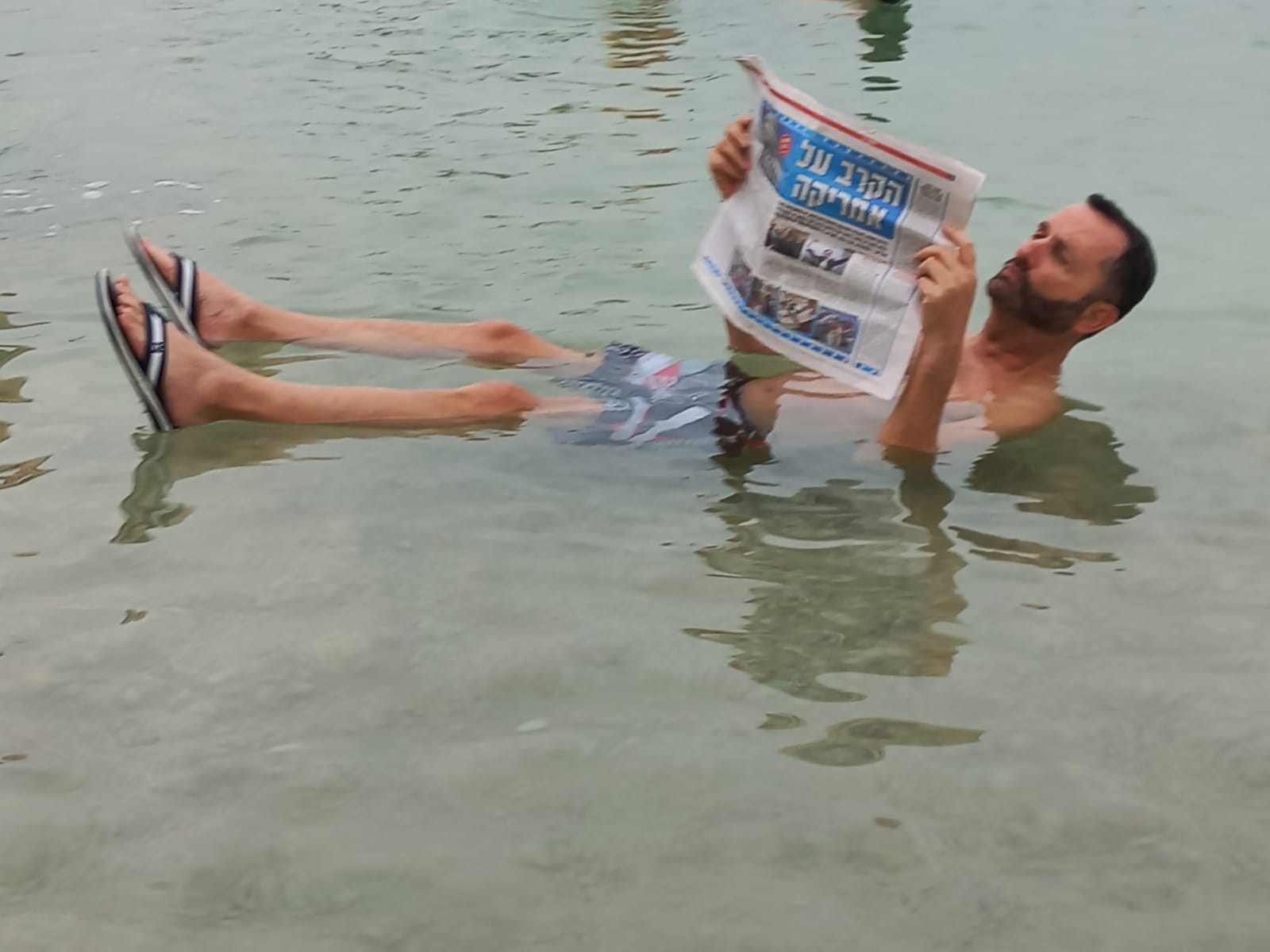
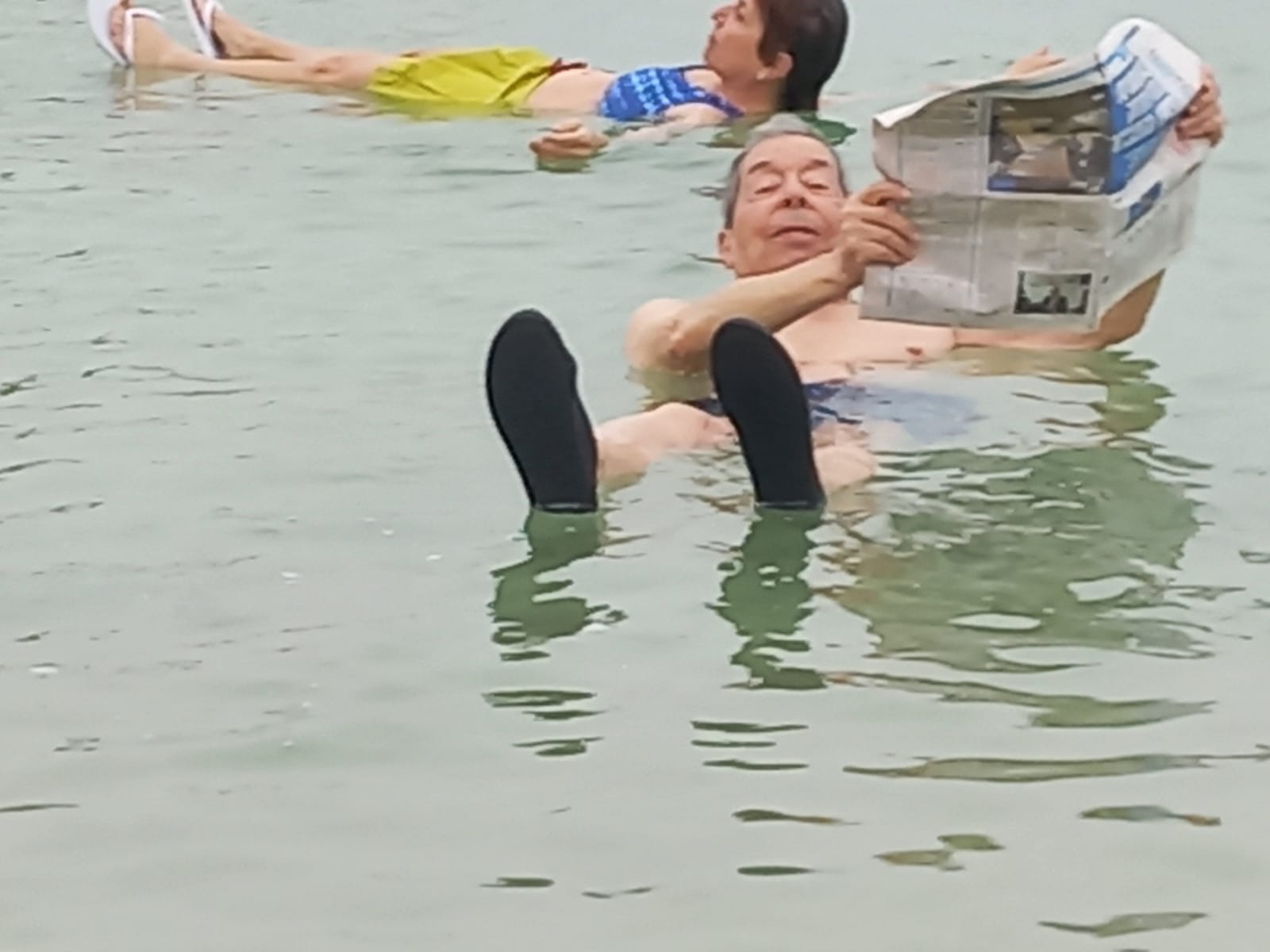
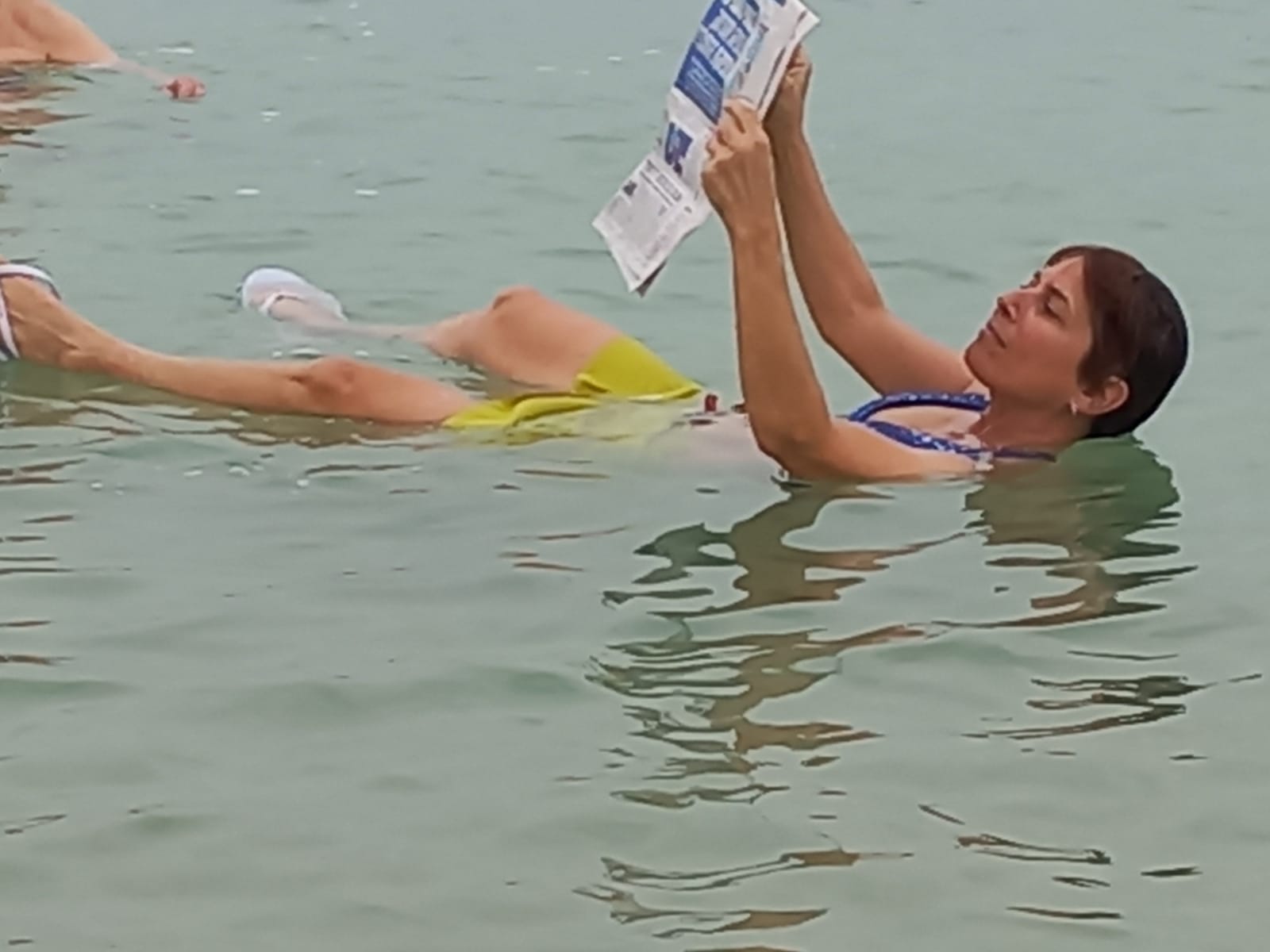
Rinse off all that super salty water, and it’s time for mud! We each start out on our own but as we want complete coverage, help is needed and we are soon slathering this thick, grey slippery goo all over each other. We’re laughing and joking as we enrich our skin with all these nutrients…while Soli looks on at his crazy adults.
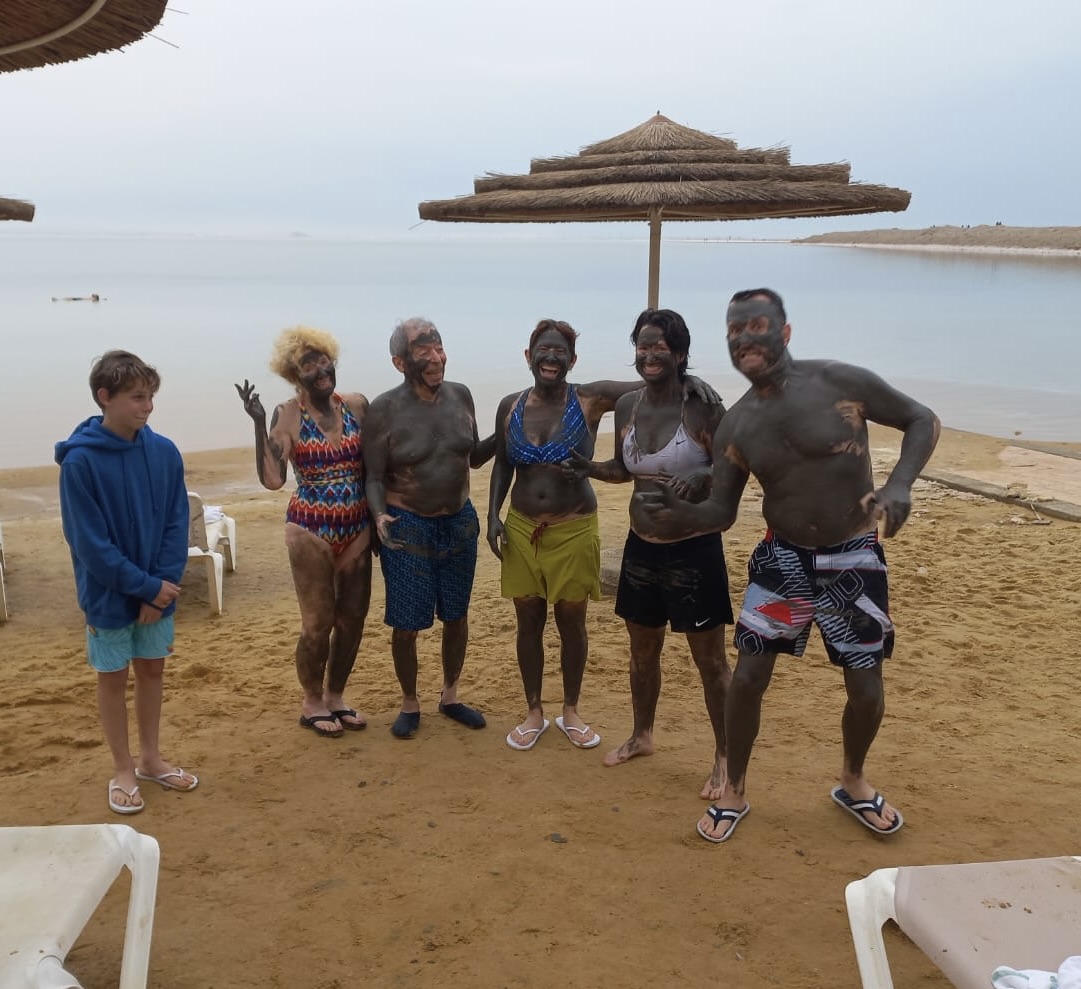

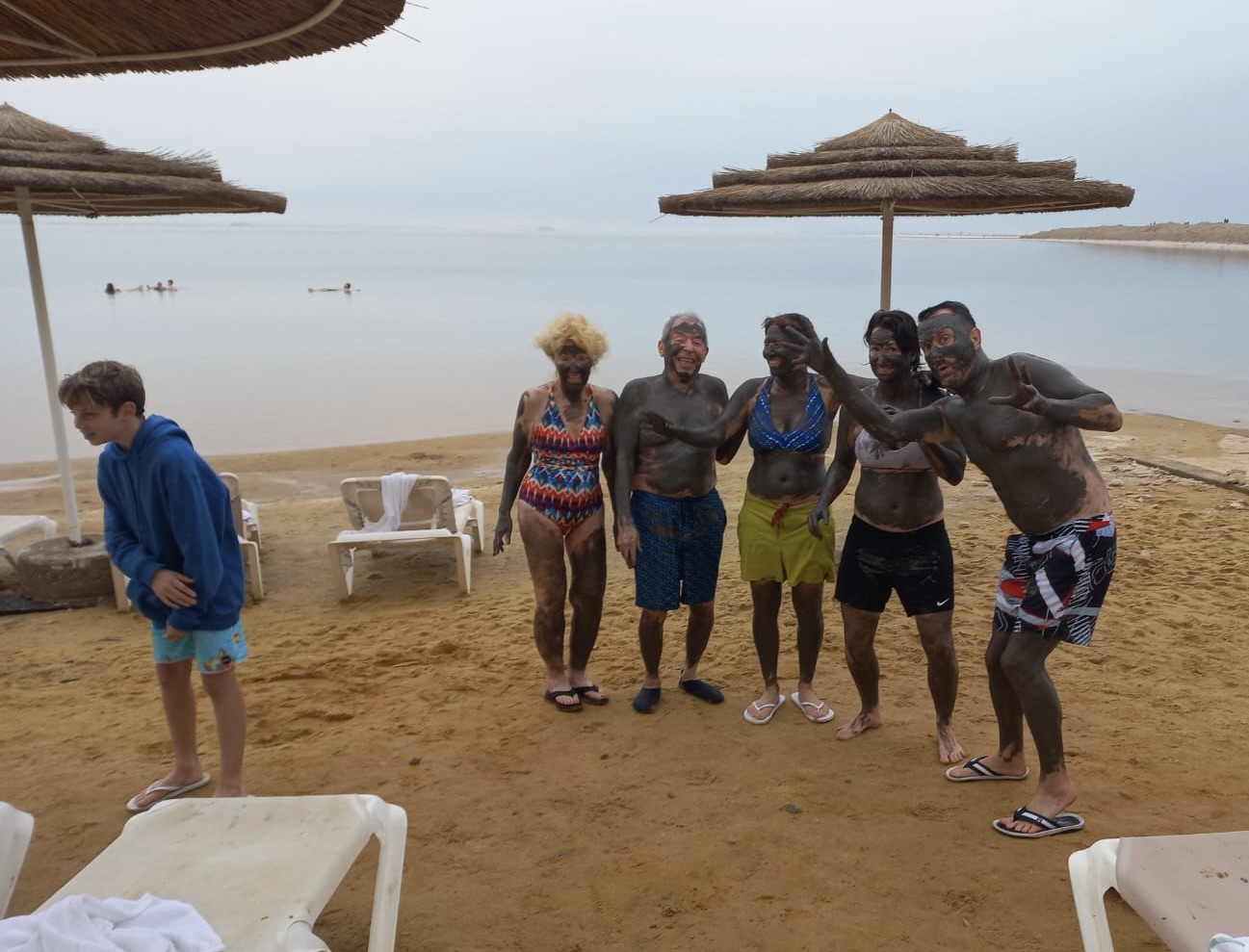
The mud is left to dry a bit, and we shower it off at the beach, another activity that requires mutual aid. Our whole bodies – backs, arms, legs, faces – that were for a moment a steely gray with the sea’s healing dredge – are now clean like never before and “soft as a baby tushy.” As we dry off, there’s a calmness of mind and body provided by the water, the air, the wet earth. We head back to the spa for some chill time, relishing the amazing Dead Sea experience we just had. It is healing both physically and mentally in a way that is hard to describe. “Purifying” maybe?
Although words escape us today, surely the Romans at Masada felt this way too…so long ago.
 Dirt Roads and High Rises
2 responses to “Choosing Death Over Slavery”
This post brought back memories of our experiences long ago. We climbed Masada to see the sunrise 42 years ago…there was no gondola then and going up and down was treacherous even for us in our 30s. We hiked into the Ein Gedi falls after that. I don’t think I’ve ever done anything more strenuous since!
LikeLiked by 1 person
I love that you did that!
LikeLike