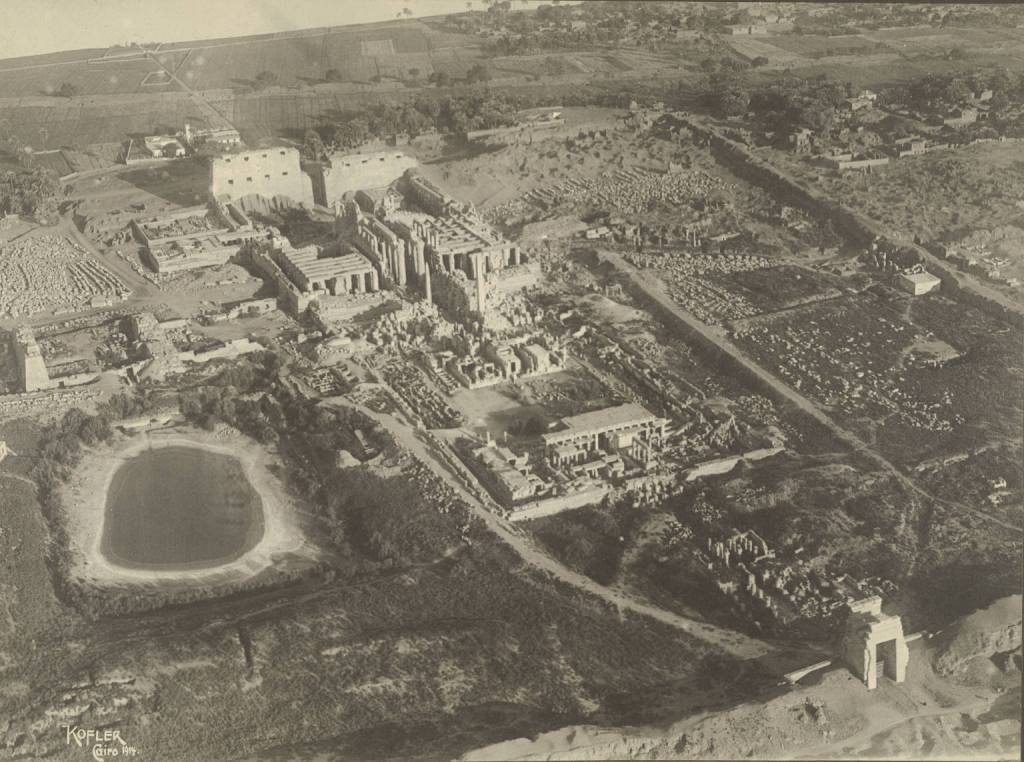
After our exciting high-seas encounter with the pirates, we docked back at Luxor for two temple visits. The Temple of Karnak was our first stop, and while you might think we’d be getting a bit of temple fatigue, we were all excited to venture out to this massive – gargantuan – temple complex. This is an old aerial photo to give you a sense of its scale.
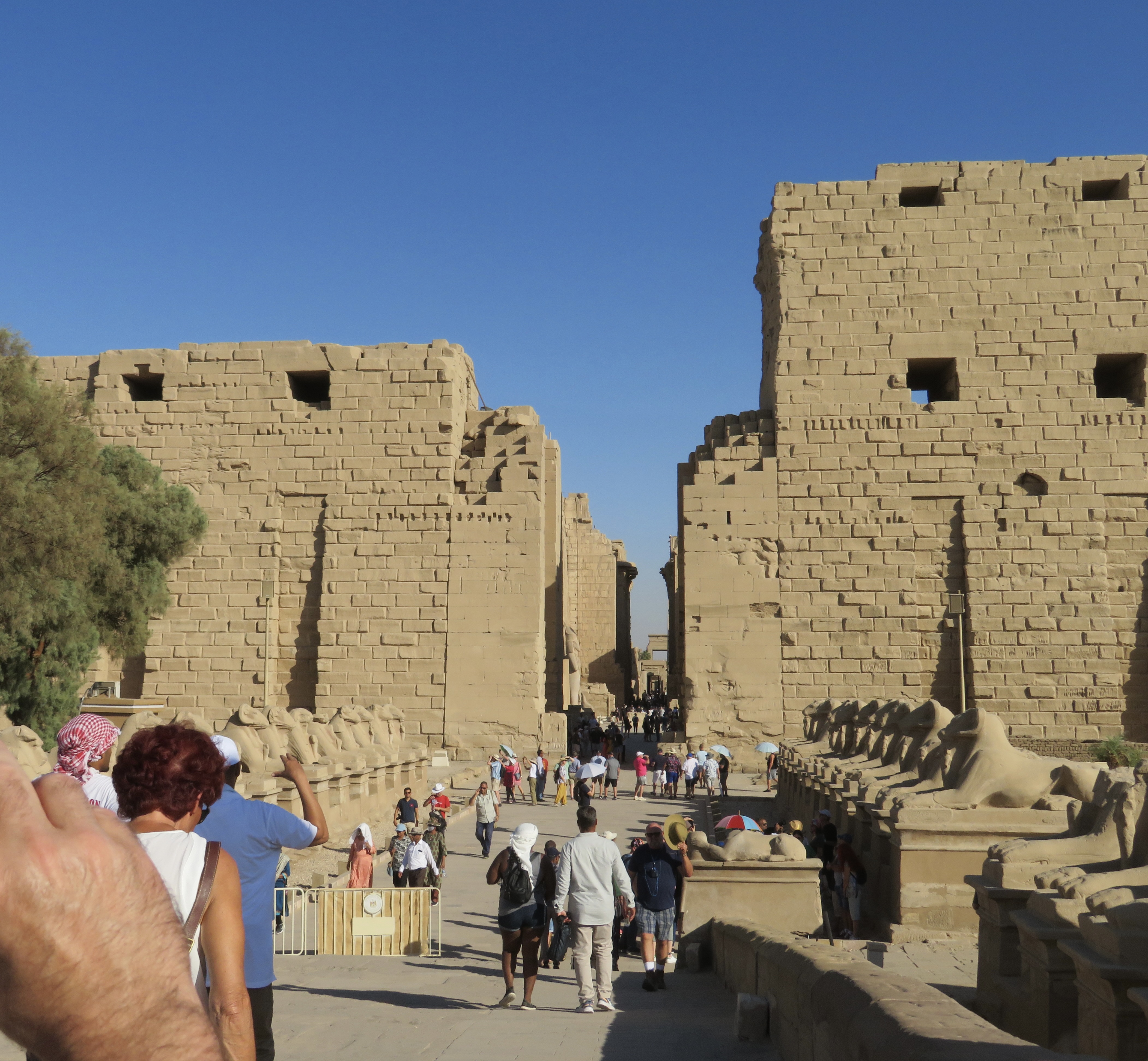
It was another hot and dry afternoon (have I mentioned it essentially never rains in Egypt?) as Ahmed led us to the entrance, and as with other sites, the soaring walls seem to both beckon you in and pressure you to stand back. Here, the first pylon is undecorated, although it was likely quite elaborate at some point. Nonetheless, the ram-headed sphinxes add drama as we pass through their stoic guard.

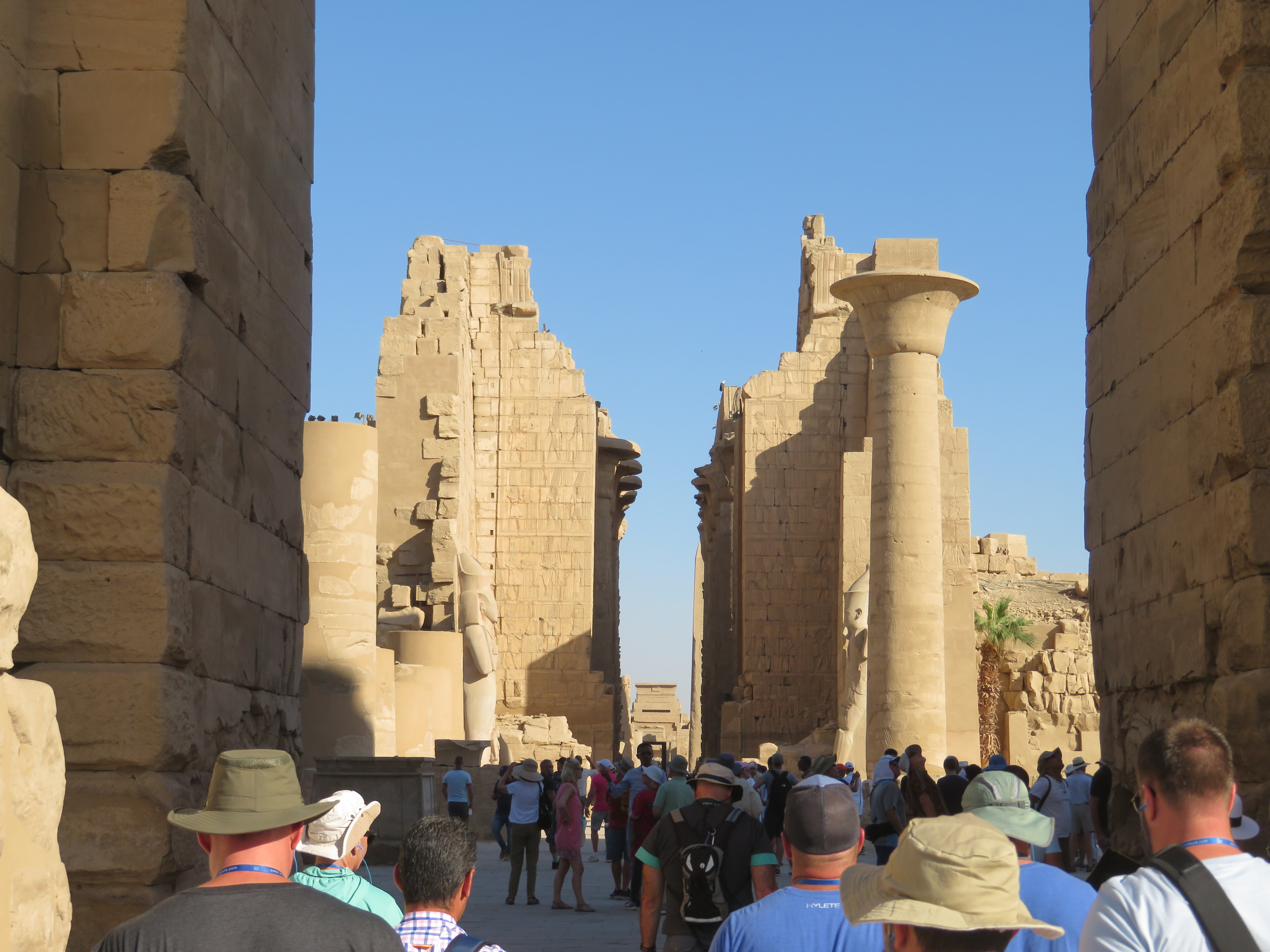
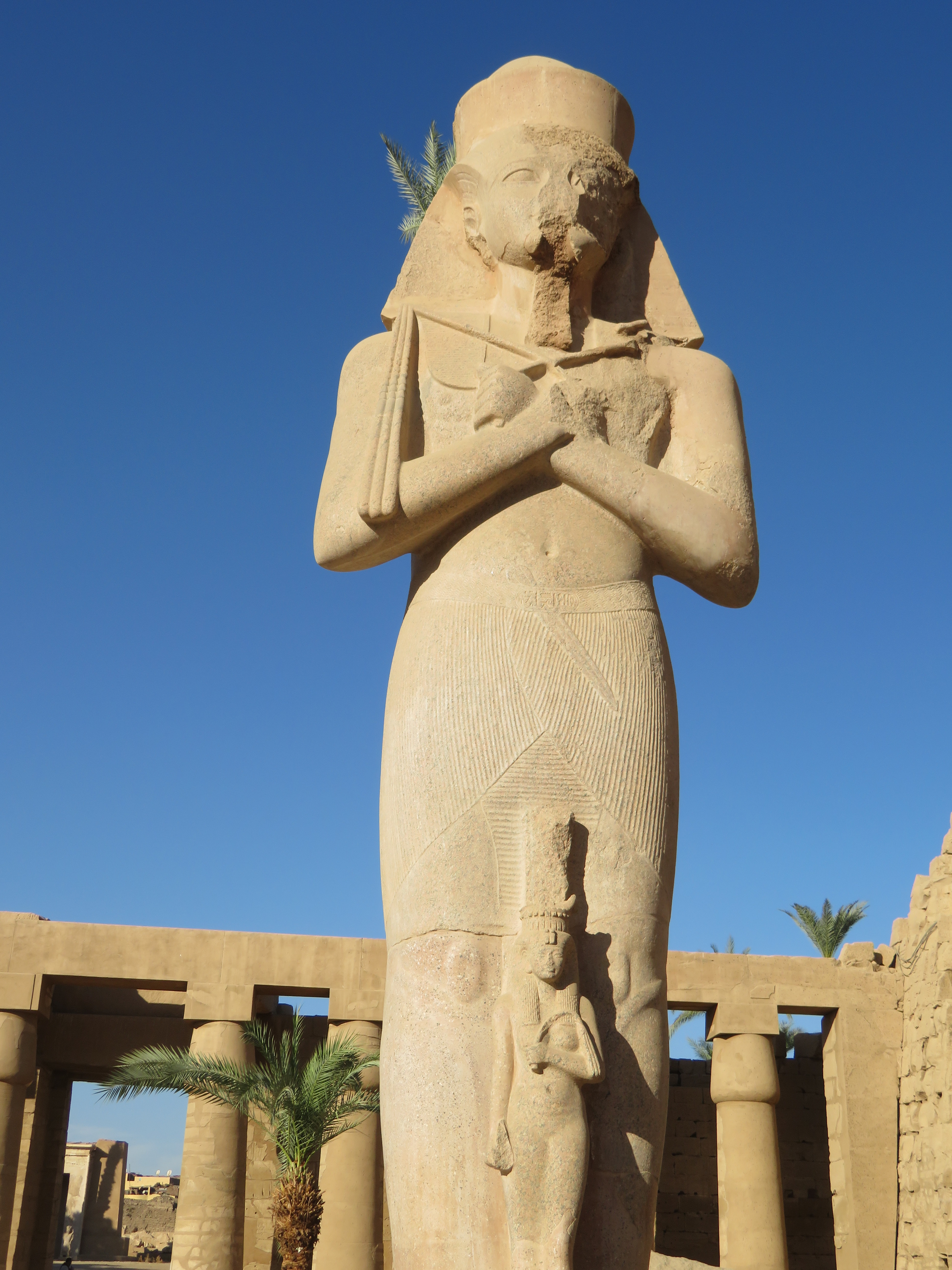
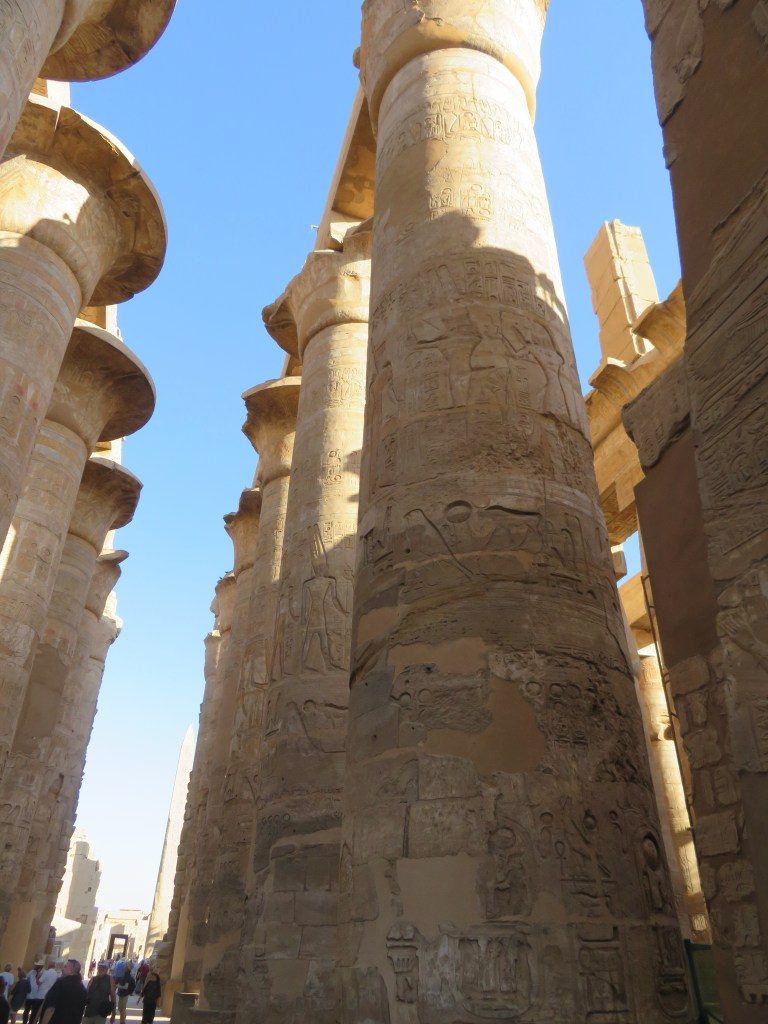
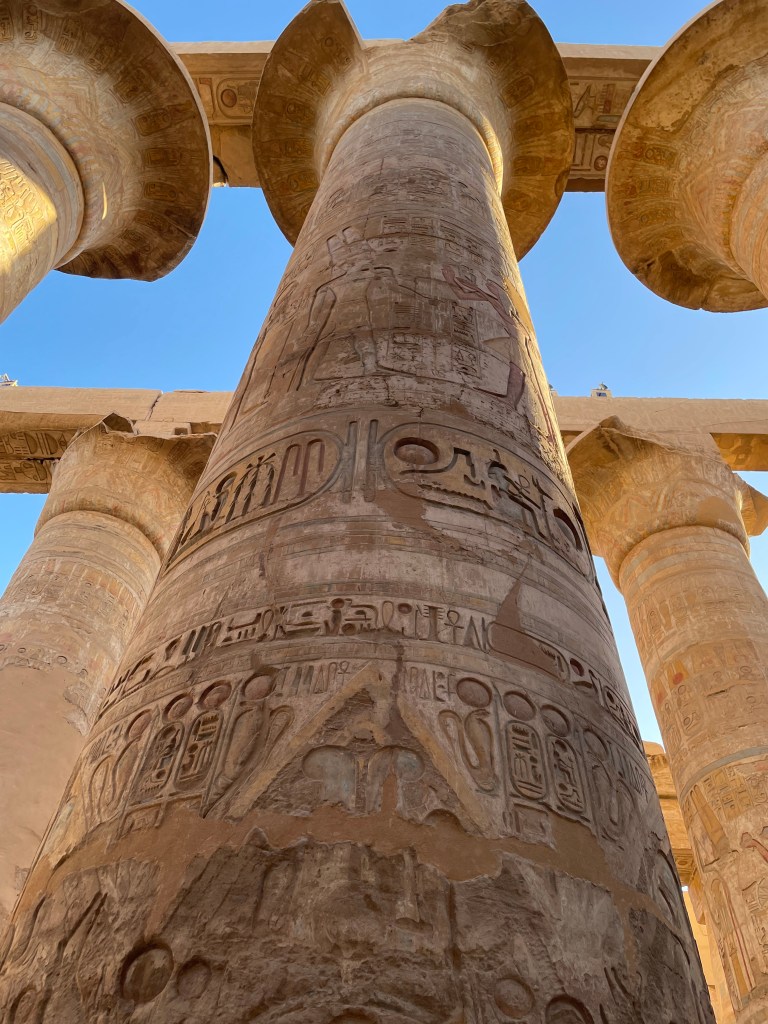
One of the most amazing things about Karnak is its longevity, a primary reason for its size. It was constructed, built upon, and used over the course of 1,600 years (“whhaaatttt?!”). The Hypostyle Hall is an architectural marvel, its roof blocks supported by 134 columns. It remains the largest room of any religious building in the world.
On a “how’d they do that?” note, the 70-ton stone beams [architraves] on top of these columns were raised either by a lever system, or more likely, mud and stone ramps were constructed, pullies used, and then all that later removed. The columns were also constructed this way.
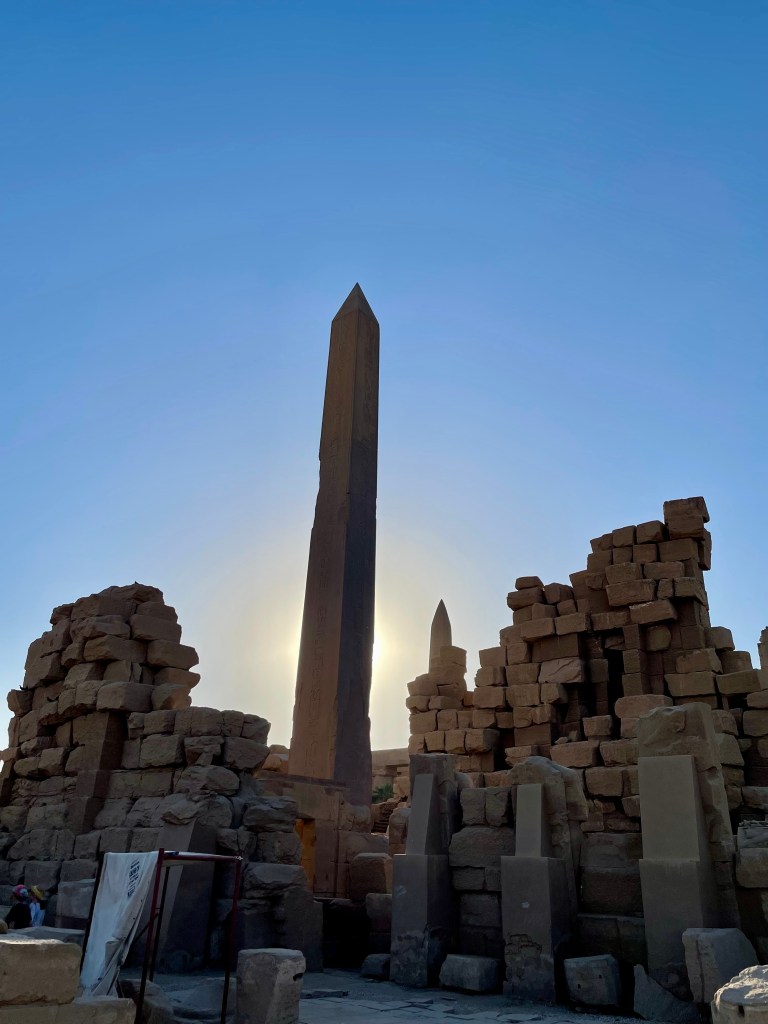
Another tidbit: the obelisk at the Piazza de San Giovanni in Rome is from Karnak. The Romans spent a lot of time in Egypt and took what they wanted…
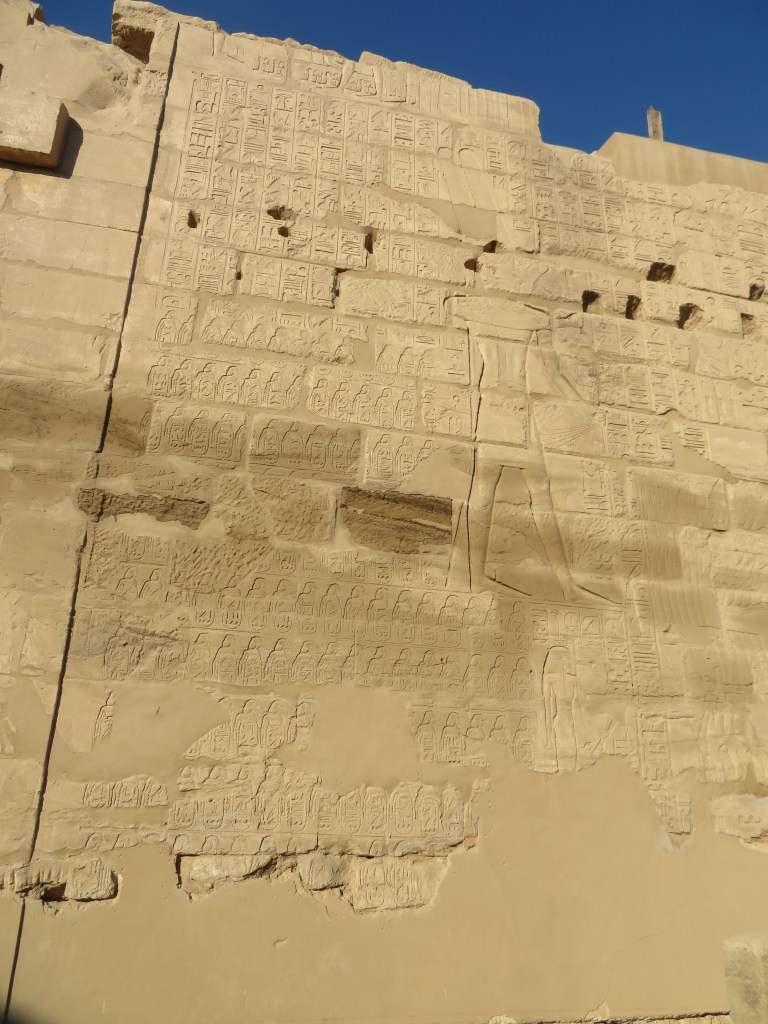
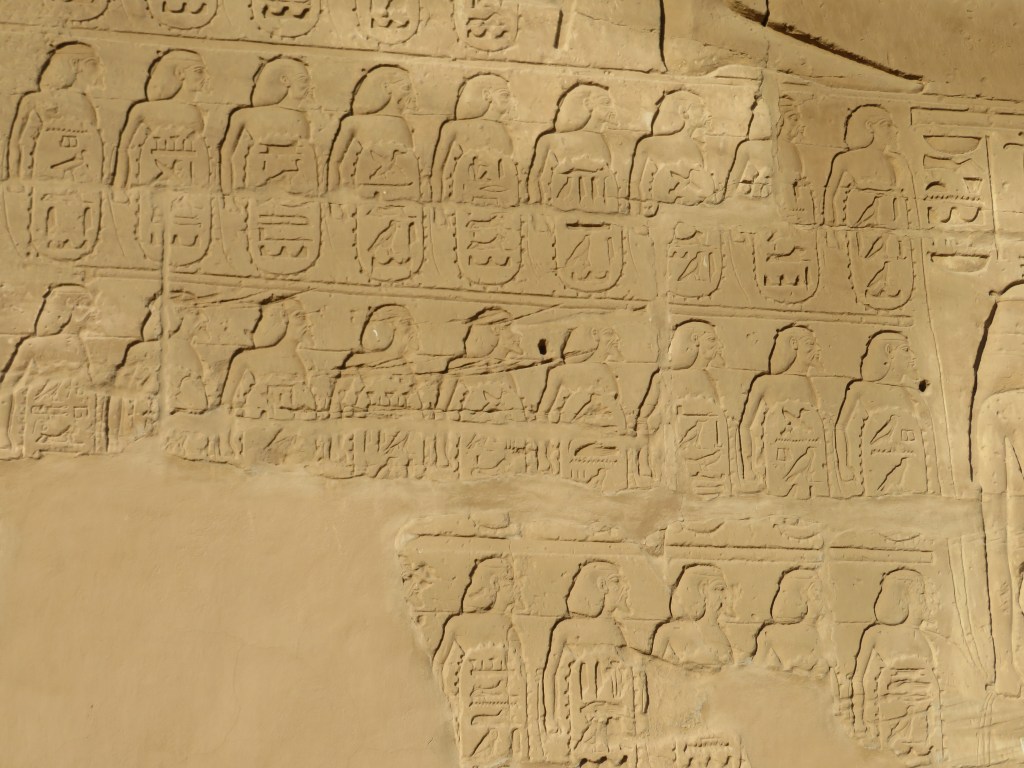
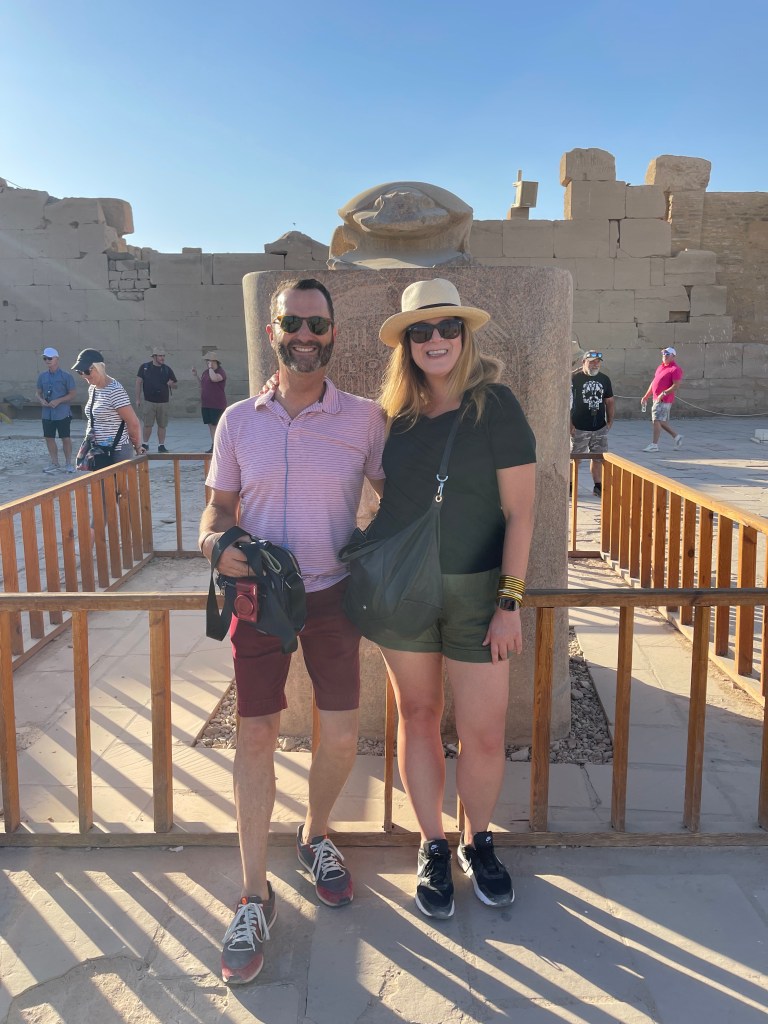
As Ahmed wrapped his entertaining stories and history lessons, we found ourselves at the giant scarab. It will bring good luck and grant you a wish if you walk around it seven times. Giustine and I figured “can’t hurt!” so we started around. Once…twice…and then Ahmed catches us going the wrong direction. “Counter-clockwise,” he says, smiling as if we should have known, so we begin again, starting a trend as other fellow travelers join in the ritual and soon a small crowd has formed. Six times around…then seven…and silently we make our wishes. Perhaps they will come true. We look to the beetle for the answer.
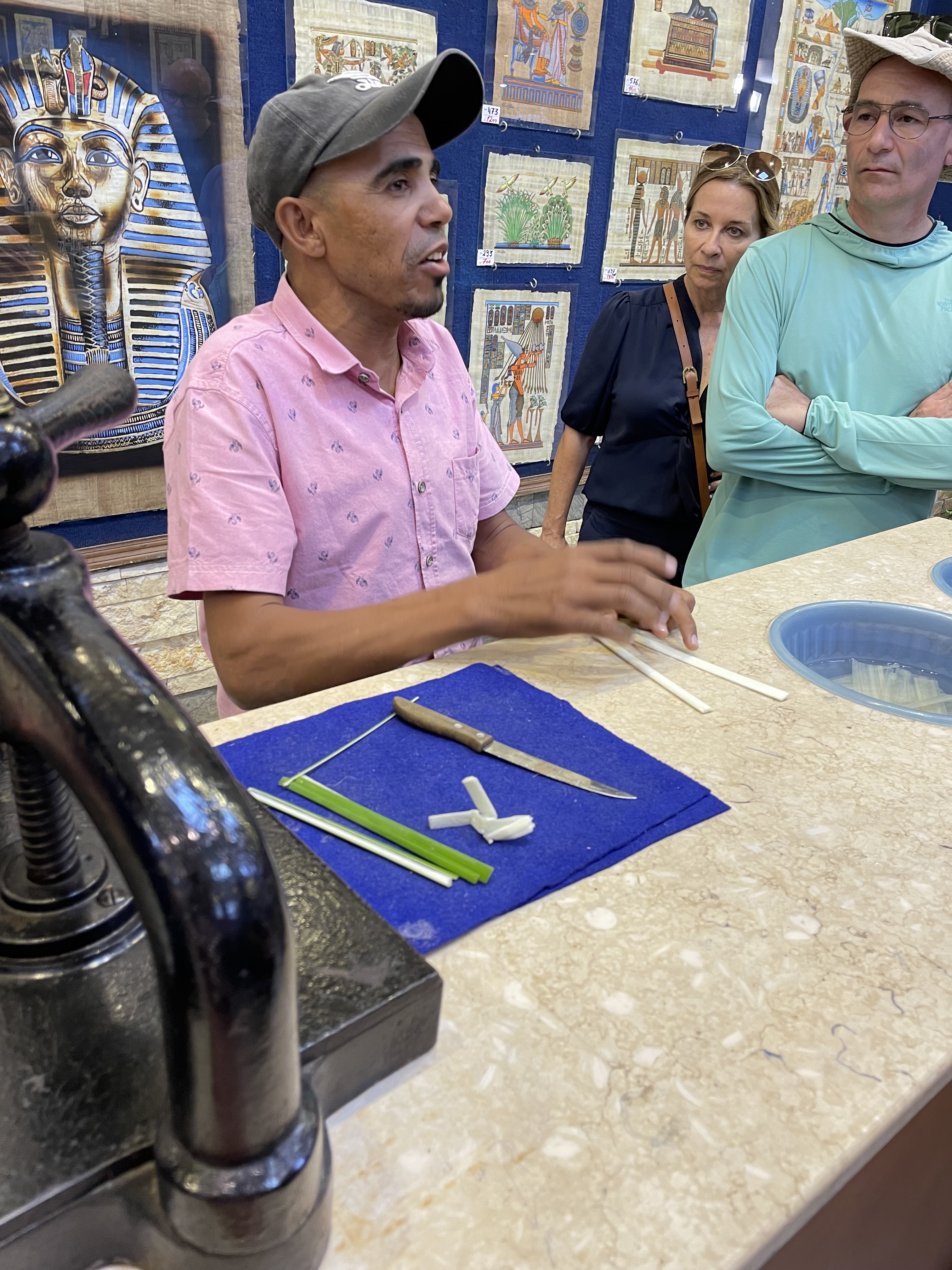
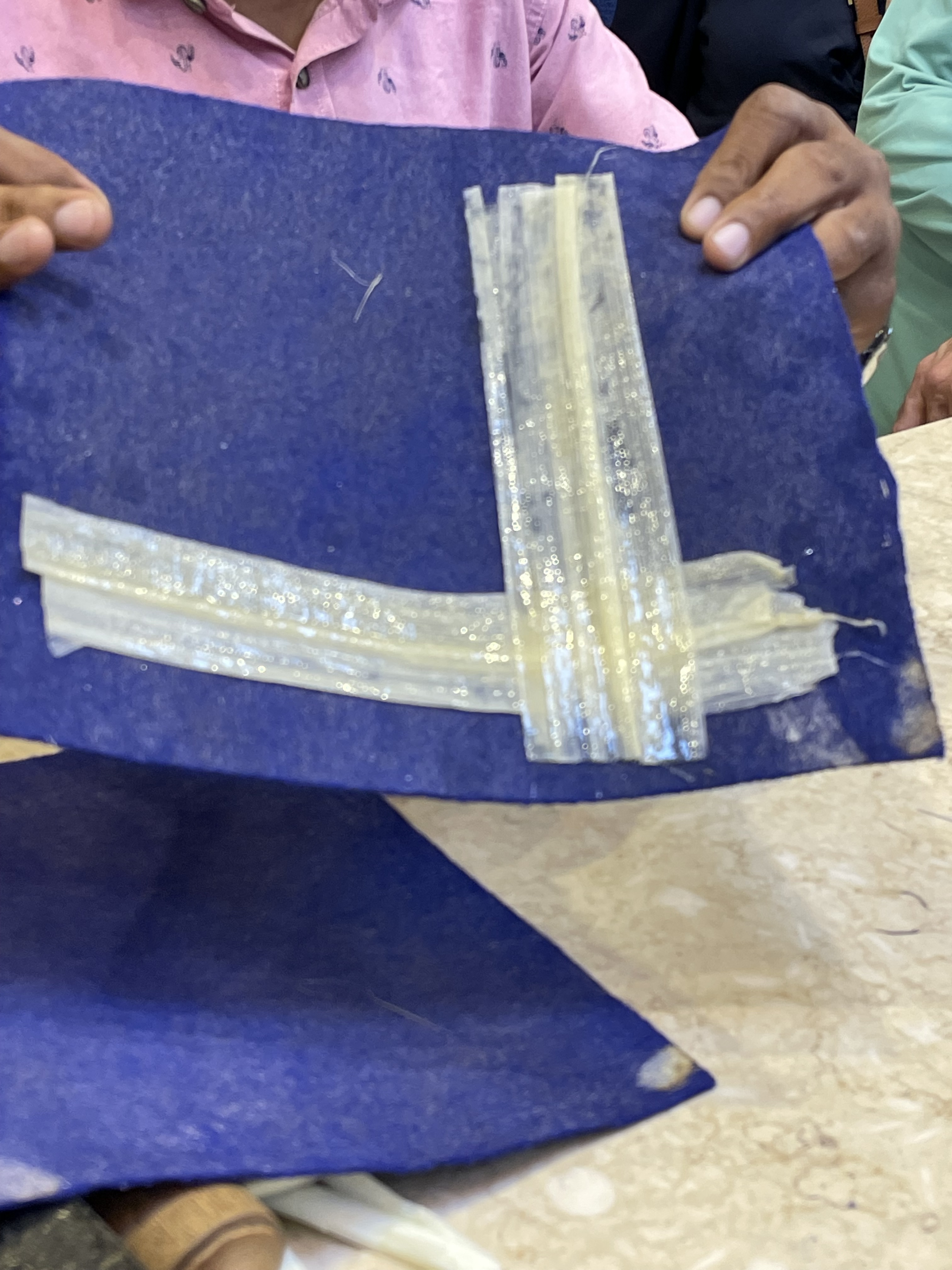
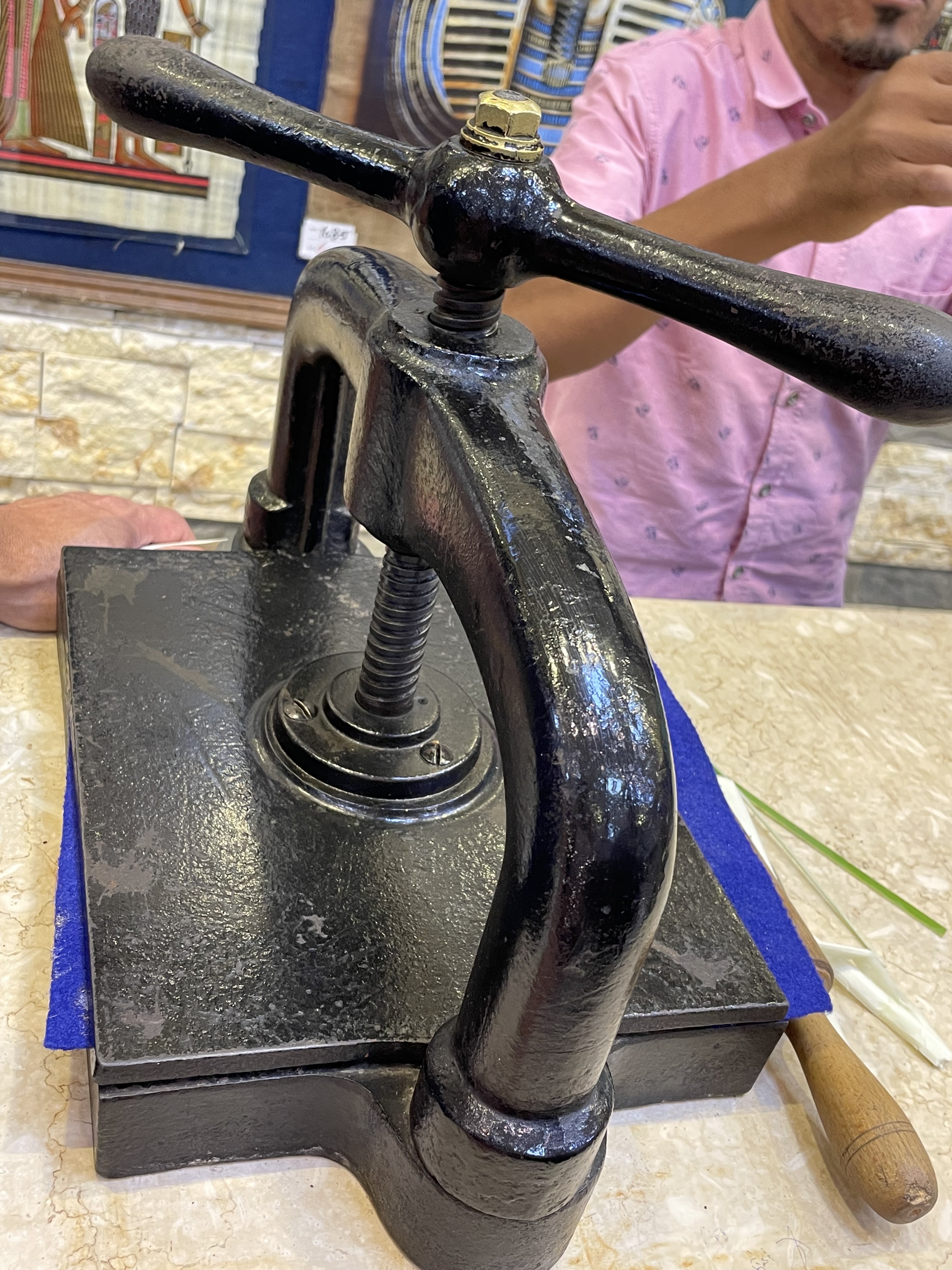
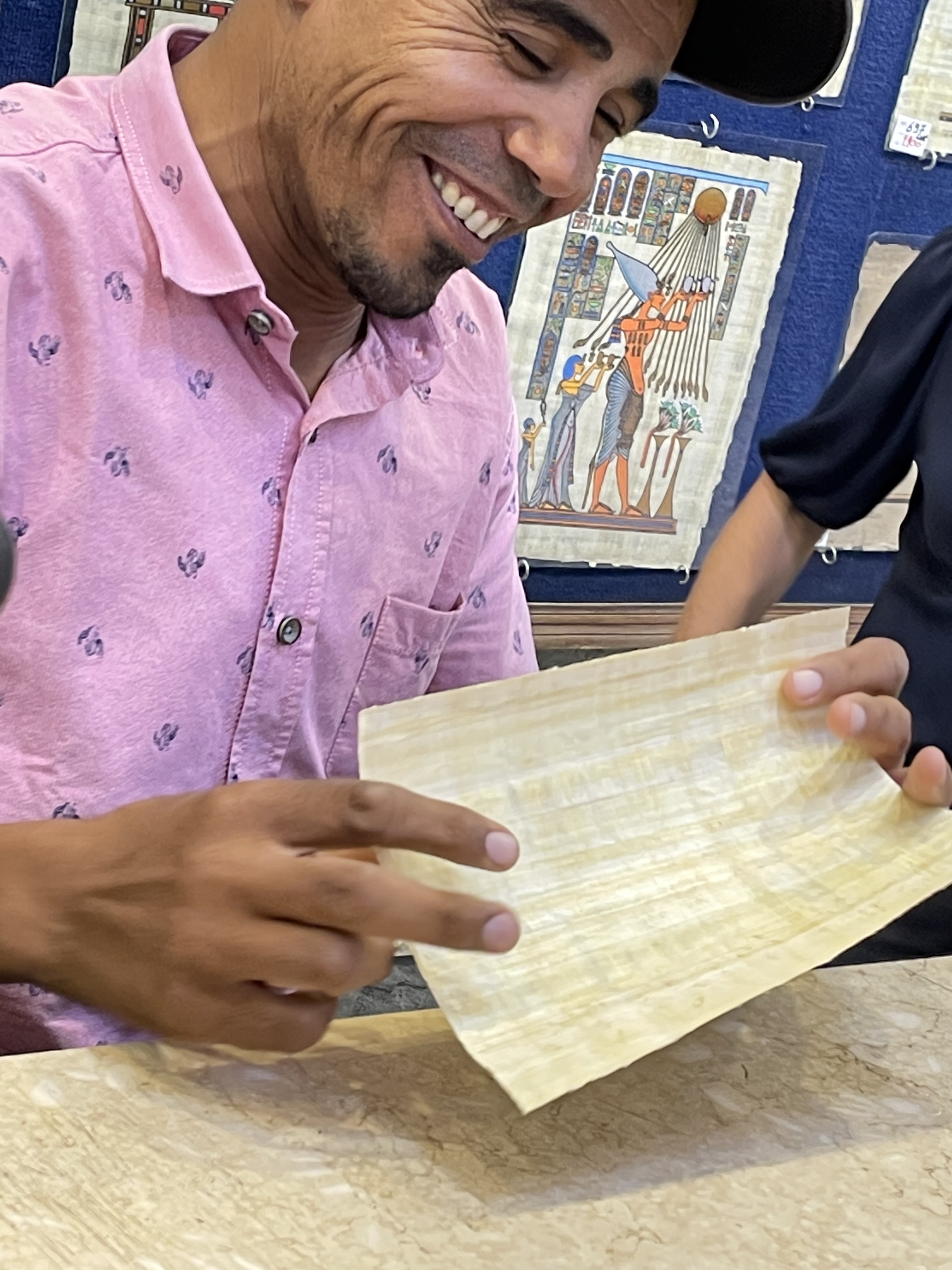
We would see the Temple of Luxor after sundown, so we had time for a stop on our way back to the ship. The Papyrus Institute was on the itinerary, about which I have to admit some trepidation. These things can be really hokey and mostly about selling stuff but in this case we were all pleasantly surprised! We got a very cool demo of how papyrus is made, and then just wandered the gallery of beautiful artwork, large pieces and small, done on papyrus. I bought a really cool painting of a pharaoh offering lotus flowers to Hathor, the god of motherhood, love & protection.
Here’s the papyrus recipe in case you want to try: remove skin; slice vertically into thin pieces; pound/roll these flat to remove sugars and salts; soak in water for a week; overlap pieces on edge/crosswise and press until dry. Voila!


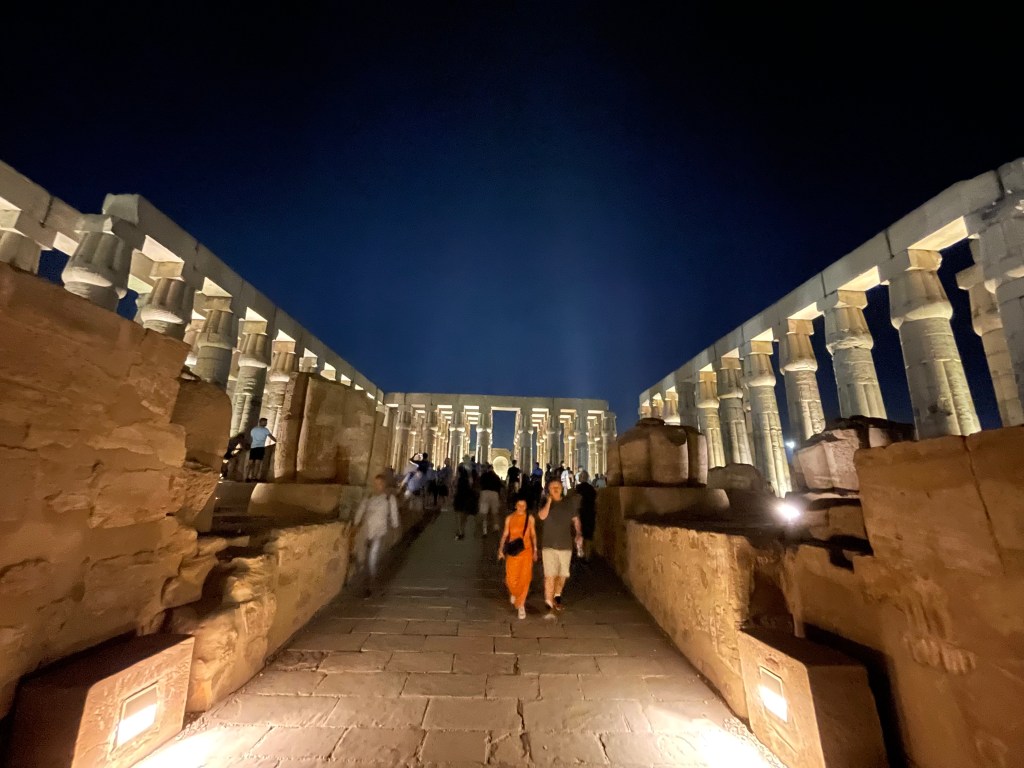
We pile back into the bus after the cool papyrus demo, and as the sun fades and the air cools just a bit, we navigate the tiny streets and congestion of Luxor to the most crowded place we’ve been thus far. There are so many busses, large and small, trying to squeeze into the parking lot outside of the Luxor Temple it’s just crazy. With astonishing precision, they fit all these vehicles together like a jigsaw puzzle, and we make our way to the entrance. It is just as crowded with people as the parking lot was with vehicles, everyone similarly wrangling for position so we can get in (and go through the obligatory but inconsequential metal detector). Our guides do an amazing job keeping us together…we emerge from the entry with a sigh of relief…the sun is almost gone…and the temple rises before us. Breathtaking is an oft-used word on this trip, and perhaps here it is most fitting.
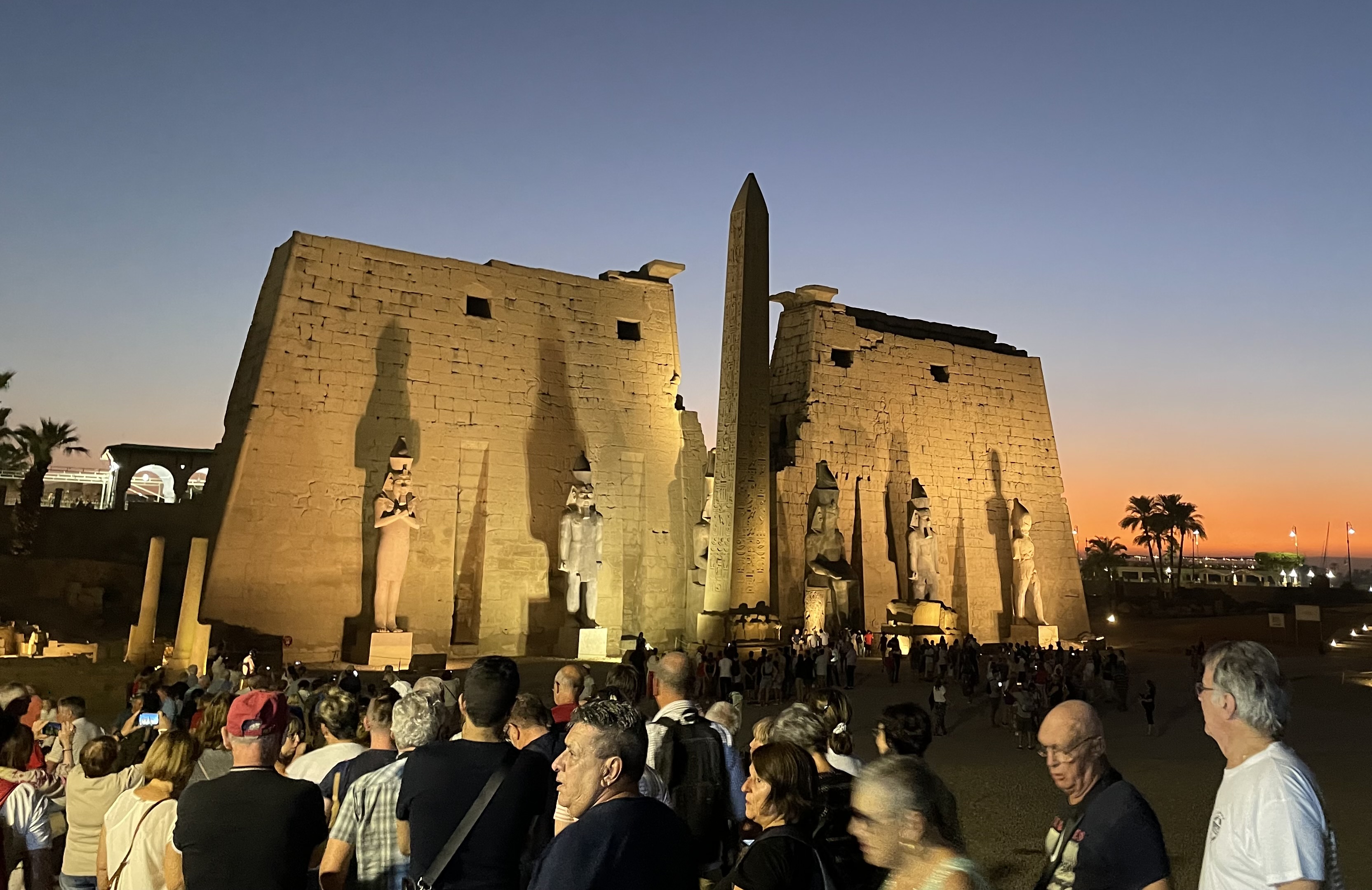
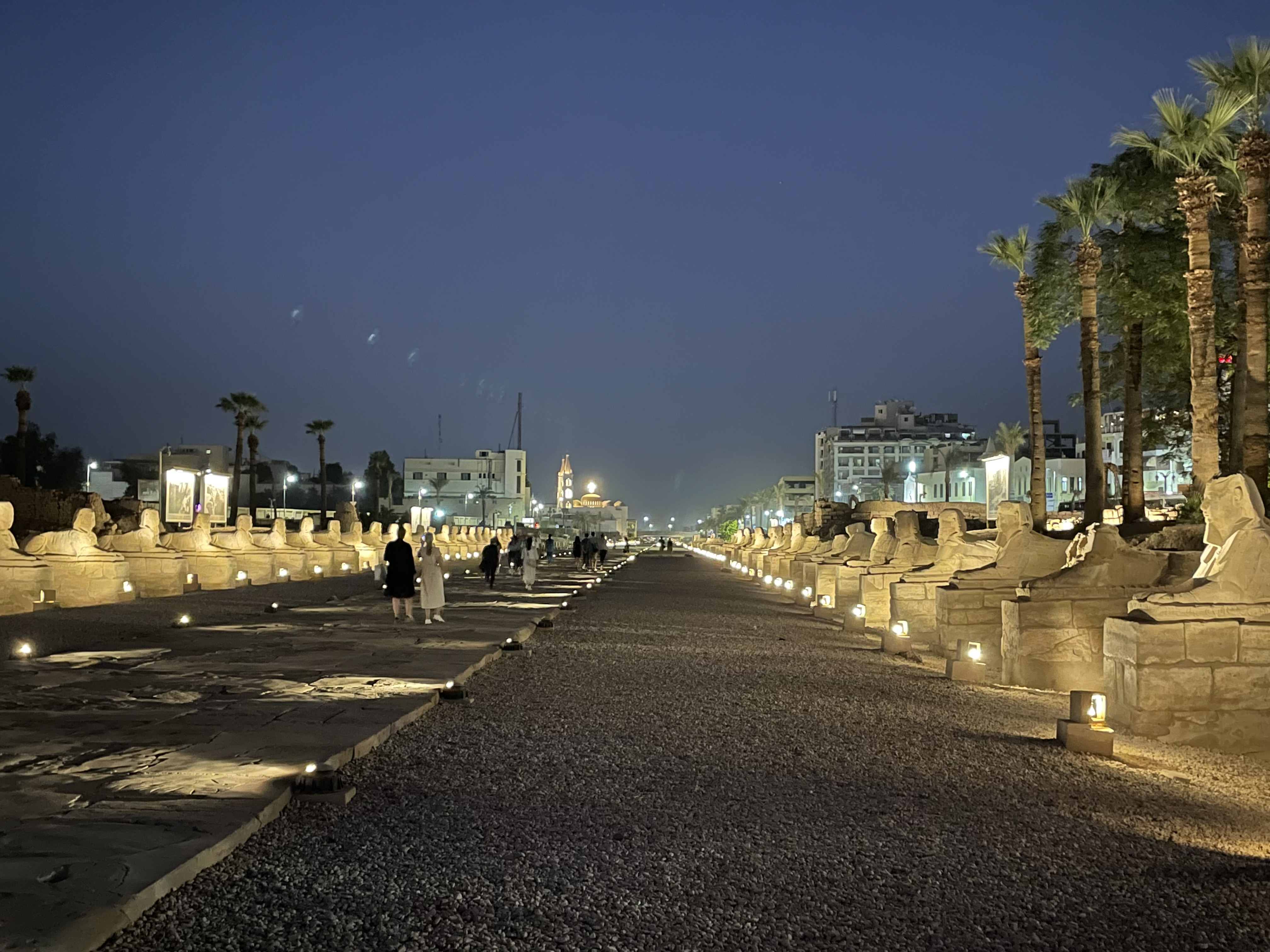
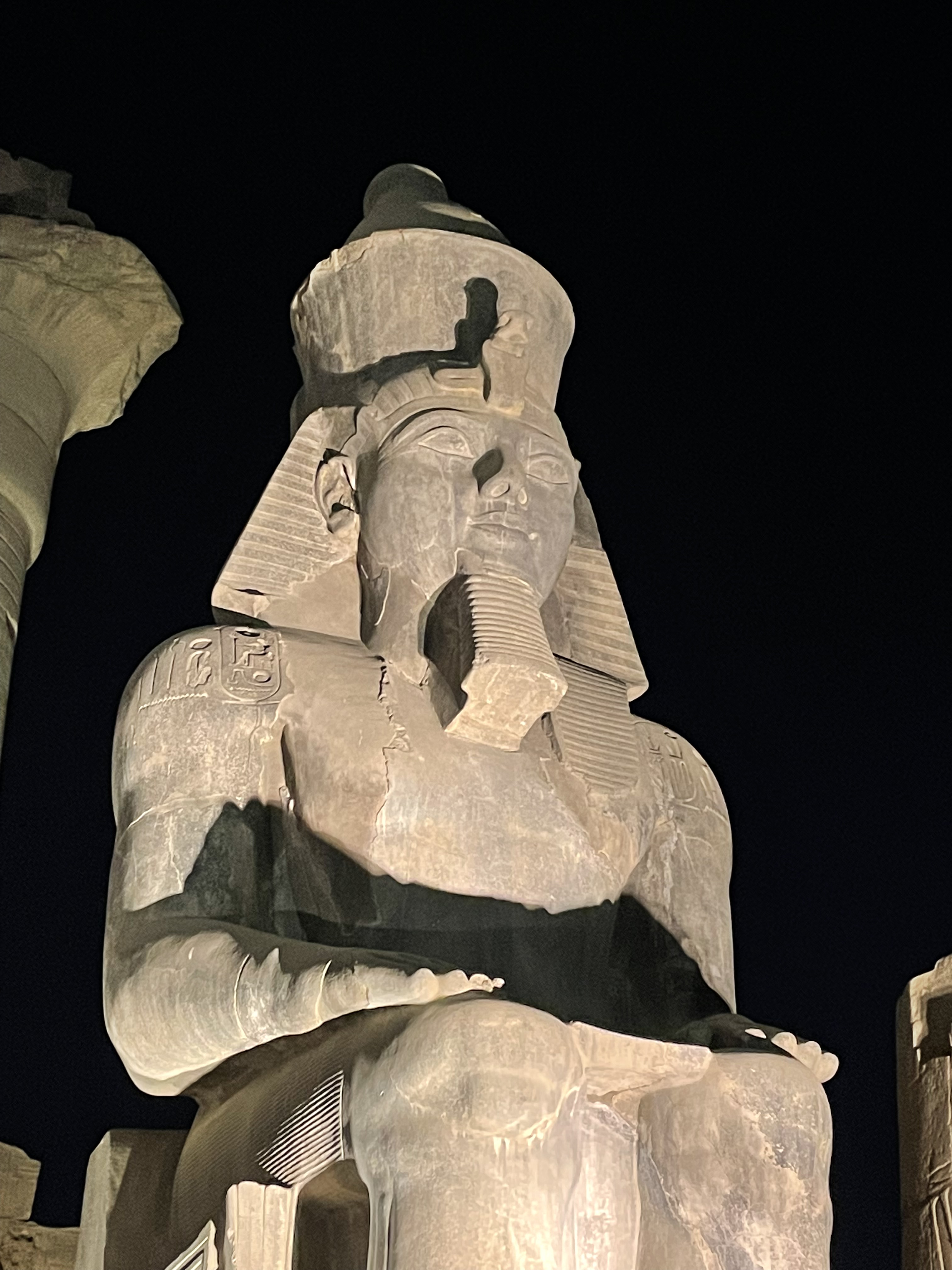
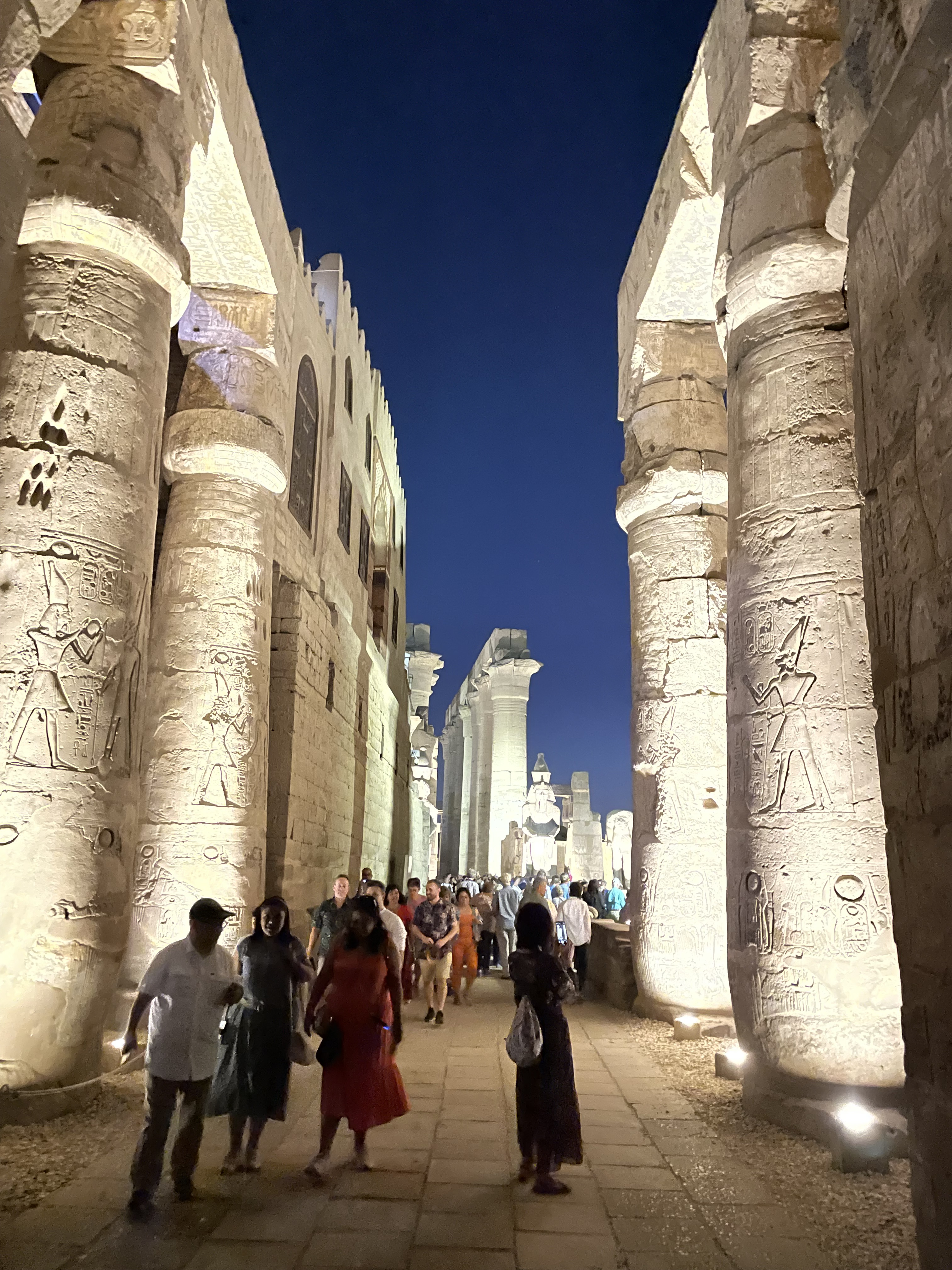

Luxor was one of two primary temples on the east bank, the other being Karnak which is very close by. It was constructed around 1400BC, and unlike most temples, it is not dedicated to a god or deified pharaoh but rather to the “rejuvenation of kingship.” Perhaps the many pharaohs of Egypt were crowned here? There is still much to be discovered.
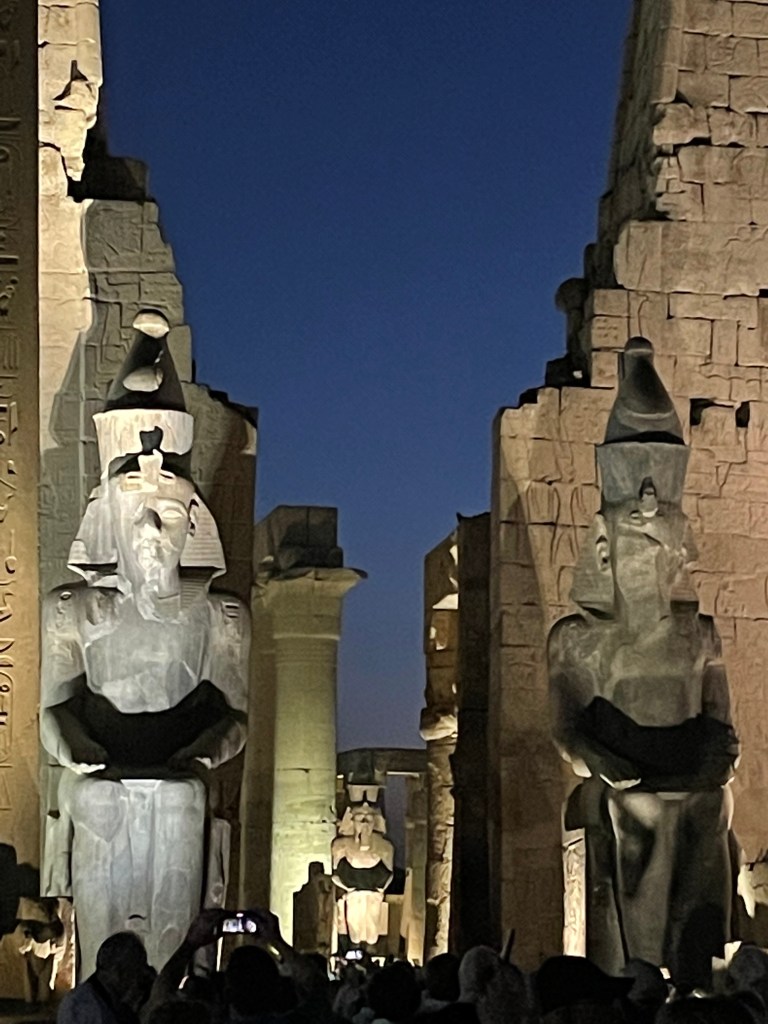
If it looks like an obelisk appears to be missing at the entrance (to the right), you’d be correct in that observation. It is in the Place de la Concorde in Paris. And let’s just say the French ain’t giving it back…
As the sun dropped below the horizon, the day’s end call-to-prayer sounded across the city, making its way to the temple. In this ancient place, darkness having fallen across the warm sandstone floors and pillars and statues, the lyrical Egyptian Arabic was the perfect accompaniment to our gazing upon the inscriptions and imposing figures.
Take a moment to listen before we go back to the ship…
 Dirt Roads and High Rises