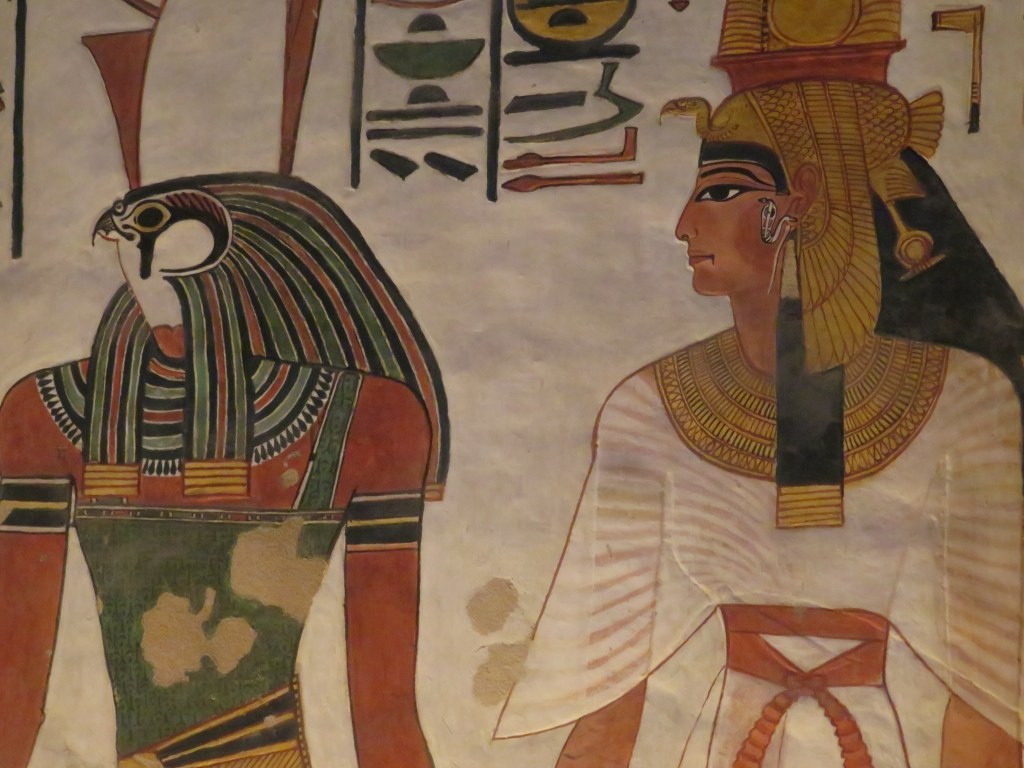
As if the spectacular Valleys of the Kings and Queens wasn’t enough for one day, we still had another stop on the itinerary: the Mortuary Temple of Queen Hatshepsut. She was only the 2nd female pharaoh, reigning in the mid-15th century BC. The actual length of her 21-year sovereignty is not perfectly documented, and part of it may have included a time when she acted as regent for her infant son. No matter, the mortuary temple dedicated to her is absolutely stunning, its resplendent architecture presenting three massive terraces that seem to emerge from the cliff itself or rise from the desert floor below…and perhaps it does both…
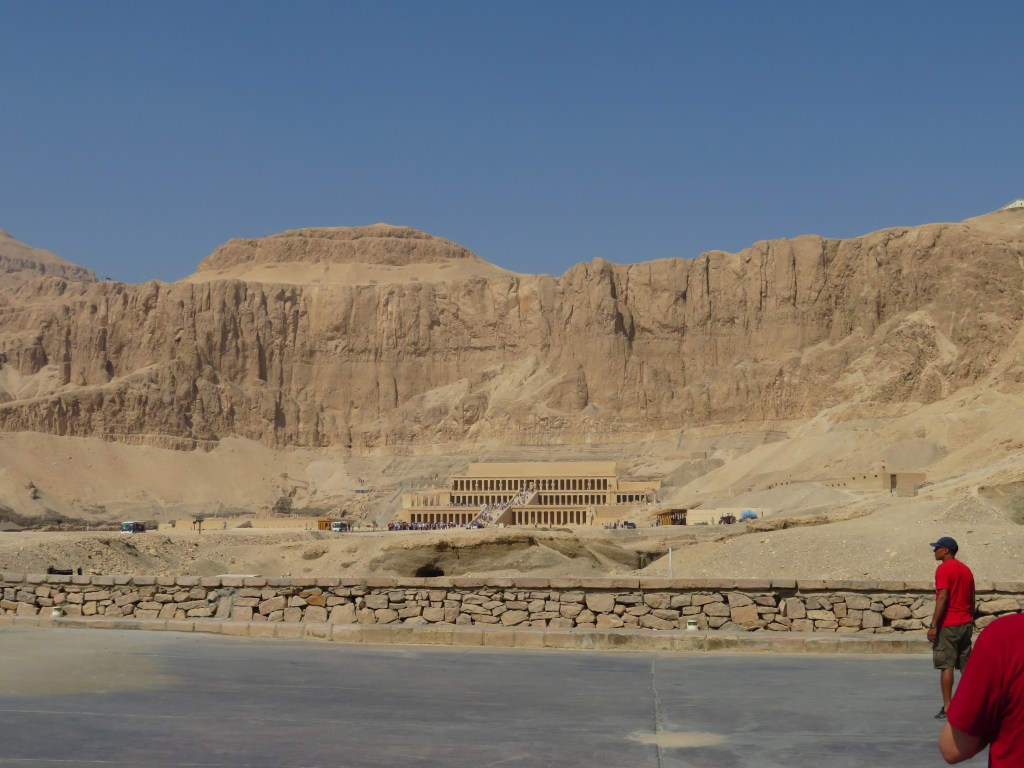
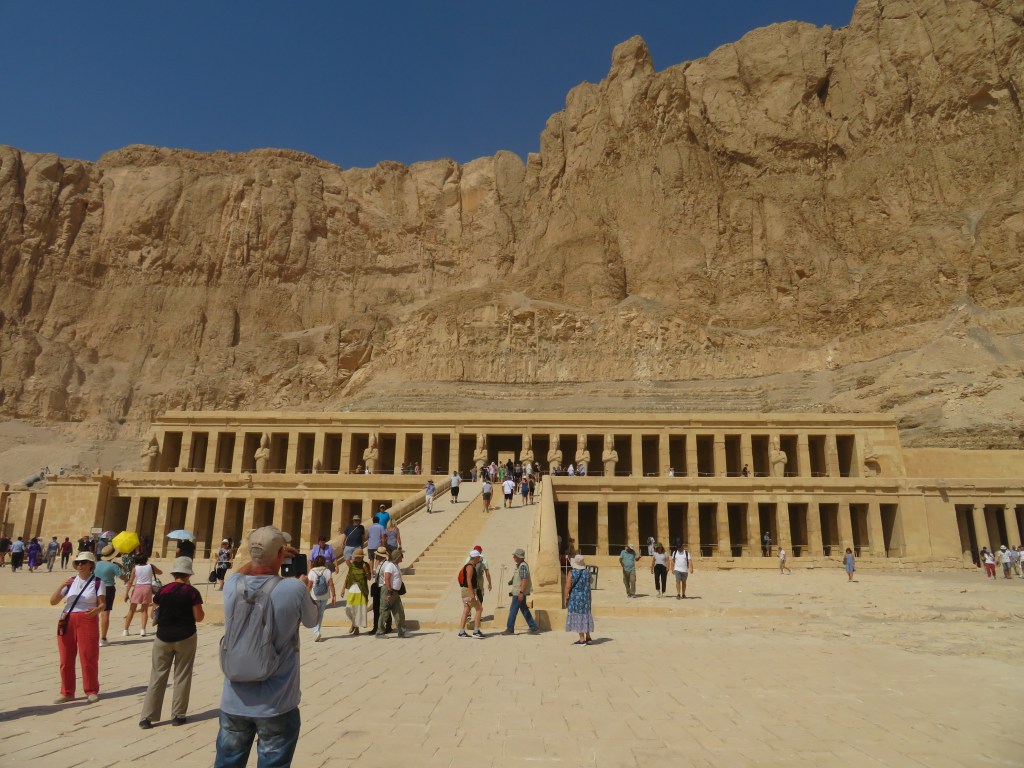
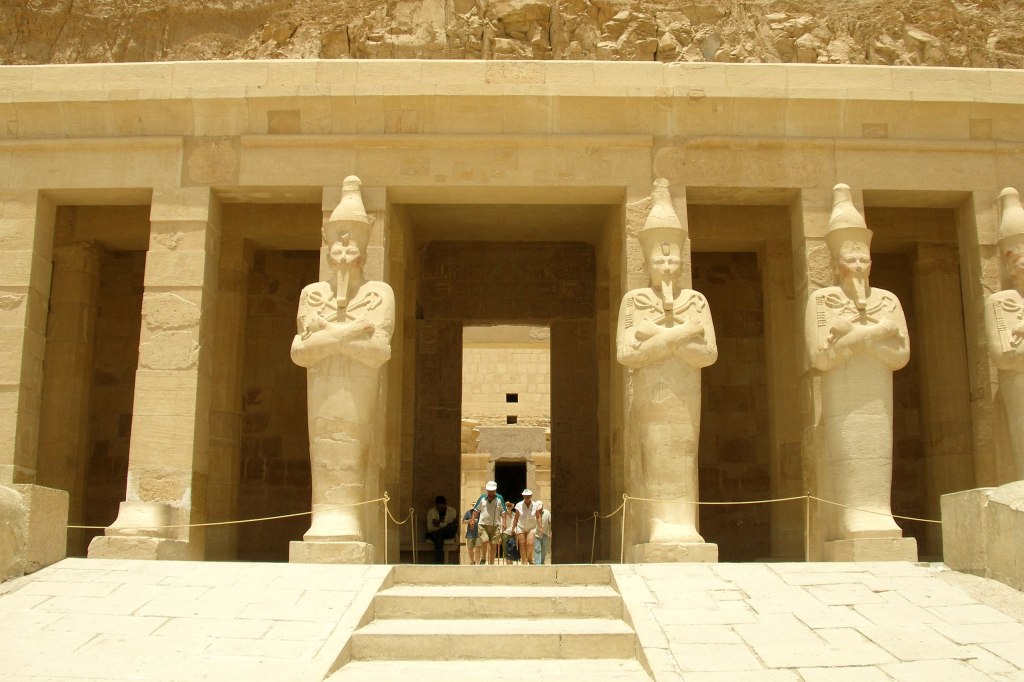
Awe-inspiring, regal, powerful, and commanding the landscape, the Temple is a sight to behold. Carved into the towering hillside behind it, this imposing palace of worship and afterlife is adorned with hieroglyphics and gods across the spectrum, in addition to the towering statues of pharaohs that line the façade (specifically whom changed several times as statues were “repurposed.”). Imagine all this brightly painted from top to bottom and it comes to life with worshippers in prayer, celebrations and festivals, and high priests performing their daily rituals (most often in sections where only they were allowed).
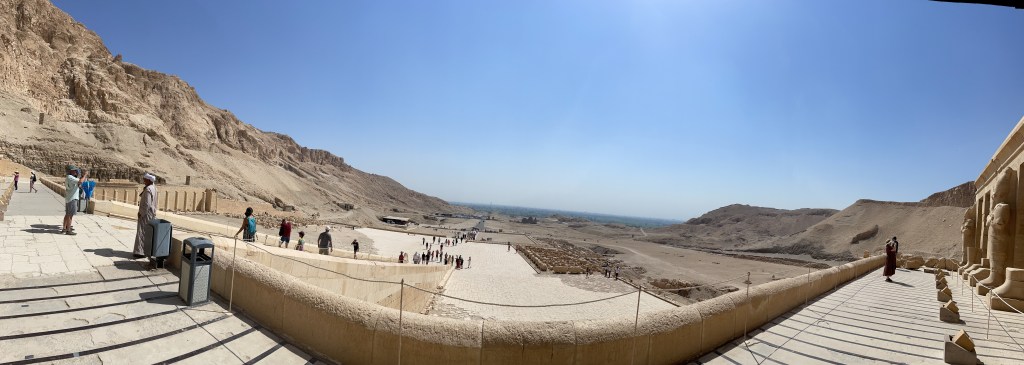
Under the blazing sun, we are left to wander the chambers and halls, making our way deeper into the complex and to the burial chamber, the granite coffin still in place. Without Ahmed, and with thanks for his teaching thus far, the images start to tell their own stories. I doubt we are interpreting them correctly, but that doesn’t really matter, it seems. They are speaking into our eternity, and we are listening.
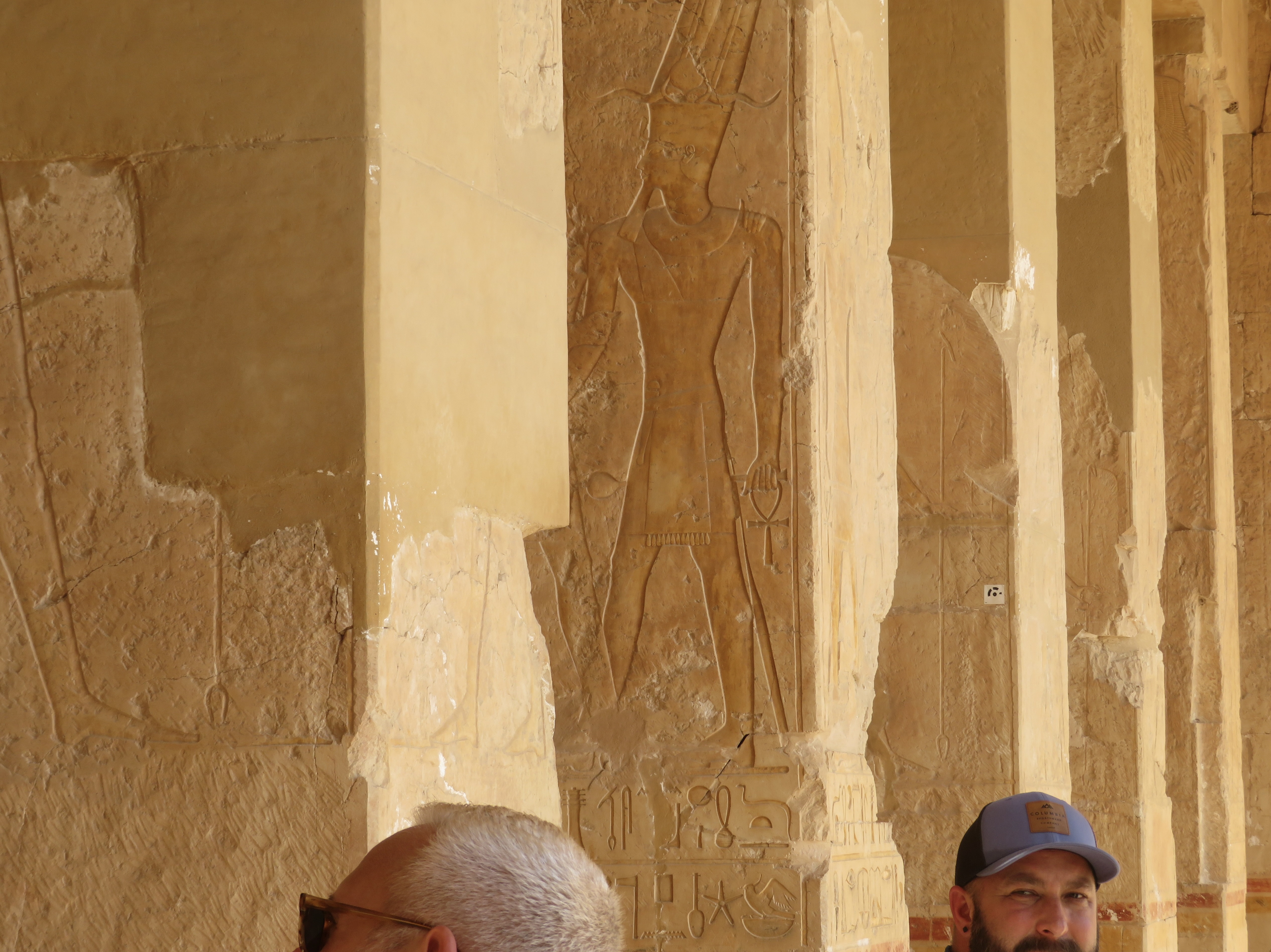
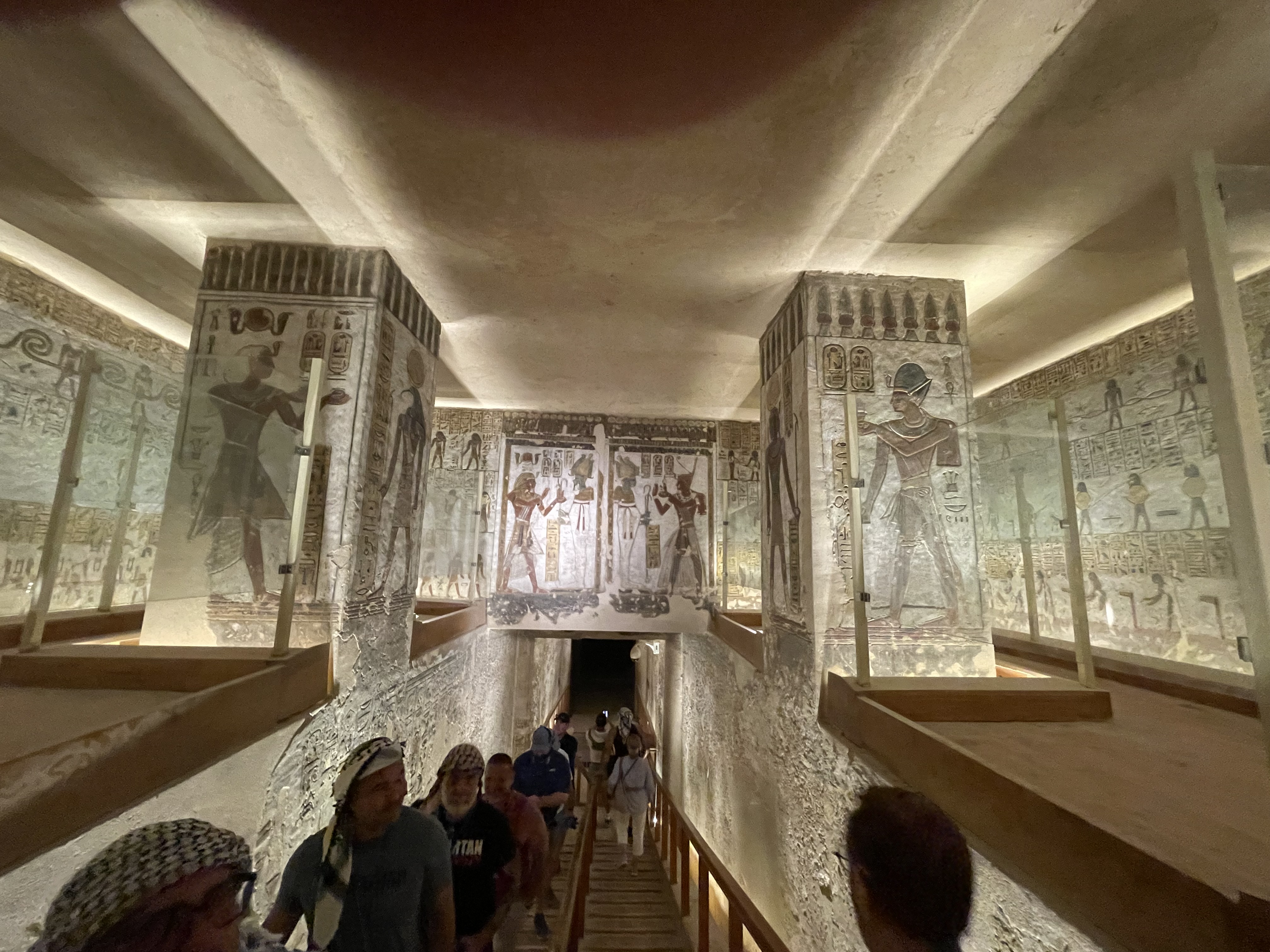
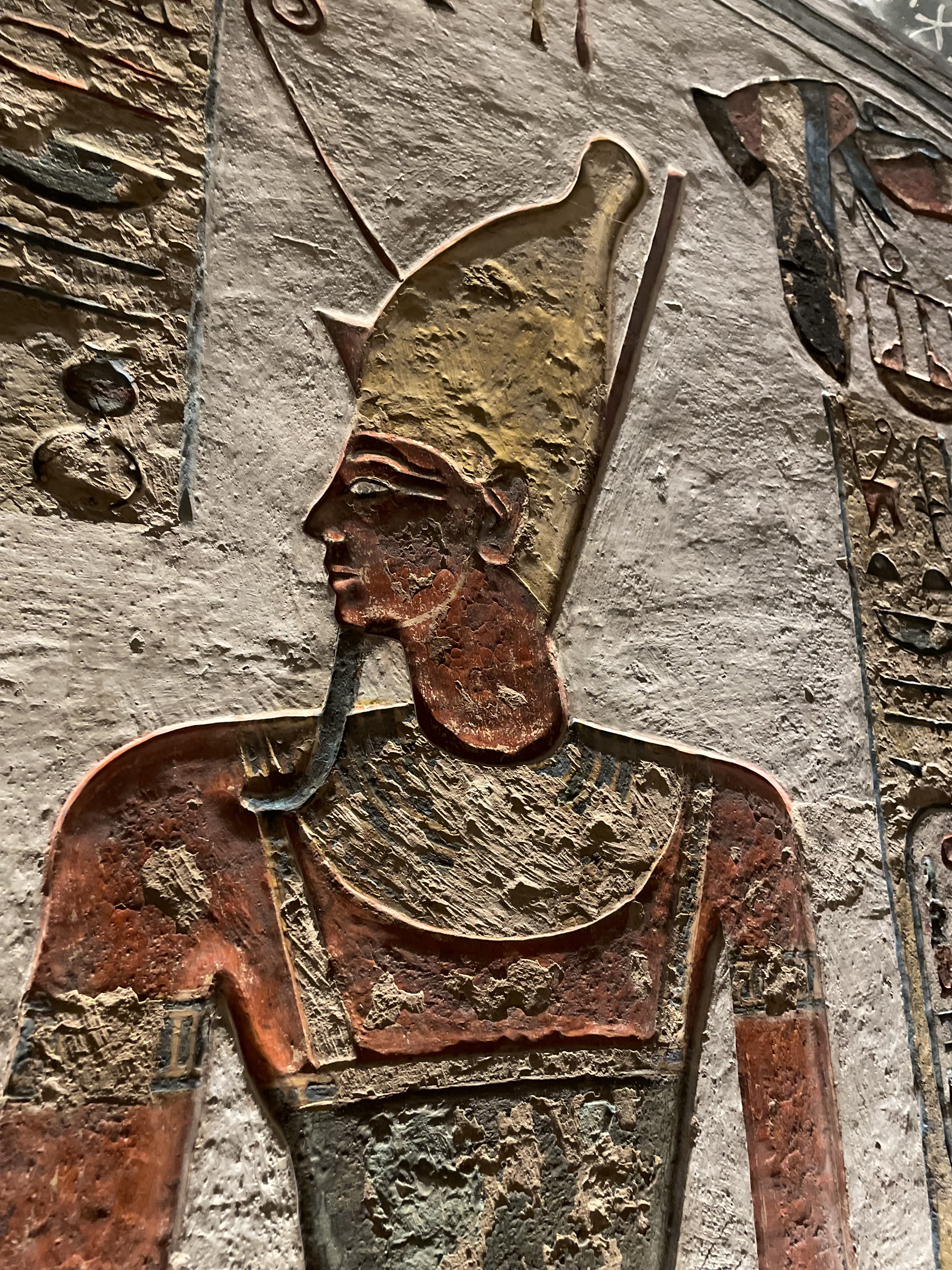
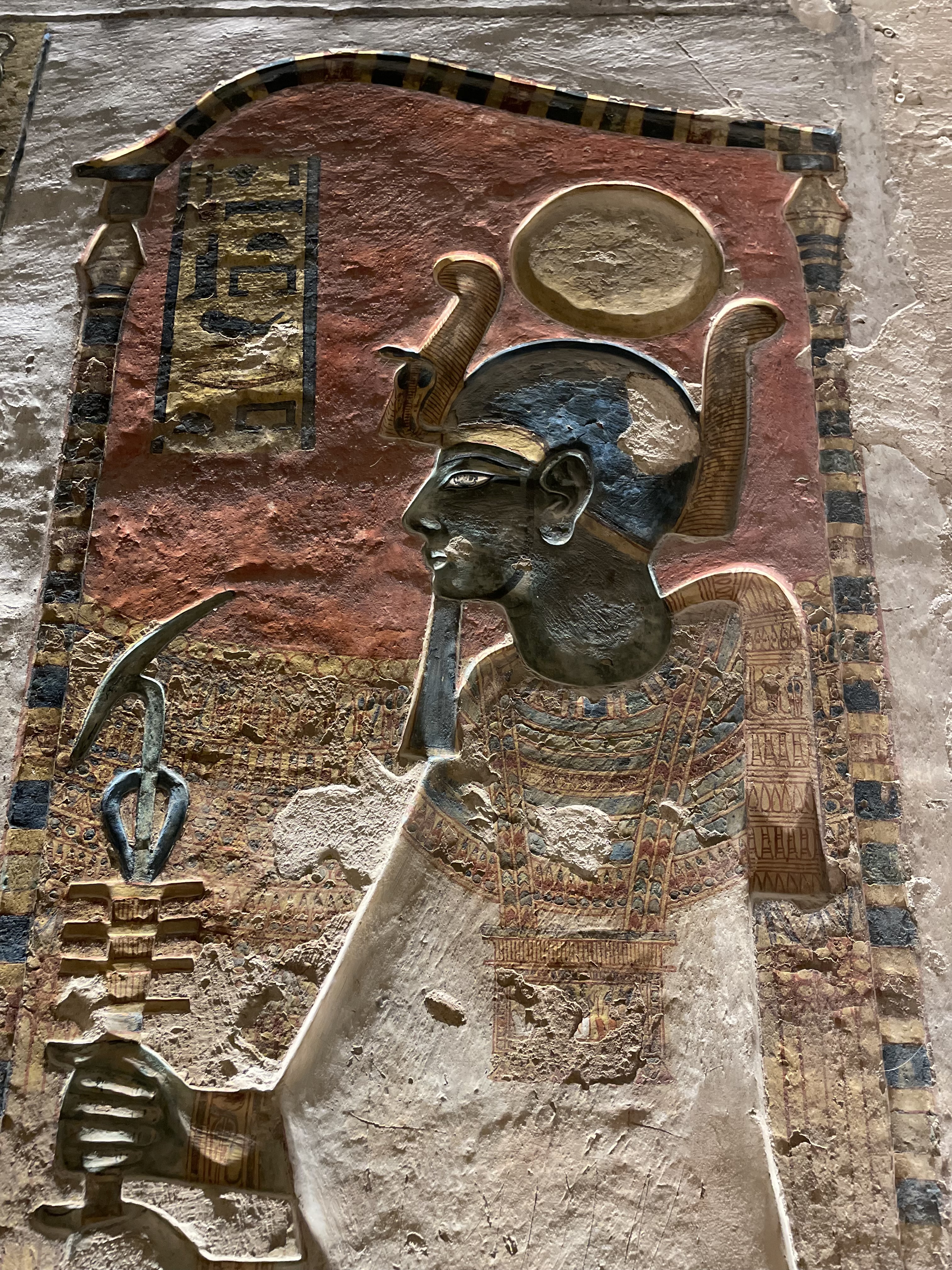
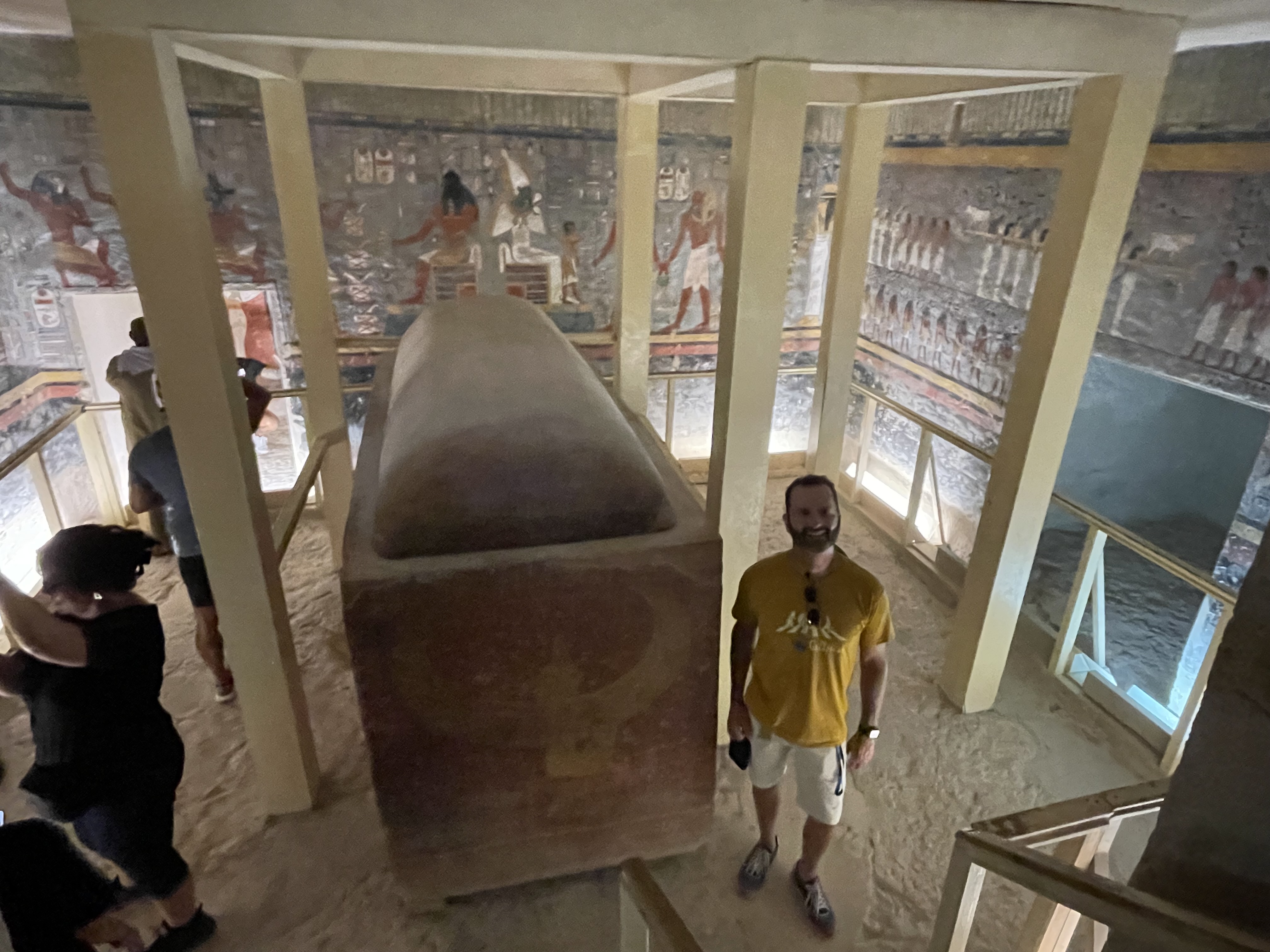
After exploring this astonishing place, with hats on heads and thirst to be quenched, we queue to the golf carts that will take us back down the hill. It is chaotic and disorganized, no lines at all, really, and the tour guides are yelling about how their group should go first, the drivers responding with disinterest, all in a language we don’t understand. It seems impossible to navigate, but somehow it works. I end up in the front seat next to the driver. He points to a cup between the seats, expecting a tip when we arrive. I oblige, having accepted this tipping-for-everything culture as part of the Egyptian experience.
I’m glad I brought all those $1 bills.
The next morning begins with the holy but ominous pre-dawn call to prayer coming from the many mosques along the river’s edge. It seems to give permission for the ship to set sail (we do not move at night), and we leave Esna at dusk bound for Edfu and the Temple of Horus. It’s another leisurely start as we ready for the day’s tour at 10:30.
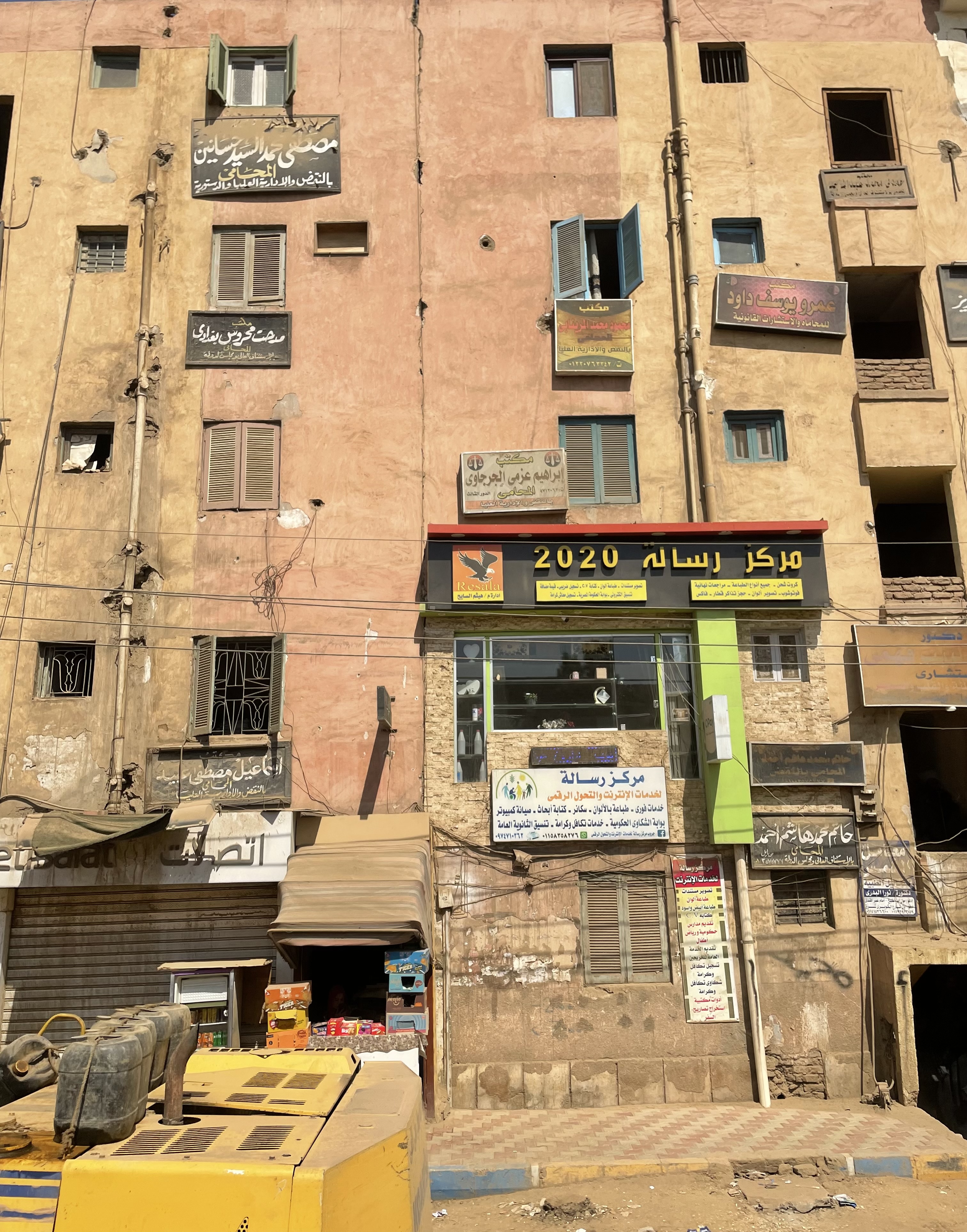
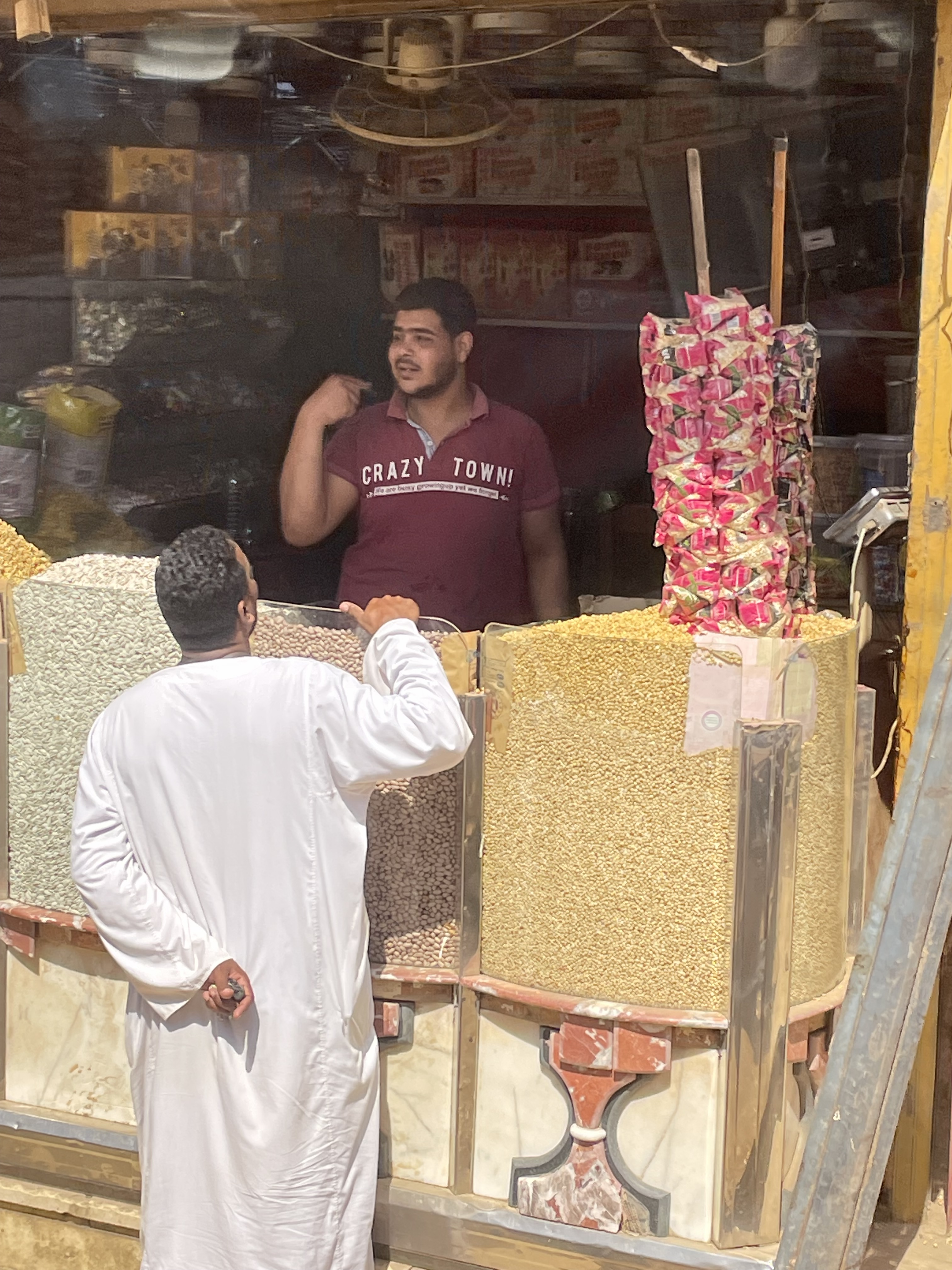
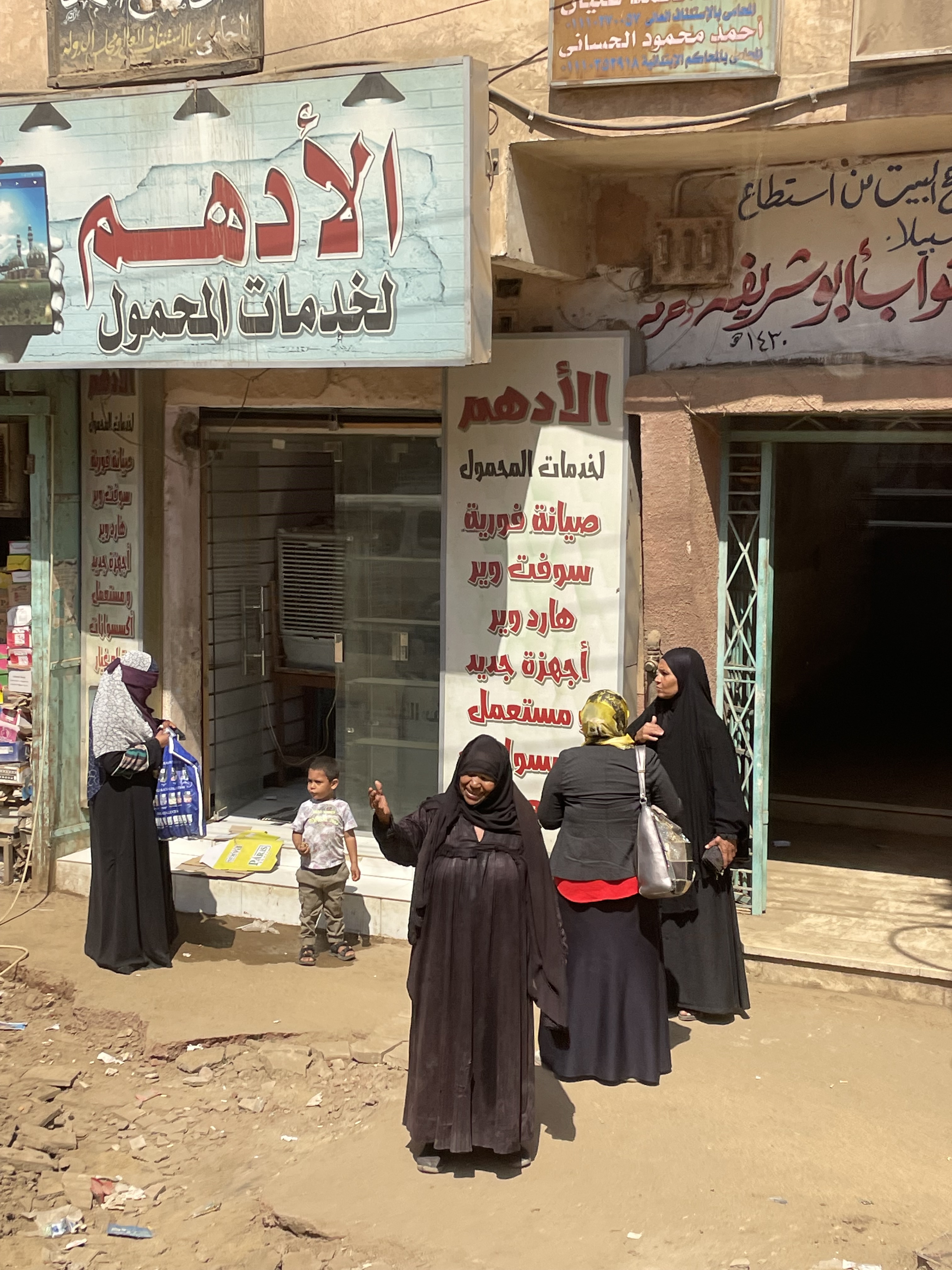
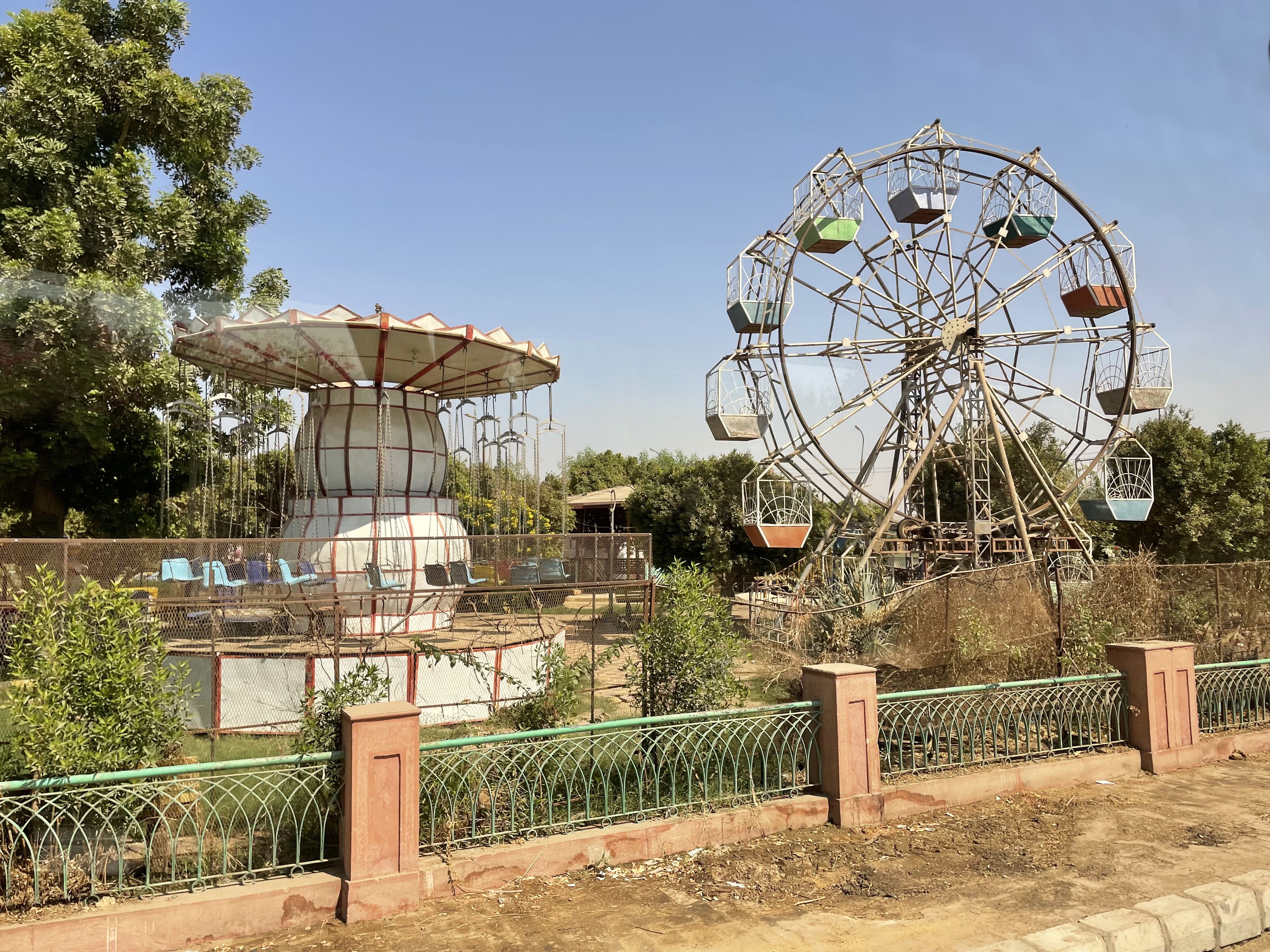
Our late-morning drive winds slowly through the once-paved, now dirt-patchwork streets of this small city, past the bakeries, tiny restaurants frying Egyptian falafel, dry goods stores and clothing shops and such…people going about their daily lives being punctuated by our bus that looms large. It feels oddly “observatory” to watch from motor-coach windows, but the children smile and wave, and the mothers dressed in traditional muslim garments pay no attention.
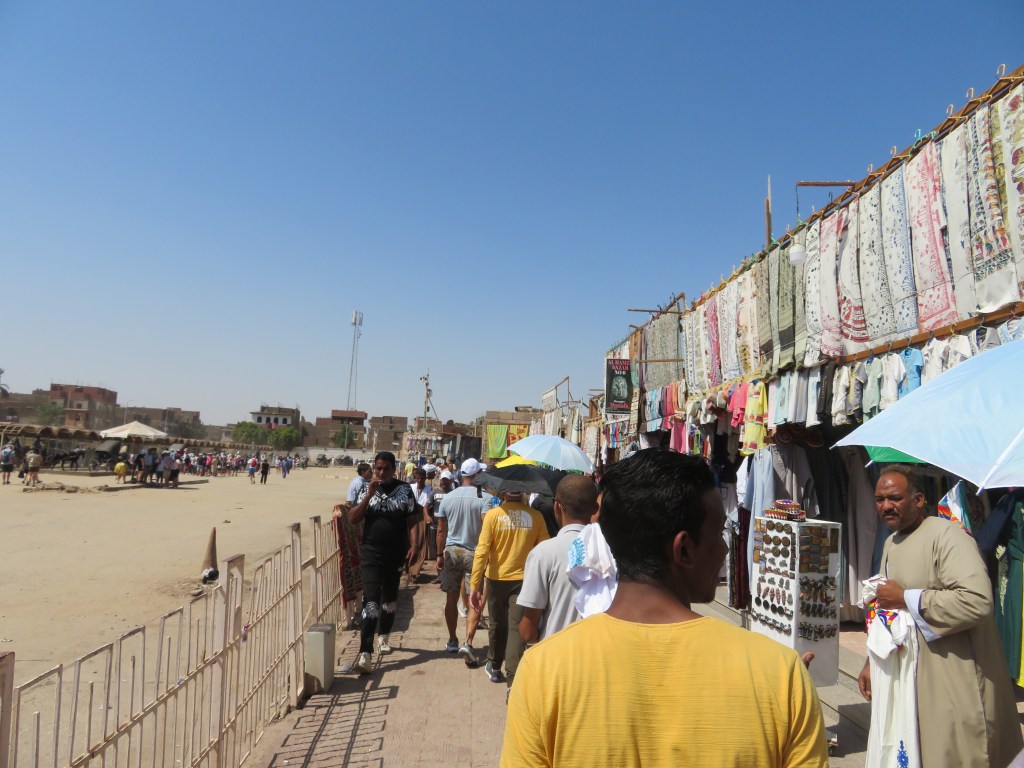
Again we must traverse the parade of vendors wanting us to “just come look”; we’ve gotten pretty good at ignoring them and push through to the Temple. As we turn the corner, the imposing, massive pylon comes into view. The wows and oh-my-gods echo amongst us as we get closer. It’s truly massive and just towering above – note the scale of the visitors to the height of the wall.
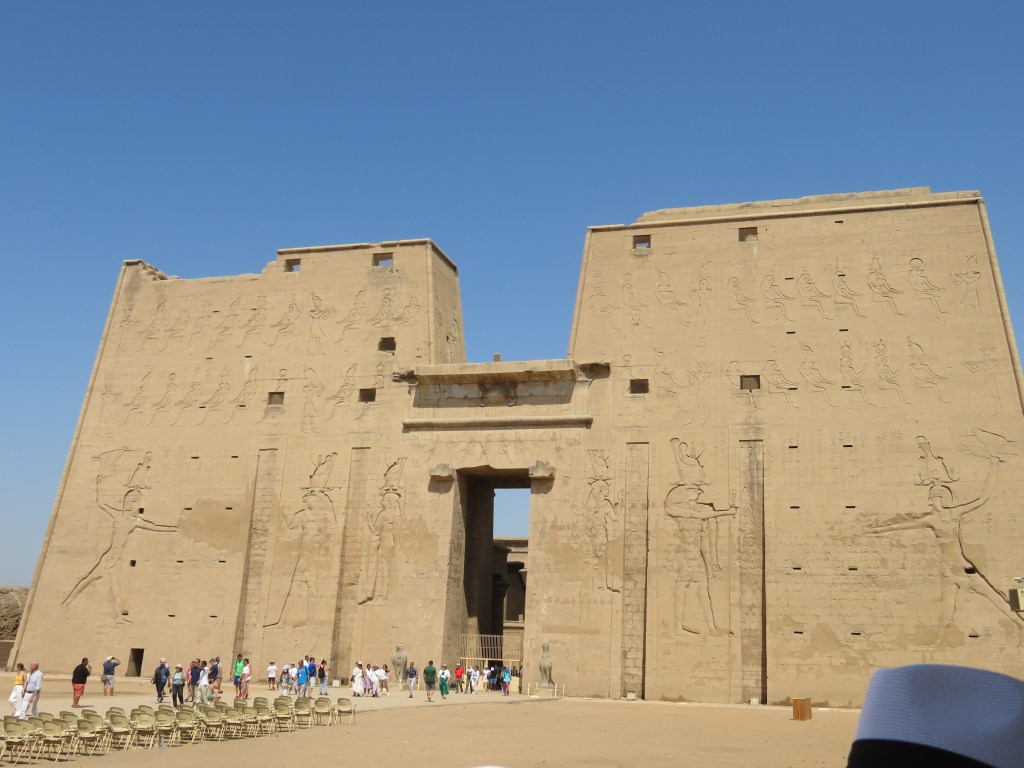
Built in 230 BC, it is the 2nd largest temple in Egypt (Karnak being the largest; we visit there later this week). The walls speak to the language and religion of the Greco-Roman period of Egypt’s history; the Pharoanic era would end just a couple hundred years later (soon in ancient Egyptian terms).
Horus was a god depicted both as a falcon and as a man with the head of a falcon, as he was the protector of – and from – the sky, as well as the god of kingship. He could soar above the clouds but also barrel down swiftly and accurately to protect his people. The “Eye of Horus” appears on these ancient walls as well as in trinket shops and on t-shirts and jewelry – his eye that can see with clarity from afar serves to protect you. I think he’s my favorite god. He’s just really cool…confident and imposing in his stare and stance.
The temple is very well preserved (and has some structural restoration), and in places, much of the color remains. We see here, as in the other temples, a large number of the figures defaced, which is so unfortunate. Many years later when the Christians occupied these lands and used these buildings, they considered the images to be pagan, and thus destroyed them.
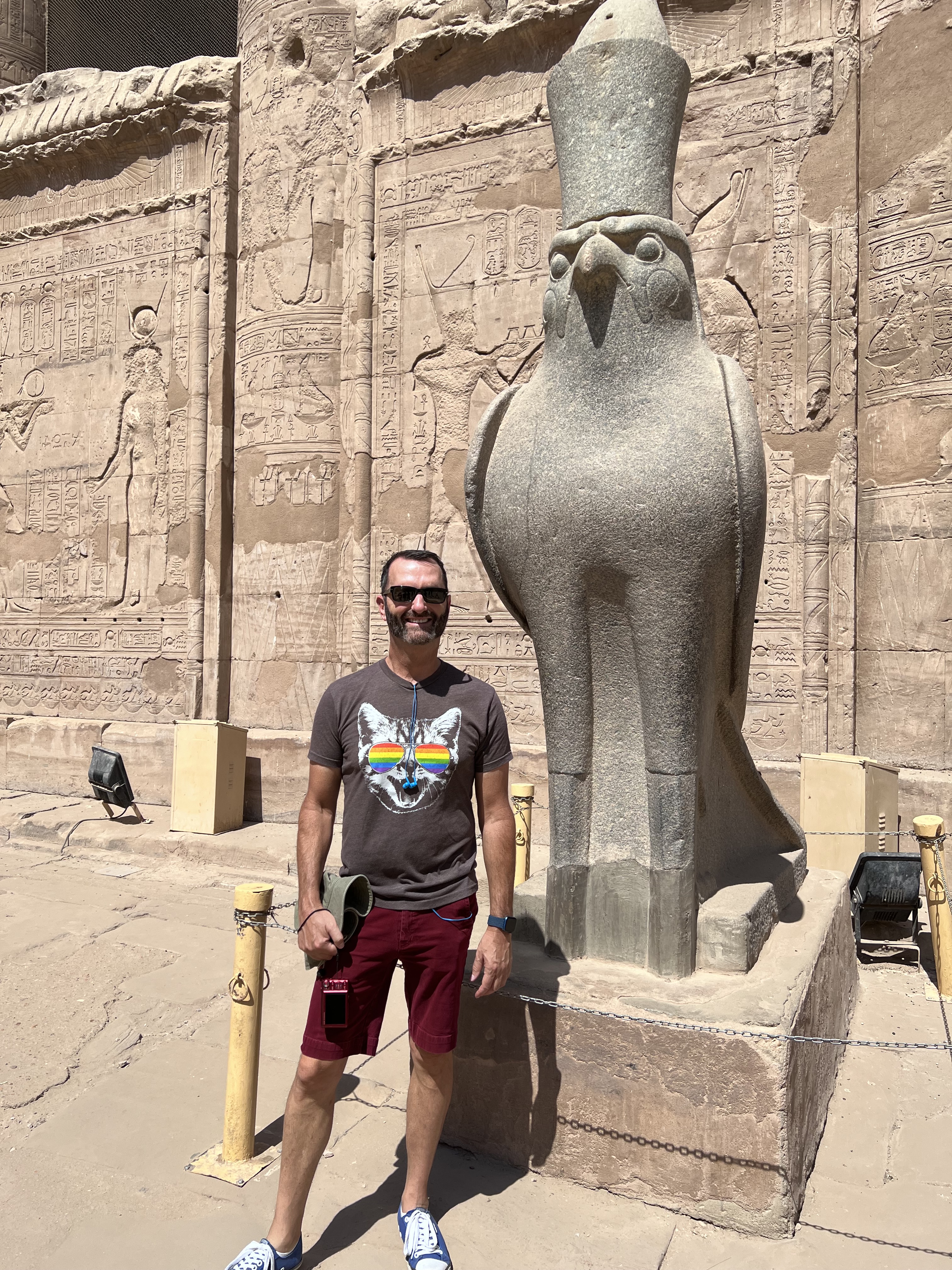


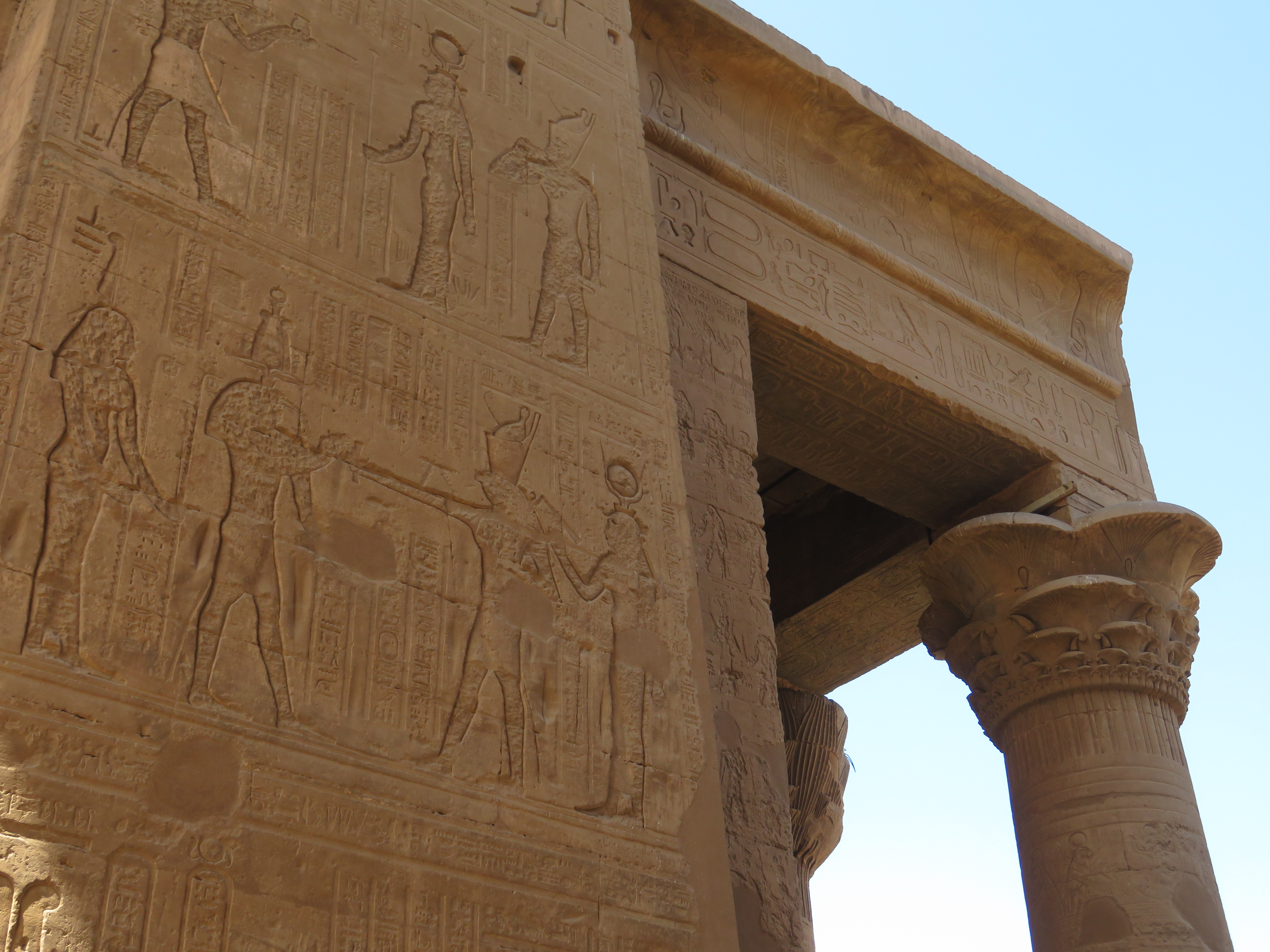
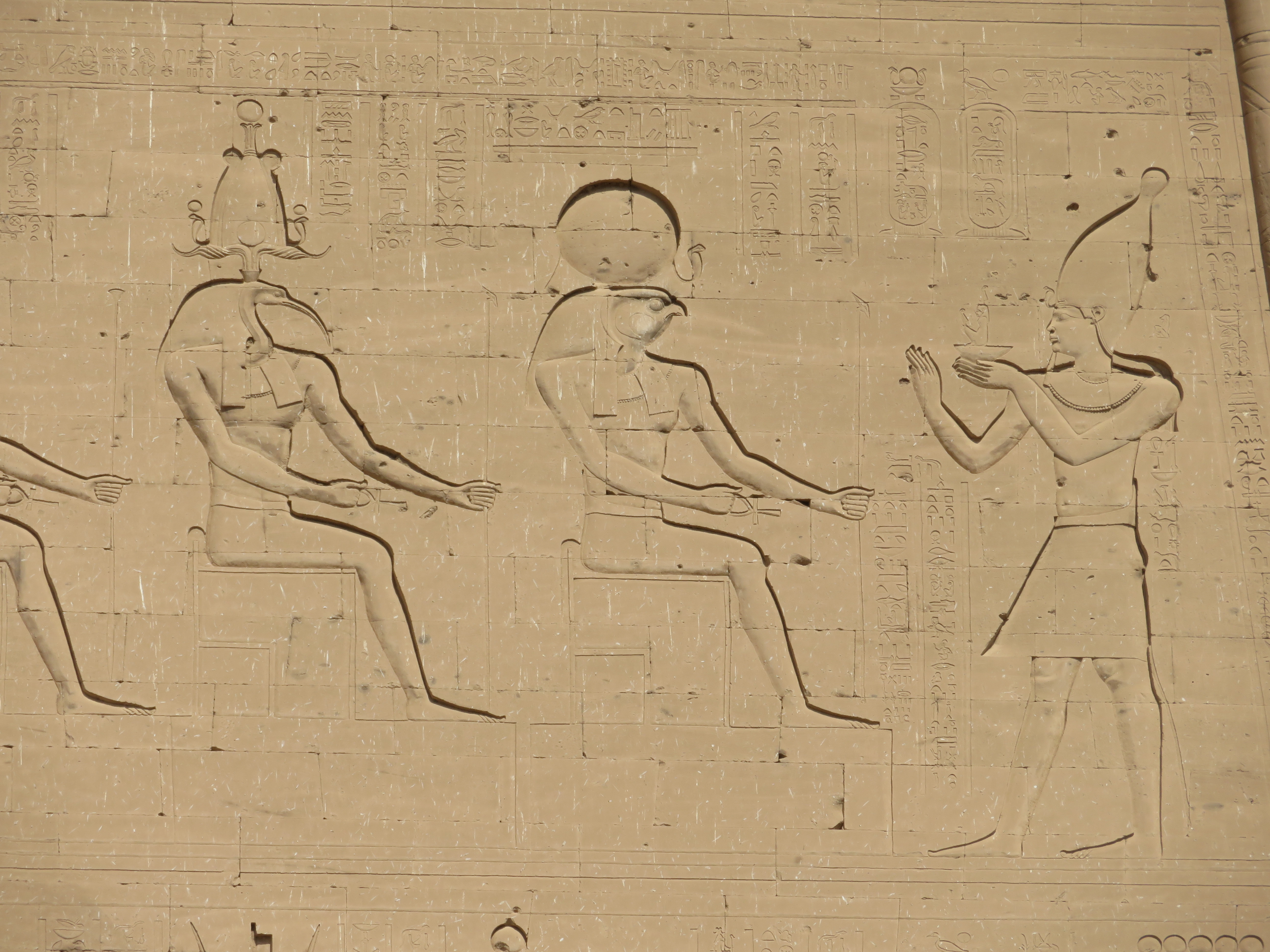
A little side-by-side of what it might have looked like in all its glory…
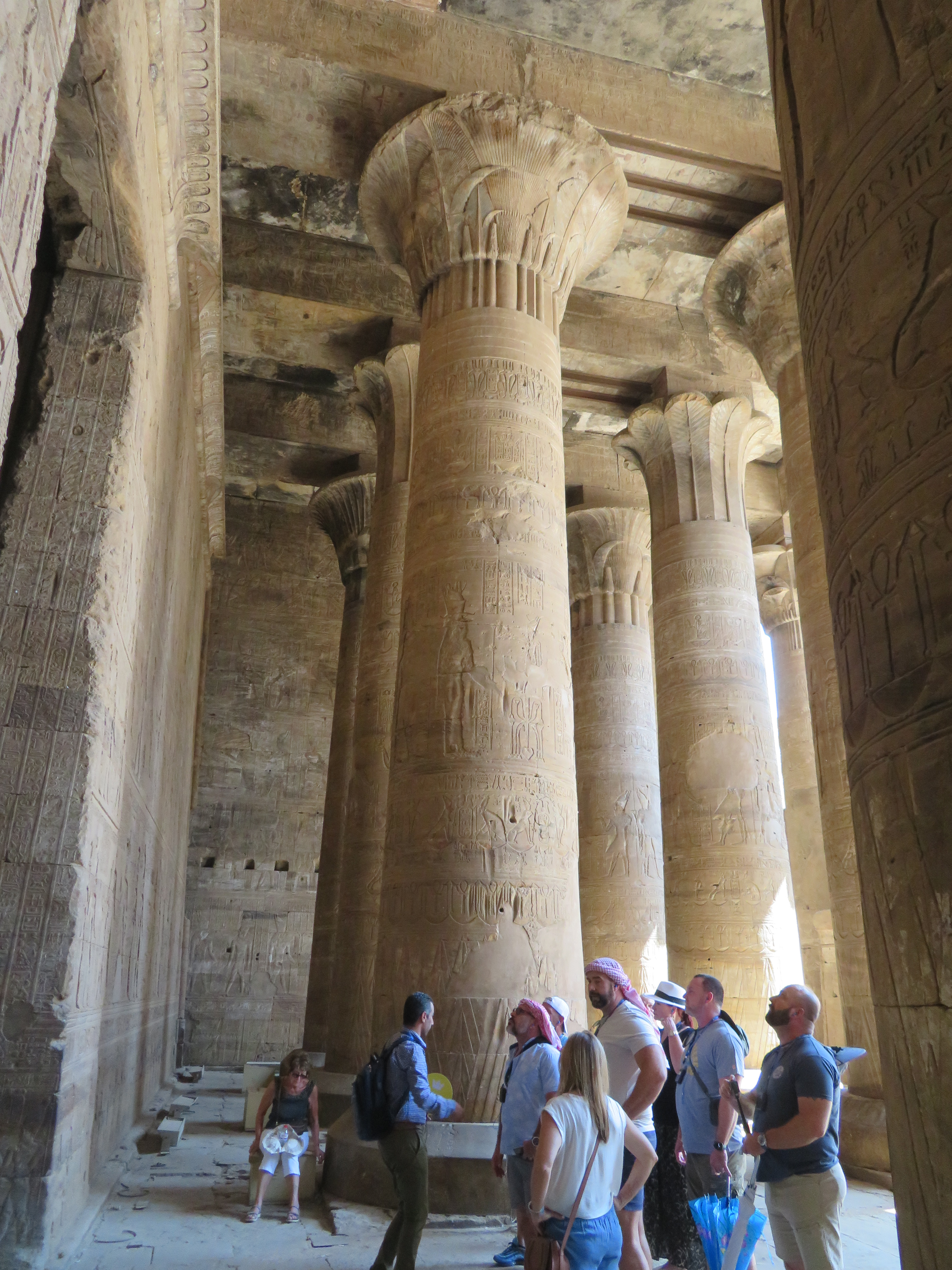
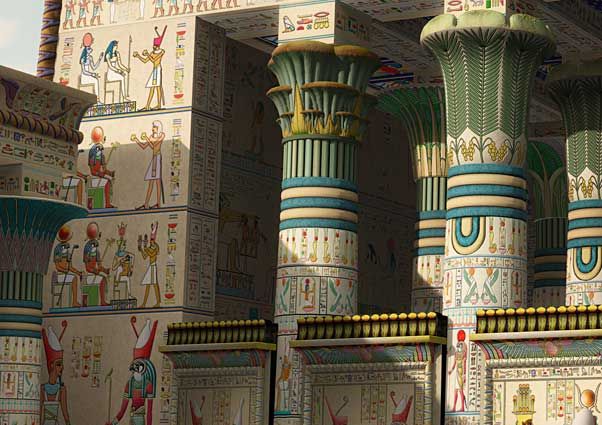
The interior courtyard, for public festivals and worshipping, is huge and it’s not hard to imagine it filled with people thousands of years ago. Only high priests were permitted further into the temple sanctuaries, and when we go there, you can almost hear the ancient chanting and smell the burning oil left for the gods. The candles and oil lamps that provided light would have cast a perfect glow. It must have been at once beautiful and spiritual and at the same time intimidating, as was its intended design. For better or worse, religion used to control the masses – or provide them hope and refuge – is the most ancient story we can tell.

We stopped by the Horus Coffee Shop on the way out, made thirsty by the sun and the heat emanating from the stone, and sat for a minute in the shade of the thatched roof, looking back at the amazing temple, contemplating its place in history. A $1 pit-stop and we headed back to the ship for an afternoon of relaxation.
Shifting gears in this narrative…our ship was great! Nice public spaces (if not oddly decorated), and it even had a small gym and salon/spa. Two highlights were the gift shop and the upper deck, complete with outdoor bar and swimming pool.
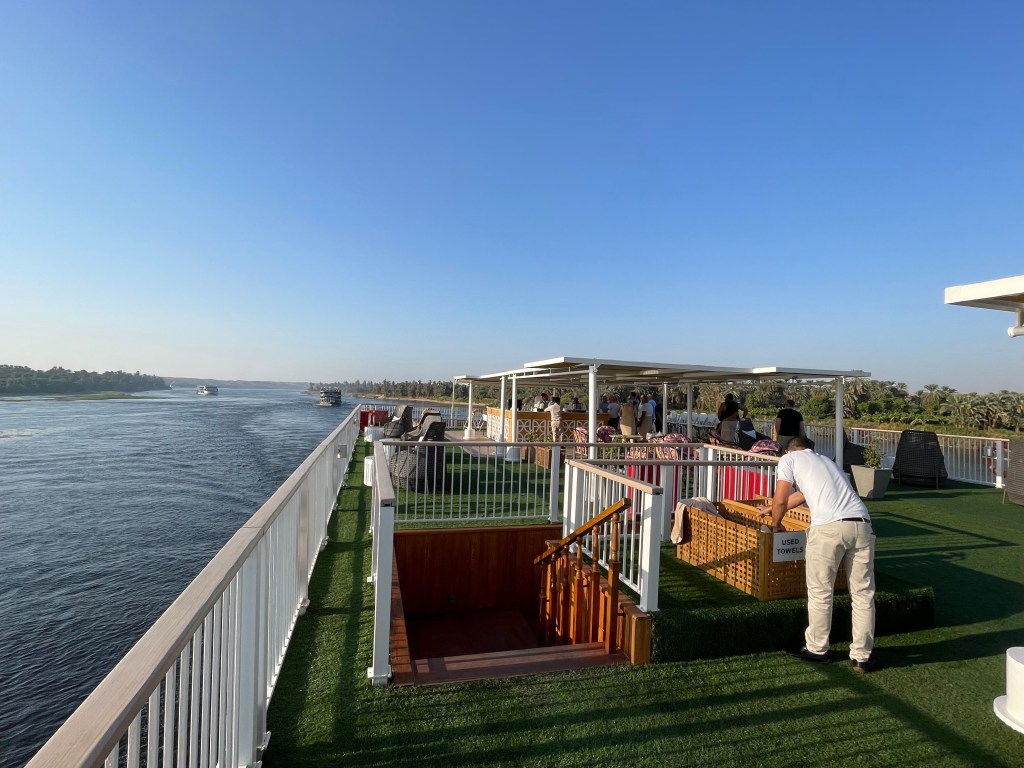
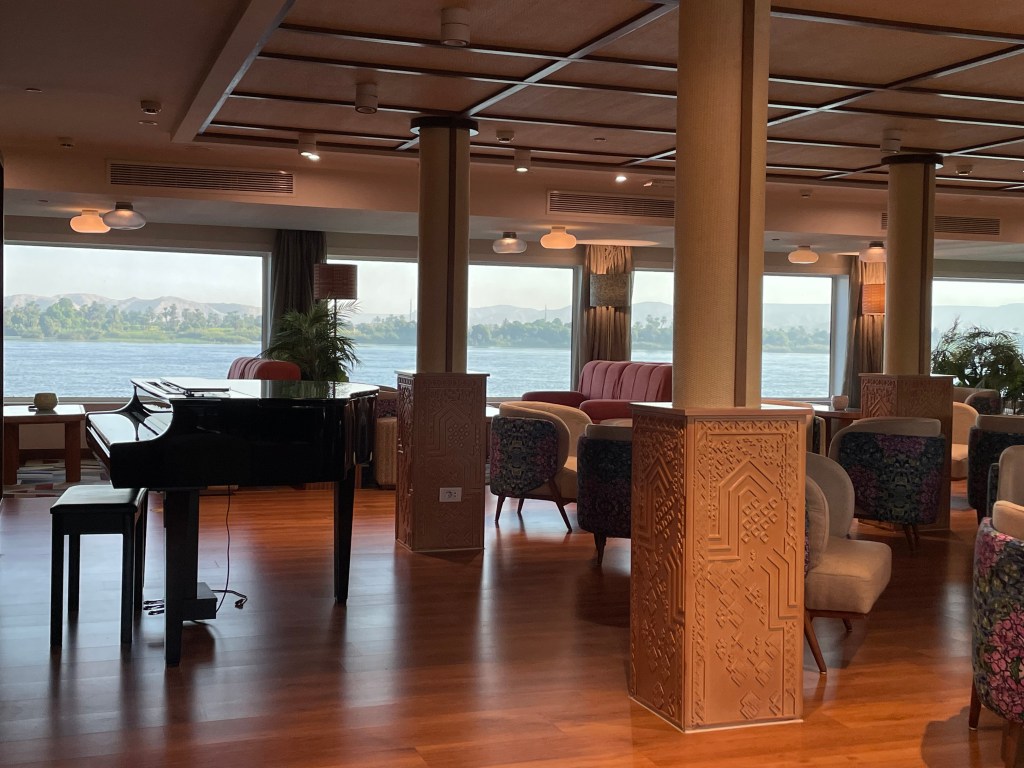
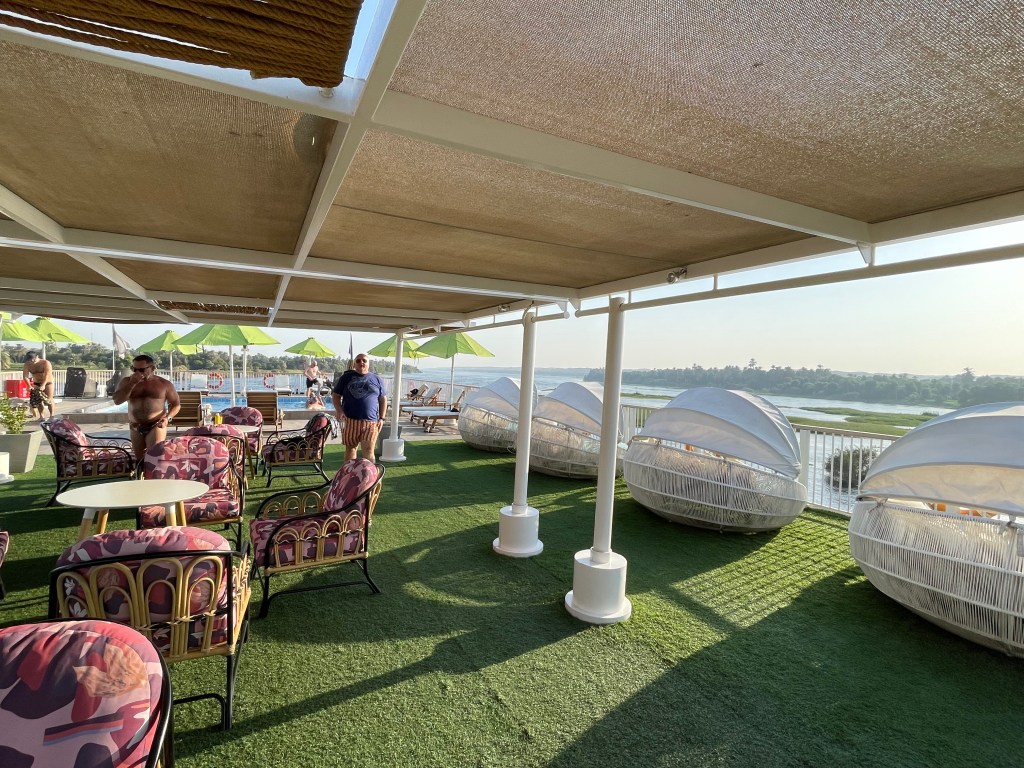
It may seem odd to highlight the gift shop, but they had everything you could imagine, at the right prices (although gold jewelry seemed really expensive), and the two guys running it were so friendly and helpful. They had so much stuff crammed into the nooks and crannies of a closet-sized space, it was amazing. “You want that in a different color? We have many!” They would even get stuff for you at the next stop if they didn’t have it and made custom-embroidered shirts with Egyptian designs and/or your name in hieroglyphics. Needless to say, we all spent a bit of time (a lot of time?) in the gift shop.
This lazy afternoon was the perfect time to crawl into one of those cabana chairs…the warmth of the sun on your skin…the green river’s edge meeting the water in an endless time-lapse as the ship slowly drifted along…the gentle almost imperceptible rocking of the water below making the eyelids heavy…
Zzzzzzzz…..

 Dirt Roads and High Rises